

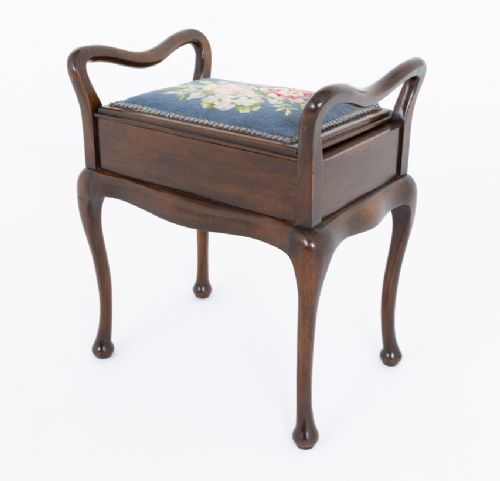


Edwardian Mahogany Music Seat
An edwardian mahogany music seat brings practical refinement to the piano or dressing table, offering sturdy timber and comfortable seating.
Edwardian Mahogany Music Seat
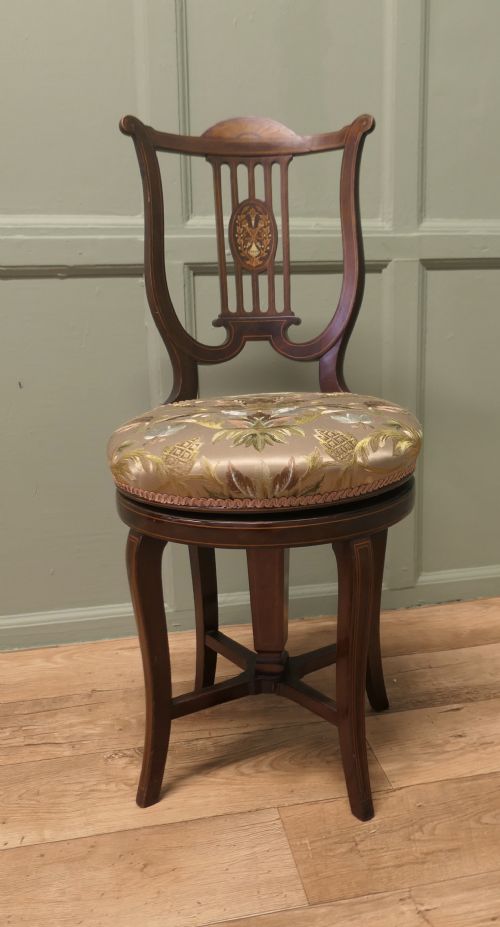
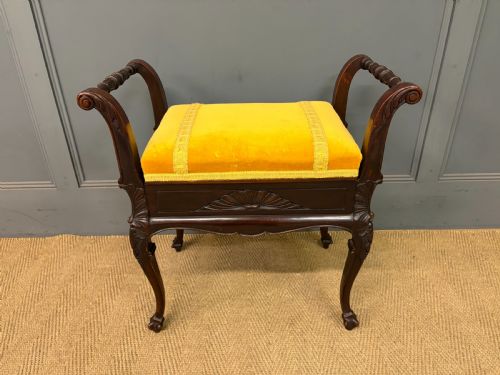
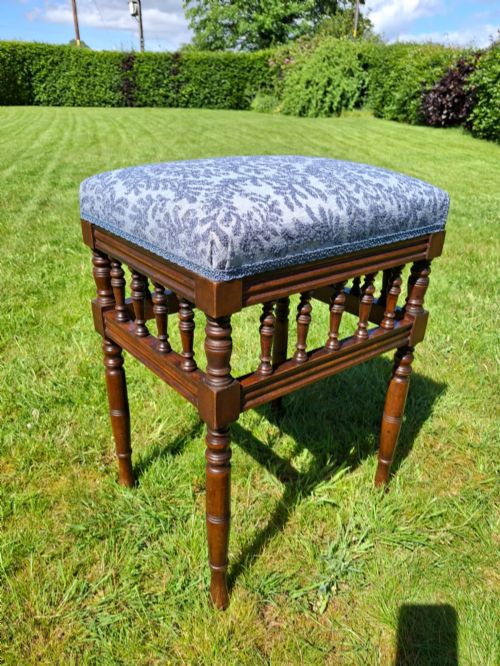
The edwardian mahogany music seat encompasses piano stools, revolving music chairs, and duet benches designed for domestic instrument practice. Most examples date from the Edwardian era and 1900, alongside Victorian and Georgian pieces.
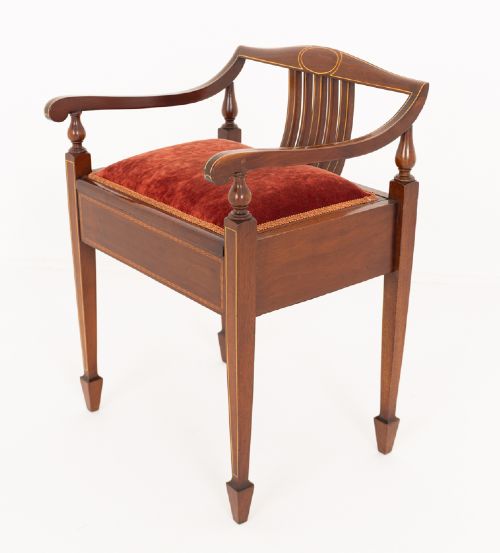
Forms range from single revolving stools and lyre back chairs to box seats with lift-up lids for sheet music storage. Duet stools and long ottoman seats also appear frequently across the selection.
Craftsmanship and Detail
Quality rests on the crispness of satinwood inlay, the solidity of the mahogany frame, and the engineering of the revolving or lifting mechanism. Superior pieces display refined joinery and careful attention to period revival styles.
The choice and execution of upholstery also distinguish individual pieces, with hand-worked tapestry or quality leather elevating the finished seat above standard fabric coverings.
Edwardian Mahogany Music Seat Retail Price Guide 2026
Typical asking prices for edwardian mahogany music seat among the pieces listed under this phrase on Sellingantiques today, from the lower quarter to the upper quarter. They describe what is for sale here now, not the wider market.
Listings feature mahogany as the dominant timber, paired with velvet, leather, and tapestry upholstery across Edwardian and Victorian periods.
Jas Shoolbred·James Shoolbred
The Edwardian Mahogany Music Seat Glossary
- Duet stool
- A wider seat designed to accommodate two players side by side at a piano. These often feature lift-up lids for music storage.
- Lyre back
- A chair back shaped in the form of a classical lyre instrument. It appears frequently on revolving music chairs.
- Satinwood inlay
- Contrasting pale timber inserted into the mahogany surface in decorative patterns. This technique defines Sheraton Revival pieces.
- X framed
- A cross-shaped base structure supporting the seat. This form offers notable stability and visual balance.
Edwardian Mahogany Music Seat: Frequently Asked Questions
How do I use a music seat today?
These seats function ideally as piano stools, dressing table chairs, or occasional seating in a living room. Their compact proportions allow them to fit easily into smaller spaces.
Many versions feature lift-up lids or internal compartments, providing useful concealed storage for small household items or modern paperwork.
What styles influence these music seats?
Makers drew heavily on Sheraton Revival, Queen Anne Revival, and neoclassical motifs when designing these pieces. These historical revivals brought lighter proportions and refined inlay work to Edwardian furniture.
Georgian and Chippendale influences also surface, particularly in pieces featuring classical carving or traditional framing methods.
How do I identify an Edwardian piece?
Edwardian music seats generally display bright mahogany timber, delicate satinwood inlay, and lighter construction than their heavy Victorian predecessors. They date primarily from the period around 1900 to 1910.
Look for typical Edwardian upholstery materials such as original tapestry, velvet, or needlepoint complementing the polished wood frame.