
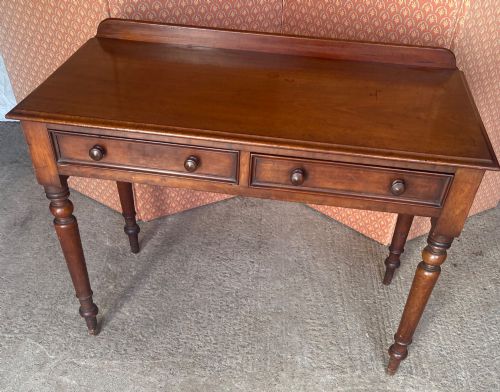
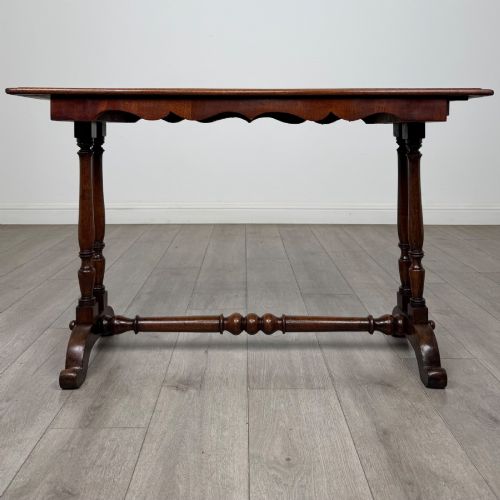
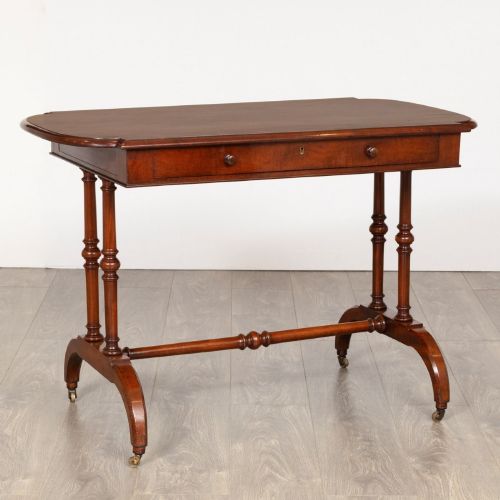
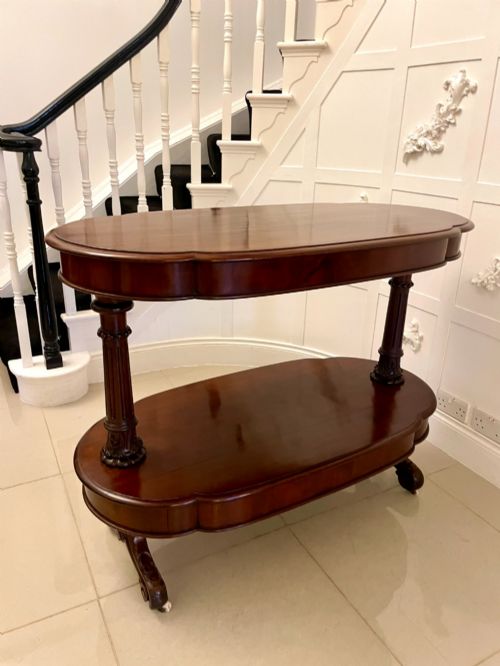
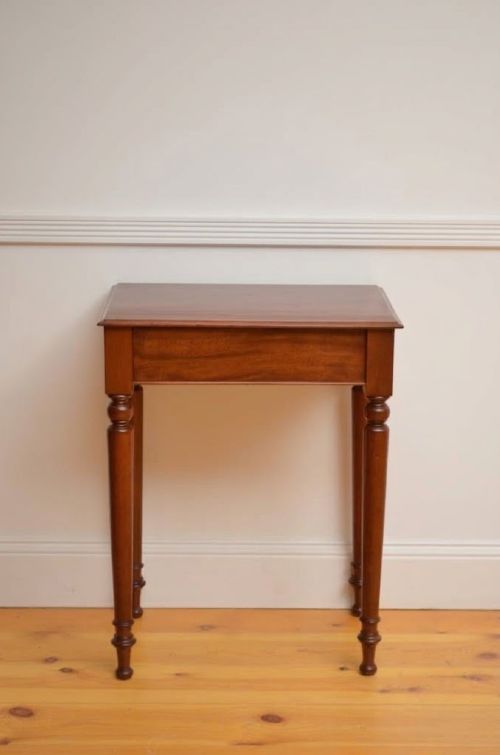
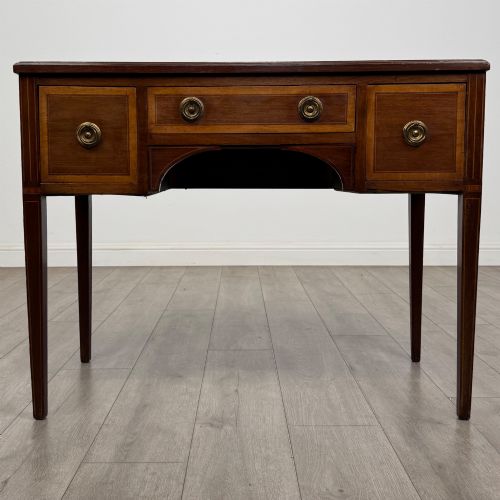
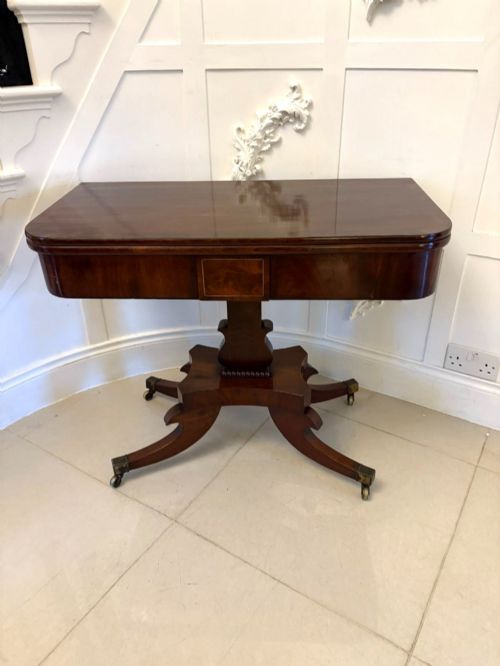
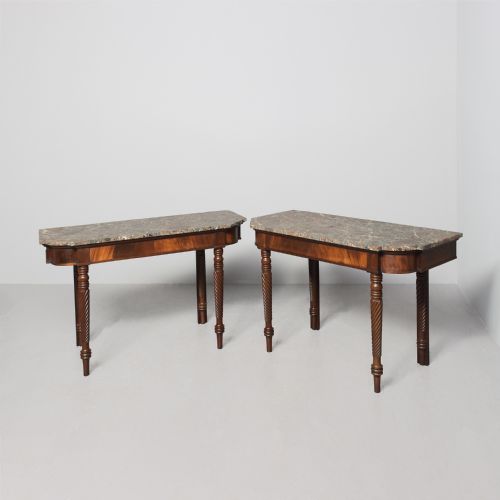
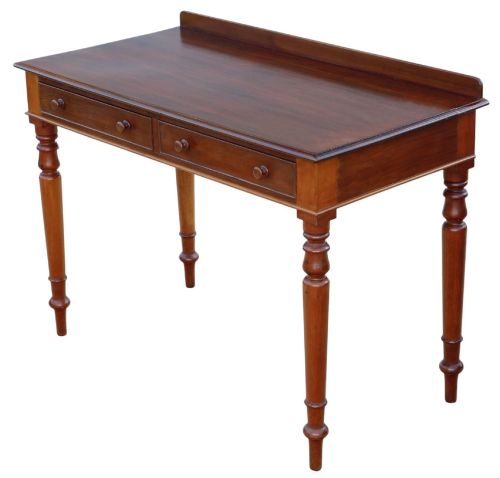
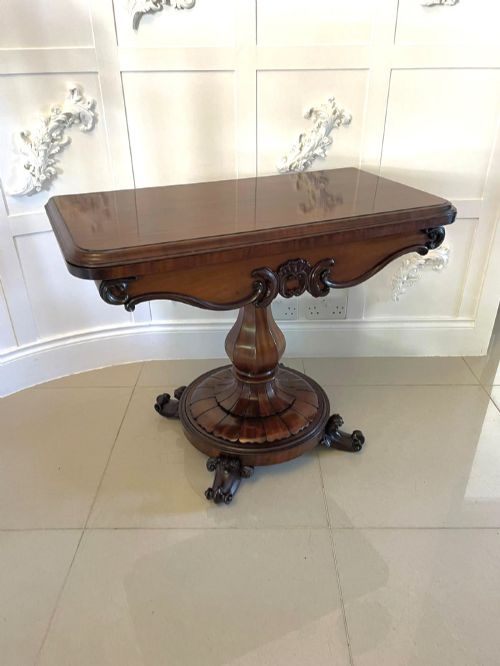
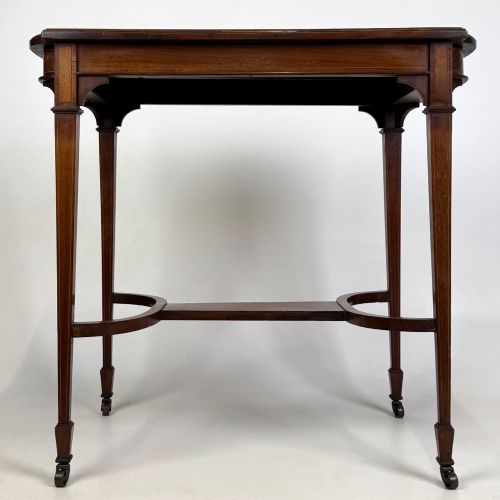
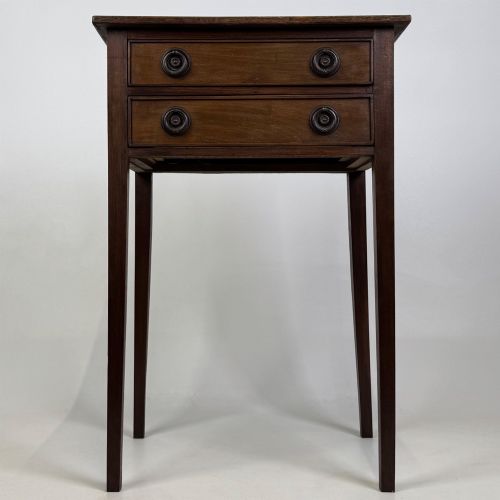
Edwardian Mahogany Hall Table
When you search for an edwardian mahogany hall table, you are looking at practical entrance furniture built with timber and decorative stringing.
Edwardian Mahogany Hall Table
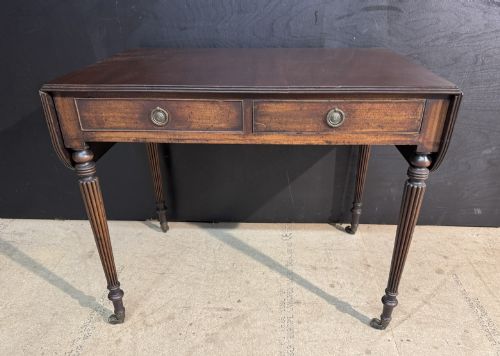
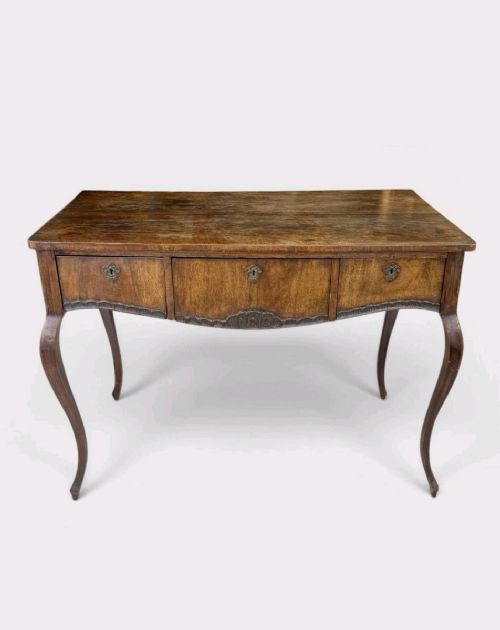
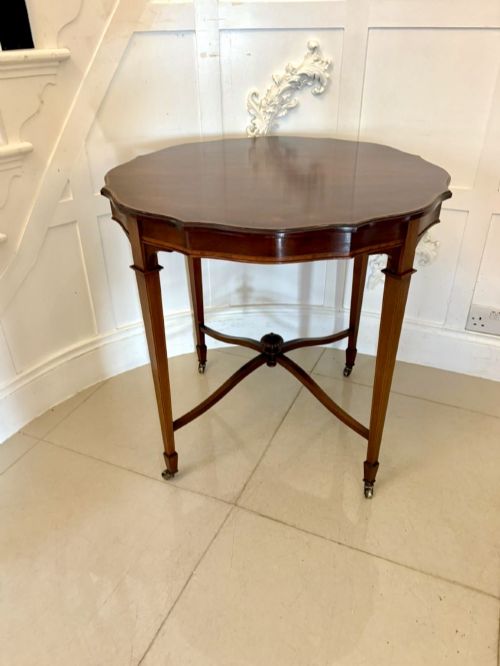
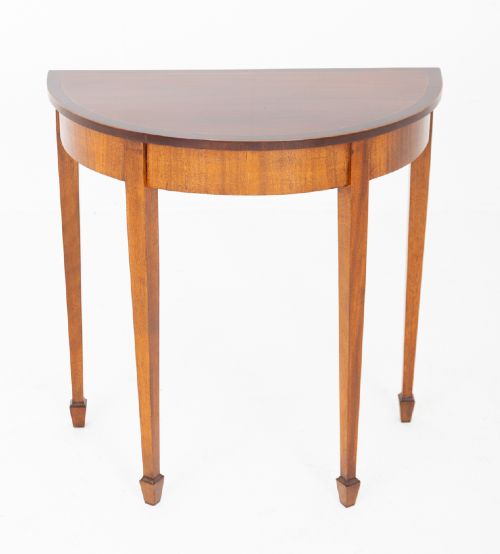
An edwardian mahogany hall table sits in narrow entranceways and corridors, providing a surface for correspondence and household items. The forms seen in the listings include console tables, side tables, and small rectangular or demi-lune shapes designed to fit against walls without obstructing passage.
While the label edwardian points firmly to the period around nineteen hundred, the pieces show influences from earlier styles such as Sheraton and Georgian alongside occasional Art Nouveau touches. The versions most commonly met combine straightforward proportions with restrained inlay rather than heavy ornamentation.
How they were made
Makers utilised solid mahogany and mahogany veneers over secondary timbers, often selecting boards with a clear grain for the top surfaces. Construction relied on traditional joinery techniques to ensure stability in pieces that were frequently narrow and freestanding.
Decoration was achieved through contrasting timbers rather than deep carving. Boxwood and satinwood inlay formed delicate lines and motifs around drawers and table edges, complemented occasionally by brass handles and leather inserts on writing surfaces.
Listings for this phrase combine standard Edwardian manufacture with Victorian precedents, mahogany timber, and satinwood inlay.
What varies in quality
The standard of an edwardian mahogany hall table depends on the selection of the timber and the precision of the cabinetwork. Superior examples display carefully matched grain patterns across the top and crisp, unblemished inlay rather than simple painted lines.
Structural integrity also separates the output of larger workshops and named makers from ordinary commercial production. Drawers that run smoothly on well-fitted guides and legs that remain rigid without additional bracing indicate higher standards of manufacture.
Heal and Son·Gillows·Druce and Co·Walker and Hall
The Edwardian Mahogany Hall Table Glossary
- Mahogany
- A durable tropical hardwood imported for British furniture manufacture, valued for its rich reddish-brown colour and stable grain.
- Demi-lune
- A half-moon shape used for console and side tables designed to stand flat against a wall.
- Stringing
- Thin lines of contrasting wood inlay, such as boxwood or satinwood, set into the mahogany surface for decoration.
- Cross-banding
- A strip of veneer applied to the edge of a table top with the grain running perpendicular to the main surface.
- Satinwood
- A pale yellowish timber used alongside mahogany to create bright contrasting inlay work.
Edwardian Mahogany Hall Table: Frequently Asked Questions
Where should I place a hall table?
These tables fit best in entrance halls, corridors, and narrow landings where surface space is needed without blocking movement.
Their shallow depth allows them to sit flush against walls while holding post, keys, or small lamps.
Did Edwardian tables use veneer?
Yes, cabinetmakers frequently applied fine mahogany veneers over secondary timbers to achieve smooth, figured surfaces on table tops.
This technique permitted the use of choice grain patterns while keeping the underlying structure stable.
What is satinwood inlay?
Satinwood inlay involves setting thin strips of pale yellow timber into channels cut into the darker mahogany surface.
It forms geometric borders and decorative motifs typical of the Sheraton revival style found in this period.
How do I care for mahogany?
Mahogany surfaces require simple dusting with a dry cloth and protection from direct sunlight and excessive heat.
Avoiding harsh chemical polishes preserves the original finish and the subtle tones of the wood.