


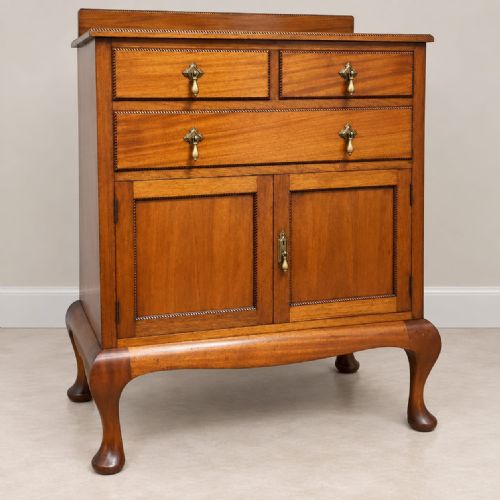
Edwardian Mahogany Chest Drawers
An Edwardian mahogany chest drawers offers solid proportions and warm timber figures, satisfying both period character and everyday bedroom storage needs.
What these pieces are
An Edwardian mahogany chest drawers brings together the refined cabinetmaking of the early twentieth century and the functional storage required for the home. Most examples date from around nineteen hundred, adhering to the Edwardian aesthetic while frequently drawing inspiration from earlier Georgian revival designs.
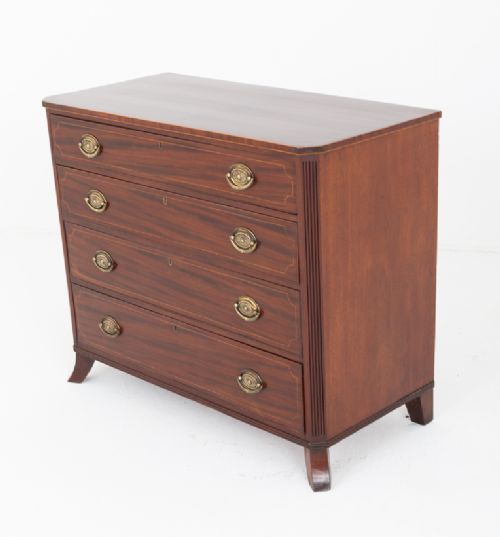
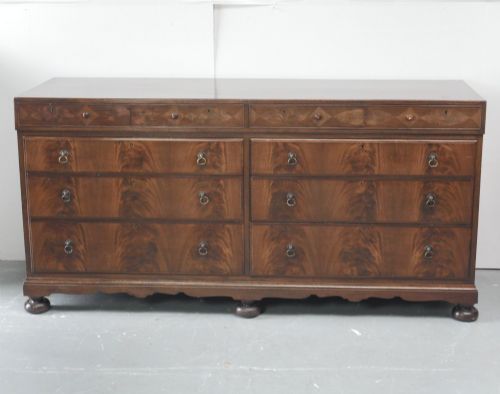
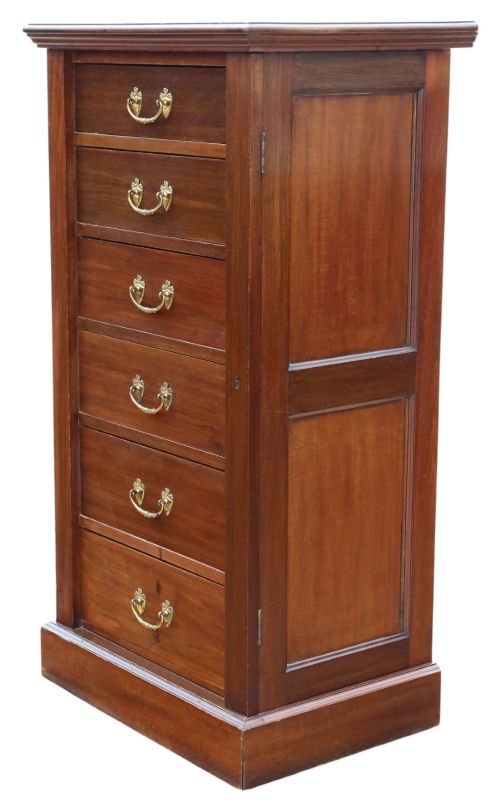
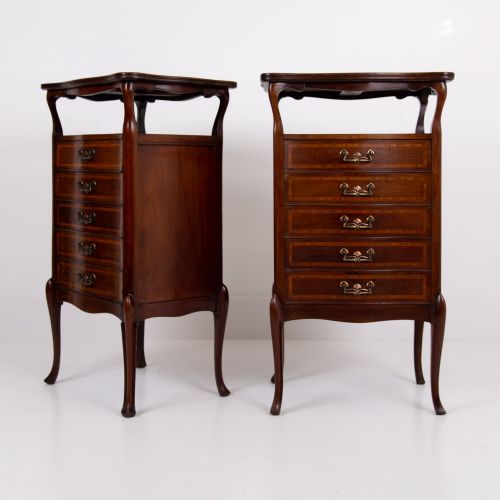
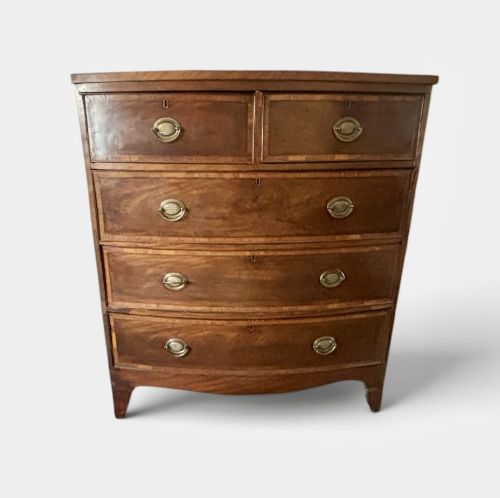
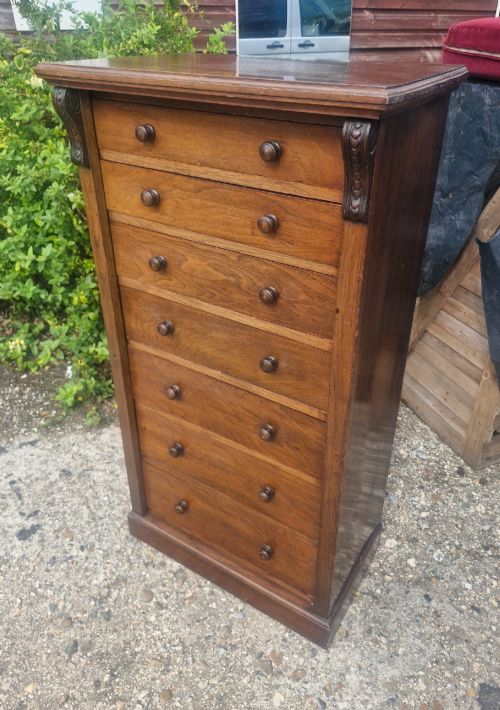
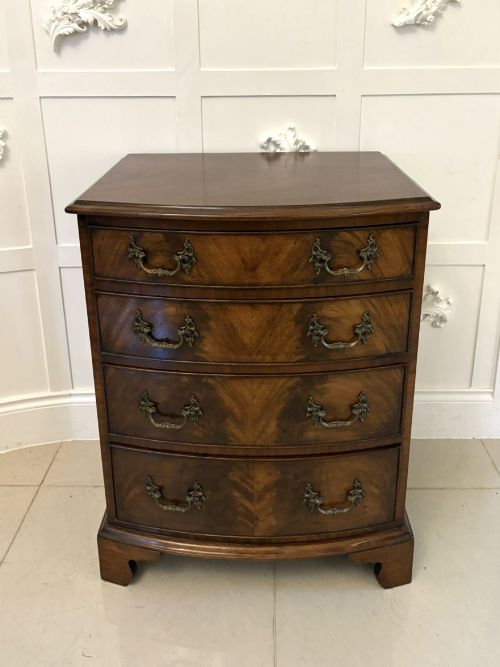
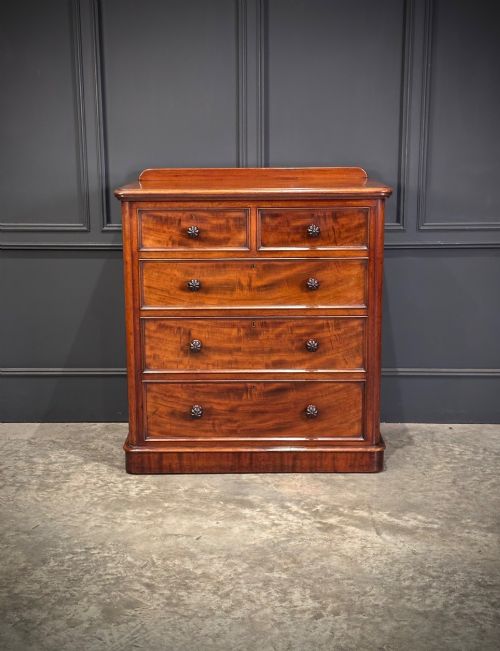
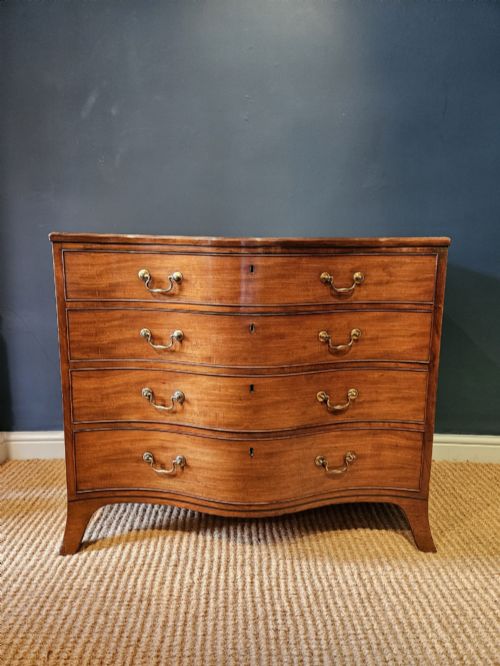
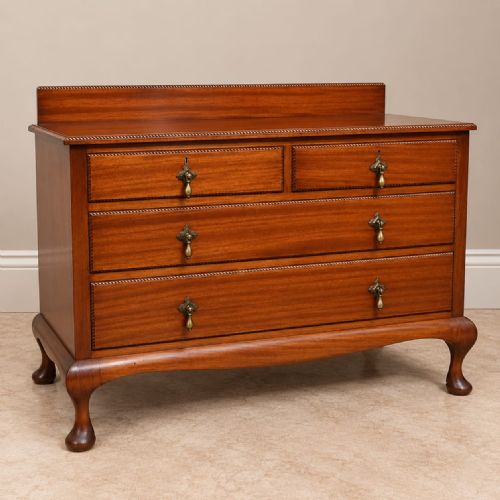
The selection ranges from standard four-height chests and bow front formats to more specialised pieces such as serpentine chests, tall narrow variants, and combinations incorporating cupboards or brushing slides. Mahogany remains the dominant timber across these forms, often selected for its rich grain patterns.
Makers of the period applied subtle decorative treatments, including satinwood crossbanding and ebony stringing, alongside brass ring drop handles. Whether you encounter a small bedside proportion or a larger Scotch chest, each piece demonstrates the practical domestic utility typical of the era.
How they were made
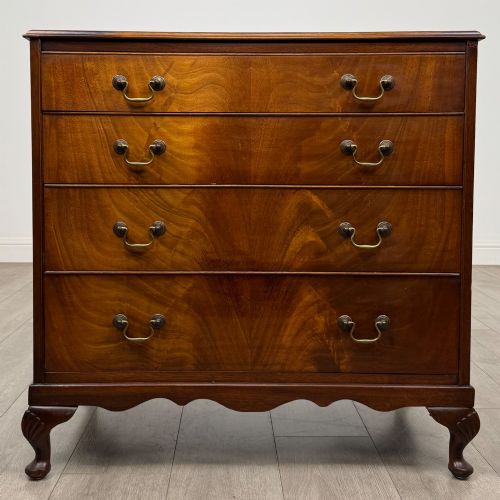
Cabinetmakers constructed these chests using solid mahogany and figured veneers, frequently enhancing the drawer fronts with flame mahogany or subtle inlay work. Timber selection dictated the visual weight of each piece, with figured grain reserved for prominent surfaces.
Hardware details such as brass ring drop handles and cast iron components were integrated into the drawer construction and internal locking mechanisms. Structural integrity relied on traditional joinery methods scaled to suit both standard chests and complex serpentine forms.
Form variations include standard chests, bow fronts, serpentine shapes, and safe cabinets.
What varies in quality
Quality in an Edwardian mahogany chest drawers rests primarily on the choice of timber and the sophistication of its silhouette. Pieces featuring highly figured flame mahogany veneers or controlled serpentine and bow front shapes stand apart from plain flat-fronted equivalents.
The presence of refined decorative elements, such as satinwood crossbanding, ebony inlay, and original brass ring drop handles, elevates the craftsmanship. Furthermore, specialised configurations like brushing slides or integrated cupboards indicate higher workshop ambition.
Robinsons of Newcastle
The Edwardian Mahogany Chest Drawers Glossary
- Mahogany
- A durable tropical hardwood prized for its deep reddish-brown colour and ability to take a fine polish. Cabinetmakers utilised it extensively for solid construction and decorative veneers.
- Bow Front
- A convex curved furniture front that projects outward in a smooth arc. This shape requires advanced woodworking skill to fit drawers accurately.
- Serpentine
- A shaped furniture front featuring a concave centre flanked by convex outer curves. The undulating line demands precise hand-shaping.
- Crossbanding
- A narrow strip of veneer laid across the grain direction around the perimeter of a drawer front or top. It creates a contrasting border frame.
- Brushing Slide
- A pull-out shelf integrated into the upper section of a chest. It provided a clean surface for folding clothes or brushing garments.
Frequently Asked Questions
What is an Edwardian mahogany chest drawers?
An Edwardian mahogany chest drawers is a storage item produced around nineteen hundred, typically constructed from mahogany with varying drawer counts and decorative inlays.
These pieces combine early twentieth-century production methods with traditional forms inspired by Georgian revival styles.
How do I style a chest in a modern bedroom?
The warm reddish-brown tones and figured grain of mahogany allow these chests to anchor both traditional and contemporary interior schemes.
Their compact proportions, particularly in smaller bow front or slim variants, make them practical for everyday bedside or hallway placement.
What hardware is typical on these chests?
Original examples frequently feature brass ring drop handles secured to the drawer faces.
These metal fittings complement the dark mahogany timber and tie into the prevailing Edwardian aesthetic.