


Edwardian Mahogany Bookcase Desk
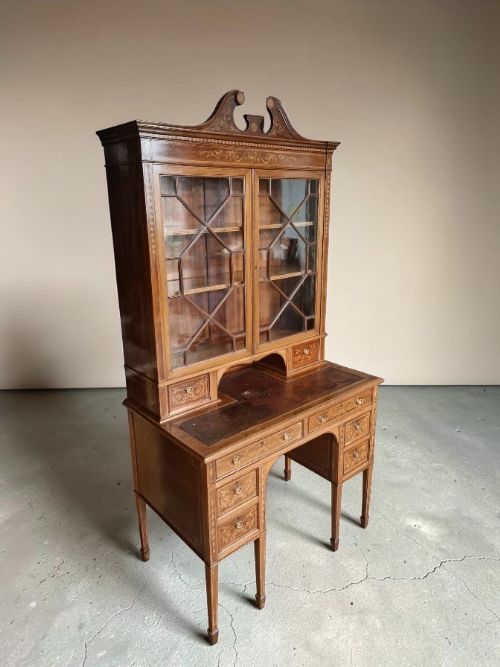
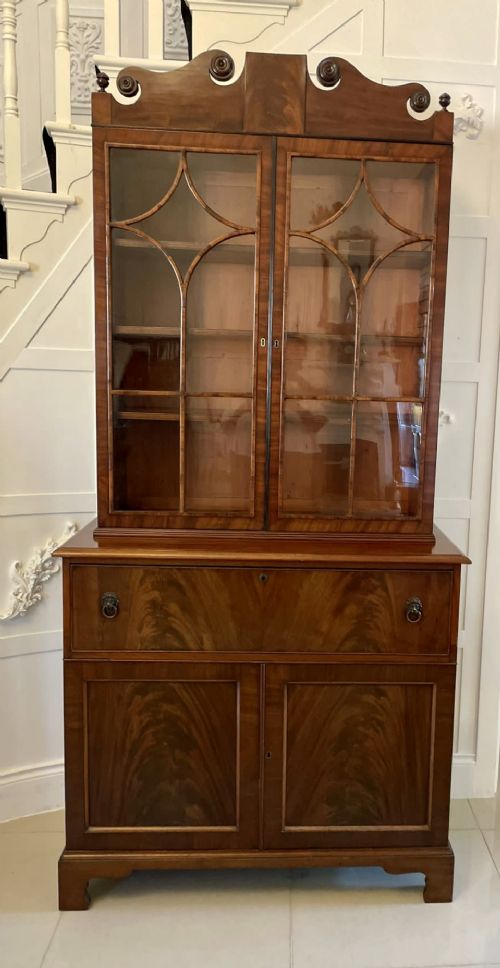
An edwardian mahogany bookcase desk combines a glazed library cabinet with a fitted fall-front writing surface for practical home study.
Edwardian Mahogany Bookcase Desk
An edwardian mahogany bookcase desk brings together upper display shelving and a lower writing compartment, housing books and correspondence in one tall piece of furniture. Many examples on this page date from the Edwardian period and the year nineteen hundred, though the listings also include pieces built in earlier Georgian and Regency styles.
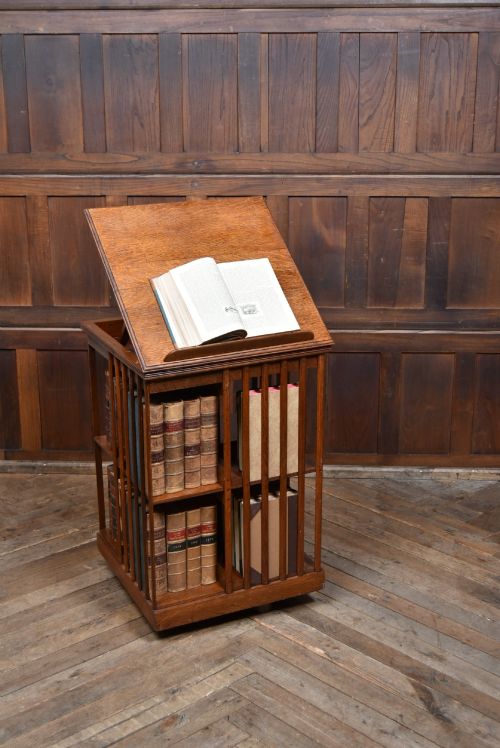
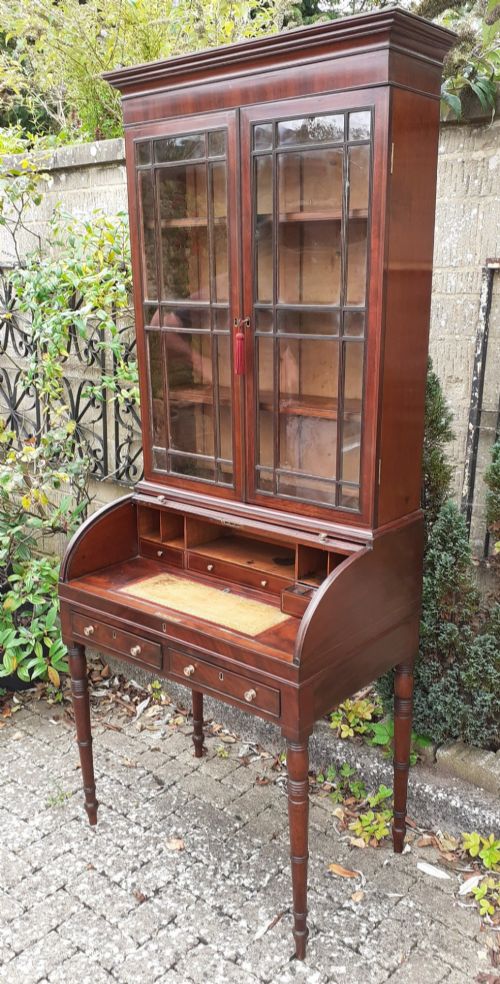
The primary form pairs glazed upper doors with a drop-front bureau or secretaire drawer that pulls down to reveal pigeonholes and small drawers for writing materials. Alongside these tall bureau bookcases, the selection incorporates rotating table-top bookcases, cylinder desks, and display cabinets constructed in rich timber.
Makers and workshops of the period drew heavily on earlier designs, producing items described as Sheraton Revival or Georgian Style. This mixture means buyers encounter both authentic Edwardian interpretations and older nineteenth-century or eighteenth-century prototypes built along similar functional lines.
Timbers and Construction Methods
Cabinet makers relied on solid mahogany and mahogany veneers for the main structure, often incorporating satinwood inlay to create decorative border banding and floral motifs. Glass panels were fitted into wooden astragal bars within the upper bookcase doors to protect volumes from dust while keeping titles visible.
Internal fittings frequently utilised secondary timbers such as oak for drawer linings and partition dividers within the writing compartment. Brass handles, escutcheons, and hinges secured the drop fronts and doors, while leather inserts provided a durable writing surface inside the fall-front desk.
Desk tidies and revolving table-top bookshelves ensure that even the smallest workspace can host an organised library.
Evaluating Craftsmanship and Detail
The distinction between standard and superior pieces rests on the precision of the cabinet work and the choice of materials. Finer examples display carefully matched mahogany grain patterns, delicate satinwood inlay work, and robust dovetail joints on every internal drawer.
Proportion and the integration of the writing drawer dictate overall success. Superior pieces maintain clean architectural lines where the drop front closes flush with the carcase, and the internal stationery fittings demonstrate the same attention to detail as the exterior display sections.
Maple and Co·Gillows·Edwards and Roberts·Tudor and Burrey
The Edwardian Mahogany Bookcase Desk Glossary
- Secretaire
- A desk component featuring a pull-down front drawer that conceals a fitted interior of small drawers and pigeonholes. It allows the cabinet to function as a writing desk without sacrificing the storage capacity of a chest or bookcase.
- Astragal
- A small wooden moulding used to divide glass panes within a cabinet door into smaller geometric sections. These bars support the individual panes while adding a decorative grid pattern to the bookcase front.
- Sheraton Revival
- A late nineteenth and early twentieth century design movement that copied the lighter, neoclassical furniture styles associated with George Sheraton. Pieces from this revival often feature polished mahogany and detailed satinwood inlay.
- Cylinder desk
- A writing table fitted with a quarter-cylinder rolling wooden shutter that conceals the desk interior when pulled down. When opened, the writing surface often pulls forward for comfortable use.
- Bureau bookcase
- A tall item of furniture combining a sloping-front desk compartment below with open or glazed shelving above. The sloping lid opens outward to create a flat writing plane.
Edwardian Mahogany Bookcase Desk: Frequently Asked Questions
How do I use a secretaire drawer?
The front of the drawer hinges downward to rest in a horizontal position, supported by sliding wooden arms or brass-mounted quadrant stays. This reveals an internal arrangement of small drawers and pigeonholes for stationery.
Once finished writing, the writing flap lifts back into the vertical position and locks securely behind the main drawer front, concealing the desk space entirely.
Where should I place a bookcase desk?
These tall pieces require a stable wall position with sufficient clearance in front of the bureau section to allow the fall front to open fully. Placing them away from direct sunlight protects the polished mahogany surface and any leather writing inserts from fading.
Because the upper section holds glass doors and books, ensuring the floor is level prevents the tall carcase from leaning and keeps the doors aligned properly on their hinges.
How do I tell Edwardian pieces from Georgian ones?
Edwardian items dating around nineteen hundred often display lighter construction, machine-sawn internal elements, and satinwood inlay influenced by revival styles. Georgian pieces from the eighteenth century typically exhibit heavier solid timber framing, hand-cut dovetails, and structural proportions specific to the earlier reigns.
Examining the secondary timbers inside the drawers and the style of the brass hardware helps clarify whether a piece is an original eighteenth-century work or a later Edwardian interpretation.
How do I care for the mahogany finish?
Maintenance involves dusting regularly with a soft, dry cloth and applying traditional beeswax sparingly to nourish the timber grain. Avoid using modern silicone sprays, which build up on the surface and dull the polished finish over time.
Keeping the interior well-ventilated and maintaining steady room humidity prevents the solid mahogany and veneer from warping or cracking across the large panel surfaces.