


Edwardian Mahogany Book Stand
An edwardian mahogany book stand brings practical table-height storage and rich timber grain to a corner or beside a chair.
Edwardian Mahogany Book Stand
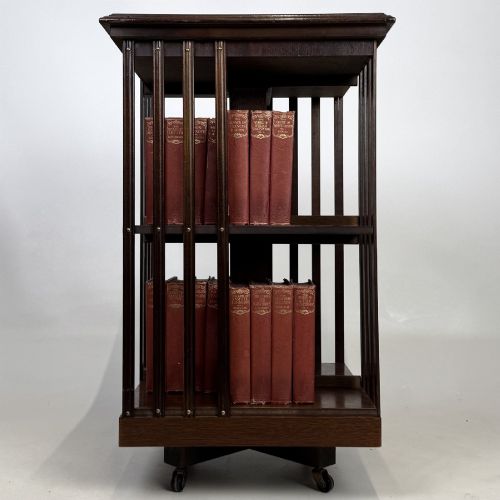
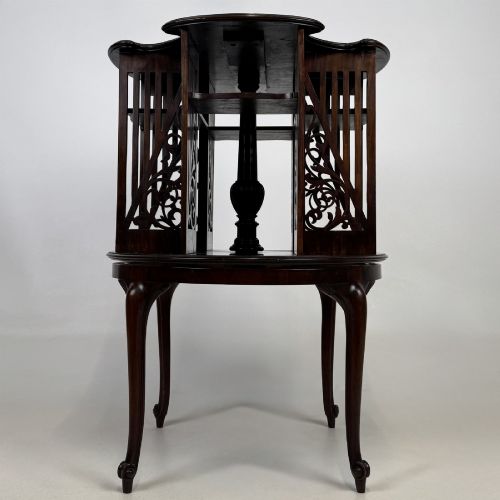
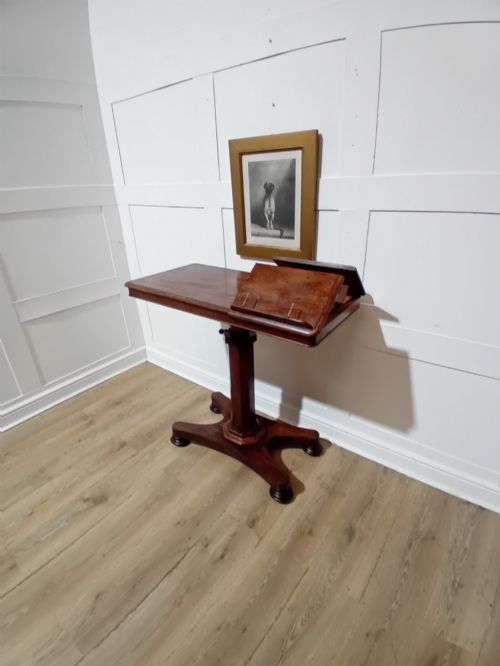
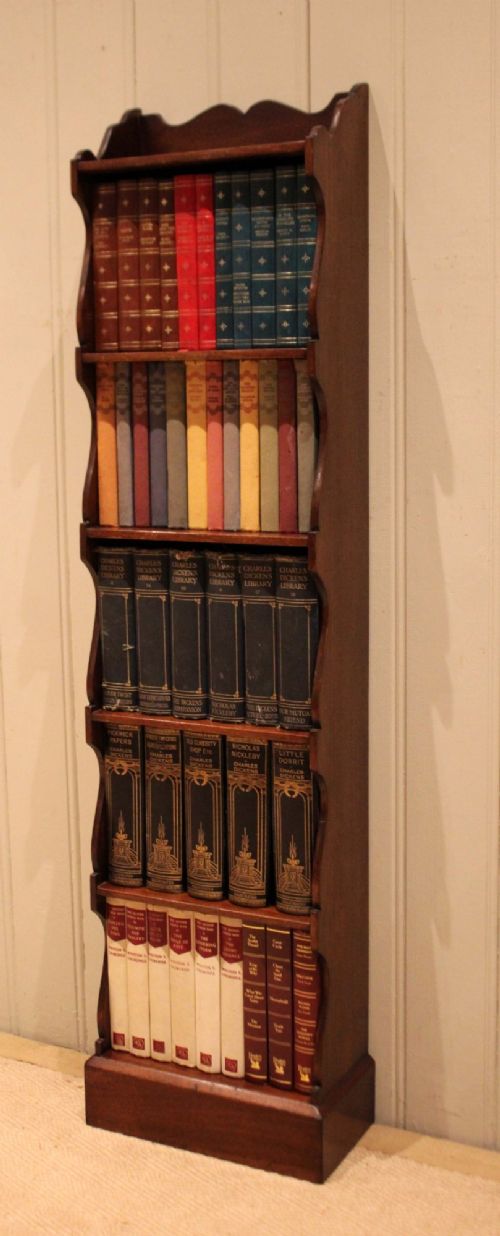
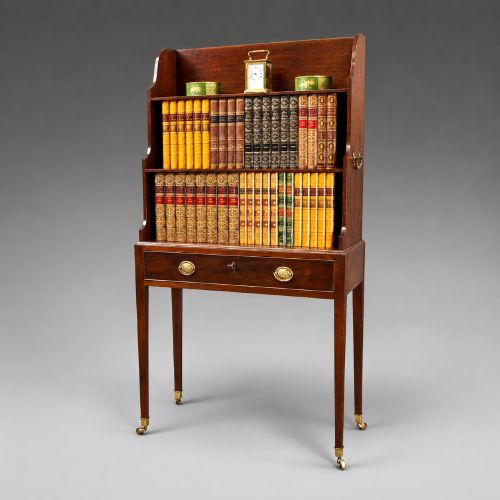
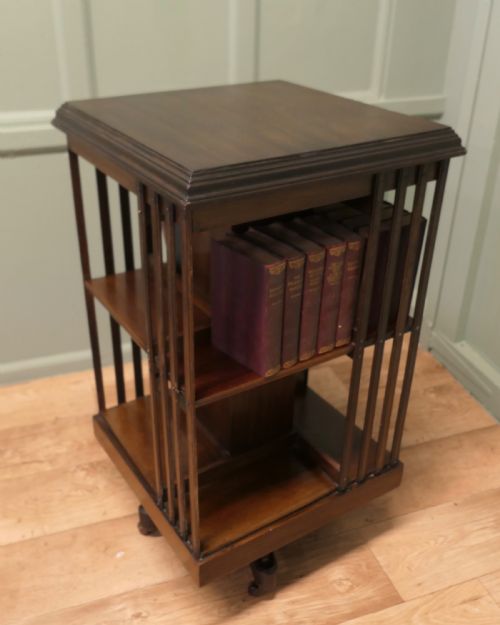
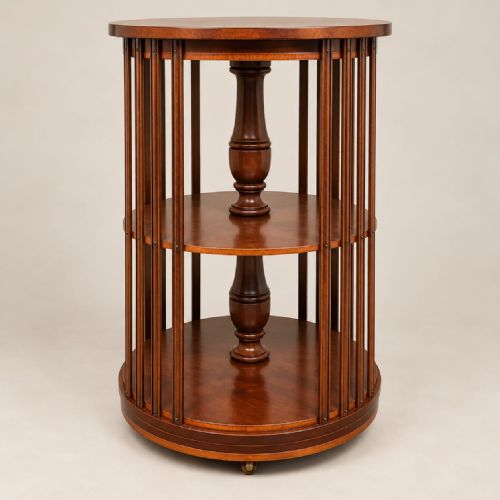
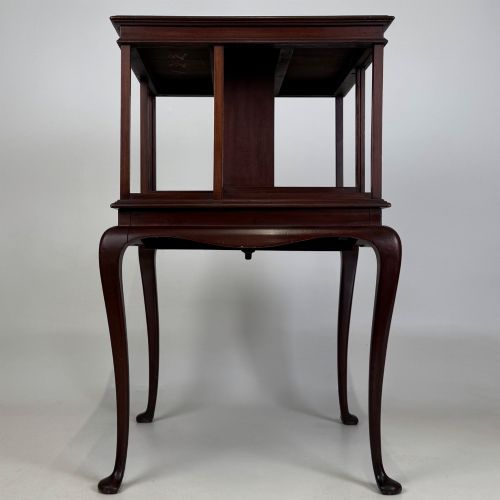
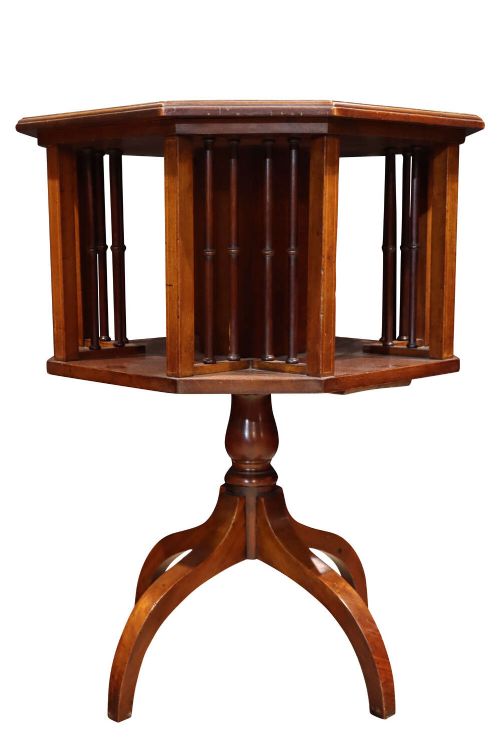
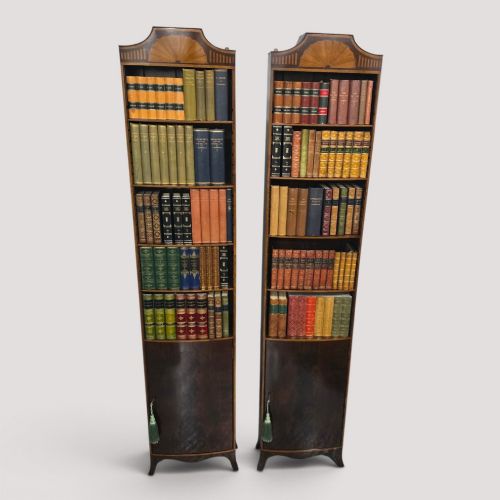
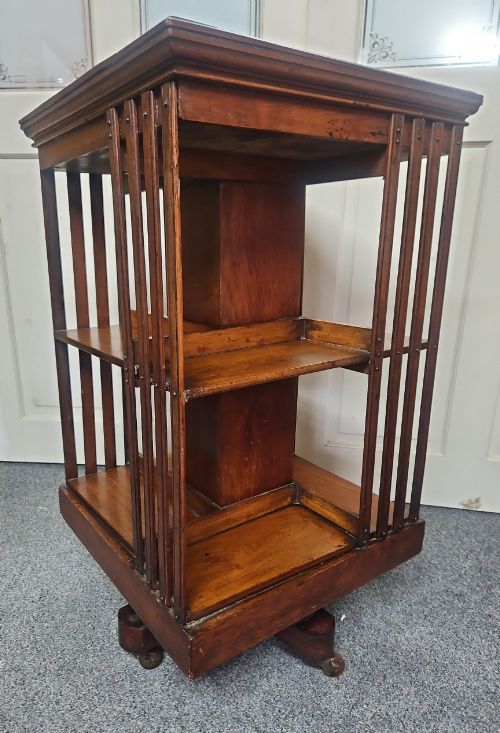
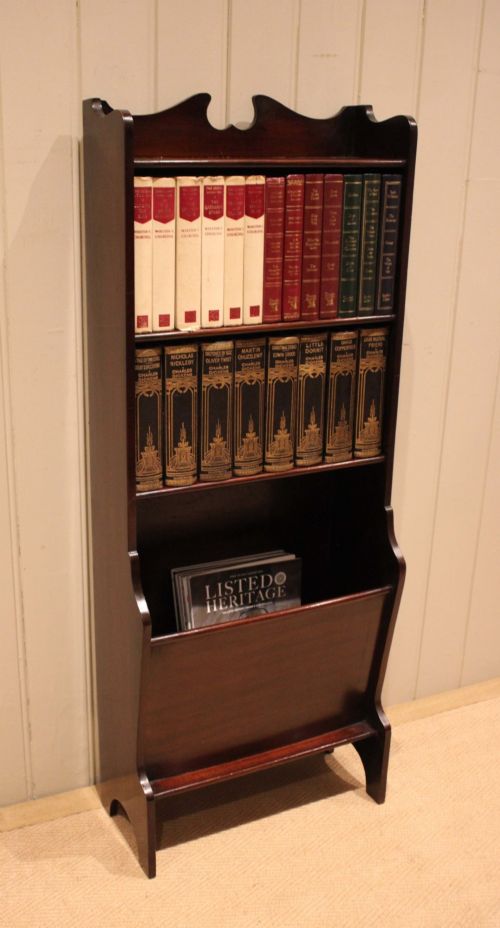
An edwardian mahogany book stand encompasses compact freestanding revolving bookcases, open shelf units, and low troughs designed to hold volumes within arm's reach. The most common form on this page is the revolving bookcase, which spins on a central spindle to allow access from a seated position.
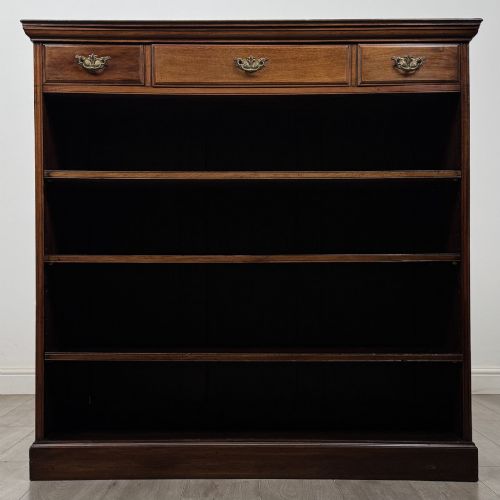
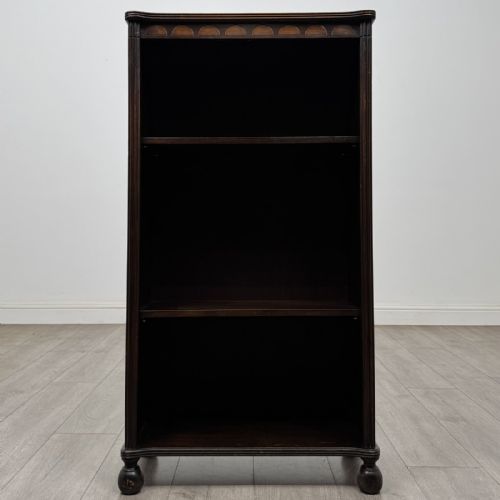
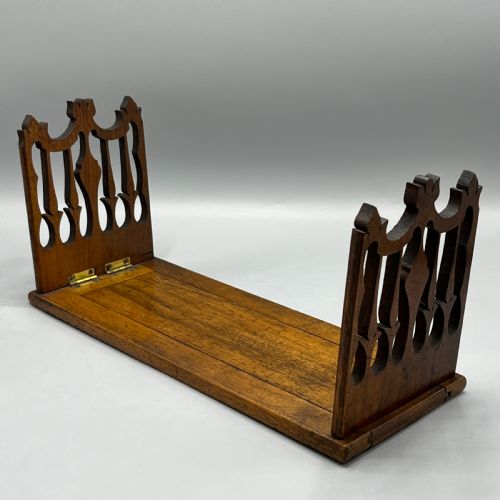
Makers of the period also produced stationary book troughs, magazine stands, and open shelving units with fixed or adjustable tiers. These pieces belong primarily to the Edwardian era around nineteen hundred, though some share the heavier proportions of late Victorian design.
Proportions remain compact to suit domestic sitting rooms and libraries of the period. Makers frequently incorporated brass castors or iron fittings to make these heavy timber pieces mobile across carpets.
How they were made
Cabinet makers relied on solid mahogany and flame mahogany veneers, often enhanced with satinwood inlay or delicate stringing around the perimeters. The timber provides a deep, warm red-brown ground that accepts polishing to a soft gloss.
Revolving models require a hidden internal cruciform action connected to a metal spindle and ball bearings for smooth rotation. Structural stability comes from tight joinery, while brass and cast iron supply durable hardware for castors and hinges.
Edwardian Mahogany Book Stand Retail Price Guide 2026
Typical asking prices for edwardian mahogany book stand among the pieces listed under this phrase on Sellingantiques today, from the lower quarter to the upper quarter. They describe what is for sale here now, not the wider market.
Some Edwardian revolving bookcases include subtle hidden stops inside the hidden mechanism to prevent enthusiastic readers from spinning the shelves too far.
What varies in quality
The distinction between standard commercial output and superior craftsmanship lies in the selection of timber figures and the precision of the inlay. Flame mahogany with rich chatoyancy and crisp satinwood banding elevates a simple revolving bookcase into a showpiece.
Mechanical performance sets the better revolving stands apart from heavier, stiffer examples. A top-tier piece turns silently and evenly on its central pivot without lateral wobble, reflecting careful alignment by the workshop.
Waring and Gillows·Muirhead Moffat Glasgow·Laverton of Bristol
The Edwardian Mahogany Book Stand Glossary
- Flame mahogany
- A veneer cut from the fork of the mahogany tree where the grain twists to produce a distinctive flame-like pattern. This figured timber was favoured for prominent top panels and drawer fronts.
- Satinwood inlay
- Contrasting pale yellowish-wood geometric lines or floral motifs set flush into the darker mahogany surface. It defines Edwardian and late Victorian decorative panels.
- Revolving bookcase
- A low, square tiered bookcase mounted on a hidden rotating base. Users can spin the entire tower to select volumes from any angle.
- Book trough
- An open-topped V-shaped or sloping wooden holder designed to keep books upright on a table or floor. They often feature carrying handles or integrated magazine compartments.
Edwardian Mahogany Book Stand: Frequently Asked Questions
Can revolving bookcases hold heavy books?
Most revolving bookcases handle standard octavo volumes and novels comfortably on their shelves. The internal mechanism supports a balanced load when distributed evenly across the tiers.
Very heavy folio volumes or dense reference sets place uneven strain on the central spindle and cross-framing. Reserve the upper tiers for lighter reads and heavier bindings for the lower shelves.
How do I distinguish Edwardian from Victorian stands?
Edwardian pieces generally exhibit lighter proportions, brighter mahogany tones, and more delicate satinwood stringing. Makers of this era favoured slender framing and subtle neoclassical or Art Nouveau motifs.
Victorian examples tend to be heavier, darker in timber colour, and more robustly constructed with deep mouldings. Library furniture from the earlier nineteenth century prioritises utility and solid mass over fine decorative banding.
Where should I place a book stand?
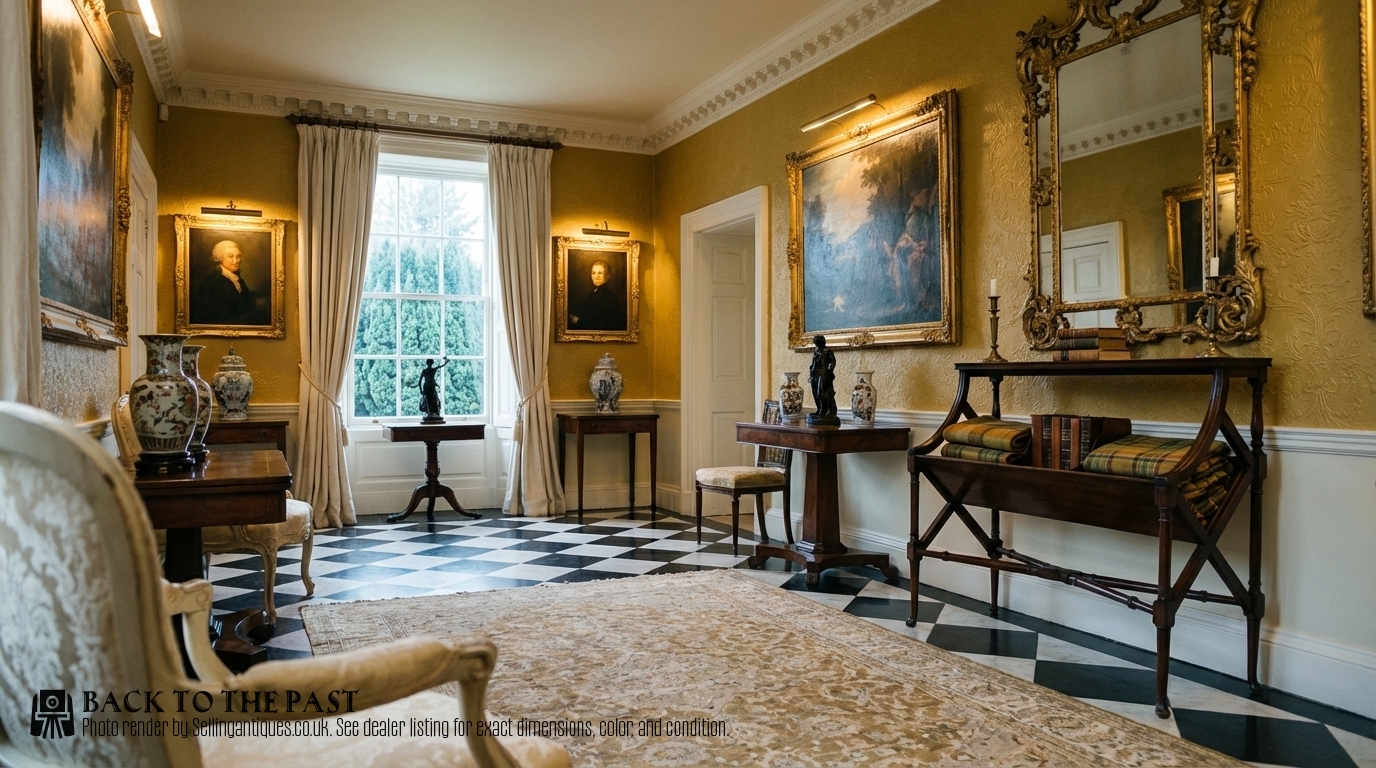
These compact stands work well beside an armchair, reading chair, or sofa where books and periodicals are frequently accessed. A revolving model functions effectively in the corner of a study or sitting room.
Freestanding open shelves also suit narrow hallways or landings where floor space is restricted. Their finished backs allow them to sit away from the wall without losing visual appeal.