

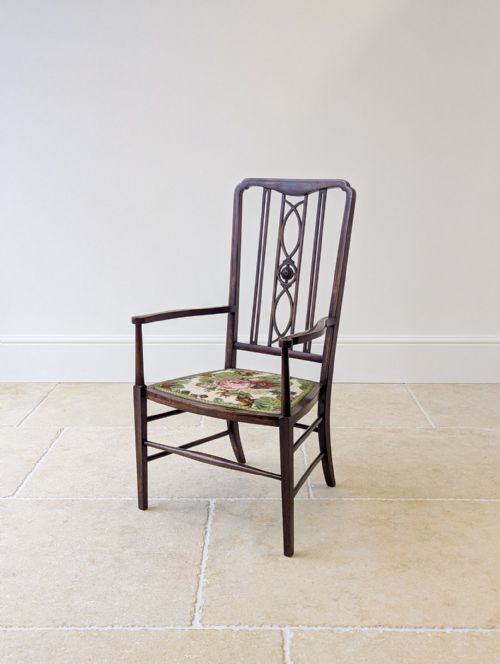
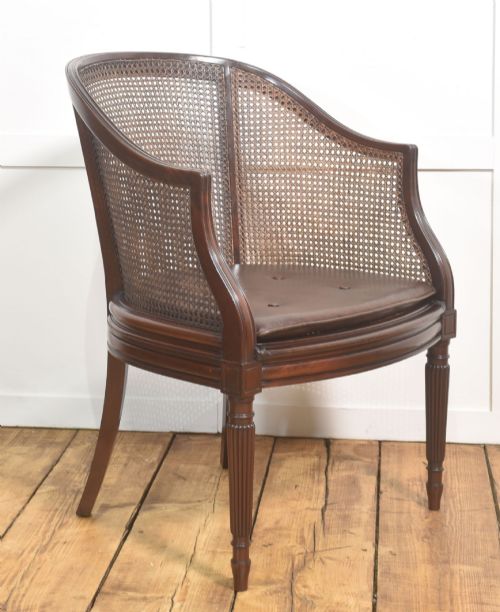
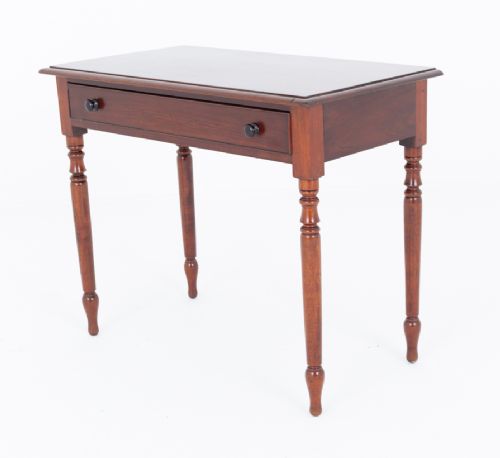
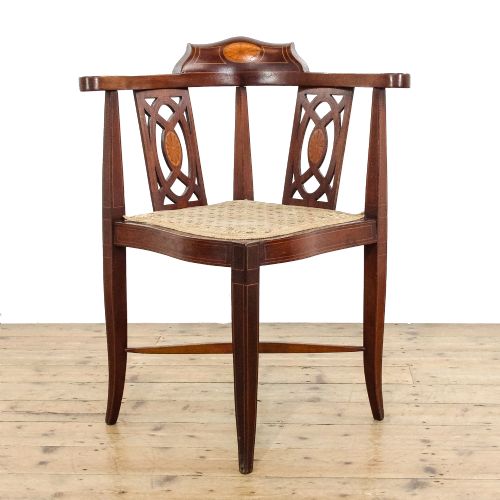
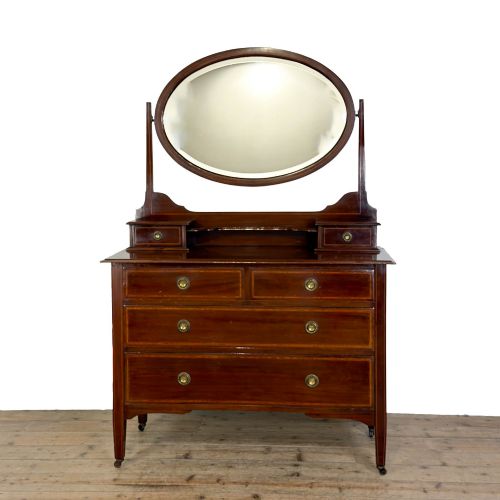

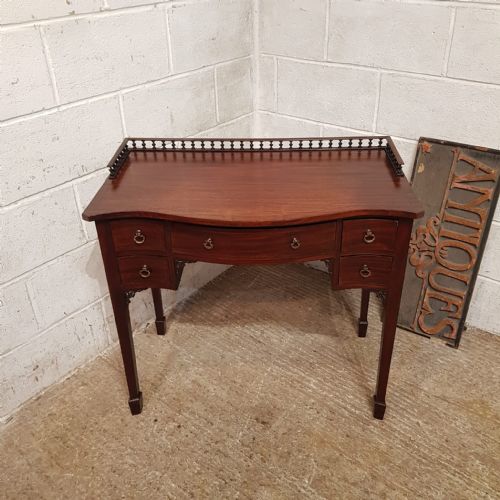

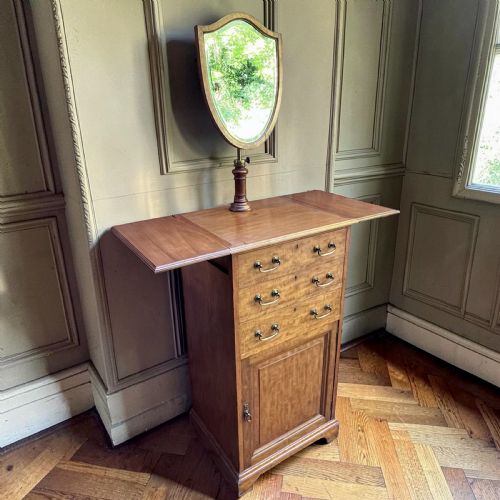


Edwardian Mahogany Bedroom Desk
When you handle an edwardian mahogany bedroom desk, you find a lighter, more refined writing piece made for private rooms.
Edwardian Mahogany Bedroom Desk
An edwardian mahogany bedroom desk brings domestic writing furniture into private chambers with a lighter scale than heavier library tables. The surviving examples typically show the clean lines of the Edwardian period alongside earlier Victorian influences.
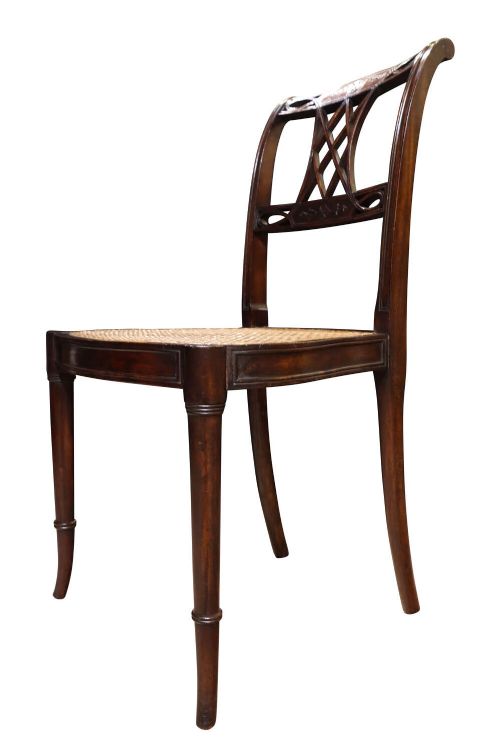
Buyers encounter writing tables, serpentine fronted writing desks, and dressing tables that double as writing surfaces. Many pieces combine mahogany with satinwood inlay or cane seating elements.
The form developed to serve correspondence and personal administration in the bedroom or boudoir. These pieces reflect a domestic life where writing letters required a dedicated, elegant table rather than a formal office desk.
How they were made
Cabinet makers utilised solid mahogany and mahogany veneers, often incorporating contrasting satinwood inlay to create delicate border patterns and motifs. Brass handles and glass elements appear selectively on dressing attachments and drawers.
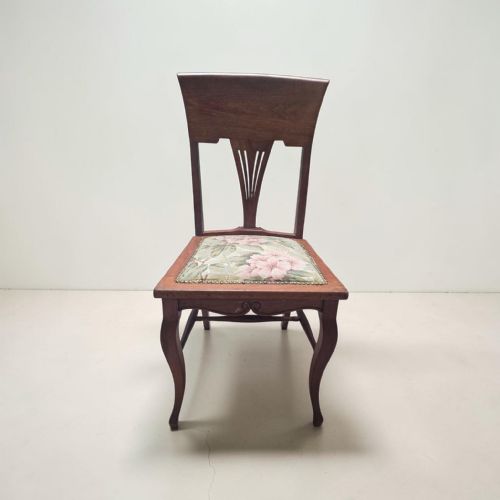
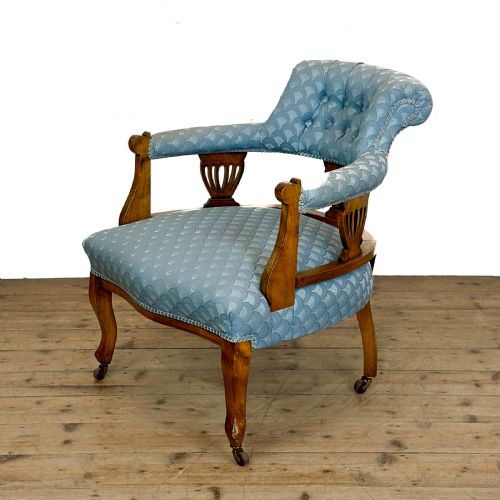
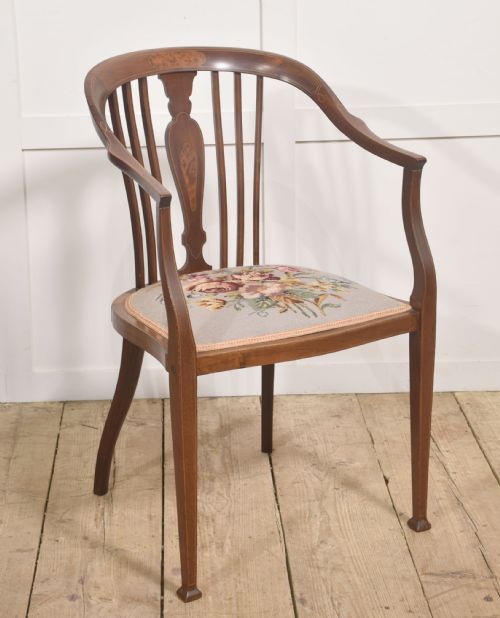
Joinery techniques balance structural strength with visual lightness, avoiding the bulk of mid-nineteenth-century furniture. Caning and fabric upholstery provide textured inserts for associated seating.
Surfaces received hand-applied finishes that highlight the natural grain of the timber. Marquetry details demonstrate precision cutting of contrasting wood veneers embedded directly into the mahogany ground.
Edwardian Mahogany Bedroom Desk Retail Price Guide 2026
Typical asking prices for edwardian mahogany bedroom desk among the pieces listed under this phrase on Sellingantiques today, from the lower quarter to the upper quarter. They describe what is for sale here now, not the wider market.
Some desks hide their inkwells so cleverly you might mistake them for ordinary dressing tables.
What varies in quality
The distinction between ordinary and superior pieces rests on the precision of the inlay work and the selection of timber figures. Richly grained mahogany combined with crisp satinwood stringing separates fine workshop output from plain utility pieces.
Structural integrity in slender legs and joints determines the durability of these lighter forms. Superior examples maintain tight mitres and smooth drawer action without relying on secondary reinforcement.
Design ambition elevates certain pieces, particularly those featuring serpentine fronts or integrated mirrors. The restraint and execution of decorative details dictate the standing of each piece.
Edwards & Roberts
The Edwardian Mahogany Bedroom Desk Glossary
- Mahogany
- A durable tropical hardwood prized for its reddish-brown colour and stable grain. It serves as the primary structural and surface material across these pieces.
- Satinwood inlay
- A decorative technique using contrasting pale satinwood veneer inserted into the mahogany surface. This creates fine geometric lines and floral motifs.
- Serpentine front
- A furniture front curved in a wave shape, convex at the centre and concave at the sides. This contour adds movement and visual interest to writing tables.
- Caning
- Woven rattan or split cane used to form breathable panels for chair seats and backs. It provides a lightweight alternative to solid wood or heavy upholstery.
- Marquetry
- Elaborate decorative patterns formed from fitted pieces of coloured veneers. Craftsmen apply this technique to tabletop surfaces and drawer fronts.
Edwardian Mahogany Bedroom Desk: Frequently Asked Questions
Where were these desks placed?
These pieces sat in bedrooms and private chambers for personal correspondence and dressing.
They offered a compact writing space away from public reception rooms.
How do I date an Edwardian desk?
Look for lighter proportions, satinwood inlay, and Sheraton Revival influences typical of the early twentieth century.
Construction details and secondary timbers also help confirm the period of manufacture.
Are these desks suitable for daily work?
The lighter scale suits laptop use and occasional writing rather than heavy clerical tasks.
Consider the kneehole height and drawer clearance before regular daily use.
What styles appear alongside Edwardian pieces?
Sheraton Revival, Art Nouveau, and Louis XVI Revival elements frequently influence the decoration.
Victorian transitional pieces also bridge the gap into the Edwardian era.