
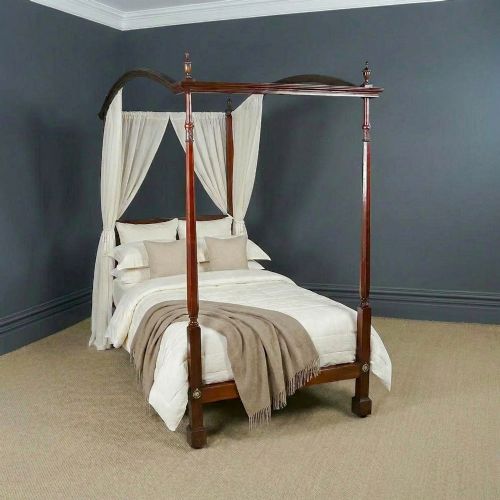


Edwardian Mahogany Bed Frame
These Edwardian mahogany bed frame examples bring warmth and solid timber construction to a bedroom, offering period character alongside standard modern mattress sizing.
Edwardian Mahogany Bed Frame
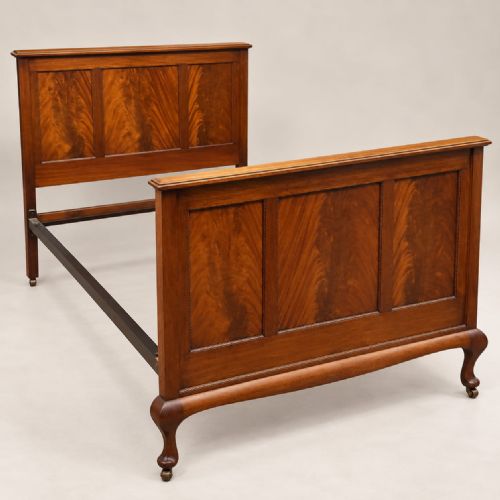
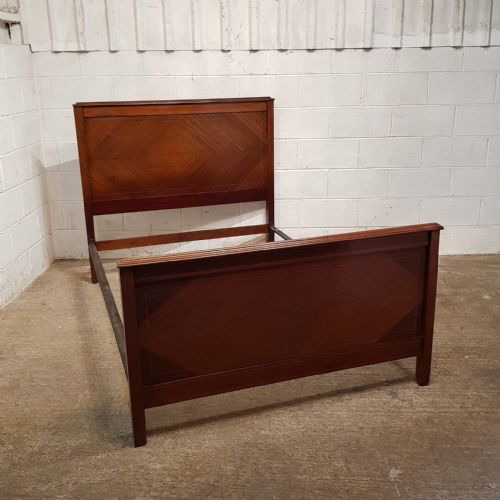
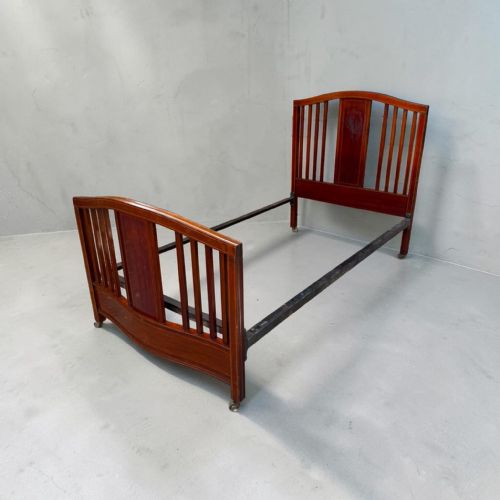
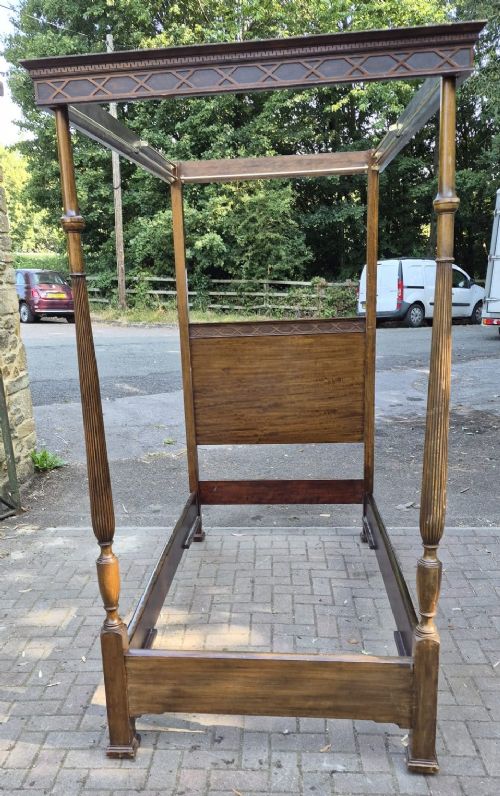
An Edwardian mahogany bed frame represents the bedroom furniture of the early twentieth century, spanning single and double sizes alongside four poster designs. Makers of the period drew upon Georgian Revival, Art Nouveau, and Gothic Revival aesthetics, creating pieces that balance substantial timber with lighter decorative details.
The domestic forms appearing here include double bedsteads, single beds, and pairs of single beds, often supplemented by associated window seats and day beds. Most examples date from around nineteen hundred to nineteen ten, capturing a distinct turn-of-the-century shift in domestic furnishing tastes.
How they were made
Cabinet makers of the era constructed these frames primarily from mahogany and its veneers, sometimes incorporating satinwood for contrast and inlay work. Iron and brass components appear in structural hardware and decorative details, whilst textiles feature in associated upholstered panels and day beds.
Surface decoration relies on marquetry, inlay, carving, and timber framing techniques. Plum pudding mahogany provides distinct grain patterns on specific pieces, while structural rails and panel construction ensure stability across single and double proportions.
Listings feature mahogany, satinwood, iron, and brass across single beds, double bedsteads, and four poster configurations.
What varies in quality
The standard of a frame rests on the depth of the timber selection and the precision of decorative inlay such as marquetry or satinwood banding. Finer examples display accomplished carving and robust joinery that maintains structural integrity across larger double and four poster formats.
Design ambition distinguishes baseline utility furniture from works attributed to notable retailers or specific revival styles. The integration of brass fittings and the quality of the timber figuring mark the division between standard production pieces and superior workshop output.
Heals of London·Heal and Son
The Edwardian Mahogany Bed Frame Glossary
- Bedstead
- A framework of a bed upon which mattress supports rest. These structures form the main visible wooden or iron perimeter of early twentieth century sleeping furniture.
- Inlay
- A technique where pieces of contrasting timber, such as satinwood, are inserted into recessed portions of the mahogany surface. This creates decorative borders and motifs across headboards and footboards.
- Marquetry
- Elaborate decorative veneer work forming pictorial or geometric patterns on the wood surface. Skilled artisans assembled thin wood slices to adorn prominent panels.
- Four poster
- A bed with four vertical columns supporting an upper canopy or tester frame. Edwardian interpretations frequently adapt earlier Georgian proportions for domestic bedrooms.
Edwardian Mahogany Bed Frame: Frequently Asked Questions
Will a modern mattress fit an Edwardian bed frame?
Many Edwardian frames were built to traditional dimensions that differ slightly from contemporary standard sizes. Checking the internal length and width dimensions before purchase ensures a proper fit for modern mattresses.
Some single and double frames accommodate standard proportions closely, whilst others require bespoke mattress commissioning or minor internal adjustments to sit correctly within the side rails.
How do I care for Edwardian mahogany furniture?
Maintenance involves dusting with a soft, dry cloth and avoiding placement near direct heat sources or strong sunlight. Excessive temperature fluctuations cause timber and veneer to dry out and split.
Applying occasional appropriate wax preserves the polish on the mahogany surface without building up excessive residue. Protecting the finish maintains the rich colour developed over the past century.
How do I distinguish Edwardian from Victorian beds?
Edwardian frames generally display lighter proportions and more restrained ornamentation than their Victorian predecessors. The influence of Georgian Revival and Art Nouveau styles leads to cleaner lines and brighter mahogany finishes.
Victorian pieces often utilise heavier timbers and more exuberant carving or darker finishes. Construction details and timber selection help indicate the specific decade of manufacture around the turn of the century.
Are these beds easy to assemble?
Most antique wooden bed frames utilise traditional metal bolt-and-socket fixings at the corners to connect the headboard, footboard, and side rails. These systems allow the furniture to be dismantled for transport and reassembled in a bedroom.
Ensuring all original bolts and brackets are present and secure guarantees the stability of the structure. Standard spanners usually suffice for tightening the iron connections during setup.