
Edwardian Mahogany Armoire
An edwardian mahogany armoire brings substantial presence and fitted storage to a bedroom through fine timber and period craftsmanship.
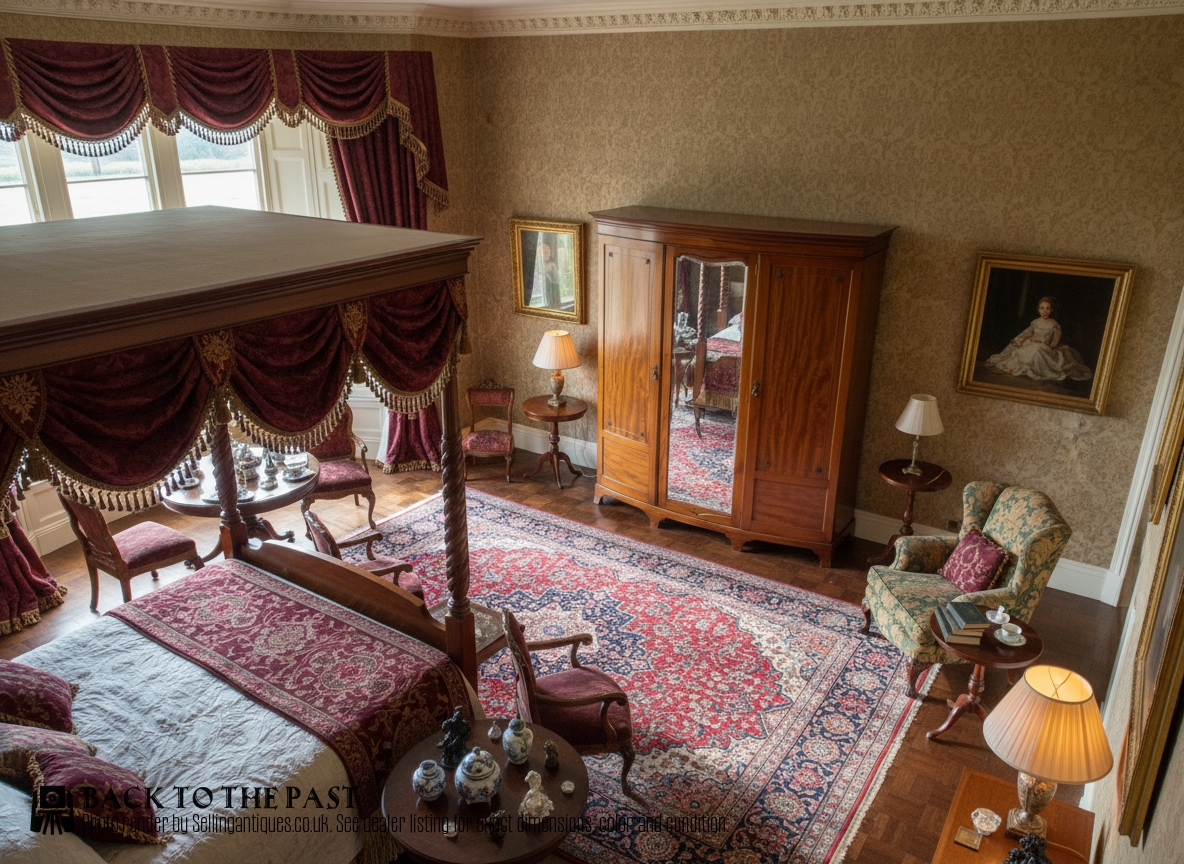
Edwardian Mahogany Armoire
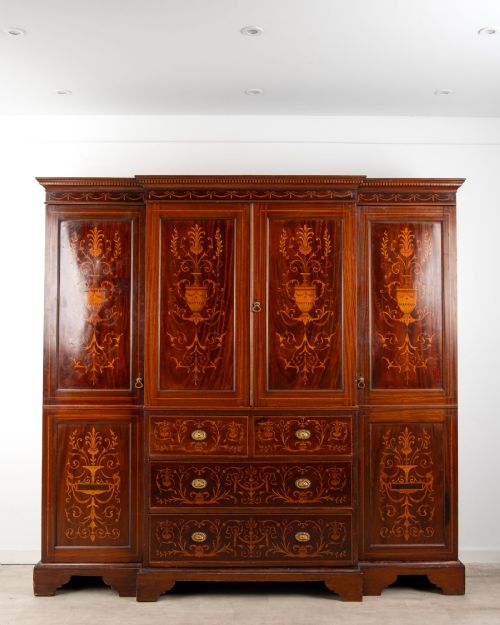
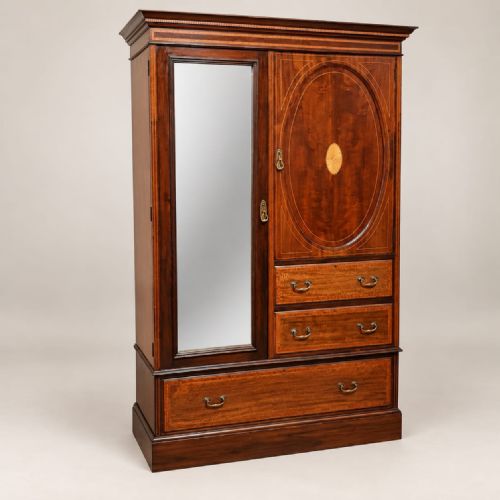
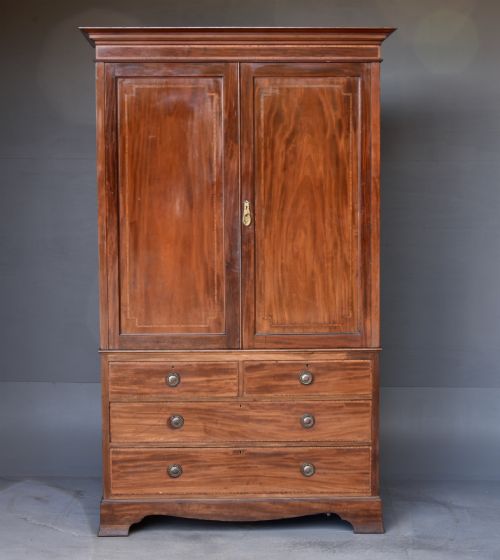
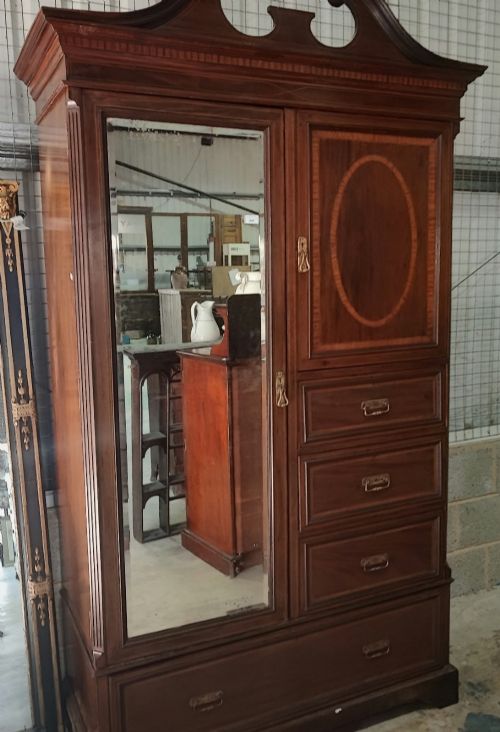
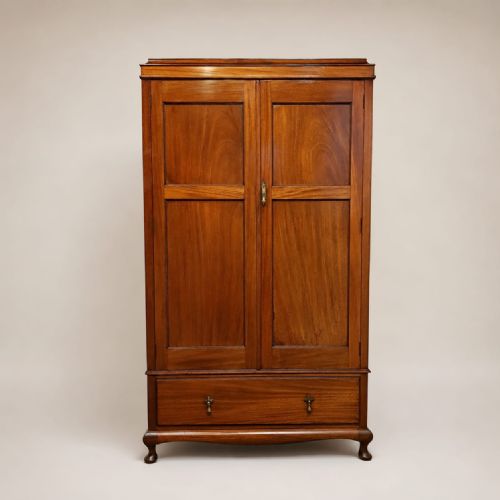
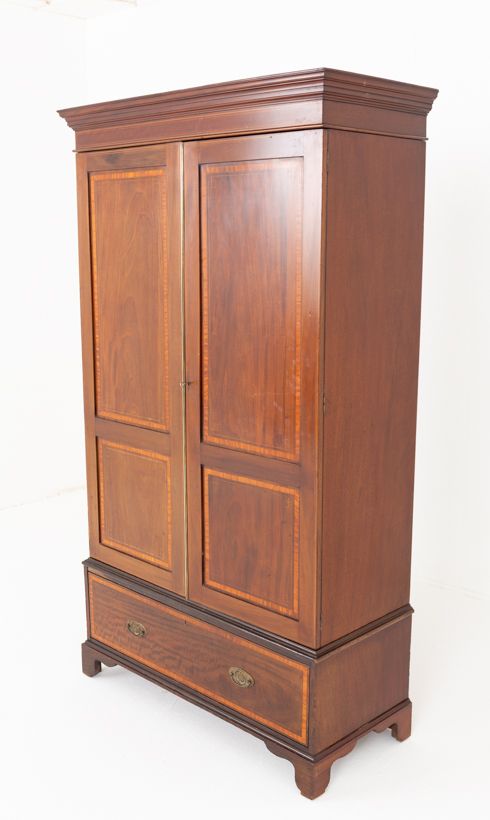
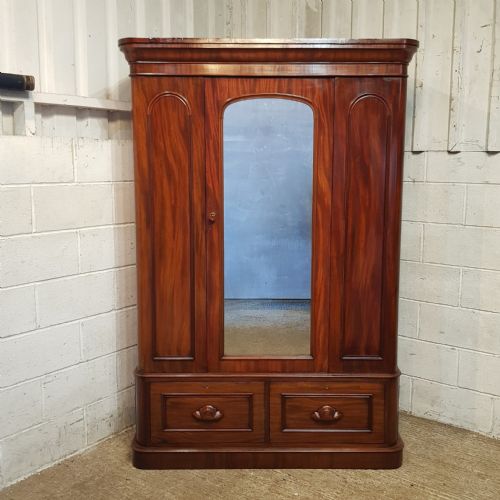
An edwardian mahogany armoire encompasses large bedroom wardrobes, compactums, and linen presses produced around the turn of the twentieth century. These substantial case pieces often feature multiple doors, interior hanging space, drawers, and shelving tailored for period garments.
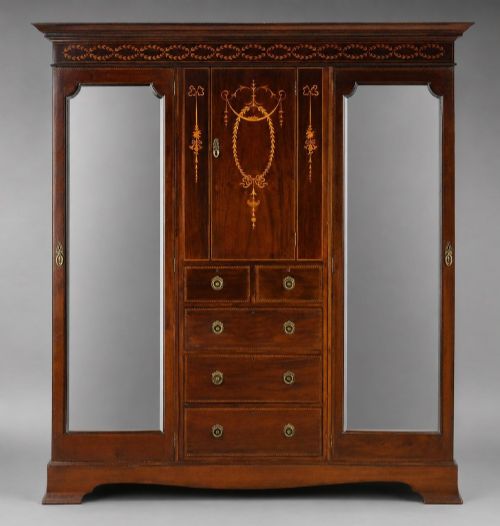
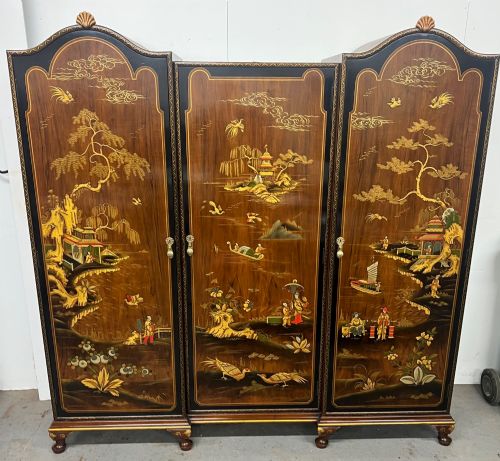
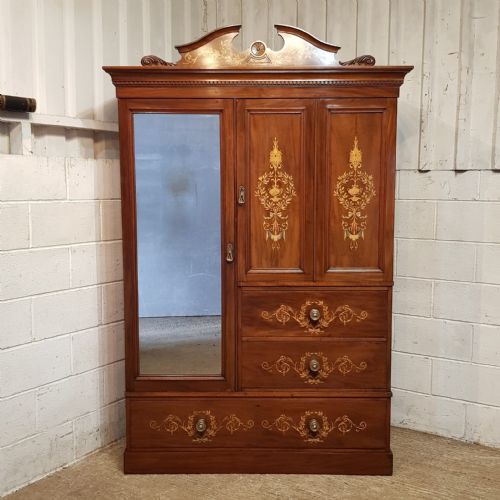
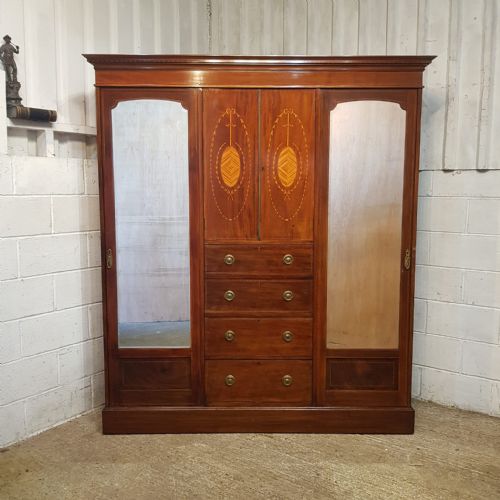
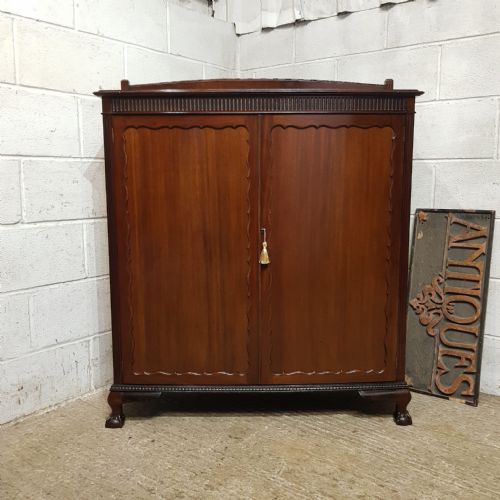
The version most commonly met on this page is the Edwardian triple wardrobe or compactum, frequently decorated with subtle stringing and symmetrical paneling. Alongside these standard formats appear double door wardrobes and occasional variations drawing on Sheraton revival or neoclassical styles.
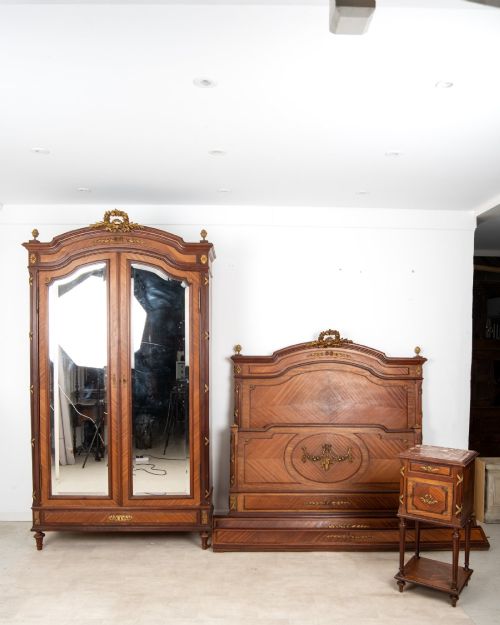
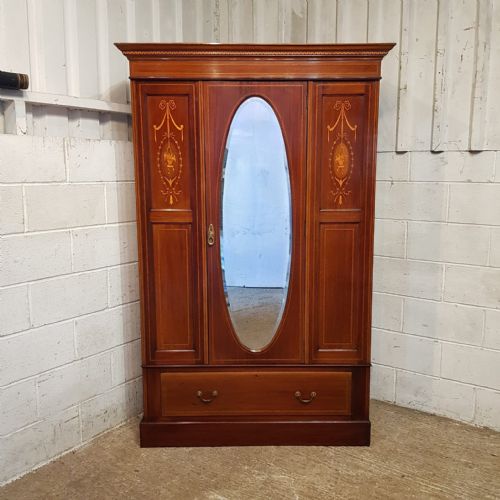
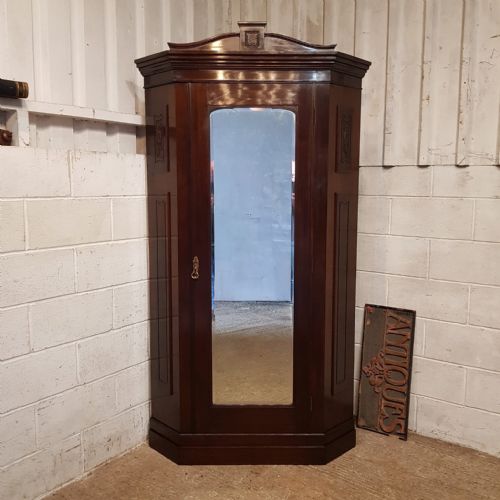
While the label armoire frequently applies to continental or French-influenced designs, British makers adapted the term for large freestanding wardrobes of the period. Pieces range from straightforward utilitarian models to expansive breakfront configurations equipped with mirrored doors and internal sliding trays.

Construction and Materials
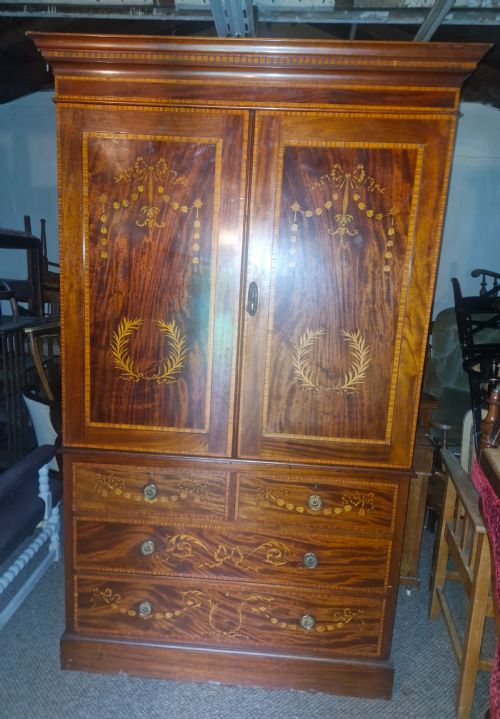
Cabinet makers built these large carcasses using solid mahogany frames combined with figured mahogany veneers to create striking visual movement on wide doors. Flame mahogany veneers were carefully selected and matched across multiple panels to form symmetrical grain patterns.
Inlay work relied on contrasting timbers such as satinwood, boxwood, and amboyna, set into precise channels to form decorative banding and classical motifs. Internal fittings incorporated secondary woods for drawers and shelving, joined with traditional dovetail construction.
Hardware played an essential functional and decorative role, utilising cast brass handles, escutcheons, and occasional ormolu mounts. Glass panels appeared frequently in central mirror doors, while internal hanging rails and clothes hooks made heavy use of brass and iron.
Edwardian Mahogany Armoire Retail Price Guide 2026
Typical asking prices for edwardian mahogany armoire among the pieces listed under this phrase on Sellingantiques today, from the lower quarter to the upper quarter. They describe what is for sale here now, not the wider market.
Some compactums conceal interior tie racks and mirrored dressing slides behind their grand panelled doors, built for gentlemen who took morning routines very seriously.
Judging Quality and Execution
The distinction between standard commercial output and superior workshop production rests upon timber selection and veneer matching. Finer examples display continuous grain across entire frontages, whereas lesser pieces rely on simpler, uniform boards with minimal figure.
Structural integrity reveals itself in the thickness of the secondary timbers used for internal drawer linings and the precision of the joinery. Premium pieces incorporate sophisticated compactum interiors with numerous fitted drawers and sliding linen trays rather than simple open hanging space.
Decorative detailing separates mass-market furniture from high-end commissions, particularly in the crispness of the boxwood inlay and the weight of the cast brass hardware. Superior makers integrated carved mouldings and architectural cornices that remained securely fixed despite the seasonal movement of large timber panels.
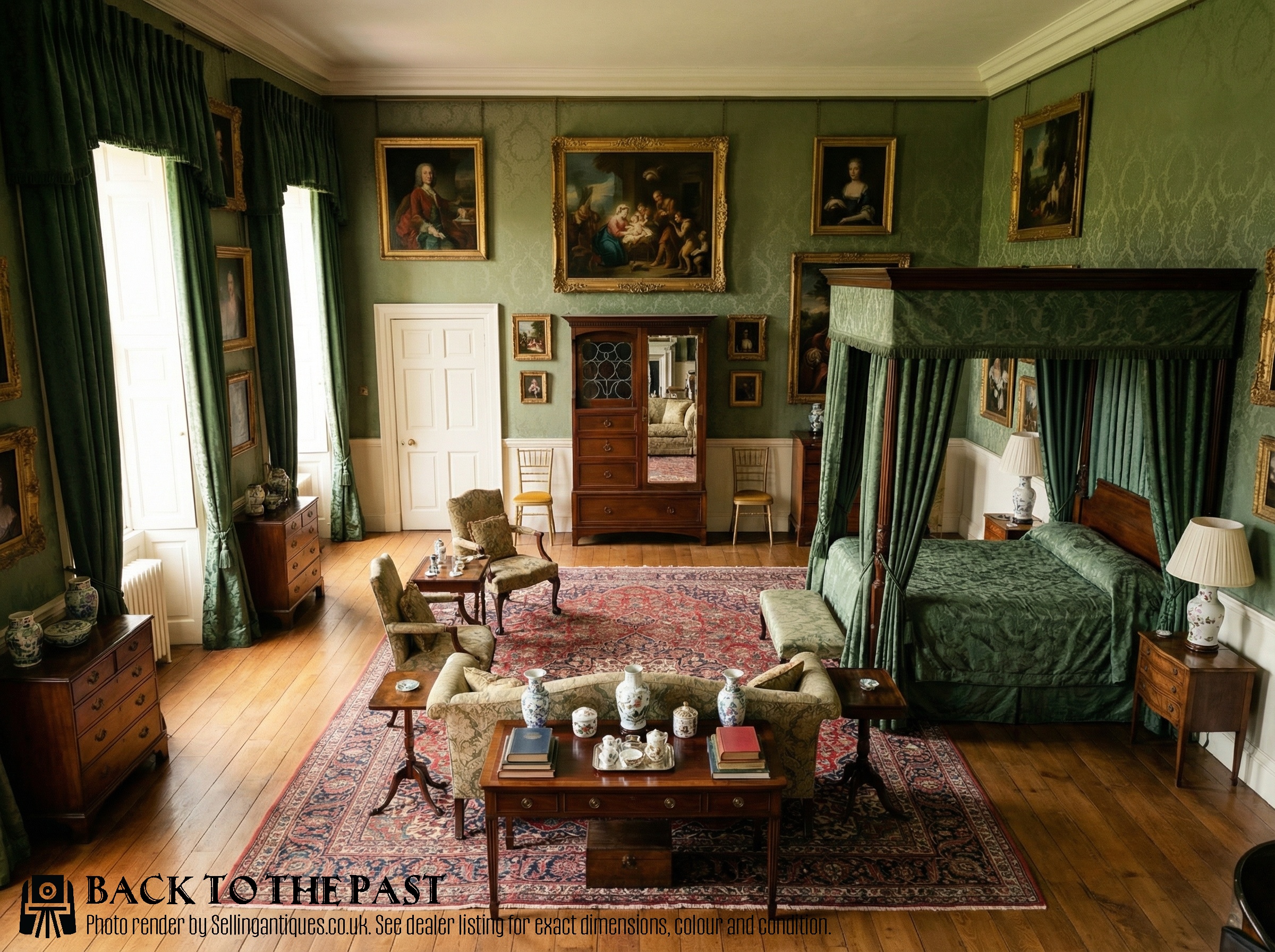
Maples and Co·Edwards and Roberts·Druce and Co·Wylie Lochhead
The Edwardian Mahogany Armoire Glossary
- Compactum
- A multi-functional wardrobe combining hanging space, enclosed shelving, and internal drawers within a single carcass. This layout maximised bedroom storage efficiency during the late Victorian and Edwardian eras.
- Breakfront
- A cabinet design where the central section projects forward from the flanking wings. This architectural arrangement creates depth and visual interest across large triple wardrobes.
- Satinwood Inlay
- A decorative technique employing contrasting pale satinwood veneer inserted into grooves cut into the darker mahogany surface. It formed delicate geometric lines and classical swags popular in revival styles.
- Linen Press
- A tall case piece featuring upper doors enclosing sliding trays or shelves above a chest of lower drawers. Originally designed for storing household linens before hanging wardrobes became standard.
- Flame Mahogany
- A highly figured veneer cut from the fork of the mahogany tree where branches join the main trunk. The resulting grain resembles flickering flames and was prized for principal door panels.
Edwardian Mahogany Armoire: Frequently Asked Questions
How do I dismantle a large wardrobe?
Most large Edwardian wardrobes separate into distinct modular components comprising a cornice, a base, two side sections, and central doors. Screws and concealed bolts hold the main frame together internally.
Marking each component during disassembly ensures correct alignment when reassembling the piece in a new room.
What is a compactum wardrobe?
A compactum is a specialised multi-purpose wardrobe designed to hold an entire wardrobe of clothing within one unit. It integrates hanging compartments alongside banks of internal drawers and sliding linen trays.
These versatile interiors often include dedicated spaces for collars, ties, and smaller garments.
How do I care for mahogany veneer?
Mahogany requires stable environmental conditions away from direct heat sources and strong sunlight to prevent the timber and veneer from drying out. Periodic application of quality beeswax helps maintain the natural lustre of the polished surface.
Avoid using silicone-based sprays, which can penetrate porous historic finishes and damage the wood over time.
Are these wardrobes difficult to move?
Due to their solid timber construction and large dimensions, these wardrobes are heavy and require at least two people to handle safely. Removing heavy mirrored doors and internal sliding trays significantly reduces the overall weight before transport.
Professional antique couriers equipped with protective blankets and trolleys provide the safest transport method.