




Edwardian London Artwork
Edwardian London artwork captures the capital through maritime scenes, river views and urban watercolours framed in gilt wood.
Edwardian London Artwork
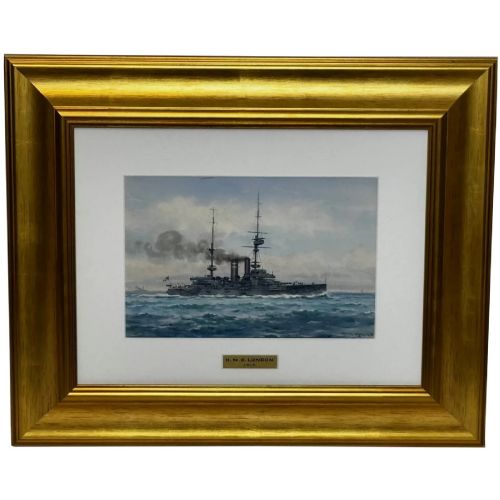
Edwardian London artwork comprises paintings, watercolours and etchings depicting the city during the early twentieth century and the Edwardian period. Buyers encounter topographical watercolours of parks and landmarks alongside marine scenes of the River Thames.
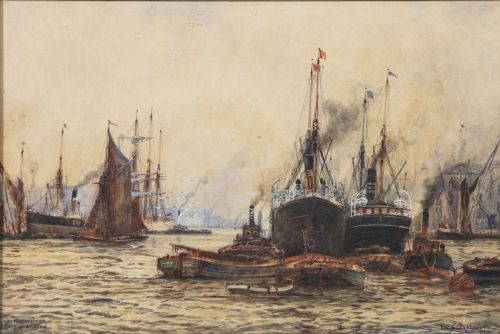
The most common pieces on this page are watercolours on paper and oil paintings recording London views such as the Pool of London, Westminster Bridge and St James Park. These works span periods from the nineteenth century into the 1930s, reflecting British Impressionism and maritime styles.
Subjects range from bustling river traffic with shipping and bridges to quiet garden scenes featuring springtime crocuses. Artists documented specific locations including Whitehall, Leicester Square and Blackwall Reach.
How they were made
Artists worked primarily with watercolour paint, ink and oil on canvas applied to paper or canvas supports. Many watercolours utilise delicate washes to capture the characteristic atmospheric haze of the capital.
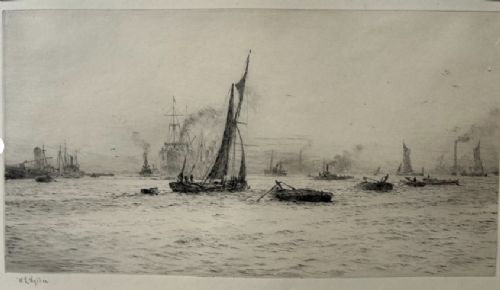
Etchings provide detailed linear records of river reaches using ink on paper, signed by hand by the artist. Surviving works are commonly housed within glass-fronted gilt wood frames that complement the period aesthetic.
Artists frequently braved the famously smokey London air to capture shipping traffic, ensuring future generations inherited the city's foggy charm.
What varies in quality
Quality rests upon the artist's handling of light, atmosphere and perspective within the London streetscape or river view. Works by established painters demonstrate a superior command of watercolour or oil technique, rendering architecture and shipping with precision.
The choice of framing and the preservation of the paper or canvas influence the overall presentation. Stronger pieces display vibrant pigments and confident brushwork that successfully convey the scale and mood of the Thames and surrounding parks.
Frank Watson Wood·William Lionel Wyllie·Frank William Scarbrough·Charles James Lauder·Rowland Henry Hill·Walter Duncan·Harold E Frecker·Edward Fletcher·Beatrice Parsons·Frances E Nesbitt·William A Macdonald·Herbert John Finn
The Edwardian London Artwork Glossary
- Topographical watercolour
- A painting style focused on the accurate representation of specific places, buildings and landscapes. These works served as visual records of London views before widespread photography.
- Etchings
- Prints produced by scratching a design through a protective ground on a metal plate, which is then acid-bit and inked. Artists often signed these impressions in pencil below the image.
- Marine watercolour
- A painting dedicated to maritime subjects, including shipping, ports and naval vessels. In this collection, these pieces frequently feature the River Thames and naval themes.
- Gilt wood frame
- A wooden picture frame coated with a thin layer of gold leaf or metallic paint. These frames protect the artwork under glass and reflect the decorative tastes of the period.
Edwardian London Artwork: Frequently Asked Questions
What subjects appear in Edwardian London artwork?
The works depict recognizable London locations including the River Thames, Westminster Bridge, Whitehall and St James Park. Many pieces focus on maritime activity, shipping, and architectural landmarks under varying atmospheric conditions.
Other scenes capture urban parks during spring and specific river pools, reflecting the everyday visual landscape of the capital during the early twentieth century.
Which materials were used for these pieces?
Artists employed watercolour paint, ink, pencil and oil on canvas or paper supports. Finished works were protected under glass and mounted within gilt wood frames.
Etchings utilise ink on paper, often bearing the original pencil signature of the printmaker alongside the printed image.
How do I identify an Edwardian London painting?
Look for stylistic markers of British Impressionism and maritime painting traditions typical of the early twentieth century. Signatures, dates in the titles, and historical London subjects help anchor the piece to the period.
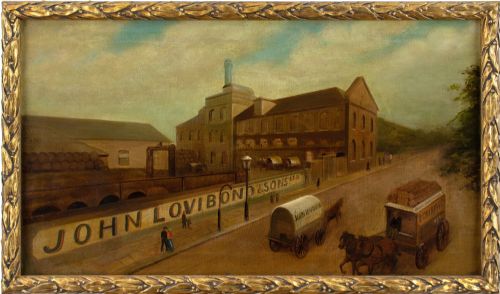
Topographical details of bridges, breweries and government buildings provide further clues to the specific decade and location depicted.
How should I display these works at home?
Protect watercolours and works on paper from direct sunlight to prevent the fading of delicate pigments and paper discoloration. Keeping them behind glass within their original gilt wood frames preserves both the art and the period context.
Position pieces in stable room environments away from excessive moisture to maintain the condition of the paper and canvas.