
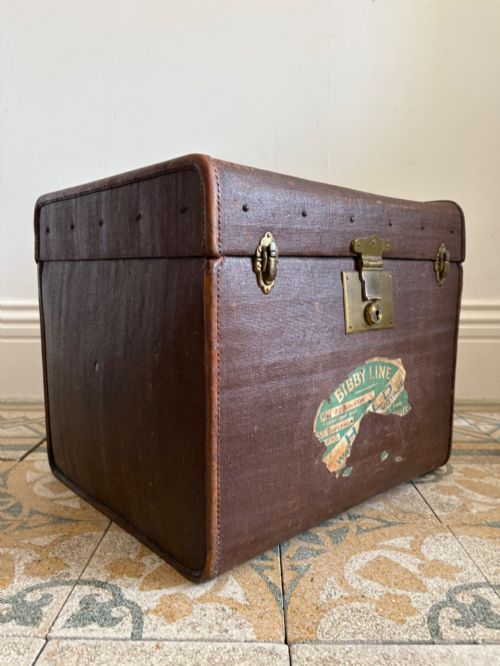
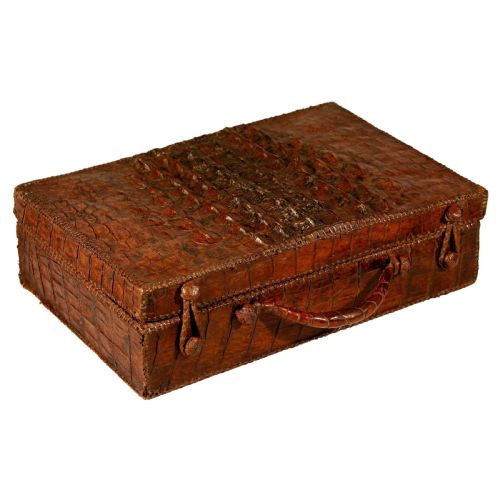


Edwardian Leather Travel Case
An edwardian leather travel case carries the weight of a slower century in its rigid hides, brass clasps, and fitted interiors.
Edwardian Leather Travel Case
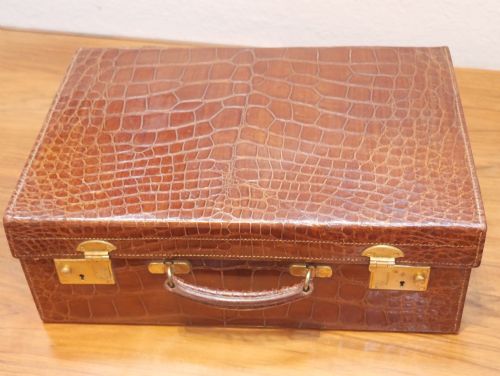
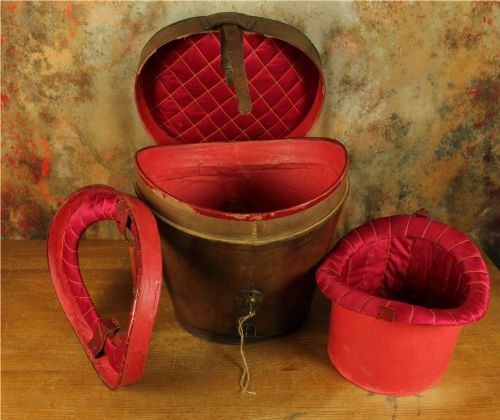
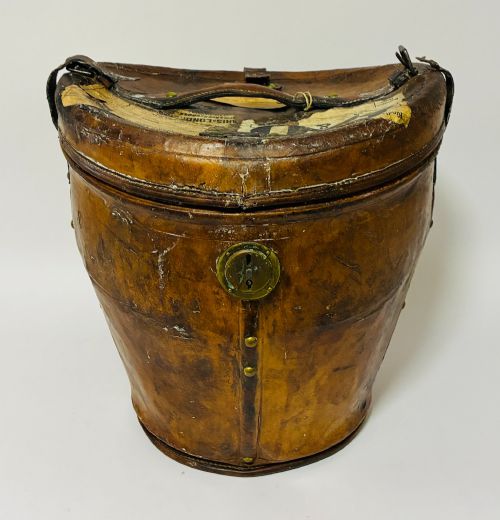
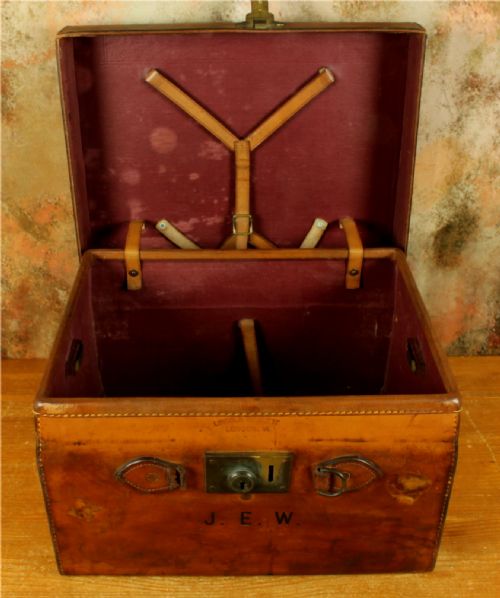
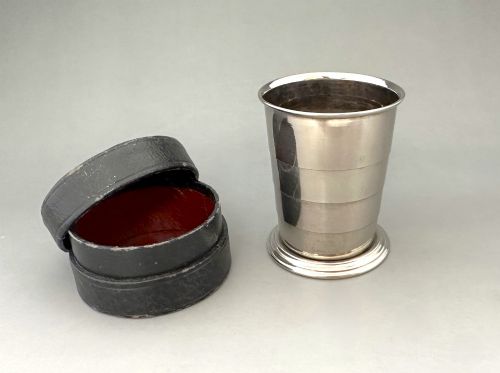
When searching for an edwardian leather travel case, buyers encounter rugged gentleman's luggage, doctor's field kits, and fitted dressing cases designed for steamship and rail journeys. The pieces on this page span sturdy suitcases, tall hat boxes, and compartmented trunks originating from the late Victorian era through the early twentieth century.
Most examples found here hail from the Edwardian period and the 1920s, constructed in England, Scotland, and France for upper-class transit. They range from modest overnight bags to massive portmanteaus bearing historic travel labels and monogrammed lids.
How they were made
Maker's workshops built these trunks and cases using heavy bovine leather, canvas, and exotic skins such as crocodile and alligator over rigid wooden or metal frames. Brass locks, hinges, and reinforced corner brackets secured the structure against the rigours of carriage and steam travel.
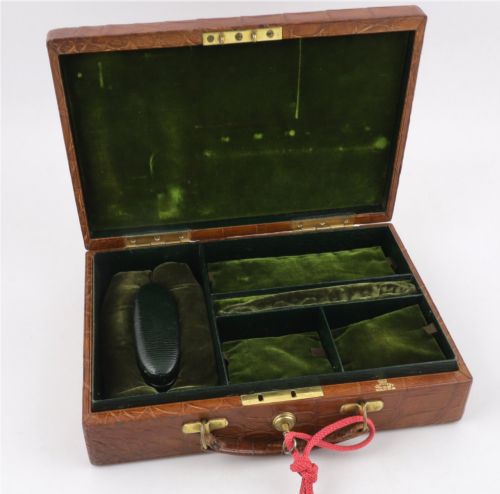
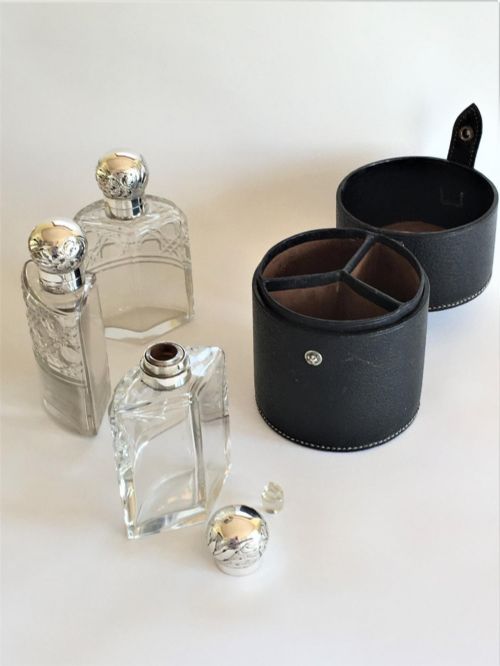
Interiors frequently received velvet, silk, or fabric linings alongside leather straps to hold glass bottles, silver vanity items, and gentleman's grooming tools. Stitching was executed by hand or heavy machine, joining thick hides to withstand decades of use.
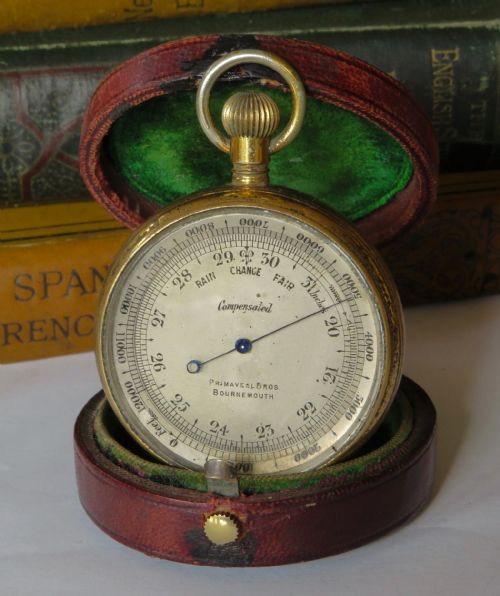
Form variations include double hat boxes, pocket barometers, veterinary field kits, and gentleman's valet suitcases.
What varies in quality
The distinction between standard luggage and exceptional pieces rests upon the maker's mark, internal complexity, and material rarity. Signed pieces from established firms command attention through superior hardware and thoughtful compartment layouts.
The inclusion of original fitted interiors - complete with silver-topped jars, razors, or manicuring tools - elevates a standard container into a comprehensive gentleman's valet.
Primavesi·Lincoln Bennett·Army and Navy·John Pound·Harrods·C. Antrobus·Finnegans of Bond Street·Goyard·JW Allen·WE Pain
The Edwardian Leather Travel Case Glossary
- Portmanteau
- A large leather travelling case that opens into two distinct compartments. These heavy trunks were standard baggage for transatlantic steamship voyages.
- Campaign case
- Portable furniture or utility boxes designed for military officers or travellers on the move. They typically feature brass corner reinforcement and recessed carrying handles.
- Valet suitcase
- A fitted luggage piece containing dedicated slots for razors, brushes, and gentleman's grooming accessories. Interiors often utilise silk or velvet linings to protect silver and glass fittings.
- Vellum
- Fine calfskin or parchment used as an outer covering on luxury trunks. It provides a smooth, pale surface distinct from standard grainy leather.
Edwardian Leather Travel Case: Frequently Asked Questions
How do I clean antique leather?
Dust the surface gently with a dry cloth to remove loose particles before applying a neutral leather wax or feed. Avoid modern chemical cleaners that strip the original patina and dry out antique hides.
Work the conditioner in small circles using a soft brush, then buff the case with a lint-free cloth to restore its natural sheen.
Were these cases used for air travel?
Most pieces on this page predate commercial aviation and were constructed for railway carriages, steamships, and horse-drawn coaches. Their heavy wood frames and thick brass hardware reflect the demands of nineteenth and early twentieth-century transit.
Air travel later rendered such rigid, heavy luggage impractical, leading to the rise of lighter canvas and synthetic suitcases.
Can I use an antique case daily?
These pieces function well for light storage or occasional weekend trips when treated with appropriate care. Leather handles and old brass clasps should not bear the weight of heavy modern contents.
Inspect the internal straps and hinges before loading the case to ensure the aged materials remain secure.
What do travel labels indicate?
Historic luggage labels record steamship lines, grand hotels, and railway routes from the early twentieth century. They document the specific journeys and social circles of the original owner.
Many collectors prize these paper remnants because they add tangible narrative depth and provenance to the trunk.