
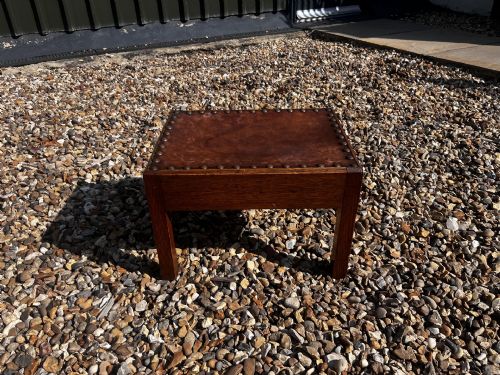
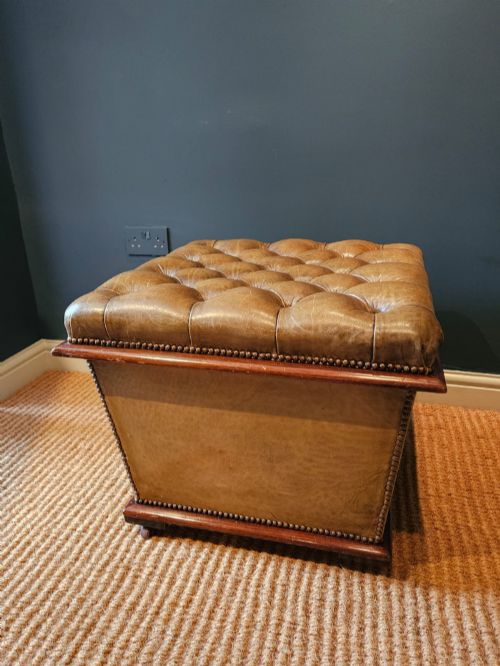


Edwardian Leather Footrest
These edwardian leather footrest pieces combine period frames with supple hides, offering a genuine resting place for tired feet.
Edwardian Leather Footrest
An edwardian leather footrest encompasses a variety of low stools and adjustable rests designed to elevate the feet during long hours of sitting. Most examples encountered here date from the Edwardian era, though Victorian and early twentieth-century pieces also appear frequently.
The primary forms include simple upholstered stools, carved oak frames, and ingenious metamorphic designs that alter shape to support the legs or transform into small chairs. These functional objects reflect the domestic comfort prioritized in period homes.
Makers and workshops of the period utilised sturdy timbers to build the internal structures, ensuring that the forms survive intact for modern interiors. Whether plain or embellished with carved details, each edwardian leather footrest serves as both a practical utility and a period furnishing.
How they were made
Makers constructed the foundational frames using solid hardwoods such as oak and mahogany, joined with traditional woodworking techniques to withstand regular pressure. These timbers provide the structural skeleton that supports the upholstered top.
The upper sections feature leather upholstery secured with metal studs, creating a durable surface designed for sustained contact and daily use. Artisans also integrated brass hardware into adjustable mechanisms, allowing the height or angle to shift smoothly.
The listings on this site feature oak and mahogany frames paired with brass hardware and metal studs.
What varies in quality
The sophistication of the woodwork marks the distinction between standard production pieces and finer workshop output, particularly seen in carved details like lion heads or the clean lines associated with the Arts and Crafts movement. Superior examples display thoughtful hand-carving and careful selection of timber grain.
The integrity of the mechanism in adjustable or metamorphic pieces dictates the overall mechanical quality, where smooth operation reflects superior period engineering. Original leather upholstery that retains its suppleness also elevates the standing of an individual piece.
Arthur Simpson Of Kendal·Arthur W Simpson
The Edwardian Leather Footrest Glossary
- Metamorphic
- Describing furniture designed to transform from one form into another, such as a footstool that converts into an armchair or adjusts its angle.
- Arts and Crafts
- A design movement emphasising handcraftsmanship, simple forms, and local materials, frequently associated with oak construction.
- Upholstery
- The materials, including leather, padding, and studs, used to cover the seating surface of a frame.
- Gout stool
- A specialised rest with an adjustable incline designed historically to elevate and comfort limbs affected by joint pain.
Edwardian Leather Footrest: Frequently Asked Questions
What is a metamorphic footstool?
A metamorphic footstool incorporates mechanical parts that allow the piece to alter its configuration, often raising the height or changing the angle of the rest.
These clever designs offered multiple seating or resting positions within a single compact item of furniture.
How do I identify an Edwardian piece?
Edwardian pieces generally date from the early twentieth century, showing lighter timber tones and refined proportions compared to heavier Victorian designs.
Look for characteristic stylistic restraint combined with traditional upholstery methods and durable leather surfaces.
Were these stools used for specific medical needs?
Some period rests were designed specifically as gout stools, featuring adjustable mechanisms to elevate sore limbs at a comfortable angle.
These specialised medical variants allowed the user to alter the incline without leaving the seat.
What woods were commonly used?
Makers relied heavily on oak and mahogany for the structural frames, providing the necessary strength for daily foot support.
These hardwoods were often left with a natural finish or waxed to highlight the grain beneath the leather top.