
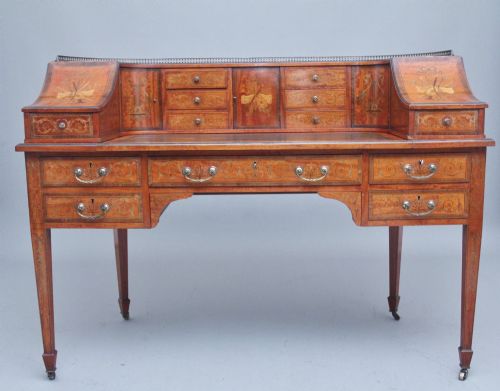
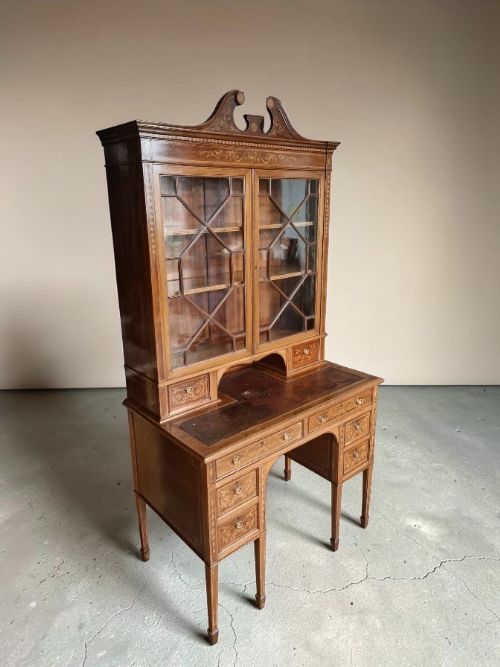
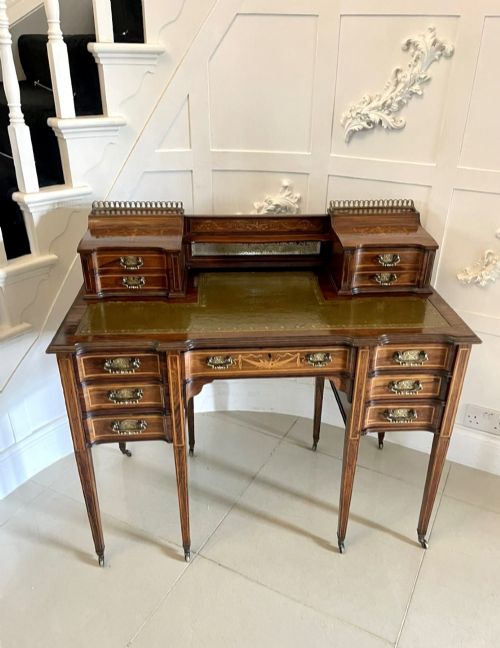
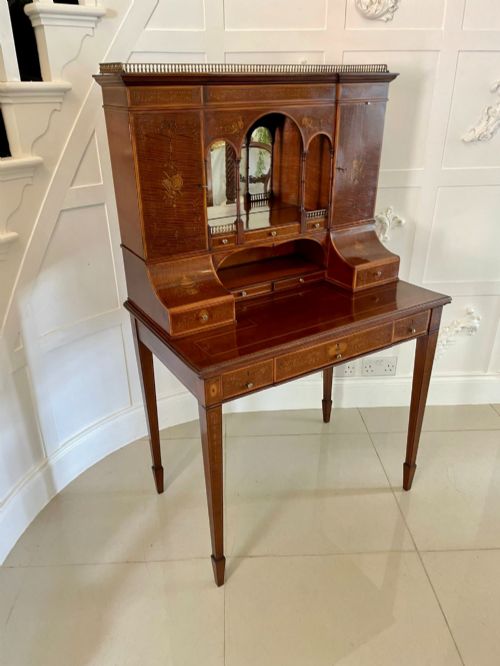

Edwardian Inlaid Ladies Desk
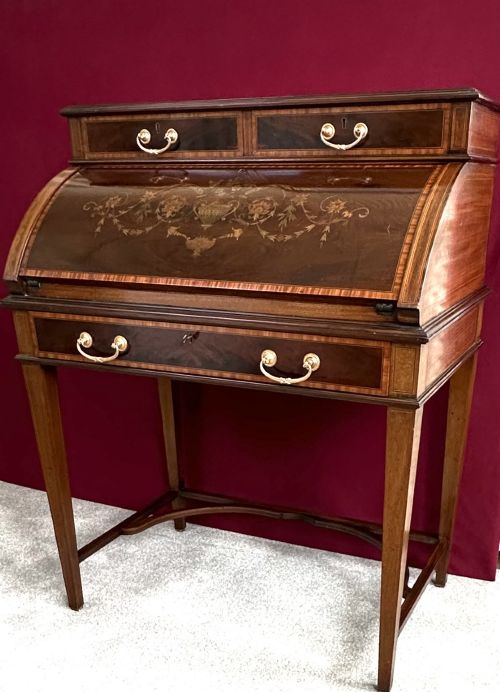
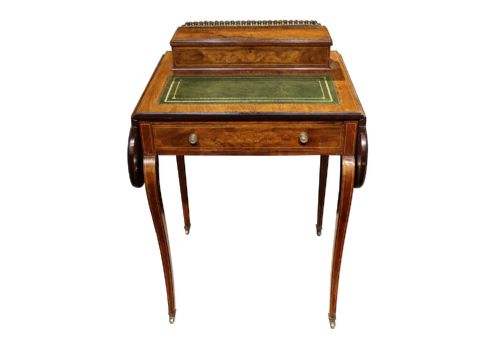
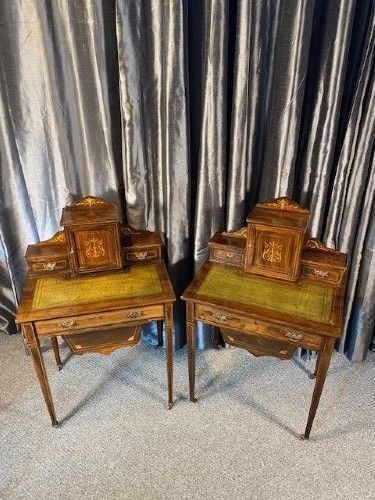
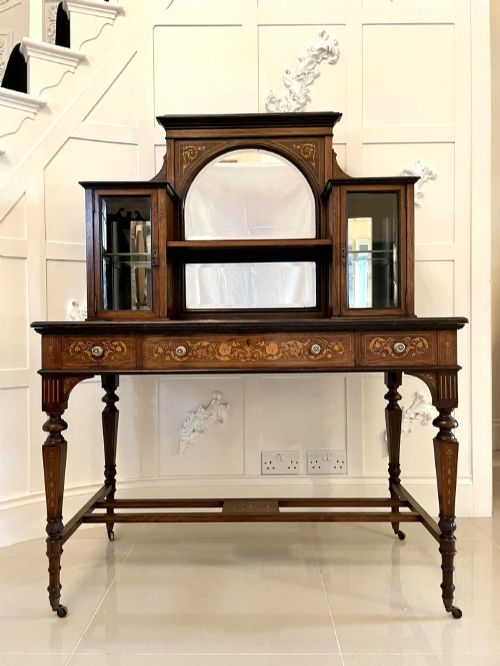
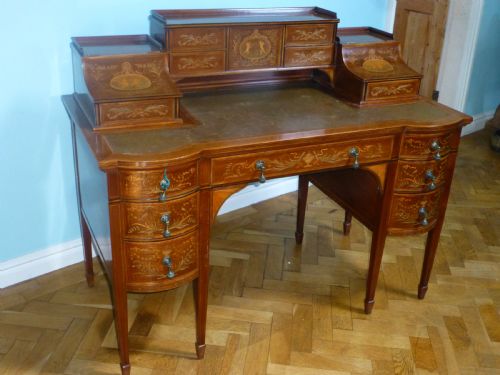
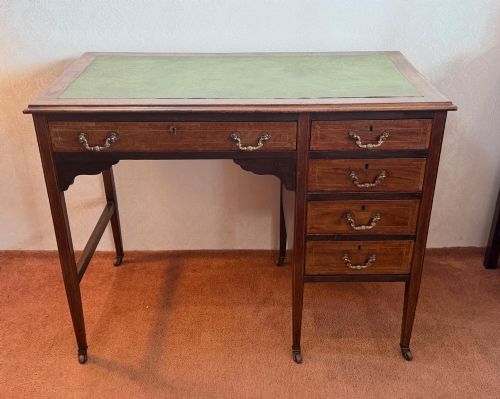
An edwardian inlaid ladies desk combines delicate proportions with intricate craftsmanship, offering a charming writing space suited for correspondence and light study.
Edwardian Inlaid Ladies Desk
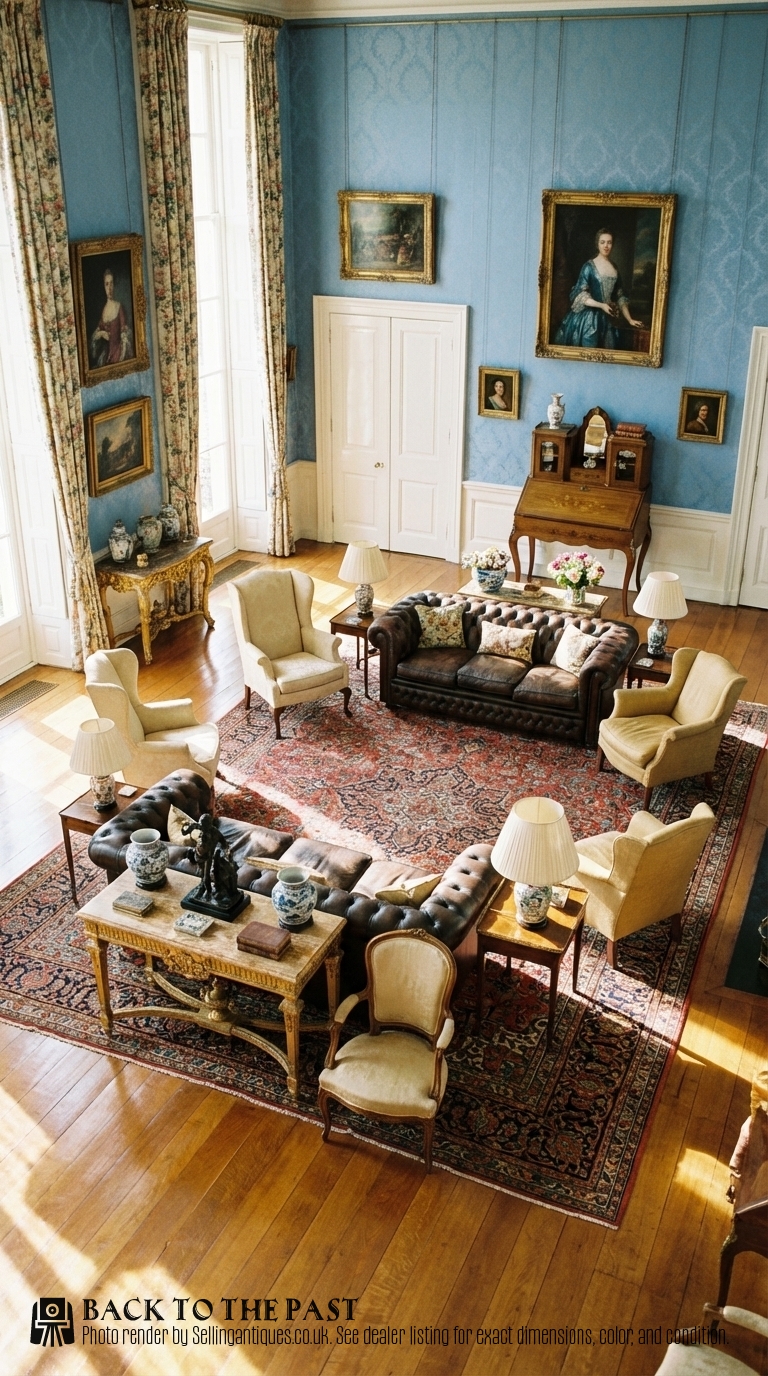
An edwardian inlaid ladies desk is a refined piece of furniture designed primarily for private correspondence and small-scale writing tasks in the home. These items typically present compact dimensions that suit intimate sitting rooms or bedrooms rather than grand libraries.
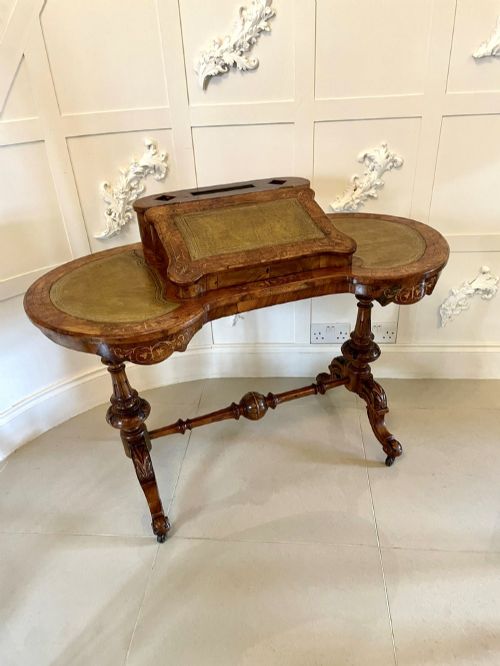
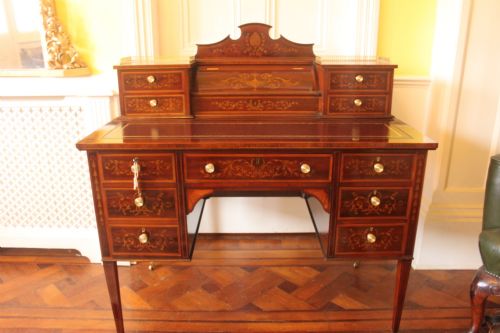
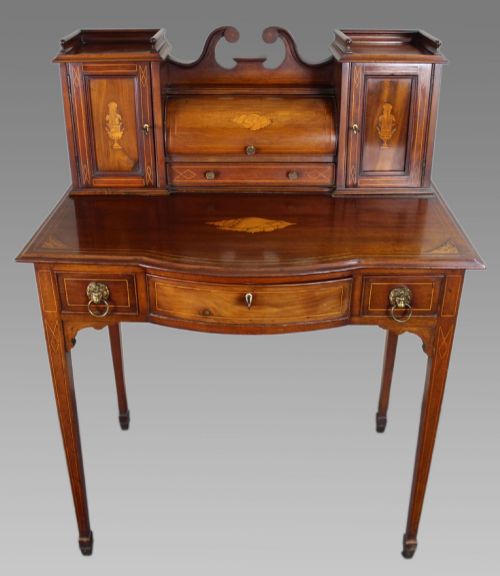
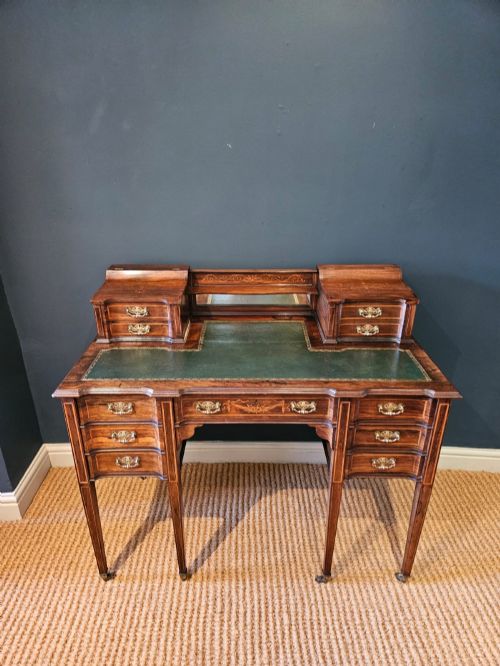
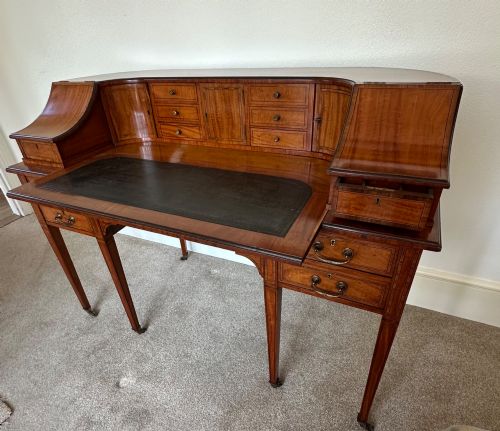
The pieces appearing most frequently on this page date from the Edwardian period and the late nineteenth century, often adopting styles inspired by Sheraton designs. Examples range from simple kidney-shaped tables and kneehole forms to elaborate structures like the Carlton House desk and the bonheur du jour.
Makers and workshops from the era utilised specific regional aesthetics, blending Victorian solidity with lighter Edwardian grace. Buyers encounter freestanding models finished on all sides alongside specialised writing tables featuring fitted interiors and compartments for stationery.
How They Were Made
Cabinet makers constructed these desks using foundational timbers such as mahogany, rosewood, and satinwood, frequently applying contrasting veneers. Detailed surface decoration relied on precise marquetry and inlay work using boxwood, brass accents, and specialised woods.
Writing surfaces frequently incorporated inset panels of leather, providing a durable and tactile writing area. Internal fittings often included small drawers, pigeonholes, and glass elements constructed with traditional joinery techniques appropriate to each specific desk form.
Lockable compartments inside these desks once kept secret billets-doux safely hidden from wandering eyes.
What Varies In Quality
Distinctions in quality rest upon the precision of the cabinet work and the complexity of the decorative inlay. Superior examples display seamless integration of contrasting timbers and finely hand-cut marquetry rather than simpler stencilled or stamped ornamentation.
The architectural complexity of the desk interior and the selection of primary cabinet woods dictate the upper tier of the range. Fully finished freestanding backs, original hardware, and comprehensive fitted writing compartments distinguish higher-grade workshop output from standard production.
Maple and Co·Edwards and Roberts·S and H Jewell
The Edwardian Inlaid Ladies Desk Glossary
- Inlay
- A technique where pieces of contrasting wood, shell, or metal are inserted into depressions carved into the primary wood surface to form a decorative pattern. This method defines the surface ornamentation of many period pieces.
- Marquetry
- An elaborate form of pictorial inlay utilising various wood veneers assembled to create intricate floral or geometric designs. Craftsmen carefully cut these veneers together before applying them to the desk top or fall front.
- Carlton House desk
- A distinctive writing table featuring a curved superstructure of small drawers and pigeonholes wrapping around the back and sides of the writing surface. Originating in the eighteenth century, this form reappeared in refined Edwardian revivals.
- Bonheur du jour
- A light lady's writing desk topped with a small cabinet, drawers, or shelves above the main writing surface. The term translates from French as day's happiness.
- Satinwood
- A hard, durable timber featuring a lustrous yellow or golden sheen that accepts fine polishing and inlay work exceptionally well. Cabinet makers favoured this wood for high-status Edwardian and Sheraton revival pieces.
Edwardian Inlaid Ladies Desk: Frequently Asked Questions
What is a ladies desk?
A ladies desk is a smaller, lighter writing table designed for personal correspondence rather than heavy administrative work. These pieces prioritised decorative elegance and compact proportions for domestic interiors.
Such furniture often included specialised compartments for stationery, inkwells, and small valuables. They sat comfortably in boudoirs, morning rooms, and private drawing rooms.
How do I identify an edwardian desk?
Edwardian desks are typically characterised by lighter timbers, refined inlay work, and stylistic revivals of earlier eighteenth-century designs. They frequently employ satinwood, mahogany, or rosewood with delicate boxwood stringing.
Construction details from this era often reflect mass-production techniques beginning to blend with traditional hand craftsmanship. Comparing drawer linings and hardware styles helps confirm the manufacturing period.
Were these desks used for writing letters?
Letter writing was the primary function for these compact desks during the late nineteenth and early twentieth centuries. The fitted interiors provided dedicated storage for note paper, envelopes, and sealing wax.
Owners utilised the pull-out or leather-inset surfaces for daily correspondence and keeping personal journals. The small scale suited the social demands of writing invitations and managing household accounts.