
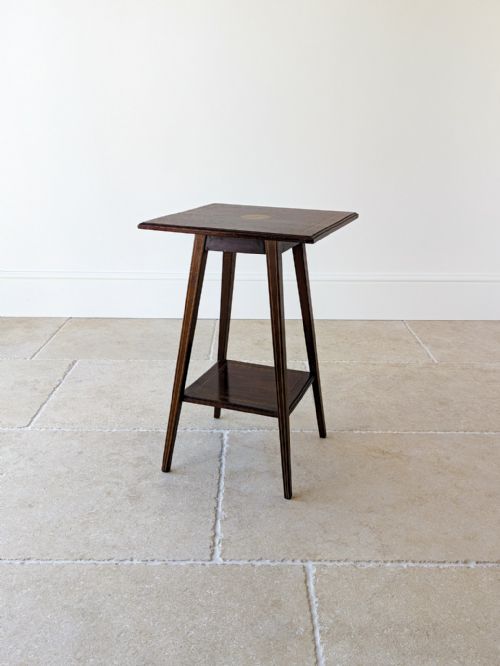
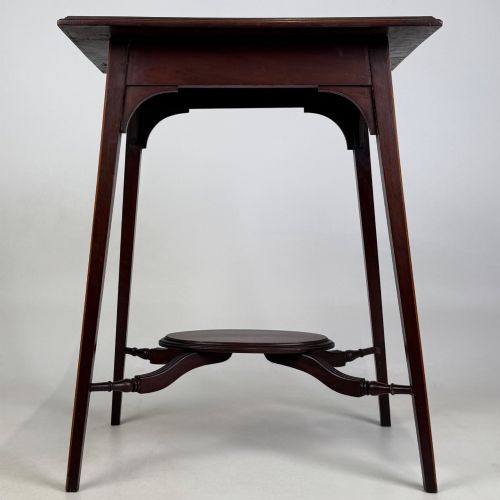
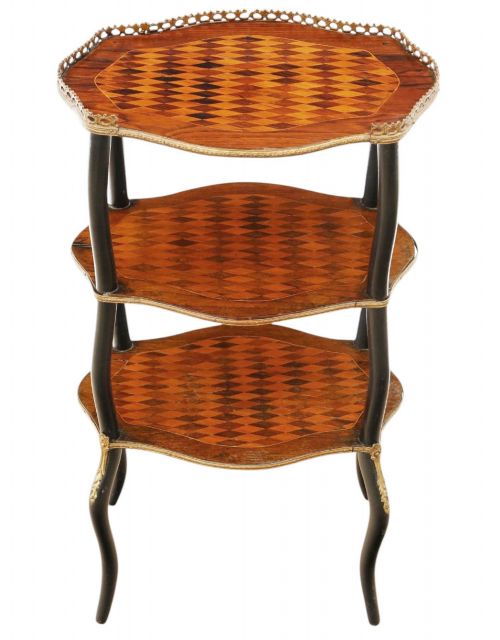


Edwardian Inlaid Corner Table
These edwardian inlaid corner table pieces bring refined geometry and rich timber into a room, offering both practical surface space and distinct period character.
Edwardian Inlaid Corner Table
When you search for an edwardian inlaid corner table, you encounter compact triangular and drop leaf occasional forms designed to fit domestic angles cleanly. The evidence shows these pieces span the Edwardian period and the early twentieth century, alongside Victorian examples dating back to eighteen seventy.
Makers utilised rich hardwoods including mahogany, rosewood, and walnut, frequently enhancing the surfaces with satinwood and boxwood inlay. These items function primarily as corner tables, side tables, and occasional tables, often incorporating multiple tiers or drop leaves for versatility.
Sheraton revival and French revival influences appear across the selection, bringing lighter proportions and classical decorative motifs to domestic furniture. A buyer meets both simple occasional pieces and more elaborate display shelves or Sutherland tables within this category.
How They Were Made
Craftsmen built these tables using solid and veneered timbers such as mahogany and rosewood, applying contrasting boxwood and satinwood to create decorative stringing and geometric patterns. Parquetry and ebonised details further demonstrate the meticulous surface decoration characteristic of the period.
Structural elements rely on traditional joinery suited to light domestic furniture, with drop leaves supported by pivoting wooden arms and tiers held by slender uprights. Brass hardware occasionally appears on hinges and fittings, complementing the warm tones of the polished wood.
Several tables feature drop leaves that transform a narrow corner wedge into a sudden circle of timber.
What Varies in Quality
The refinement of the inlay work largely determines the distinction between standard production and finer execution, with precise mitres and crisp contrasting borders indicating higher skill. The choice of primary timber also separates pieces, as selected rosewood and figured mahogany command greater visual presence than plain hardwoods.
Structural integrity and the retention of original polished surfaces govern the standing of individual pieces. Well-preserved joinery and undisturbed timber patination show how carefully a table has survived through the decades.
The Edwardian Inlaid Corner Table Glossary
- Inlay
- A technique where pieces of contrasting timber or shell are inserted into recessed portions of a wooden base to form a pattern.
- Drop leaf
- A hinged table flap that folds down to save space or lifts up to extend the surface area.
- Sheraton revival
- A late nineteenth and early twentieth century design movement that reinterpreted the neoclassical proportions and decorative motifs associated with eighteenth century cabinetmaker Thomas Sheraton.
- Parquetry
- Geometric mosaic woodwork used for decorative flooring or furniture surfaces, created by fitting small veneer blocks together.
- Sutherland table
- A narrow drop leaf table supported by swing legs on each side, allowing the leaves to fold almost vertically.
- Etagere
- A piece of furniture consisting of a set of open shelves for displaying small objects or ornaments.
Edwardian Inlaid Corner Table: Frequently Asked Questions
Where should I place a corner table?
These tables fit neatly into empty room corners to hold lamps, plants, or small decorative items without obstructing pathways.
Their compact triangular footprints utilise awkward spaces efficiently while introducing period timber tones to an interior.
How do I identify Edwardian furniture?
Edwardian pieces date from nineteen hundred to nineteen ten, generally displaying lighter proportions and refined classical revival styles.
Makers frequently combined rich timbers like mahogany and rosewood with delicate satinwood or boxwood inlay work.
How do I care for polished hardwood?
Maintain polished timber surfaces by keeping them away from direct sunlight and sudden temperature shifts that affect the wood.
Dust regularly with a soft dry cloth and occasionally apply appropriate natural wax to preserve the finish.