
Edwardian Inlaid Bookshelf
An Edwardian inlaid bookshelf brings classical elegance and warm timber tones to a room, holding a working library with quiet poise.
Edwardian Inlaid Bookshelf
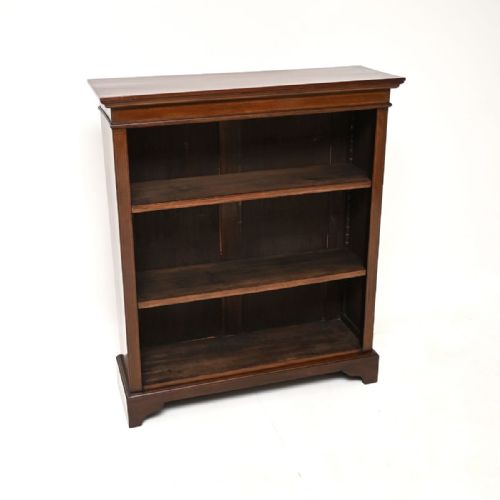
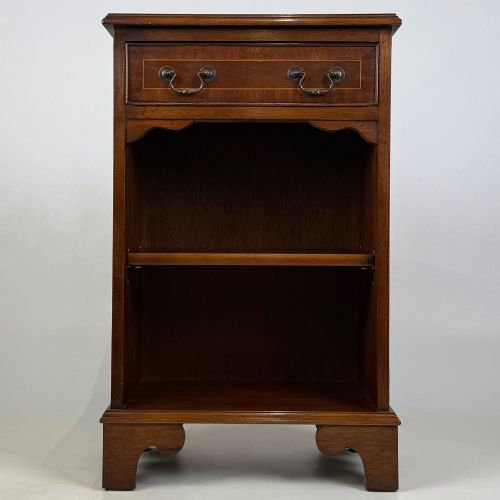
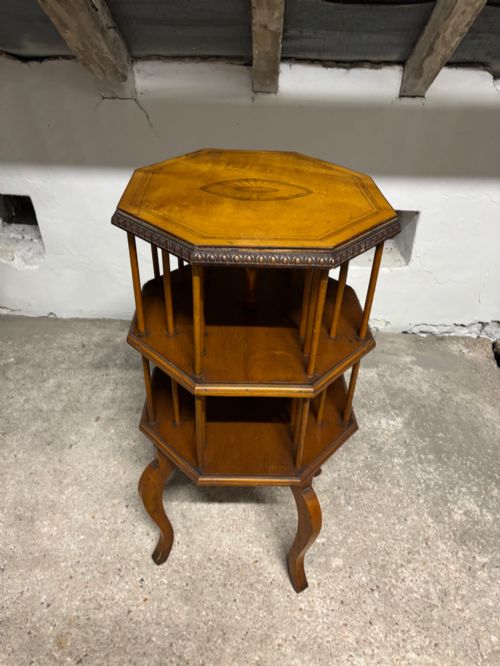
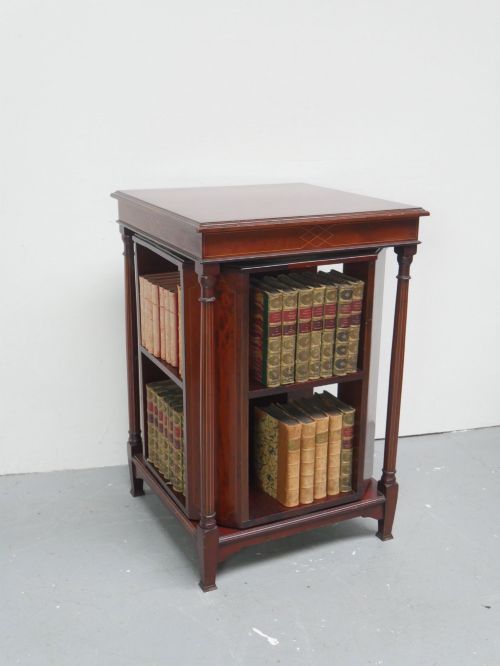
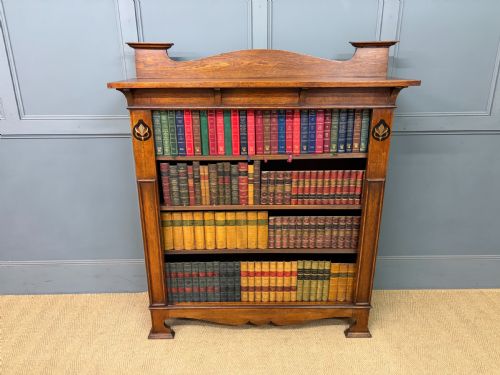
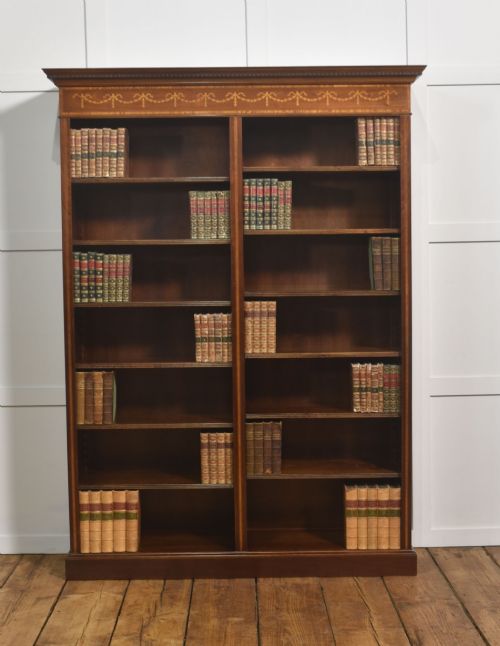
An edwardian inlaid bookshelf takes many forms on this page, spanning open shelf units, rotating table models, and tall cabinet designs. Most examples date from the Edwardian period and the early twentieth century, drawing heavily on Sheraton Revival aesthetics.
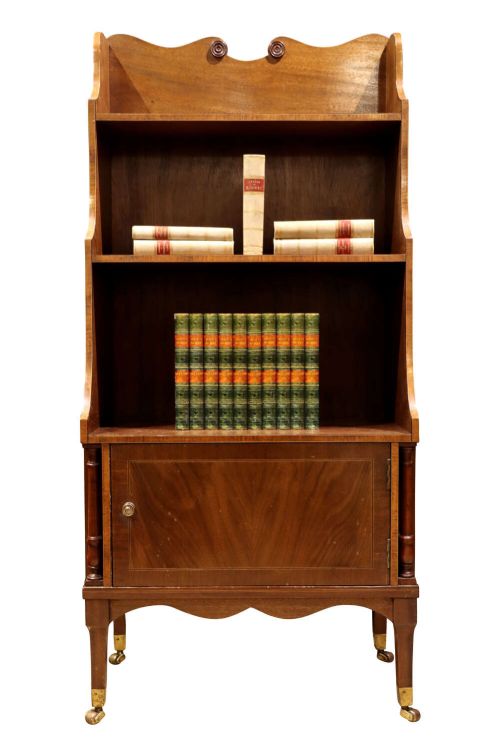
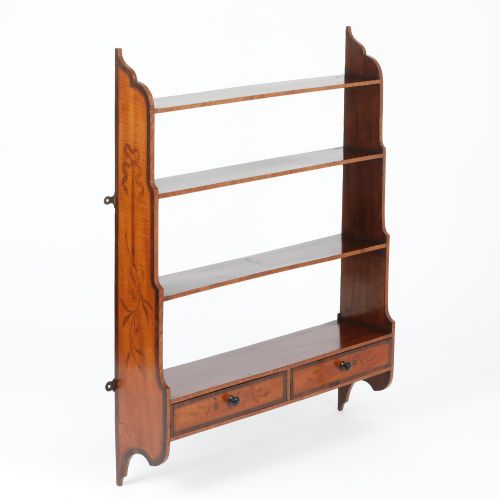
Makers fashioned these pieces primarily in mahogany, often enriched with satinwood, boxwood, and contrasting wood inlay. Alongside standard upright bookcases, buyers encounter revolving desk accessories, corner cabinets, and hanging waterfall shelves.
How they were made
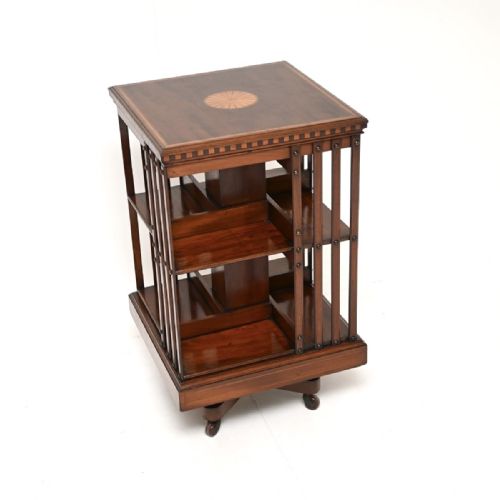
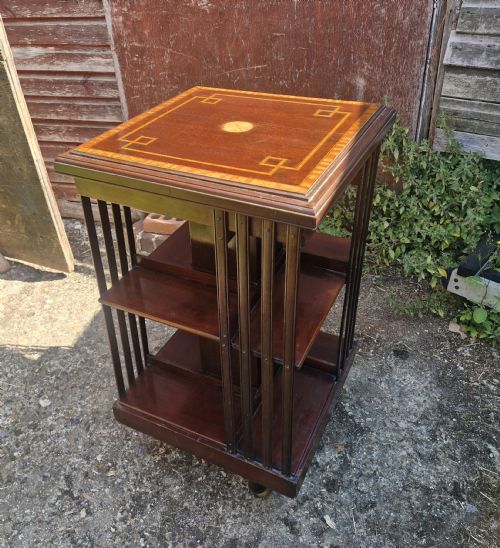
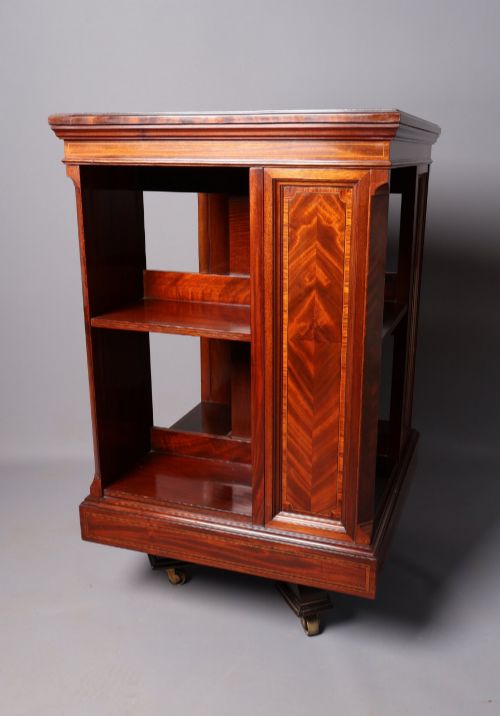
Cabinet makers built these pieces using solid mahogany and flame mahogany veneers over firmer timber bases. They applied delicate stringing and marquetry using contrasting timbers such as satinwood and boxwood to define panels and cornices.
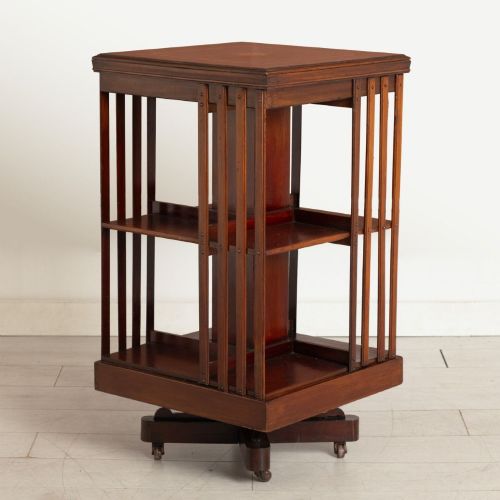
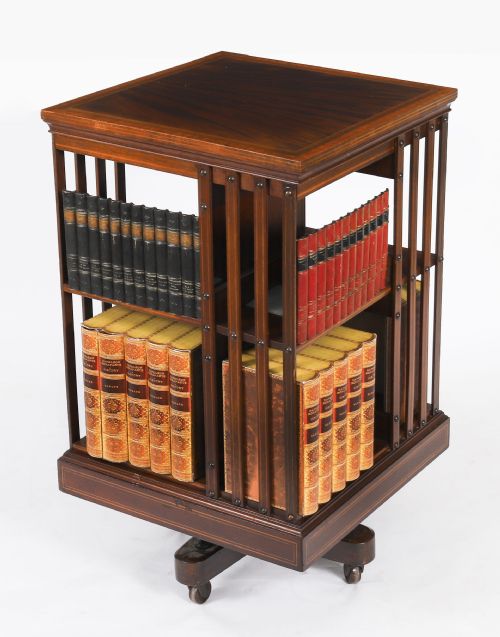
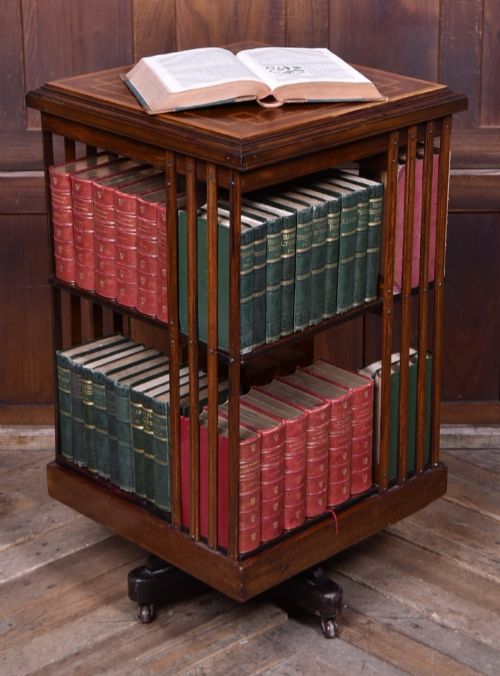
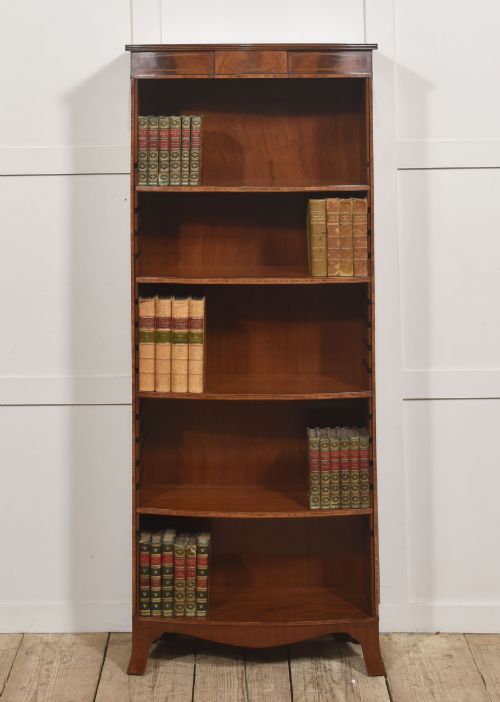
Revolving models relied on complex under-table mechanisms to turn smoothly, while larger standing units frequently incorporated brass castors and adjustable wooden shelving.
A revolving bookcase lets you spin your entire library around with a single gentle push when you cannot decide what to read next.
What varies in quality
The standard of an edwardian inlaid bookshelf rests on the crispness of its marquetry and the choice of timber figure. Flame mahogany veneers with rich chatoyancy and precise boxwood stringing sit comfortably above plainer, unfigured alternatives.
Structural integrity also separates individual pieces, particularly in revolving mechanisms that should spin without friction and standing frames that remain entirely plumb.
Maple and Co·Edwards and Roberts
The Edwardian Inlaid Bookshelf Glossary
- Inlay
- A decorative technique where pieces of contrasting timber are fitted into carved recesses of the main wood surface to form patterns.
- Satinwood
- A pale, dense timber prized for its lustrous sheen, frequently utilised in classical revival stringing and crossbanding.
- Revolving bookcase
- A freestanding tabletop or floor-standing bookcase mounted on a hidden rotating spindle for easy access from any angle.
- Waterfall bookcase
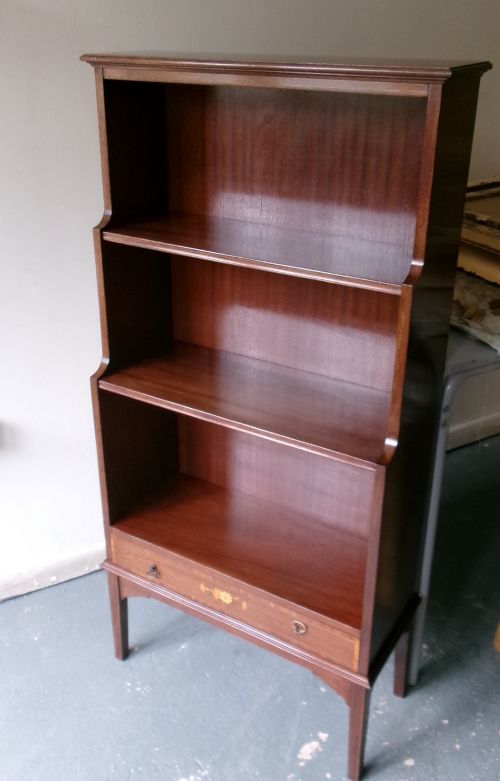
- A set of open shelves stepped back in successive tiers from bottom to top, creating a cascading profile.
- Stringing
- Thin, narrow lines of contrasting wood inlay used to outline drawers, shelves, and panels on cabinet furniture.
Edwardian Inlaid Bookshelf: Frequently Asked Questions
What styles define an edwardian inlaid bookshelf?
These pieces predominantly follow Sheraton Revival and Edwardian design principles, favouring classical symmetry, tapering supports, and light timber contrasts.
Maker details often reflect late nineteenth and early twentieth-century revivals of eighteenth-century neoclassical taste.
How do revolving bookcases function?
Floor and table models sit upon an internal cross-base mechanism with concealed ball bearings or castors that allow the entire tier of books to spin freely.
This engineering allowed readers to access a multi-directional library from a single stationary seat.
Where should I place a corner cabinet?
Corner bookcases and cabinets utilise unused ninety-degree wall junctions, making them practical for smaller studies and drawing rooms.
Their angled backs fit flush against intersecting walls while displaying books or decorative objects outward.
How do I care for mahogany and inlay?
Keep wooden surfaces away from direct sunlight and steady heat sources to prevent timber shrinkage and veneer lifting.
Apply a traditional wax polish sparingly to maintain the natural lustre of the polished mahogany and delicate boxwood stringing.