


Edwardian Hunting Artwork
Edwardian hunting artwork captures horses, hounds, and countryside pursuits in framed paintings and prints.
Edwardian Hunting Artwork
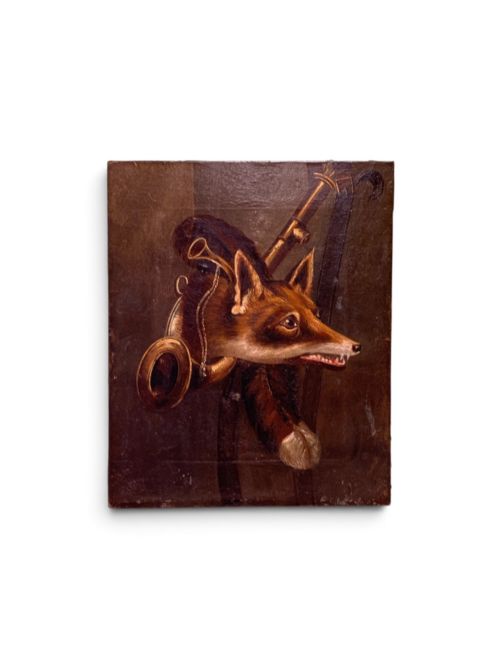
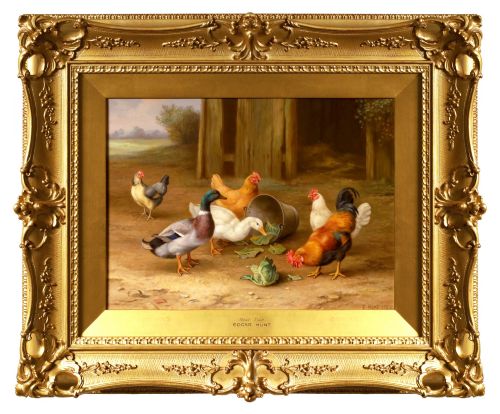
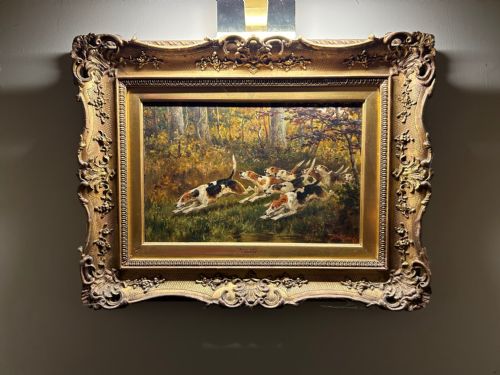
Edwardian hunting artwork covers framed paintings, watercolours, and prints depicting equestrian scenes, hounds, and field sports from the early twentieth century and surrounding periods. When searching for Edwardian hunting artwork, buyers encounter pieces capturing foxes, horses, and terriers set in open moorland and countryside landscapes. The selection spans oil on canvas, watercolour paintings, and original prints produced across the nineteenth and twentieth centuries.
Framed artworks on this page originate from British sporting art traditions, reflecting rural pursuits popular during the Victorian and Edwardian eras. These visual records range from intimate watercolours of spaniels to large oil paintings of equestrian scenes and hunting sequences. The physical presentation relies heavily on wood and giltwood frames that complement the traditional subject matter.
How they were made
Artists applied oil paint to canvas or board, and watercolour to paper, capturing the dynamic movement of horses, hounds, and riders. Many works utilise traditional brushwork to render the textures of animal coats, foliage, and open skies.
Framing materials such as wood and gilt wood enclose the paper, canvas, and glass components, protecting the delicate pigments and watercolours from environmental wear.
Listings feature paper, glass, wood, oil paint, and watercolour across nineteenth and twentieth-century periods.
What varies in quality
Quality rests upon the artist's ability to render anatomical precision in horses, dogs, and human figures during active movement. Hand-painted watercolours and original oils demonstrate individual brush mastery that mechanical print reproductions lack.
The choice of framing materials, particularly carved gilt wood, contributes to the overall presentation and preservation of paper and canvas works over time.
Edgar Hunt·Philip Henry Rideout·John Sanderson-Wells·Herbert Dicksee·Charles Johnson Payne Snaffles·Thomas Blinks·Godfrey Douglas Giles·Frank Dadd
The Edwardian Hunting Artwork Glossary
- Oil paint
- A slow-drying medium composed of pigments suspended in a drying oil, typically applied to canvas or wood board.
- Watercolour
- A painting method in which paint is made from pigments suspended in a water-soluble vehicle, traditionally executed on paper.
- Chromolithograph
- A multicolour printmaking process that uses multiple lithographic stones to build up rich colour layers.
- Gilt wood
- Wood that has been coated with a thin layer of gold leaf or metallic gilt, commonly used in traditional picture frames.
Edwardian Hunting Artwork: Frequently Asked Questions
What subjects appear in Edwardian hunting artwork?
These pieces depict equestrian scenes, fox hunting, hounds, spaniels, and rural landscapes with horses and riders.
Artists also recorded shooting scenes, wild boar encounters, and moorland pursuits.
How are these framed artworks displayed?
Most items arrive in wood or gilt wood frames, frequently protected beneath glass for watercolours and prints.
Wall art pieces suit studies, hallways, and traditional living spaces.
Are these pieces original or prints?
The selection includes original oil paintings, hand-painted watercolours, and period prints including chromolithographs.
Listings specify the exact medium used for each individual piece.
Which periods do these artworks represent?
While centred on the Edwardian era, the selection includes nineteenth-century pieces alongside works from the early twentieth century.
Styles span Victorian sporting art, British animalier, and Highland traditions.