
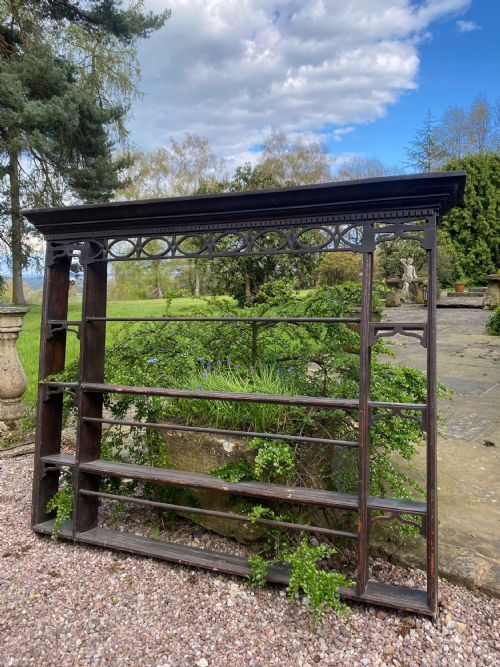
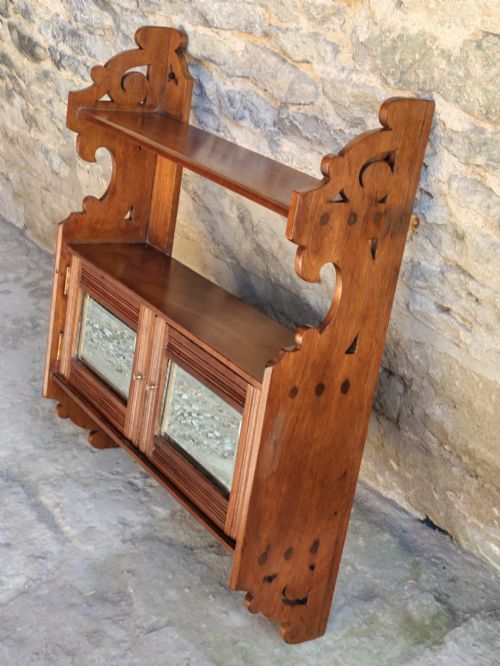
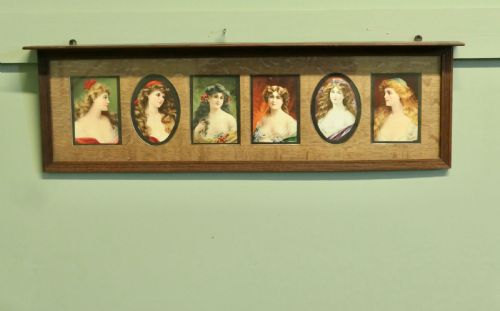
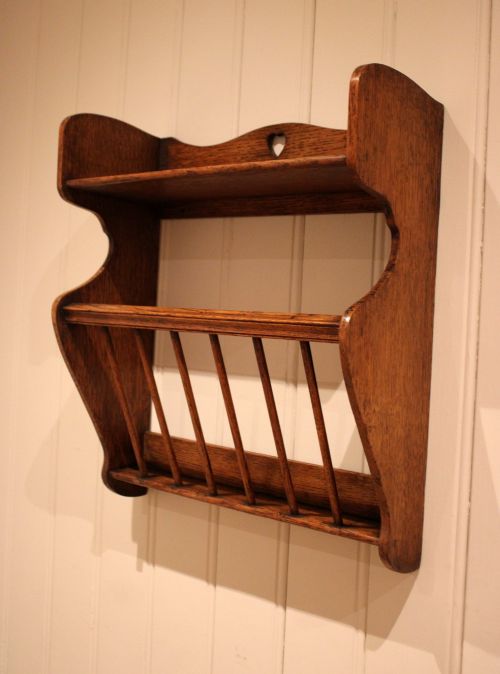


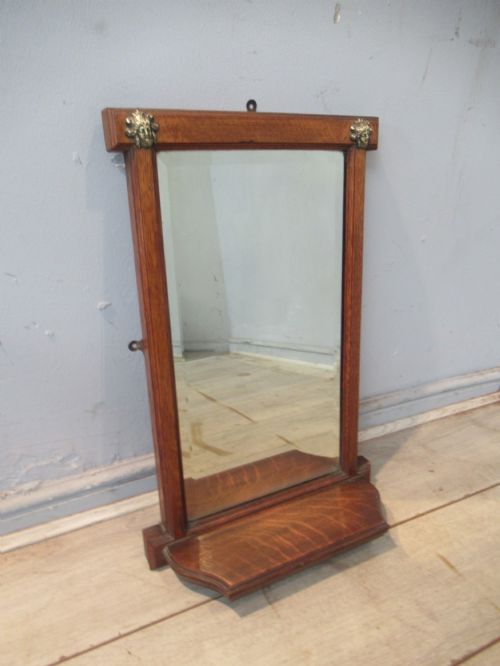


Edwardian Hanging Wall Shelf
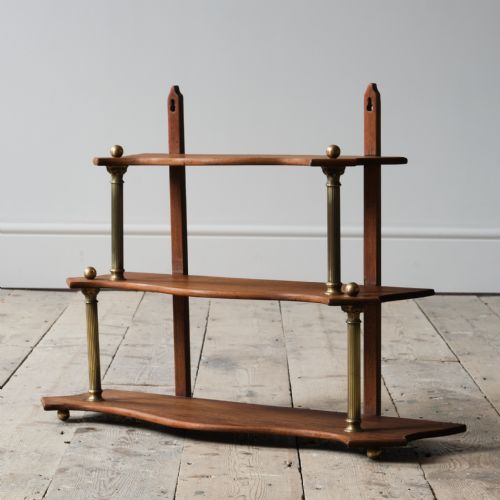
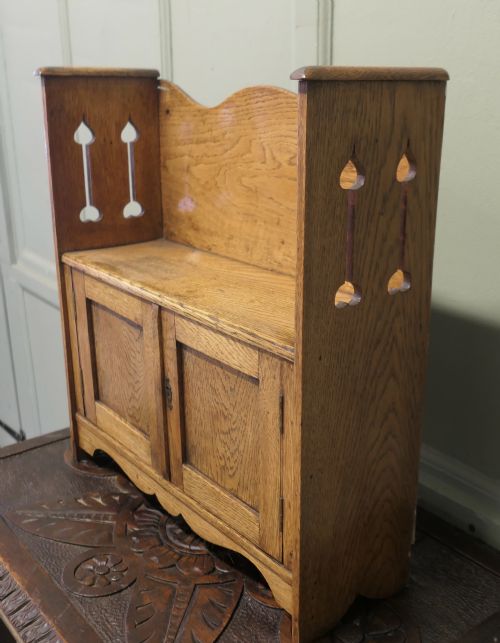
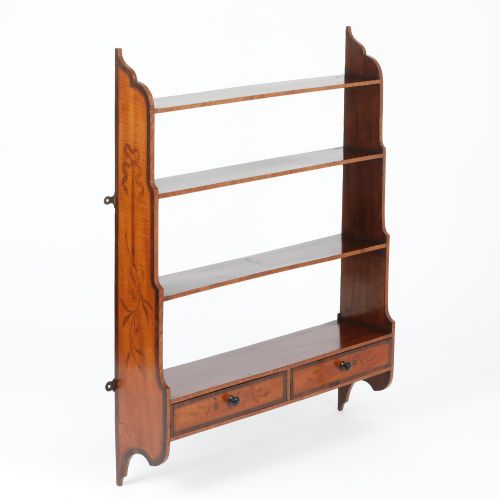
An edwardian hanging wall shelf brings useful display space to compact rooms, combining slender timber uprights with open tiers or small cupboards.
Edwardian Hanging Wall Shelf
While many examples date to the Edwardian period itself, the listings also include items from the Victorian and Arts and Crafts eras, alongside occasional earlier styles. These wall-mounted furniture pieces serve practical purposes in hallways, bedrooms, and living spaces without taking up valuable floor area.
Materials and construction
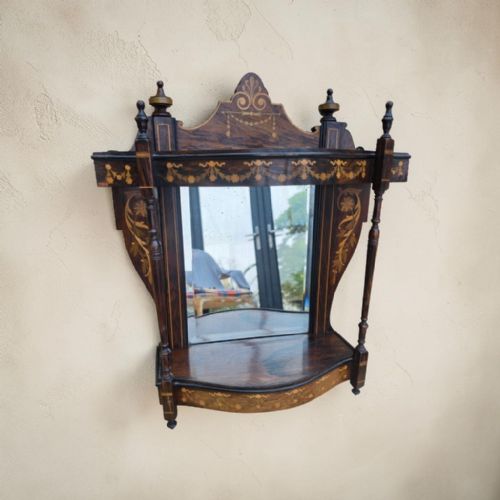
Cabinet makers utilised dense hardwoods such as mahogany, oak, and walnut to ensure stability while keeping the structures light enough for wall suspension. Satinwood and boxwood inlay frequently provide delicate contrast through stringing or geometric motifs.
Brass fittings, including hanging brackets, galleries, and hinges, provide both structural support and functional detail. Selected pieces incorporate painted surfaces or glazed panels to create enclosed display spaces for small collectibles.
Listings span multiple eras from the eighteenth century through to the Edwardian period, featuring mahogany, oak, satinwood, and walnut.
Assessing craftsmanship
Finer examples distinguish themselves through the precision of their joinery, such as neatly cut dovetails on small drawer boxes and tightly fitted shelf joints. The choice of timber grain and the crispness of inlay work further separate standard production pieces from master-built examples.
Hardware selection indicates the overall standard of manufacture, where heavy cast brass galleries and sturdy original suspension loops outlast thin stamped metal replacements.
John Moyr Smith·Arthur Simpson
The Edwardian Hanging Wall Shelf Glossary
- Whatnot
- A set of open shelves standing on legs or hung upon a wall, designed for displaying ornaments or holding books.
- Inlay
- A decorative technique where contrasting woods or metals are fitted flush into the primary timber surface to form patterns.
- Gallery
- A raised miniature railing along the edge of a shelf or top surface, originally intended to prevent items from sliding off.
- Stringing
- Thin, narrow lines of contrasting wood veneer embedded into the surface of a panel or frame for linear decoration.
Edwardian Hanging Wall Shelf: Frequently Asked Questions
How do I hang a wall shelf safely?
Wall shelves require secure fixing to solid masonry or direct attachment to timber wall studs using appropriate screws through the structural backplates.
Overloading shelves with heavy volumes can strain the hanging brackets, so distribution of weight remains essential for stability.
Where were these shelves used originally?
These pieces functioned across domestic interiors, appearing in hallways for correspondence, bedrooms for small mirrors, and libraries for extra volumes.
Compact dimensions allowed them to occupy narrow wall spaces where floor standing furniture proved impractical.
How do I care for antique timber?
Maintenance involves dusting with a dry lint-free cloth and avoiding silicone-based polishes that build up sticky residues over decades.
Keeping timber away from direct heat sources and strong sunlight prevents the wood from drying out and the finish from fading.
How do I distinguish Edwardian from Victorian pieces?
Edwardian designs typically favour lighter timber tones, slender proportions, and simpler neoclassical or Sheraton revival motifs compared to heavier Victorian styles.
Victorian wall furniture often employs darker walnut or heavy oak with more robust mouldings and denser carved ornamentation.