



Edwardian Hanging Wall Cabinet
An edwardian hanging wall cabinet brings compact architectural character to domestic interiors, offering practical storage that hovers neatly off the floor.
Edwardian Hanging Wall Cabinet
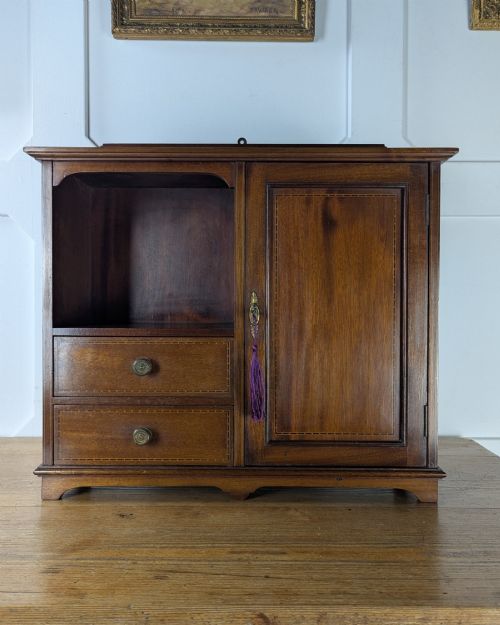
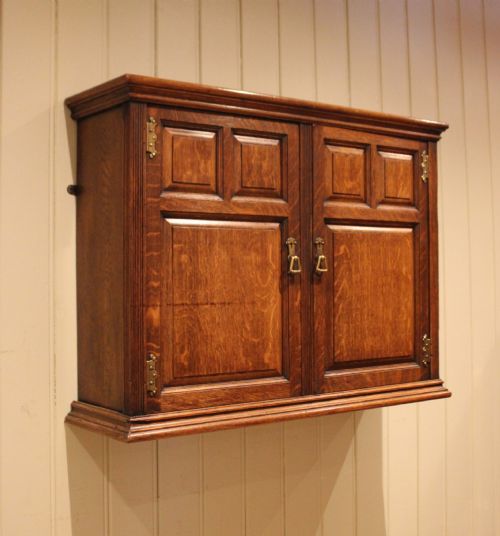
An edwardian hanging wall cabinet stands as a practical domestic fixture designed to secure small valuables, display ceramics, or hold household keys without occupying valuable floor space. The form frequently draws upon earlier Georgian or Victorian proportions, adapting traditional display concepts for compact urban rooms of the early twentieth century.
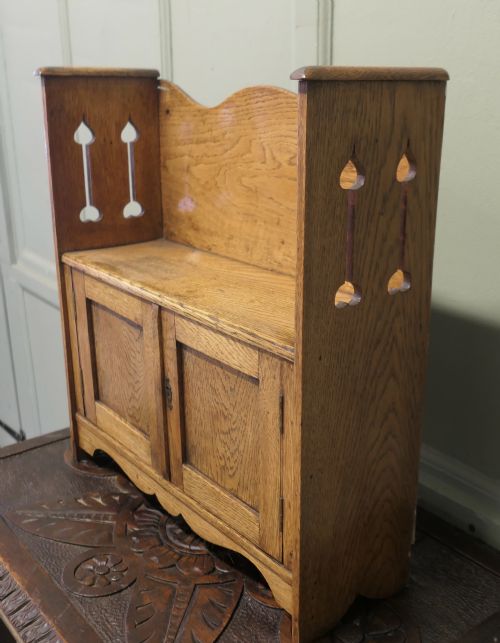
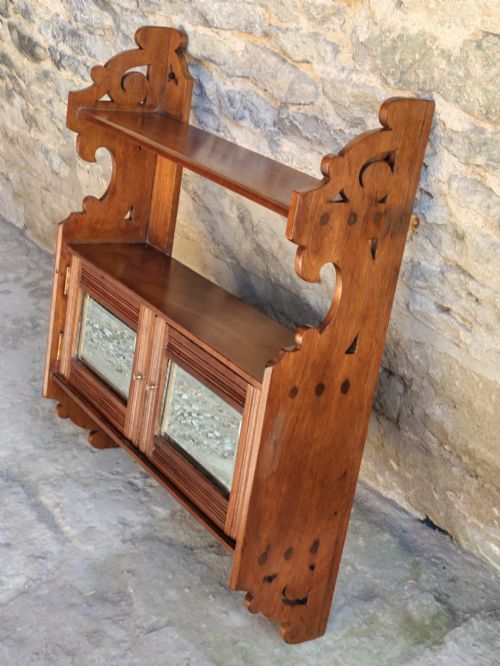
Buyers browsing this selection will encounter varied formats ranging from glazed corner cupboards and smokers' cabinets to shallow display shelving and shaving mirrors. Mahogany and oak dominate the surviving examples, often enriched with satinwood inlay or brass hardware consistent with the period taste.
How they were made
Cabinet makers constructed these wall-mounted pieces using solid hardwoods like mahogany and oak, supplemented by cedar, walnut, and rosewood veneers. Structural integrity relied on traditional joinery, while decorative appeal emerged through contrasting satinwood stringing, boxwood inlay, and carved surface details.
Glazing typically involved individual small glass panes secured within wooden framing, sometimes shaped in astral patterns or curved to follow bowfront profiles. Brass hinges, latches, and escutcheons completed the construction, functioning both as structural reinforcement and visual accents.
Formats range from corner display cupboards to shaving mirrors and specialised smokers' cabinets.
What varies in quality
The degree of hand craftsmanship separates standard production pieces from finer cabinet work, evident in the crispness of carved mouldings and the precision of inlaid wood marquetry. Superior examples utilise carefully selected timber grains that match harmoniously across door panels and cornices.
Hardware selection and internal fitting further distinguish the build standard, with heavier brass mounts and well-fitted shelving indicating a higher grade of manufacture. Cabinets retaining original glass, functioning locks, and intact surface patination represent the upper tier of surviving pieces.
John Moyr Smith·Arthur Simpson
The Edwardian Hanging Wall Cabinet Glossary
- Astral glazed
- Refers to glass doors divided into smaller panes by narrow wooden bars, often creating geometric or curved patterns.
- Bowfront
- A curved front facade that swells outward in a convex shape, frequently seen on corner cupboards.
- Inlay
- A decorative technique where pieces of contrasting wood or other materials are inserted into recessed portions of a base surface.
- Pendant
- A hanging decorative element dropping beneath the main body or base of a cabinet.
- Stringing
- Thin lines of contrasting timber inlaid into furniture surfaces to create linear borders.
Edwardian Hanging Wall Cabinet: Frequently Asked Questions
How do I hang a wall cabinet securely?
Wall cabinets require robust fixings attached directly into wall studs or masonry rather than relying solely on standard plasterboard anchors. The weight of hardwood frames and glass doors demands reliable load-bearing hardware to prevent displacement.
Position the cabinet at a comfortable viewing or reaching height depending on its intended domestic function. Ensuring correct alignment with a spirit level prevents door warping and keeps hinged panels operating smoothly.
Were these cabinets meant for corners?
Many surviving examples are specifically engineered with angled backs to fit snugly into room corners, maximising unused architectural space. These corner designs often feature glazed display doors to showcase porcelain or glassware.
Flat-backed wall cabinets also appear frequently in the record, designed for standard wall placement in hallways, smoking rooms, or bedrooms. Checking the rear profile easily distinguishes a corner unit from a standard flat wall-mounted cupboard.
How should I clean the wood and glass?
Dust wooden surfaces regularly with a soft, dry cloth to prevent particulate buildup without stripping the aged surface finish. Avoid modern silicone sprays, which can penetrate porous timber and attract further grime.
Clean glass panes using a mild solution applied directly to the cloth rather than the wood to prevent moisture damage to antique frames. Take care around delicate inlay work and brass hardware during routine maintenance.
Can I store heavy books inside?
These compact units are generally built for lightweight items such as ceramics, glassware, small books, or household requisites. Overloading internal shelves can strain fixed supports and historical joinery.
Examine the depth of the cabinet and the thickness of the shelving timber before placing heavier volumes inside. Most hanging pieces prioritise display and minor storage over heavy-duty library capacity.