


Edwardian Hall Rack
When you search for an edwardian hall rack, you uncover practical oak and mahogany furniture built to organise busy entranceways with hooks, mirrors and umbrella stands.
Edwardian Hall Rack
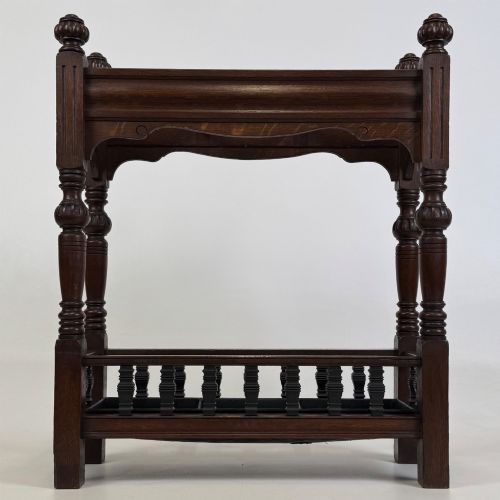
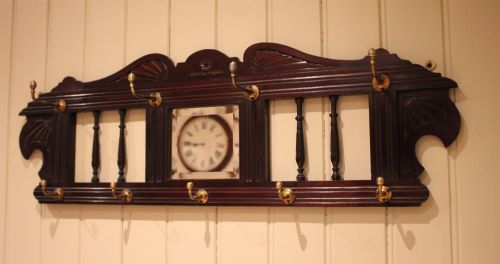
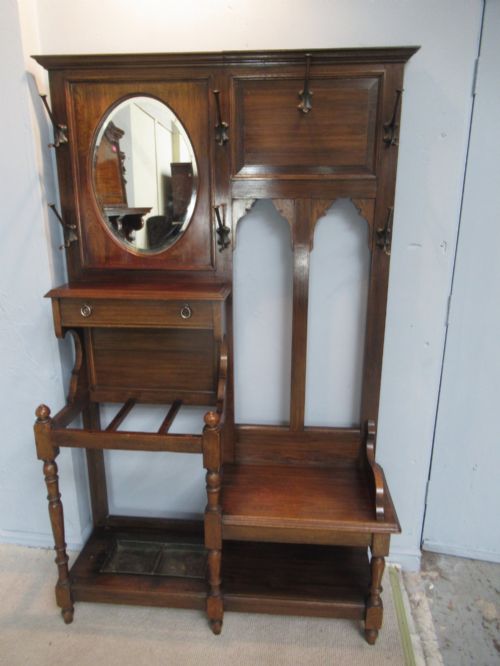
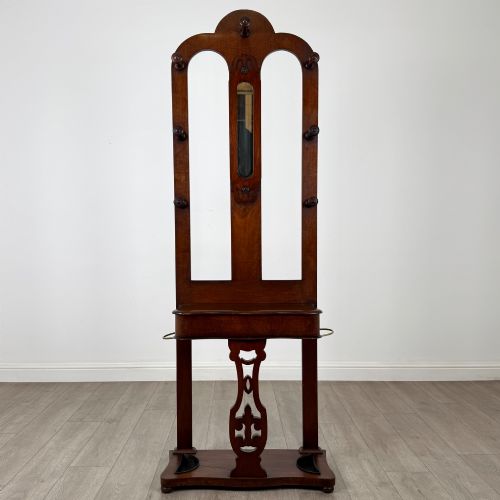
An edwardian hall rack serves as a functional greeting point in a domestic entranceway, combining storage for coats, hats and walking sticks within a single piece of furniture. These items range from compact wall-mounted coat rails to substantial freestanding hall stands fitted with mirrors and umbrella trays.
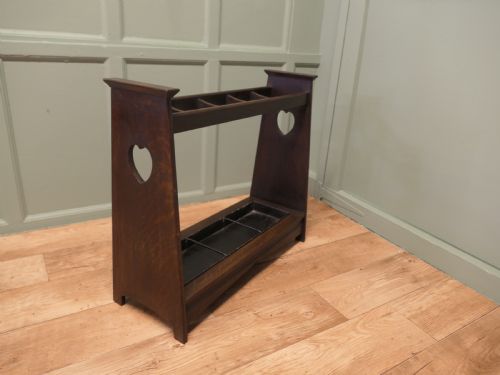
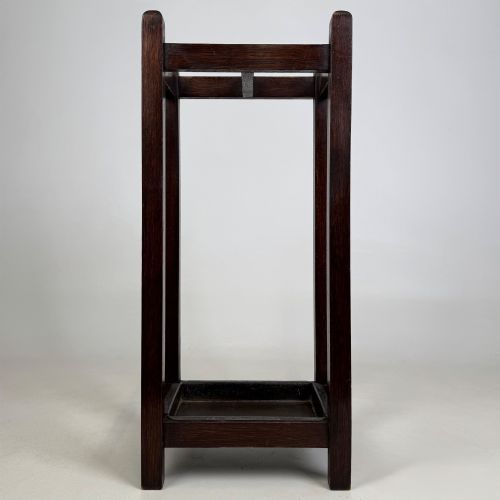
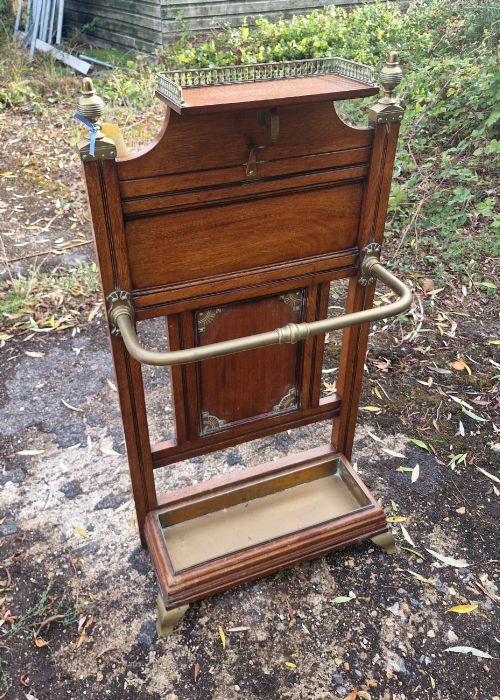
The versions most frequently seen on this page date from the early twentieth century and the late nineteenth century, reflecting the domestic habits of the period. They often incorporate brass hooks, wooden pegs and metal drip trays designed to catch rainwater from wet umbrellas.
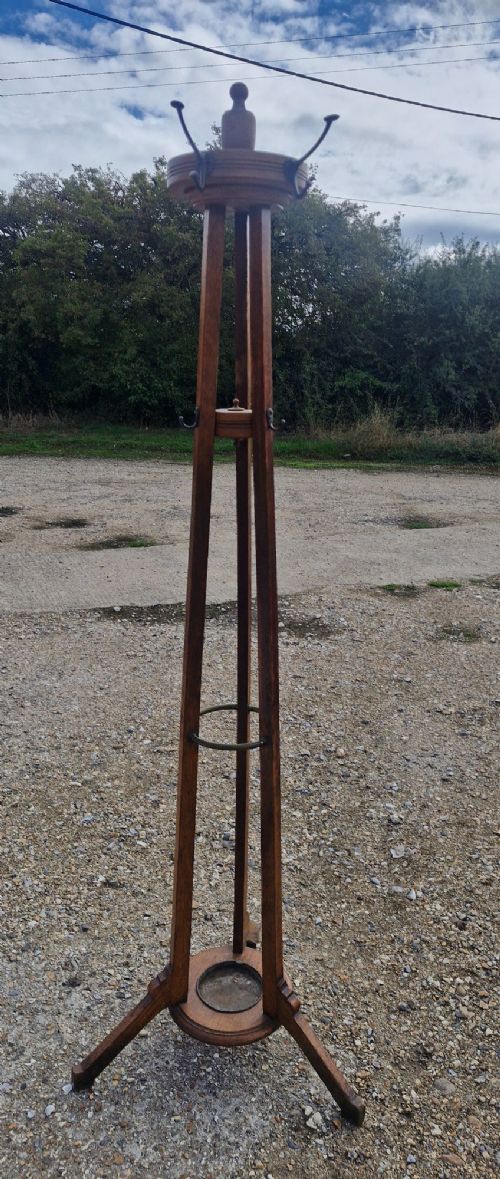
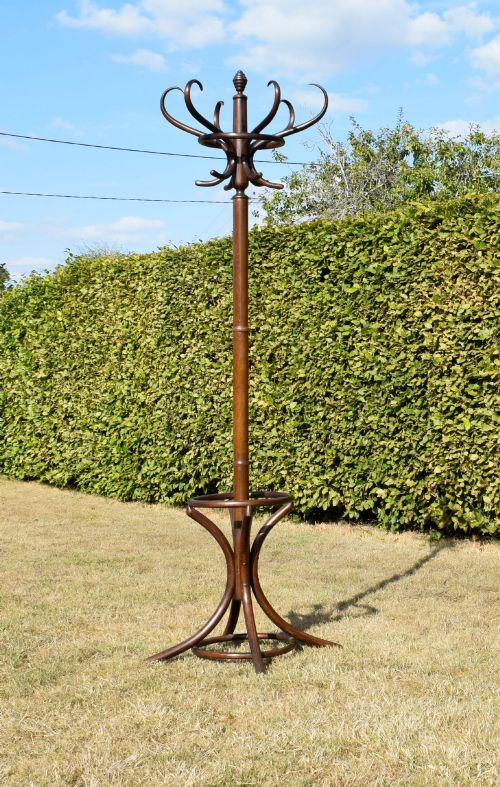
Makers produced these hall furnishings in various forms, including revolving stands, bentwood designs, and combination pieces featuring small seats or luggage racks. Oak and mahogany dominate the selection, accompanied by occasional examples in beech and metal.
How they were made
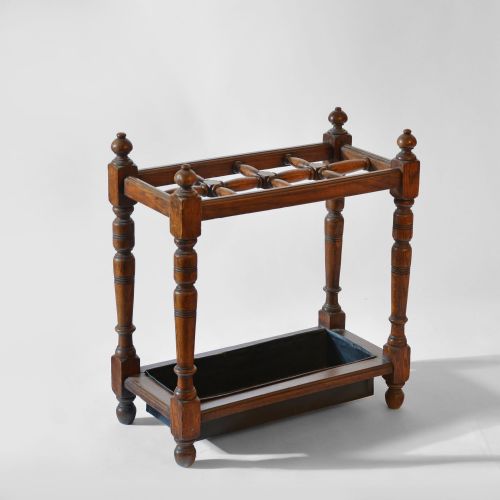
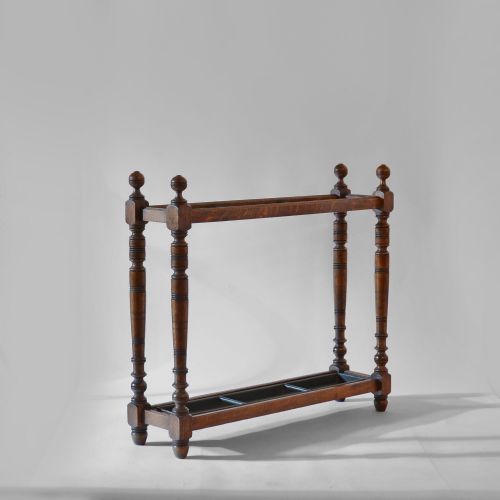
Carpenters constructed the primary framework of these pieces using solid timbers like oak and mahogany, often shaping them with carved details or turned spindles. Bentwood versions utilised steamed beech heated to create characteristic curved profiles without traditional joinery.
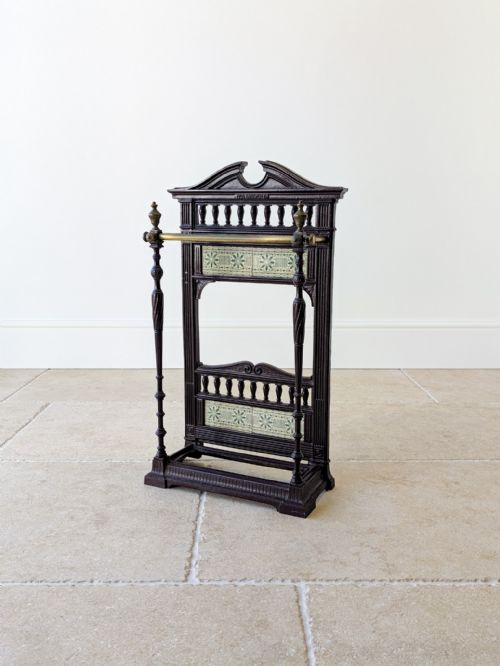
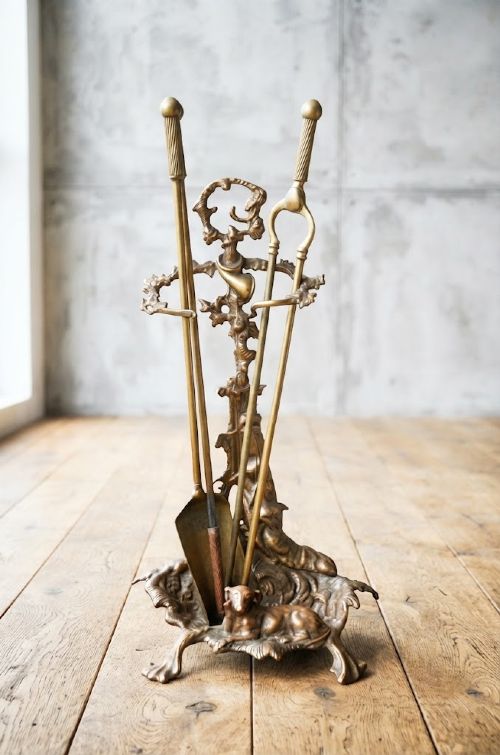
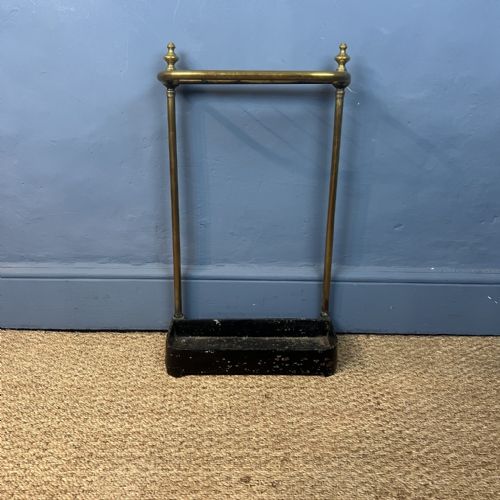
Metal components such as brass, cast iron and copper formed the structural hooks, umbrella divisions and removable drip pans found at the base of the stands. These elements were fastened with traditional screws and brackets to withstand the daily weight of heavy winter garments and wet walking gear.
Several stands feature hunting scenes cast into iron drip trays, ensuring even rainy days came with a touch of sporting drama.
What varies in quality
The grade of an edwardian hall rack depends on the selection of timber and the complexity of its construction, with quarter-sawn oak and figured mahogany representing finer production standards. Solid wood backing boards and robust jointing demonstrate superior craftsmanship compared to lighter, utilitarian pieces.
Detailing also distinguishes the tier of manufacture, such as bevelled mirror glass, heavy brass foundry work on the coat hooks, and integrated ceramic or metal drip trays. Original matching hardware and intact structural integrity indicate higher initial workshop standards.
Coalbrookdale·Liberty Design·Thonet·J. Parker of Woodstock
The Edwardian Hall Rack Glossary
- Hall Stand
- A large freestanding entranceway furniture piece that combines coat hooks, a mirror, umbrella storage and sometimes a small seat or glove drawer.
- Bentwood
- Wood that has been rendered pliable by steam and then bent into curved shapes, commonly associated with beech hat and coat stands.
- Drip Tray
- A shallow metal pan placed at the base of a stick stand to catch moisture from wet umbrellas and walking sticks, protecting the floor.
- Stick Stand
- A dedicated piece of furniture or integrated section designed specifically to hold walking sticks, canes and umbrellas upright.
- Hat and Coat Stand
- A vertical freestanding post featuring multiple branching hooks at different heights for hanging headwear and outerwear.
Edwardian Hall Rack: Frequently Asked Questions
What is an edwardian hall rack?
An edwardian hall rack is a piece of entranceway furniture designed to hold outdoor garments, hats, and walking aids. They combine practical storage with decorative woodwork typical of the early twentieth century.
These items frequently include wall-mounted rails or large freestanding stands equipped with mirrors, metal coat hooks, and umbrella wells.
How were stick stands used?
Stick stands served to keep walking canes, umbrellas, and parasols tidy and accessible near the front door. The integrated metal trays caught residual water and dirt from wet outdoor gear.
Households utilised these divisions to organise accessories for different family members or guests visiting the home.
Where should I place a hall stand?
These stands fit naturally in entrance halls, porches, or boot rooms where coats and umbrellas are dropped upon entering the house. Freestanding versions require adequate floor space and a clear wall area if they include a mirror.
Placement near the main entrance ensures the furniture serves its original practical purpose of managing outdoor apparel.