

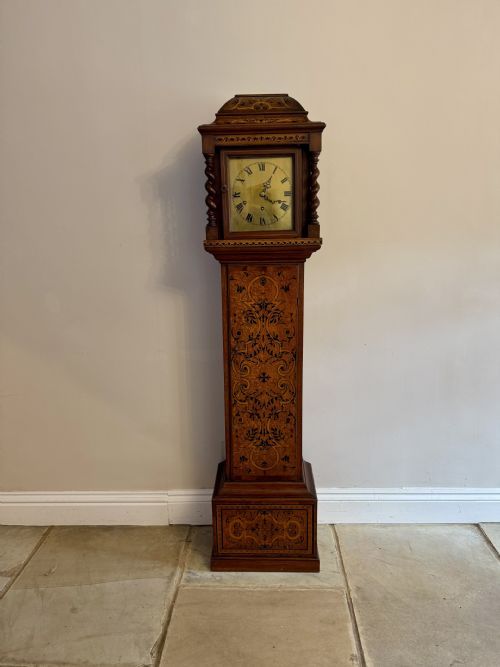


Edwardian Hall Clock
An edwardian hall clock brings monumental presence and intricate chime movements into a room, offering both traditional timekeeping and architectural dignity.
Edwardian Hall Clock
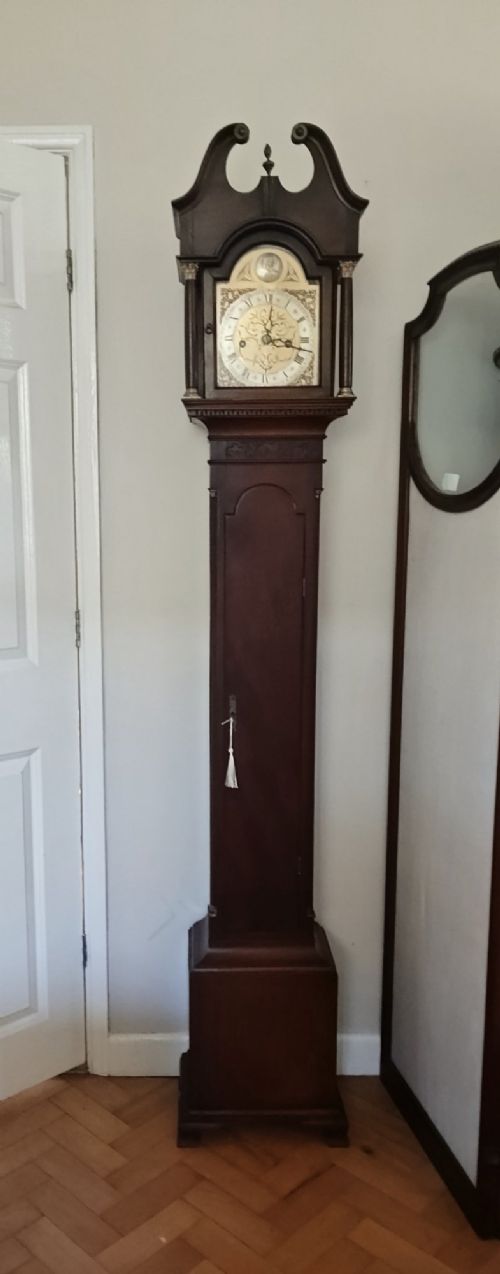
When you search for an edwardian hall clock, you encounter tall timepieces encompassing full-scale longcase clocks, grandfathers, and smaller grandmother clocks designed for domestic spaces of the period. These floor-standing instruments serve as focal points in hallways and principal rooms, combining mechanical complexity with stately cabinetry.
The selection ranges from tall mahogany and oak longcase pieces down to smaller miniature regulators and musical grandmother clocks standing on slender proportions. Most examples date from the Edwardian era itself, while associated pieces stretch from the nineteenth century into the nineteen-thirties.
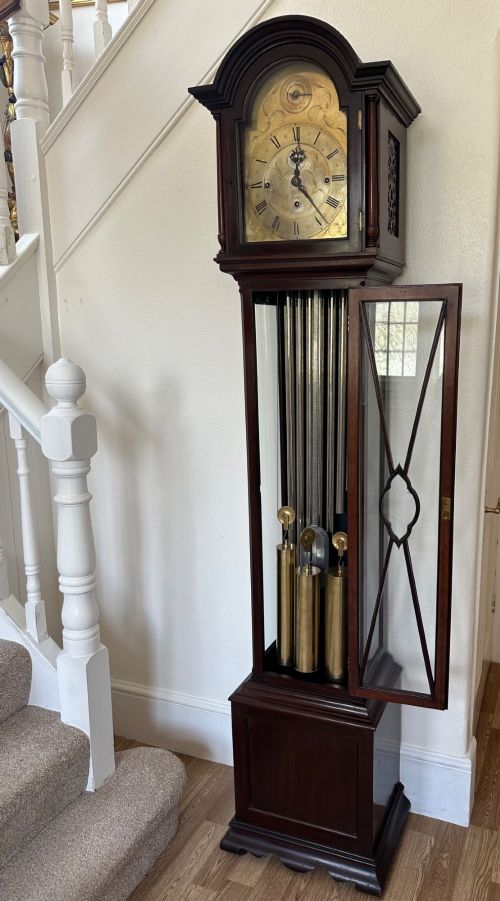
Beyond standard time indication, many specimens incorporate elaborate chiming mechanisms, playing via tubular bells or multiple tunes to mark the quarters and hours. Cabinet styles shift from plain timber surfaces to inlaid marquetry, Chinoiserie decoration, and revival designs echoing Georgian, Victorian, or Jacobean tastes.
Materials and construction
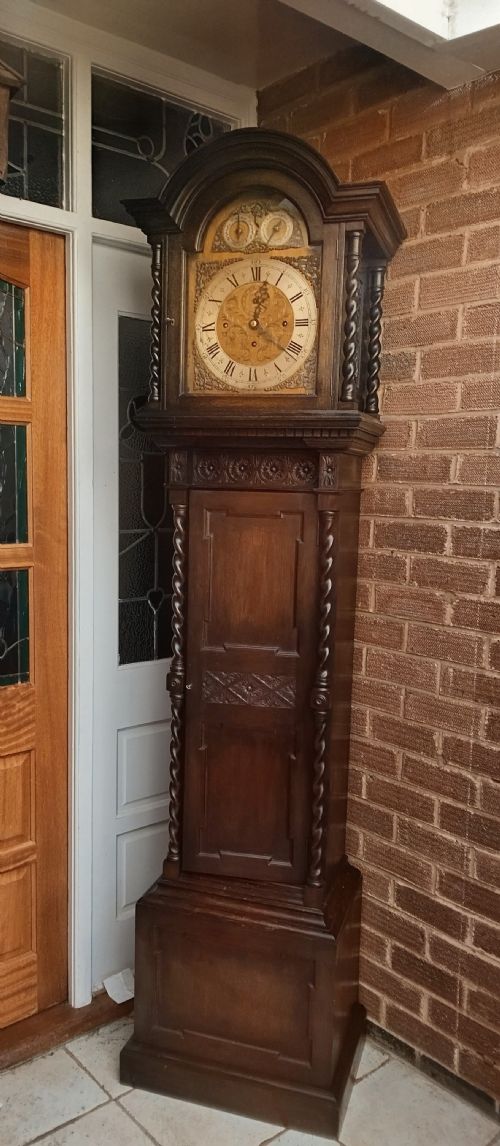
Cabinetmakers utilised dense cabinet timbers, primarily mahogany and oak, alongside decorative veneers such as satinwood, burr walnut, and ebonised wood to build the tall housing. These woods were polished, carved, or inlaid with marquetry motifs to achieve rich surface textures.
Dial and internal mechanics rely on brass components, glass face covers, and complex gear trains driven by weights or springs. Dial faces feature engraved chapter rings, subsidiary dials, and decorative spandrels paired with precision metalwork for the movement.
One exceptional wall clock survived local government debates with a unique history at Holborn Town Hall and Library.
Distinctions in quality
Quality rests upon the sophistication of the internal movement, separating simple time-only clocks from elaborate models featuring nine tubular bells, quarter chiming, or multi-tune musical cylinders. Master horologists integrated complex gear trains that demand high precision to maintain accurate strikes.
Cabinet execution distinguishes standard production from exhibition pieces, where fine marquetry inlay, carved mahogany details, and balanced proportions reflect superior joinery and design ambition.
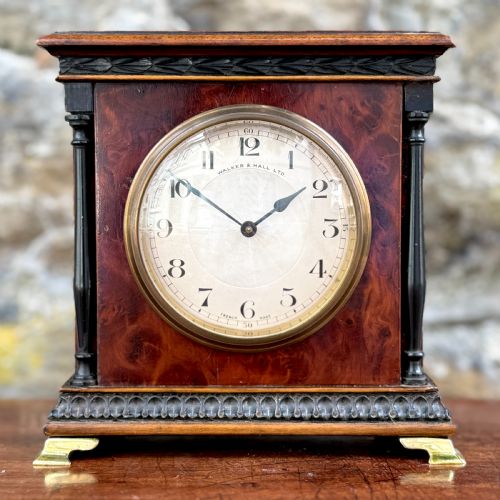
Walker and Hall·Maple and Co of London
The Edwardian Hall Clock Glossary
- Longcase clock
- A tall, floor-standing pendulum clock enclosed in a wooden case, commonly known as a grandfather clock. These housing structures protect the weighted movement while adding vertical architectural presence to a room.
- Grandmother clock
- A smaller, more slender version of the longcase clock, typically standing shorter in height. This scale suits domestic interiors where full-sized grandfather clocks would overwhelm the floor plan.
- Tubular bell
- A set of metal tubes suspended within a clock case struck by hammers to produce resonant chime notes. They replaced traditional gongs in higher-quality Edwardian chiming movements.
- Marquetry
- Decorative veneer work forming pictorial or geometric patterns using various coloured wood pieces. Craftsmen applied this technique to cabinet doors and friezes.
- Chasing
- The art of embossing or indenting metal surfaces by hammering from the front to create low-relief decorative patterns. Dial surrounds and brass fittings frequently display this metalworking skill.
Edwardian Hall Clock: Frequently Asked Questions
Where should I place an edwardian hall clock?
These tall floor-standing clocks suit entrance hallways, large landings, or principal reception rooms where their vertical presence commands the space. Placement requires a stable, level floor to ensure the pendulum swings evenly and the movement keeps accurate time.
Keep the timber away from direct heat sources and strong sunlight to protect the polished mahogany or oak finish and prevent veneer warping over time.
How do I wind a chiming movement?
Winding involves using a matching key to draw up the weights or tension the springs via holes in the dial face. Care must be taken not to overwind the mechanism, stopping as soon as resistance increases.
If the clock plays multiple tunes or chiming sequences, allow the current cycle to finish completely before adjusting the hands or winding the train.
What is the difference between a grandfather and a grandmother clock?
The primary distinction lies in height and overall scale, with grandfather clocks standing as full-sized tallcase timepieces and grandmother clocks built to much smaller, more compact proportions. Grandmother clocks emerged to fit narrower hallways and smaller Edwardian rooms.
Despite their reduced size, grandmother clocks often house sophisticated quarter-chiming or musical movements comparable to their larger counterparts.
How do I identify an Edwardian period piece?
Edwardian timepieces span the early twentieth century, showing specific cabinet styles ranging from inlaid mahogany and satinwood to Jacobean revival oak and Chinoiserie decoration. Movement construction during this era often includes tubular bell systems and advanced chiming options.
Examining the internal brass plates, dial signatures, and secondary woods helps confirm the manufacturing era and distinguishes original pieces from later revivals.