





Edwardian Green Vase
An edwardian green vase brings rich botanical colour and fluid, organic design into a room through earthenware, ceramic, and glass forms.
Edwardian Green Vase
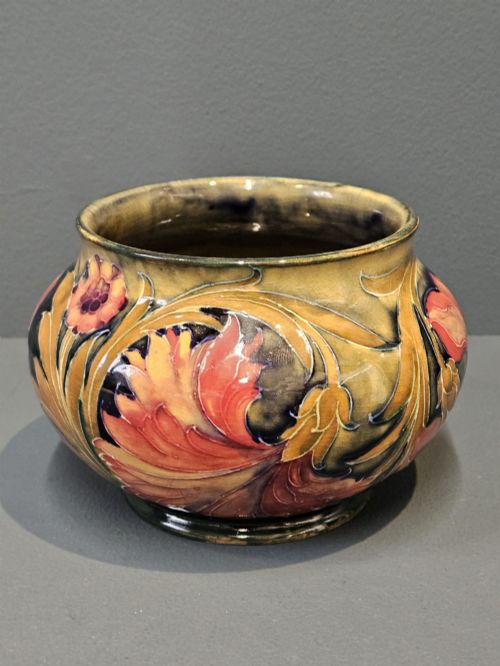
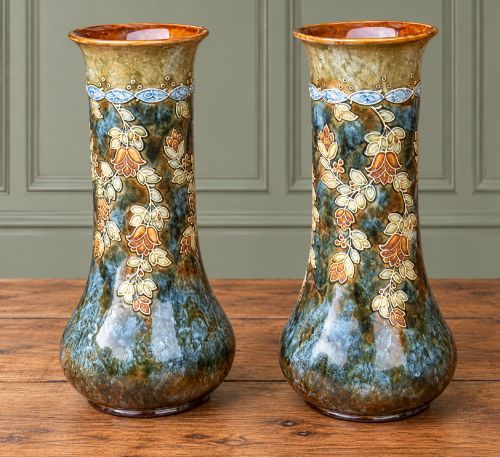
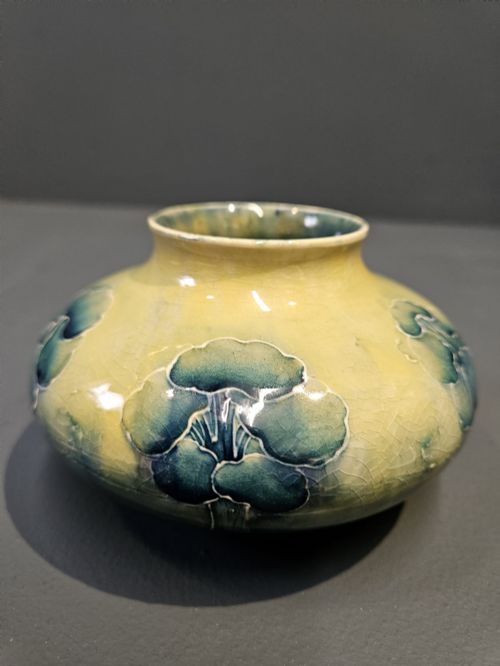
An edwardian green vase spans several distinct ceramic and glass forms created around the turn of the twentieth century. These vessels range from stout squat shapes and baluster silhouettes to slender glass flutes and decorative ewers.
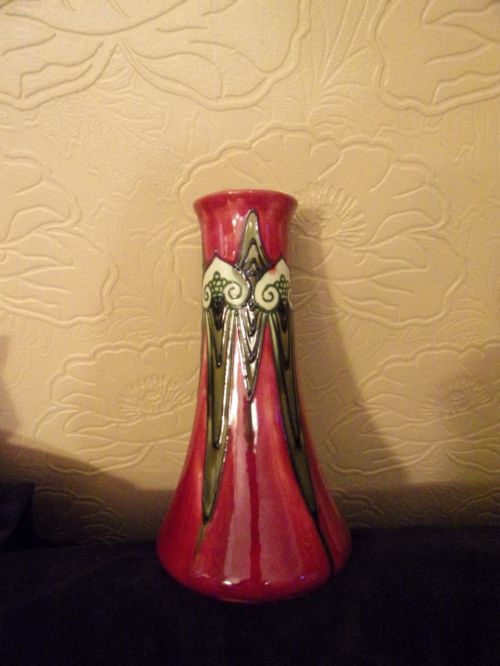
Makers of the period embraced varied aesthetic movements, producing pieces defined by Art Nouveau curves, Secessionist geometry, and Arts and Crafts simplicity. Buyers will encounter both utilitarian earthenware and delicate art glass suited for display.
The green palette varies significantly across the selection, shifting from deep forest tones and pale sea glass shades to lustrous iridescent finishes.
How they were made
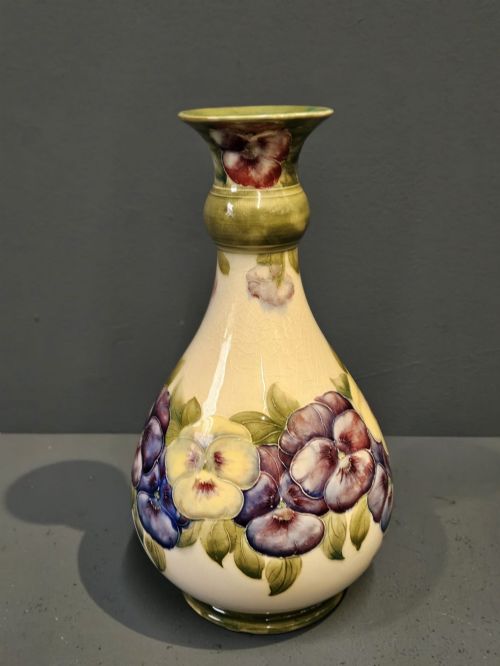
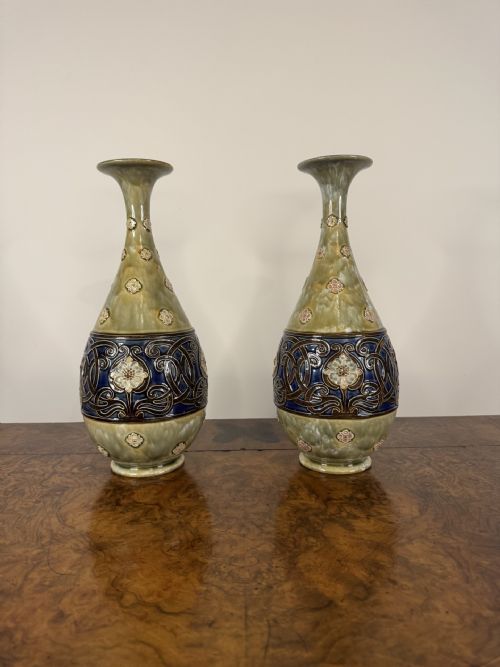
Potters utilised earthenware, stoneware, and porcelain bodies, frequently enhancing the surfaces with tube-lined glazes or slip decoration. Factories like Royal Doulton and Moorcroft applied rich coloured glazes to accentuate raised botanical motifs.
Glassmakers employed optic blowing and iridescent treatments to create depth within the material, seen in works by Loetz and James Powell. Metal mounts in pewter and sterling silver occasionally frame the glass and ceramic bodies.
Edwardian Green Vase Retail Price Guide 2026
Typical asking prices for edwardian green vase among the pieces listed under this phrase on Sellingantiques today, from the lower quarter to the upper quarter. They describe what is for sale here now, not the wider market.
Materials represented include earthenware, stoneware, porcelain, and glass, often enhanced with enamel, gold leaf, or pewter mounts.
What varies in quality
The distinction between standard production and exceptional work lies in the execution of the design and the depth of the glaze. Hand-painted details by recognised artists and precise tube-lining elevate certain earthenware pieces above simple commercial output.
In glass vessels, the richness of the iridescence and the complexity of the optical blowing determine the distinction of the piece. Superior examples display controlled colour variation and well-integrated metalwork.
Moorcroft·Royal Doulton·Loetz·James Powell·Ernst Wahliss·Royal Worcester
The Edwardian Green Vase Glossary
- Tube-lining
- A ceramic decorating technique where liquid clay is squeezed through a nozzle onto the body to form raised outlines. This method creates defined cells that hold different coloured glazes.
- Secessionist
- A stylistic movement rejecting traditional historicism in favour of stylised floral and geometric patterns. It appears frequently on ceramics and metalwork from the period.
- Vaseline glass
- A type of glass coloured with uranium oxide that exhibits a distinctive yellow-green fluorescence under ultraviolet light. It was widely produced by makers such as Moser.
- Baluster
- A vertical architectural form with a swelling lower portion tapering toward the neck, commonly used for ceramic vase silhouettes.
- Ewer
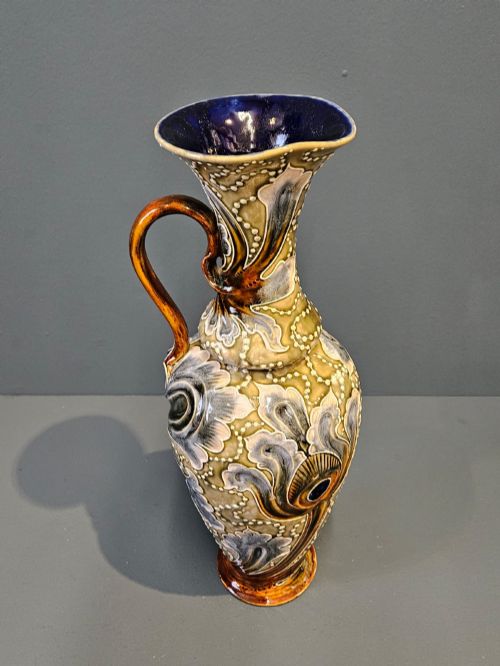
- A large jug with a wide spout and scrolled handle, often produced for decorative display rather than utility during this era.
Edwardian Green Vase: Frequently Asked Questions
How do I identify an Edwardian green vase?
Look for characteristic stylistic markers such as flowing organic lines, tube-lined floral decoration, or vibrant iridescent glass finishes typical of the period. Maker marks, impressed numbers, and registration details on the base also help confirm the date and origin.
Examine the glaze depth and the weight of the ceramic or glass body, as turn-of-the-century manufacturing methods produced distinct tactile qualities.
Were these vases used for flowers or display?
While many vessels were designed to hold fresh blooms or foliage, larger ewers, stick stands, and decorative amphorae served primarily as ornamental furnishings for the home.
Smaller spill vases and flutes fulfilled domestic functions on mantelpieces and side tables, combining practicality with contemporary artistic taste.
How should I clean my antique vase?
Dust ceramic and glass surfaces gently with a soft, dry cloth to prevent accumulation. Avoid harsh chemical cleaners or abrasive pads that might damage delicate lustres, gold leaf, or silver mounts.
If the interior requires washing, use lukewarm water and mild soap, drying thoroughly afterwards to protect older earthenware bodies from moisture retention.
What is the difference between Art Nouveau and Secessionist styles?
Art Nouveau design relies on sinuous, asymmetrical plant forms and curving lines inspired by natural growth. Secessionist work tends toward more structured, geometric arrangements while retaining a modern spirit.
Both movements influenced the green glazed ceramics and art glass produced during the Edwardian era.