


Edwardian Gothic Revival Chairs
Edwardian gothic revival chairs bring robust ecclesiastical character and dark timber into domestic rooms.
Edwardian Gothic Revival Chairs
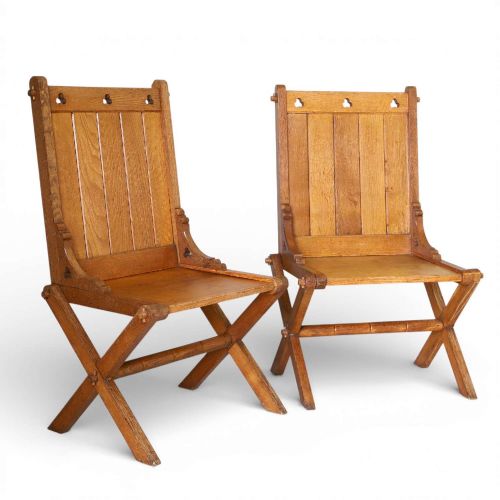
Edwardian gothic revival chairs combine architectural church details with domestic seating forms like armchairs, side chairs, and hall chairs. These pieces draw heavily on earlier nineteenth-century ecclesiastical designs, employing pointed arches, trefoils, and tall carved backs within domestic settings.
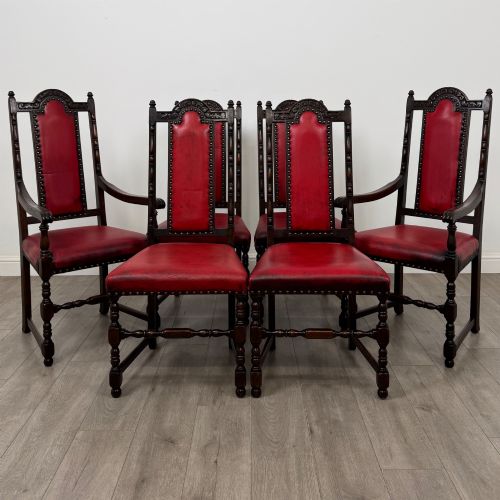
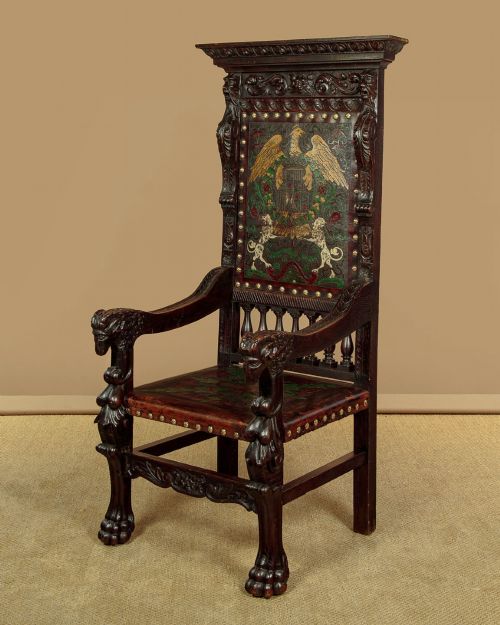
Buyers meet sturdy oak frames most frequently when exploring this aesthetic, alongside occasional examples utilising mahogany or upholstered leather panels. The forms range from simple church and hall seating to heavier throne chairs bearing carved details.
Period production bridges the late nineteenth century and the early twentieth century, incorporating related movements such as Arts and Crafts influences alongside traditional gothic motifs.
Materials and Construction
Carpenters relied primarily on solid oak and timber to build the heavy frames required for gothic revival forms, frequently enriching the dark wood with deep relief carving and architectural mouldings. Mahogany also appears among related seating types, offering a smoother reddish grain.
Upholstery elements incorporate brass studs alongside painted leather, fabric, and buttoned leather panels to provide padding on armchairs and throne seating. Selected ecclesiastical pieces integrate decorative tilework directly into the wooden frames.
Listings for this aesthetic incorporate oak, mahogany, brass, leather, and fabric across dining, hall, and armchairs.
Assessing Craftsmanship and Detail
Quality rests upon the depth and crispness of the architectural carving, distinguishing sharply executed trefoils and tracery from shallow or mechanically rounded work. The selection of timber grain, particularly in figured oak and mahogany, dictates visual presence.
Structural integrity depends on the joinery connecting high backs and heavy arms to the seat base, while secondary materials like original brass hardware and well-fitted leather panels elevate the finish.
Liberty & Co·Charles Bevan·Lambs of Manchester·A.W.N. Pugin
The Edwardian Gothic Revival Chairs Glossary
- Gothic Revival
- An architectural and decorative style drawing inspiration from medieval forms, pointed arches, and ecclesiastical motifs. This movement shaped furniture design across the nineteenth and early twentieth centuries.
- Trefoil
- A graphic ornament composed of three rounded lobes arranged in a cloverleaf shape. Craftsmen frequently carved this motif into chair backs and panels.
- Throne Chair
- An imposing, high-backed armchair designed with ecclesiastical or ceremonial grandeur. These pieces often feature elaborate carved panels and solid timber construction.
- Hall Chair
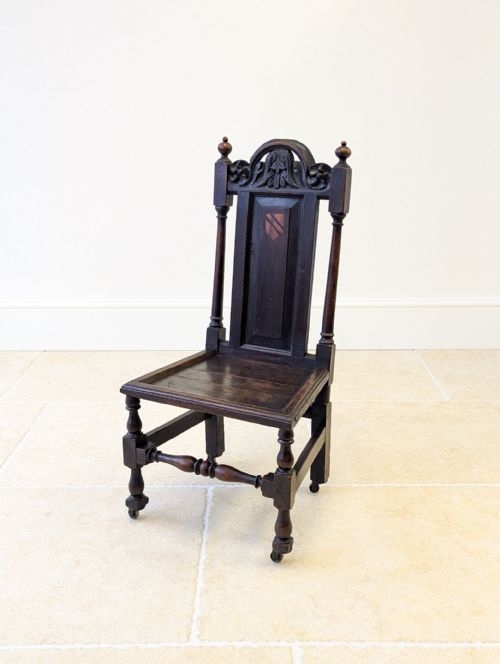
- A rigid, high-backed wooden seat historically placed in entrance halls. They frequently display carved heraldic devices or plain wooden panels.
- Ecclesiastical Taste
- A design aesthetic directly borrowed from church architecture and furnishings. It prioritises solemnity, vertical lines, and medieval ornamentation.
Edwardian Gothic Revival Chairs: Frequently Asked Questions
Where were these chairs placed originally?
These chairs served in domestic entrance halls, dining rooms, and ecclesiastical settings like churches. Their tall backs and architectural timber forms suited formal public spaces and grand domestic interiors.
Over time, collectors brought them into ordinary living rooms to add medieval character and dark wood contrast.
How do I spot genuine period construction?
Examine the joints for traditional pegged mortise and tenon construction rather than modern metal screws. Genuine examples show natural timber ageing and hand-carved detailing across the oak or mahogany frame.
Check the underside and frame junctions for tool marks and consistent wear appropriate to the nineteenth or early twentieth century.
Are these chairs comfortable for daily use?
Most hall and side chairs feature rigid wooden seats designed for upright posture rather than lounging. Armchairs and throne chairs with leather panels offer slightly more support but retain a firm, architectural build.
Buyers usually select them for visual impact and historical interest rather than soft cushioning.
How do I care for antique oak furniture?
Keep wooden surfaces away from direct sunlight and strong heat sources to prevent the solid oak from splitting. Regular dusting with a dry cloth maintains the finish without needing heavy polishes.
Condition leather panels gently with appropriate balms if the seating incorporates upholstered sections.