
Edwardian Gold Padlock
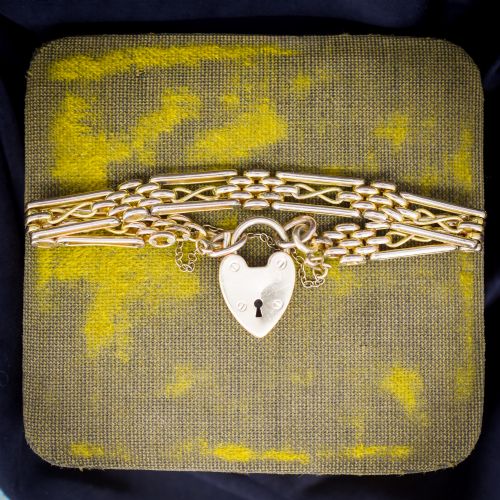
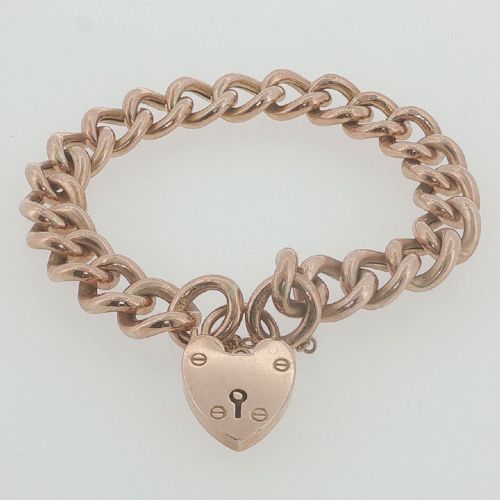
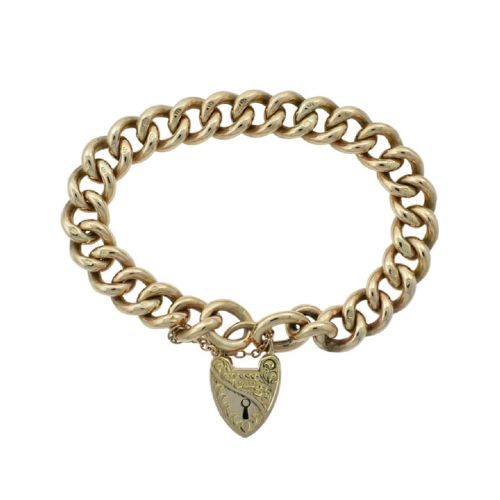
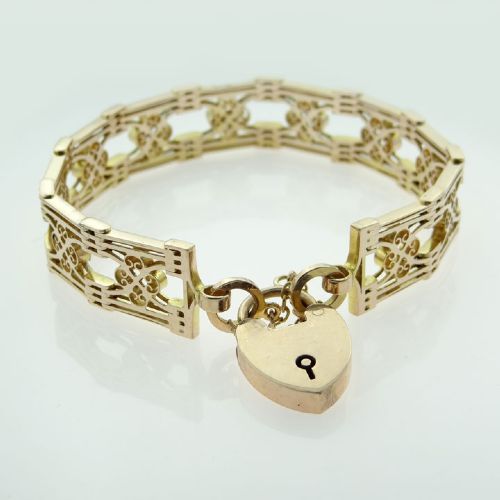
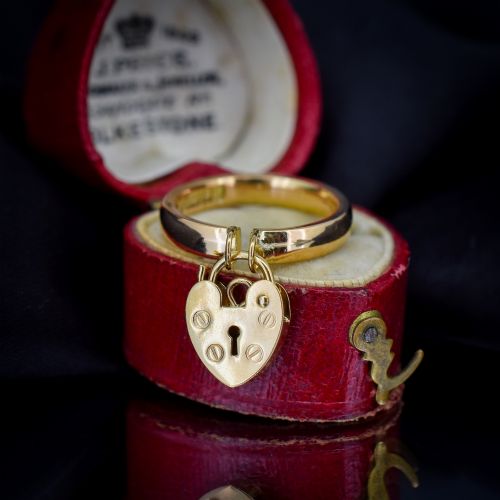
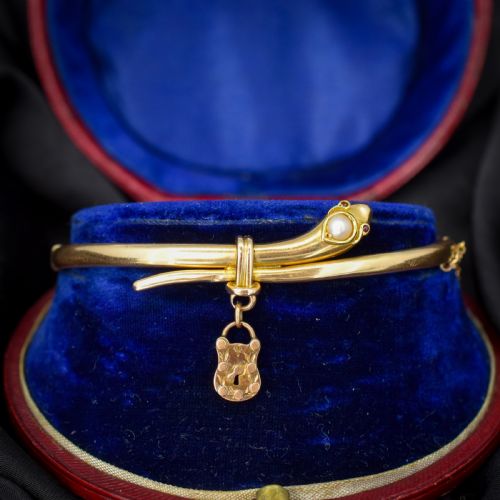
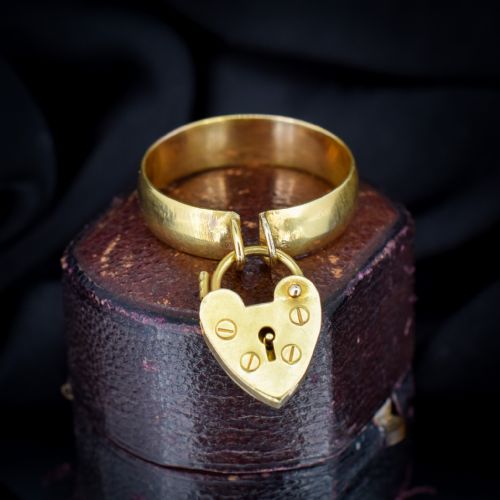
An edwardian gold padlock is a functional clasp turned into a sentimental jewel, most often found fastening a heavy gate or curb bracelet.
Edwardian Gold Padlock
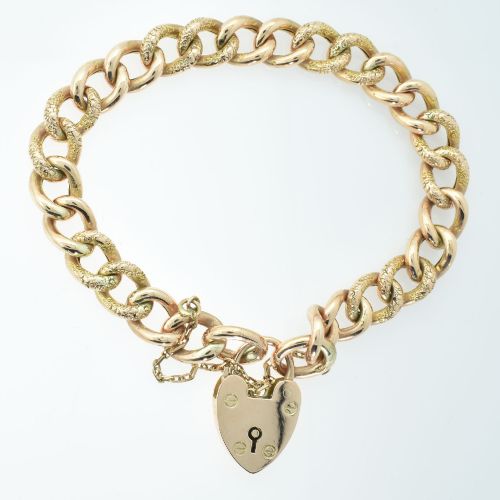
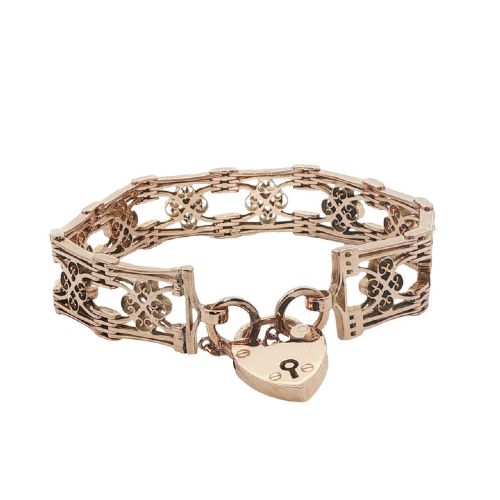
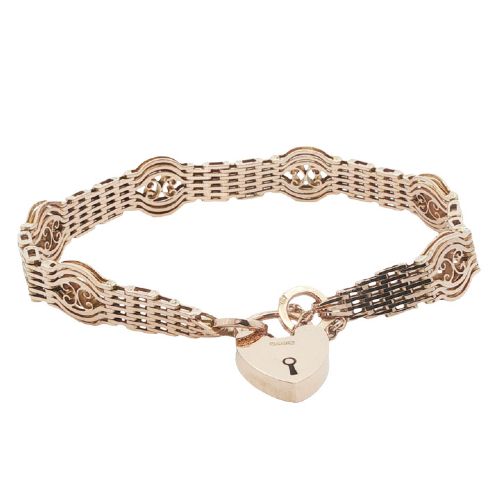
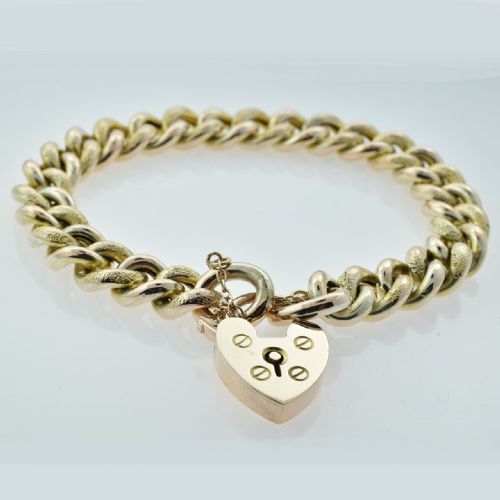
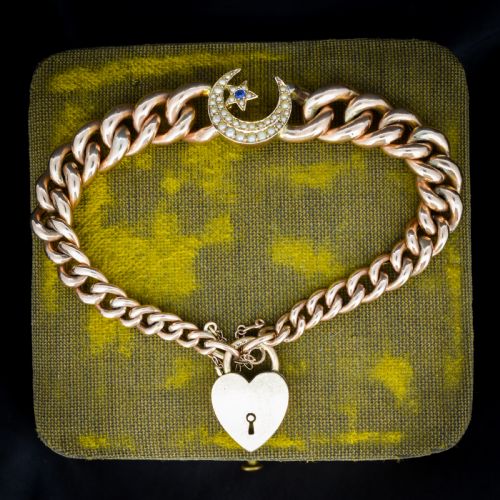
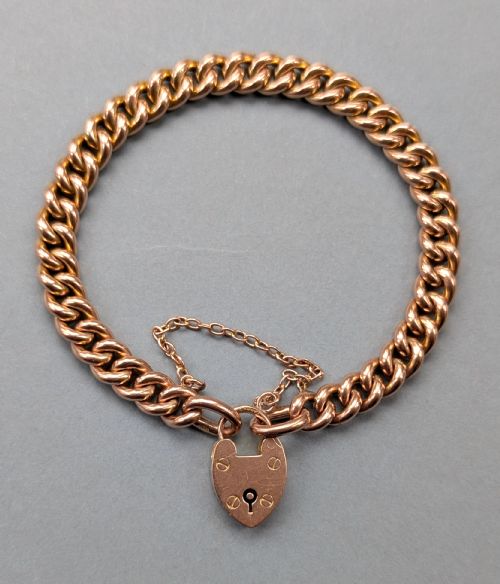
The version you are most likely to meet on this page is the sprung heart padlock attached to a substantial hollow or solid link bracelet. These items span periods from the late nineteenth century through to the Edwardian decade and into the nineteen-twenties, often carrying Birmingham or London hallmarks.
How They Were Made
The construction relies heavily on nine-carat rose gold and yellow gold, shaped into curb links, gate patterns, and hollow padlock bodies. Goldsmiths utilised hand-engraving to decorate the surfaces with half-engraved scrolls, geometric patterns, or niello work.
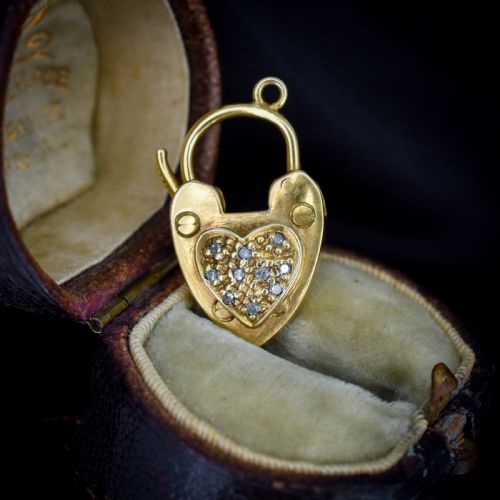
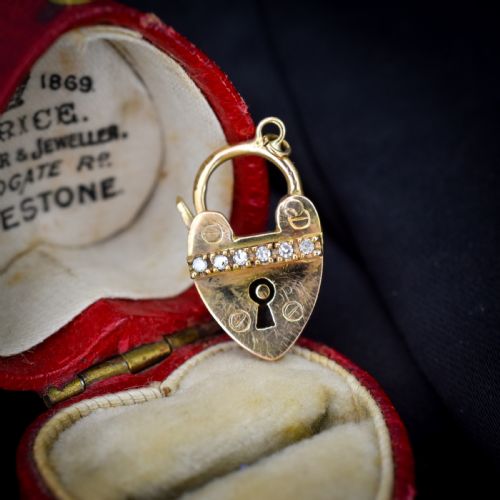
Many items incorporate gemstones such as seed pearls, diamonds, and amethysts flush-set or mounted in crescents directly onto the gold. Mechanisms depended on internal steel springs for the snap closure, while exterior loops allowed the padlocks to function as pendants or charms.
Some padlock charms open up like miniature leather purses, hiding a tiny cavity designed for a folded secret.
What Varies in Quality
The division between standard examples and superior pieces rests on the weight of the gold and the crispness of the hand-engraving. Heavier gauge metal and fully hallmarked components indicate higher workshop standards than lighter rolled gold or hollow stamped alternatives.
The integration of decorative elements like amethyst stones, pearl crescents, or diamond accents elevates the complexity of the piece. Padlocks with fully functional, tight snap mechanisms and clear assay office marks retain a higher degree of original integrity.
The Edwardian Gold Padlock Glossary
- Padlock
- A hinged, sprung clasp shaped like a heart or purse that secured a bracelet and doubled as an ornament. These catches form the focal point of many Edwardian charm bracelets.
- Gate bracelet
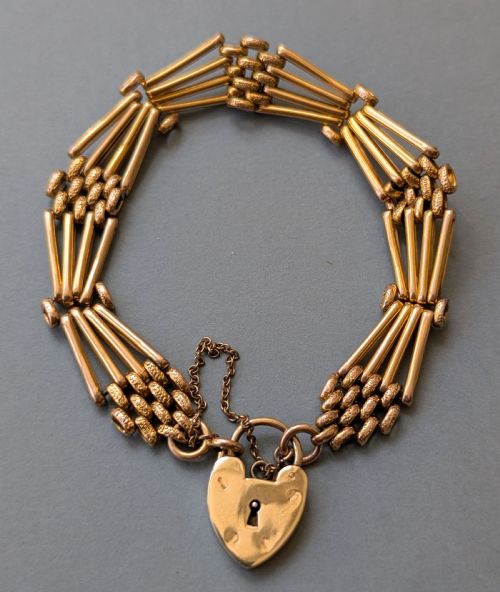
- A linked bracelet design composed of parallel bars joined by small connecting links, mimicking a traditional gate. They are frequently paired with heart padlock clasps.
- Curb link
- A type of chain formed by uniform interlocking links that lie flat against the wrist. This form provides the backbone for the majority of Edwardian gold padlock bracelets.
- Hallmark
- An official stamp applied by an assay office indicating the purity of the metal and the year of manufacture. British marks often reveal towns like Birmingham or London alongside the gold carat.
Edwardian Gold Padlock: Frequently Asked Questions
What is an Edwardian gold padlock?
An Edwardian gold padlock is a small, heart-shaped or rectangular clasp made from nine-carat rose or yellow gold. They were designed to securely fasten charm bracelets and curb link chains.
Over time, these functional clasps became decorative centerpieces, often set with pearls or amethysts and worn as standalone pendants.
How do I wear a padlock bracelet?
These bracelets are traditionally worn fastened around the wrist with the heart padlock facing outward as the main decorative element. Many pieces feature a secure internal spring mechanism that clicks shut.
Alternatively, the padlock can be removed from its original gate or curb chain and suspended from a neck chain as a pendant or charm.
Are these padlocks made of solid gold?
The material varies across the items, with many examples constructed from solid nine-carat or fifteen-carat gold. Some pieces are encountered in rolled gold or hollow-formed stamped metal.
Checking the inner loop or reverse of the padlock usually reveals hallmarks that confirm the gold standard and origin.
How can I date an Edwardian padlock?
Dating relies on reading the assay office hallmarks stamped directly onto the gold surface, which indicate the exact year of testing. Stylistic clues such as seed pearl crescents, half-engraved scrollwork, and gate link structures also point to the early twentieth century.