



Edwardian Heart Padlock Charm
Edwardian heart padlock charm pieces are sentimental fastening ornaments that bring symbolic security to period bracelets and pendants.
Edwardian Heart Padlock Charm
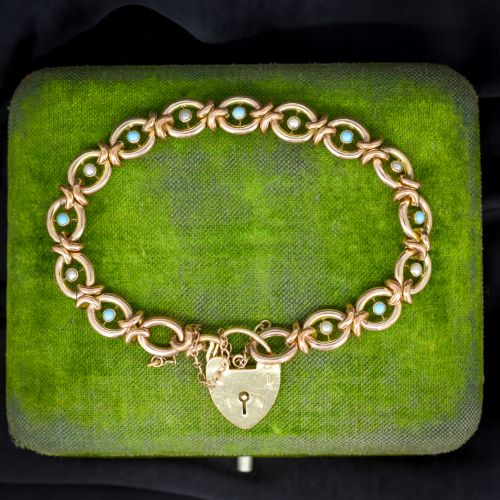
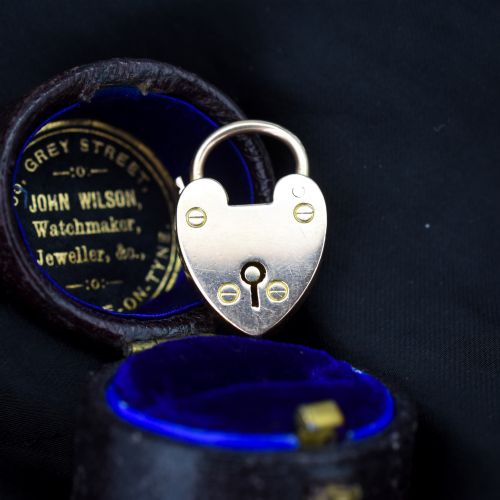
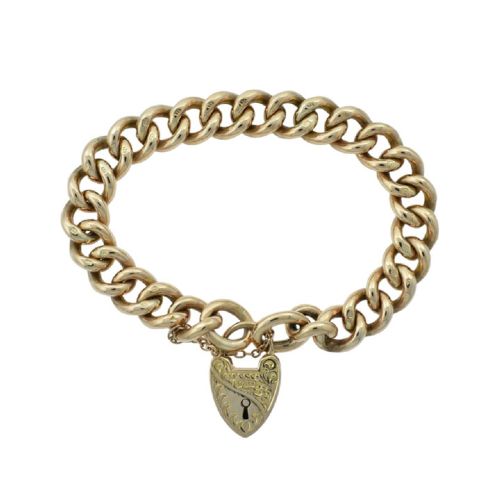
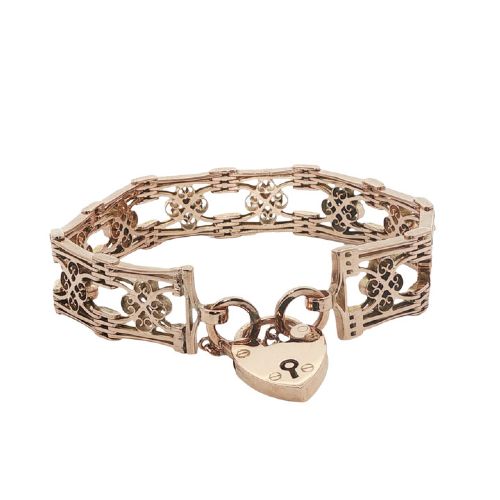
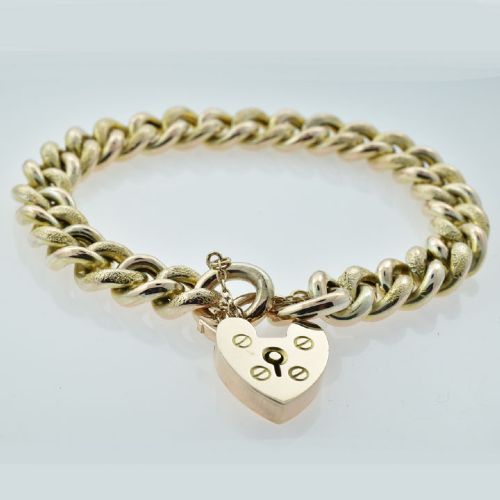
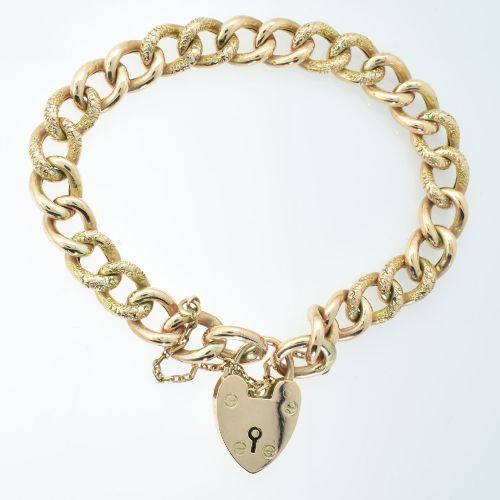
An edwardian heart padlock charm is typically found attached to curb link bracelets, gate bracelets, or worn as pendants on chains. These pieces combine mechanical utility with romantic symbolism, often functioning as actual working clasps or decorative drops.
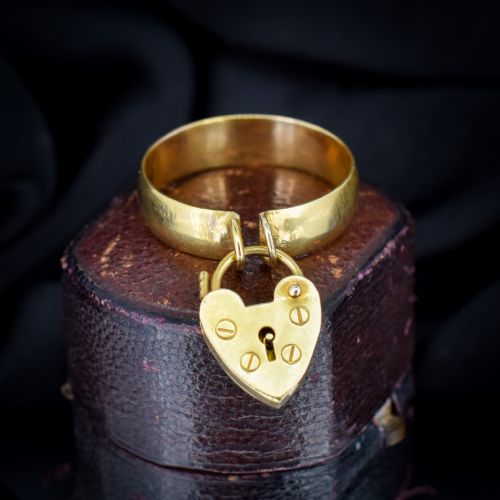
The versions most commonly met on this page span the Edwardian period, 1900, and 1910 eras, alongside related Victorian examples and occasional later iterations. Forms range from half engraved curb chain bracelets to band rings featuring heart padlock drops and tortoise shell pendants.
Makers and designers utilised specific regional hallmarks, such as Birmingham assay marks with distinct dates, to denote the metal standard and year of production. The physical formats vary from simple hollow puffed hearts to intricately detailed opening purse padlocks.
How they were made
Jewellers constructed these items predominantly from 9ct gold, 9ct rose gold, and yellow gold, frequently pairing the base metal with silver mounts. Fabrication techniques involved stamping, forming hollow or solid sections, and hand engraving delicate patterns onto the metal surface.
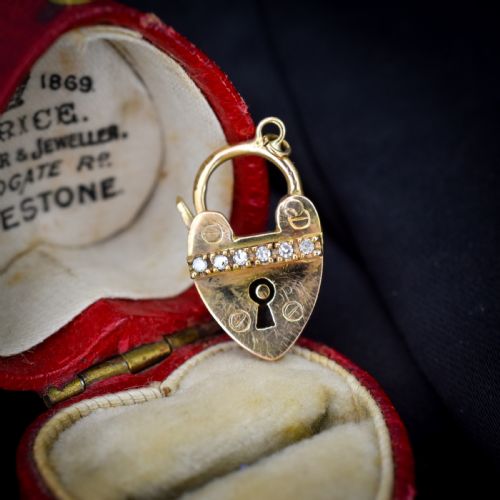
Gemstone embellishments such as diamonds, seed pearls, and sapphires were flush-set or mounted in crescents to accent the central heart motif. Niello work and tortoiseshell applications appear on specific fancy link bracelet variations, demonstrating diverse period surface treatments.
Edwardian Heart Padlock Charm Retail Price Guide 2026
Typical asking prices for edwardian heart padlock charm among the pieces listed under this phrase on Sellingantiques today, from the lower quarter to the upper quarter. They describe what is for sale here now, not the wider market.
Materials recorded across the inventory include 9ct gold, rose gold, silver, diamonds, seed pearls, sapphires, and tortoiseshell.
What varies in quality
The fineness of the hand engraving and the crispness of pattern transfer distinguish superior examples from plain variants. Half engraved surfaces require steady precision by the artisan to maintain consistent depth across the curve of the gold.
The mechanical integrity of the spring-loaded padlock mechanism and the original security of integrated jump rings indicate superior craftsmanship. Heavier gauge gold construction and well-preserved hallmarks add structural substance and historical clarity to the piece.
The Edwardian Heart Padlock Charm Glossary
- Curb link
- A type of chain composed of uniform, slightly twisted links that lie flat when worn. This form provides a sturdy foundation for heavy heart padlocks on bracelets.
- Gate bracelet
- A wide bracelet style featuring vertical bars linked together horizontally, frequently fastened with a padlock charm. It gained popularity during the late nineteenth and early twentieth centuries.
- Niello
- A black metallic alloy used as a decorative inlay on engraved metal surfaces. It creates stark contrast against silver or gold backgrounds.
- Seed pearl
- Very small natural or cultured pearls often arranged in crescents or floral clusters. They impart a delicate texture to gold charm pendants.
- Hallmark
- An official stamp applied to precious metals indicating purity, origin, and assay year. These marks help verify the period of the item.
Edwardian Heart Padlock Charm: Frequently Asked Questions
What is an edwardian heart padlock charm?
An edwardian heart padlock charm is a small, heart-shaped security fastening that was commonly suspended from charm bracelets and pendants during the early twentieth century. These objects served both a practical purpose as clasps and a sentimental function as tokens of affection.
Many examples feature hand-engraved surface details or gemstone embellishments like diamonds and seed pearls. They are typically encountered today attached to curb or gate link bracelets from the period.
How do you open the padlock?
Most edwardian heart padlock charms operate via an internal spring mechanism controlled by a small protruding nib or a hidden release button on the side or bottom. Pressing this internal catch allows the hinged loop or shackle to swing open.
While some padlocks were designed to function with miniature keys, many rely entirely on the spring-loaded internal latch for daily fastening. Care should be taken with vintage mechanisms to avoid straining the hinge.
Can these charms be worn on a necklace?
These pieces function well as pendants on chains as well as traditional bracelet charms. Their substantial drop makes them visually prominent when suspended from a simple neck chain.
When worn as a pendant, the padlock can be attached directly to a chain through its existing top loop or bail. This mirrors historical practices where charms were frequently moved between bracelets and neck chains.
How do I identify an edwardian piece?
Identification relies on examining the material standards, manufacturing techniques, and any accompanying hallmarks stamped onto the metal. Edwardian pieces frequently utilise 9ct rose gold or yellow gold alongside specific chased or half-engraved surface patterns.
Assay office stamps and date letters, such as those found on Birmingham marked examples from the early 1900s, provide precise chronological markers. Stylistic motifs like seed pearl crescents also point toward this specific era.
What metals were used?
The primary metal used in these pieces is 9ct gold, frequently seen in distinct rose and yellow variations. Silver also appears, sometimes paired with tortoiseshell or utilised in specific mountings.
Gold purity standards of the era dictated the durability and colour warmth of the items. Gemstones like diamonds and sapphires are occasionally flush-mounted into these metallic structures.