
Edwardian Gold Lavalier
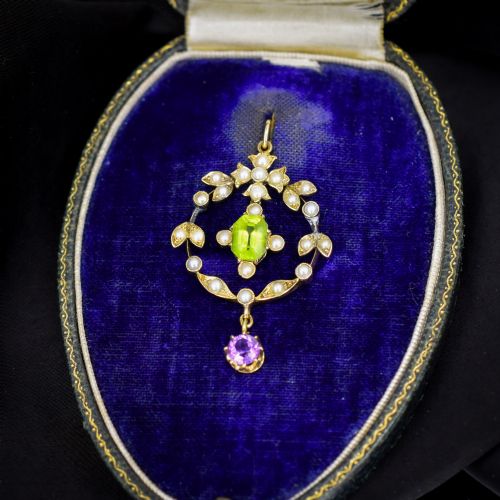
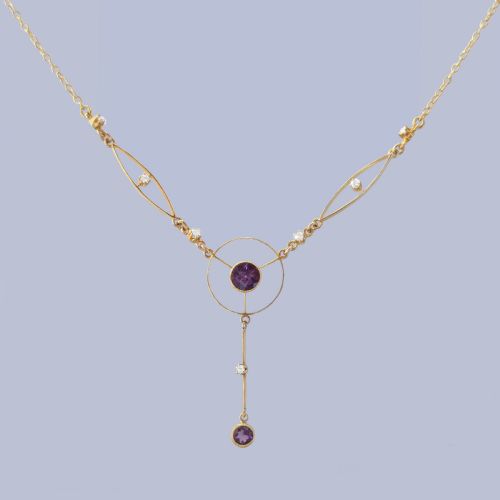
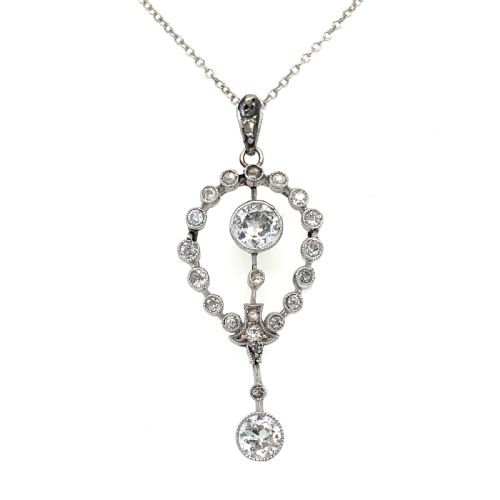
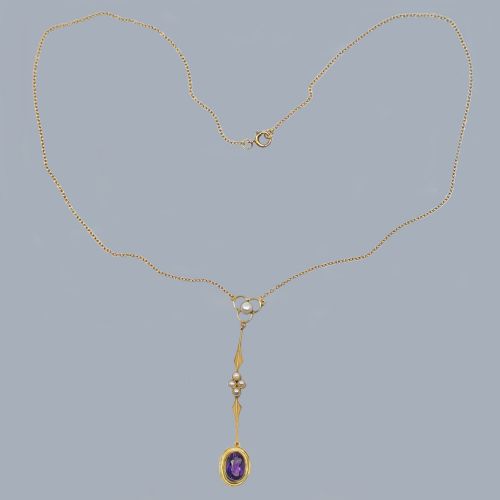
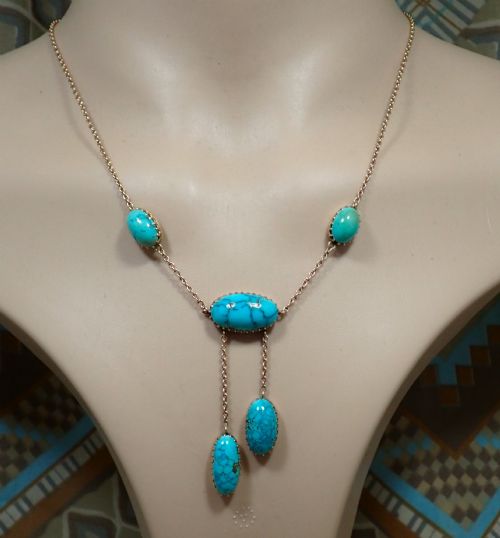
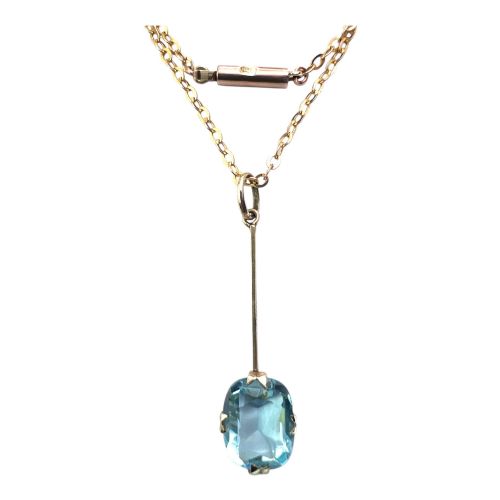
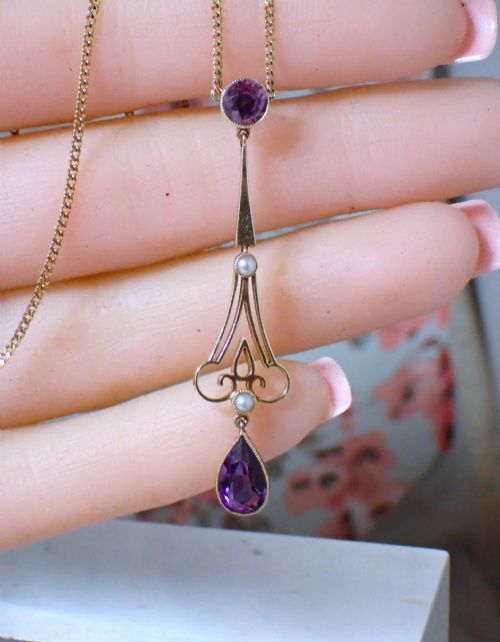
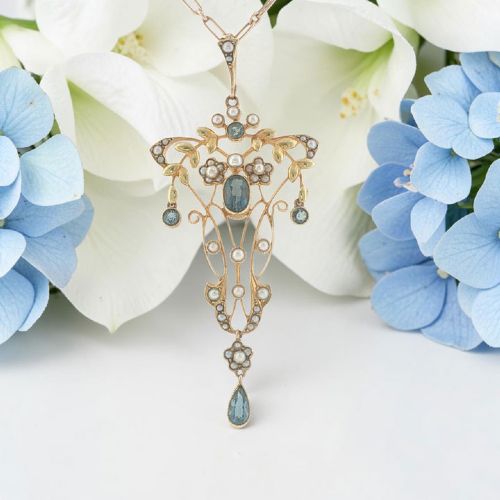
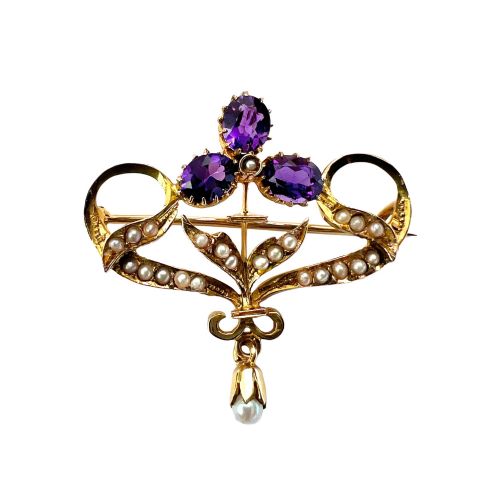
An edwardian gold lavalier suspends delicate gemstones from fine chains, bringing characteristic period fluidity and botanical grace to the neckline.
Edwardian Gold Lavalier
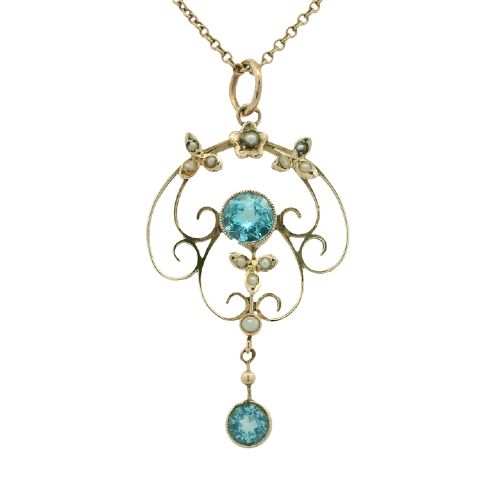
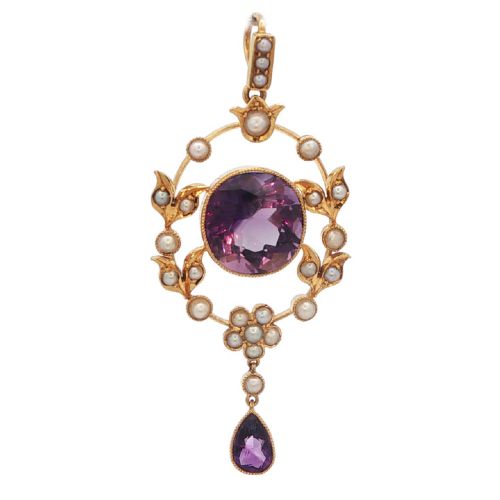
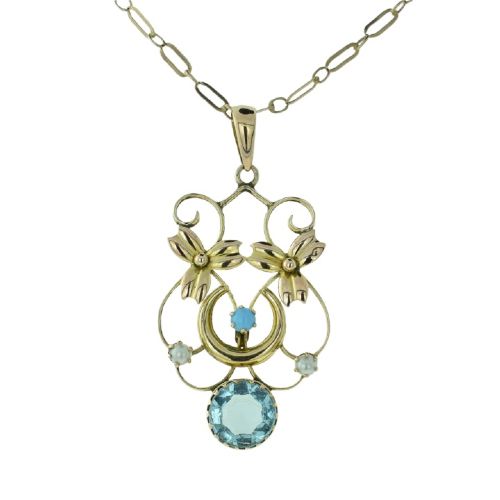
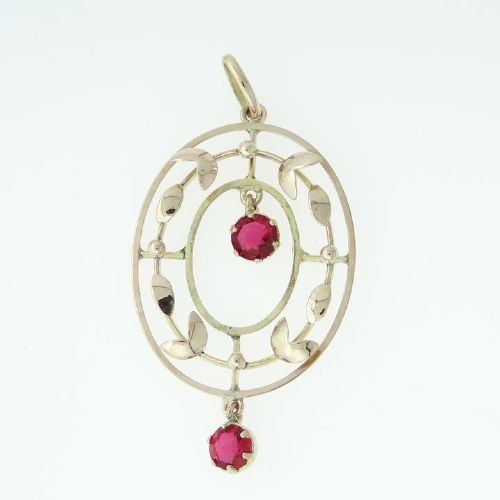
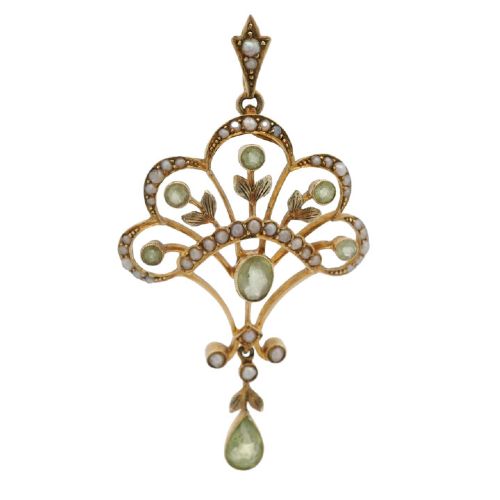
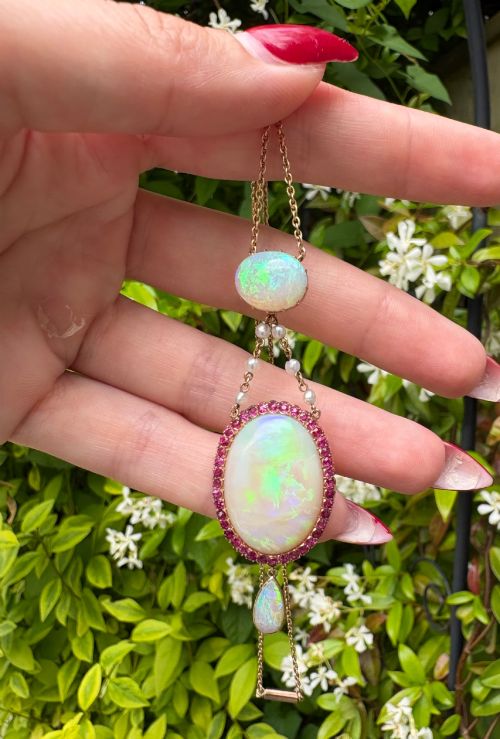
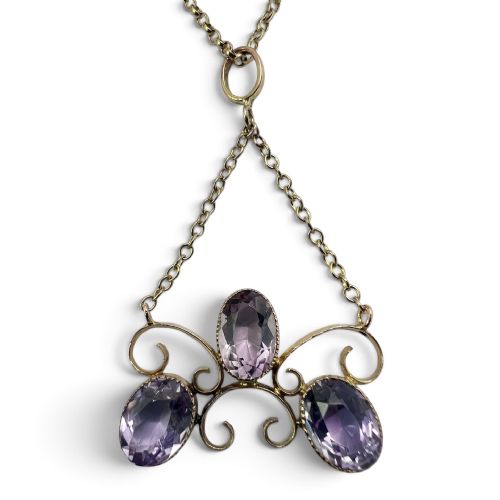
When searching for an edwardian gold lavalier, collectors encounter distinctive drop necklaces defined by asymmetrical or flowing central motifs that hang below the main collar chain. These pieces frequently incorporate delicate articulated drops, often terminating in pear-shaped gems or seed pearl tassels that swing with movement.
The version most commonly met on this page combines warm nine-carat or fifteen-carat yellow and rose gold with purple amethyst, green peridot, or pale blue aquamarine, frequently accented by tiny seed pearls. Art Nouveau influences appear strongly in the curving vegetal lines and whip-like metalwork framing these coloured stones.
While many examples originate directly from the Edwardian era and around nineteen ten, related pieces span from late Victorian origins through to nineteen twenty and nineteen thirty, including occasional Arts and Crafts interpretations.
Markers of Distinction and Craft
The refinement of the metalwork separates standard commercial production from finer workshop outputs. Superior pieces display hand-pierced openwork with clean reverse sides, precise stone matching, and secure flush settings rather than heavy glue use.
Original chain length and matching clasp integration strongly influence a piece's integrity. Examples retaining their period-correct delicate cable chains and original fitted boxes demonstrate higher collector desirability.
Edwardian Gold Lavalier Retail Price Guide 2026
Typical asking prices for edwardian gold lavalier among the pieces listed under this phrase on Sellingantiques today, from the lower quarter to the upper quarter. They describe what is for sale here now, not the wider market.
Listings feature nine-carat and fifteen-carat gold alongside platinum, incorporating amethysts, peridots, aquamarines, and seed pearls.
S. Blanckensee & Son·Hamilton & Co
The Edwardian Gold Lavalier Glossary
- Lavalier
- A pendant necklace featuring one or more suspended drops hanging below a central motif. This design gained immense popularity during the late nineteenth and early twentieth centuries.
- Seed pearl
- A very small, naturally or culturedly grown pearl, often unperforated or half-drilled for mounting on pins. These tiny pearls form delicate borders and floral clusters in Edwardian jewellery.
- Art Nouveau
- An international design style characterised by curving, organic lines inspired by natural forms such as plants and flowers. It heavily influenced Edwardian pendant geometry.
- Collet setting
- A metal collar or band that tightly surrounds the girdle of a gemstone to hold it securely in place. This technique provides a clean, low-profile edge around transparent stones.
- Suffragette
- A colour palette comprising amethyst, peridot, and white pearl, symbolising the movement for women's voting rights. Contemporary jewellery often utilises this specific gemstone combination.
Edwardian Gold Lavalier: Frequently Asked Questions
How do I wear an edwardian gold lavalier?
These delicate drop necklaces suit lower necklines where the central motif and suspended stones can hang freely without fabric interference.
Pair them with simple silk or velvet garments to let the articulated goldwork and coloured gems remain the focal point of an outfit.
Were these pendants worn as brooches too?
Many Edwardian designs incorporated dual fittings on the reverse, allowing the central drop section to detach or function with a pin attachment.
This versatility allowed owners to pin the piece to a lapel or suspend it from a ribbon or chain depending on the occasion.
How do I distinguish Edwardian pieces from Victorian ones?
Edwardian pieces generally exhibit lighter, airier platinum and high-karat gold wirework with pastel peridots and aquamarines, whereas Victorian designs often feature heavier gold settings and deeper garnets.
Stylistic overlaps occur frequently in transition periods around nineteen hundred, where dark metals give way to brighter, lace-like floral motifs.