





Edwardian Glazed Corner Cabinet
When you search for an edwardian glazed corner cabinet, you uncover a display piece designed to utilise awkward interior angles.
Edwardian Glazed Corner Cabinet
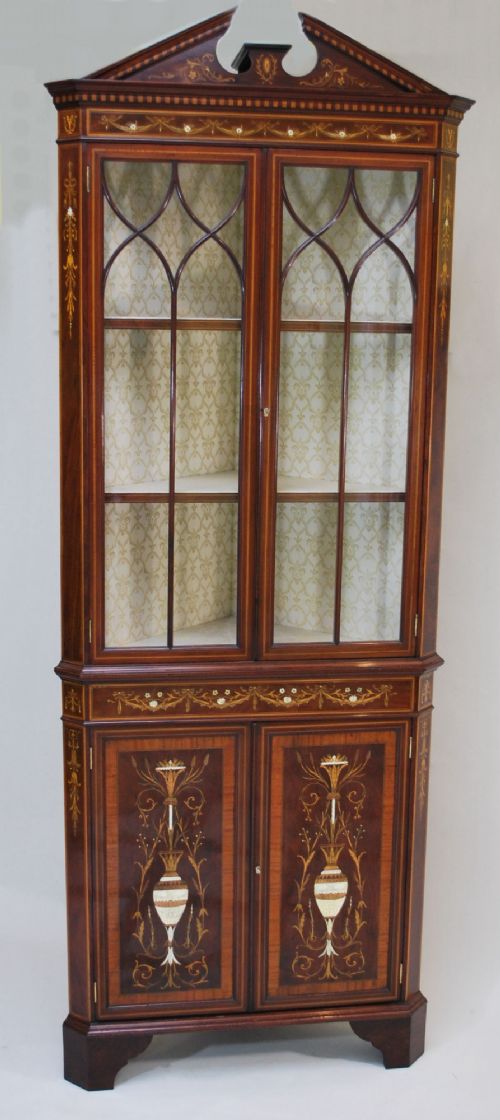
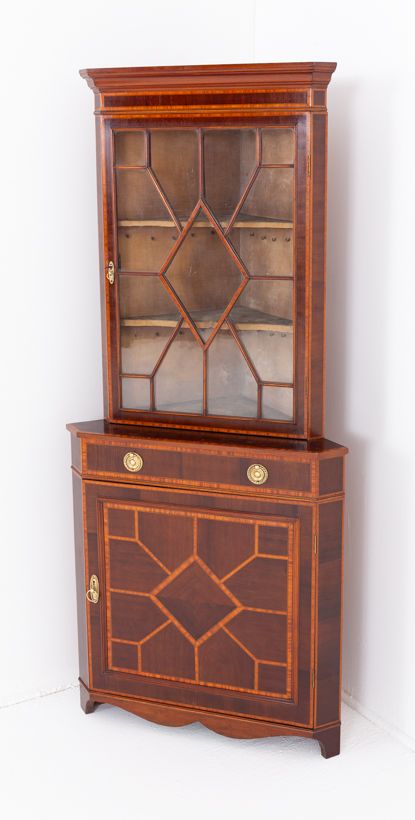
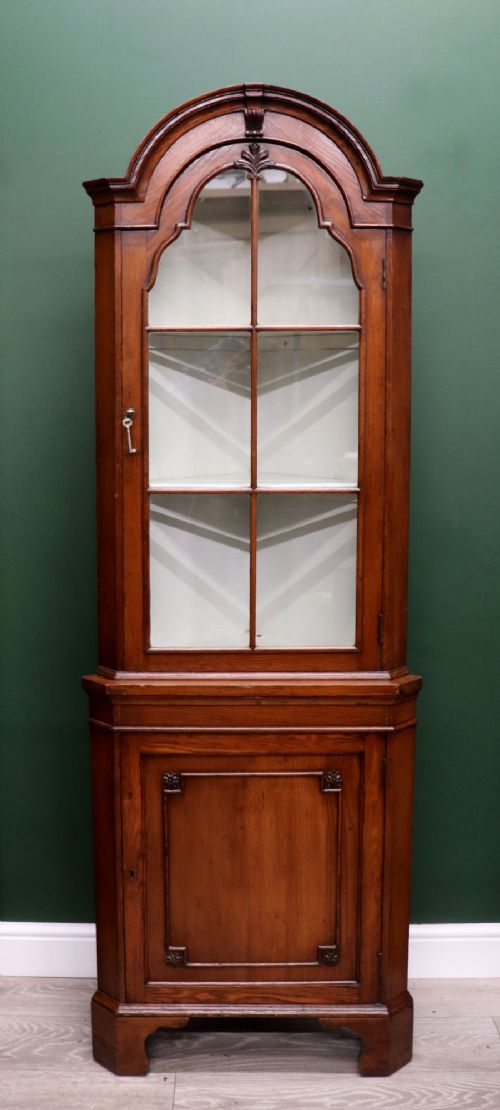
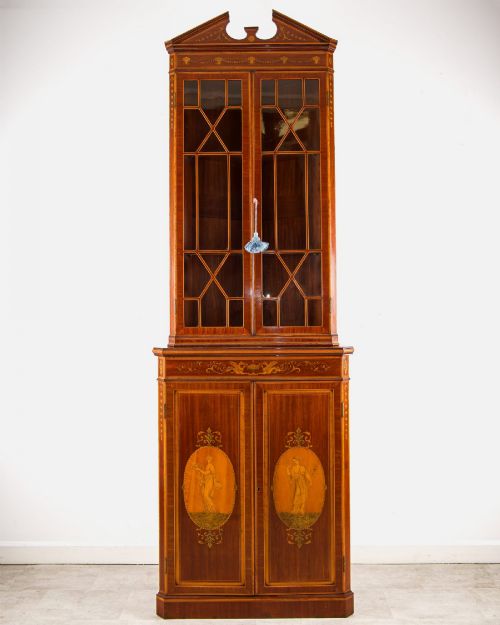
An edwardian glazed corner cabinet is a storage and display piece built to fit snugly into the junction of two walls, making practical use of domestic space. The selection spans wall hanging versions, floor standing units, and taller double height formats.
Most examples originate from the early twentieth century and adopt styles such as Sheraton Revival and Georgian Revival alongside Edwardian designs. These variations provide options for both intimate rooms and larger reception spaces.
Materials and Construction
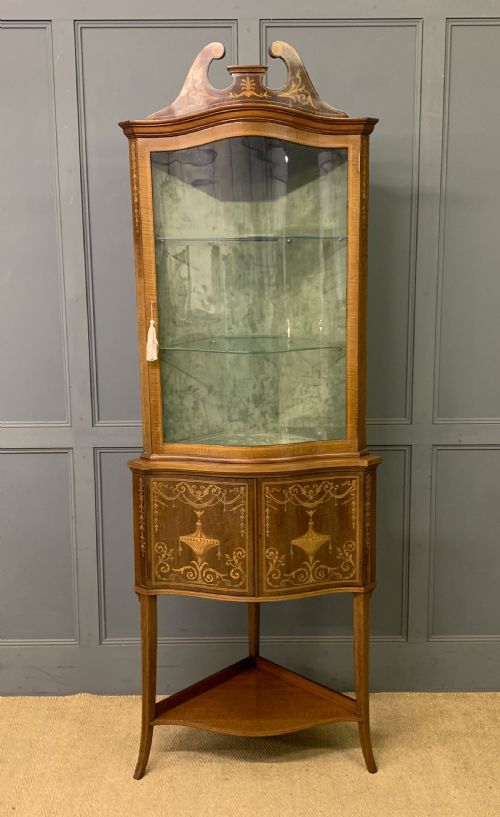
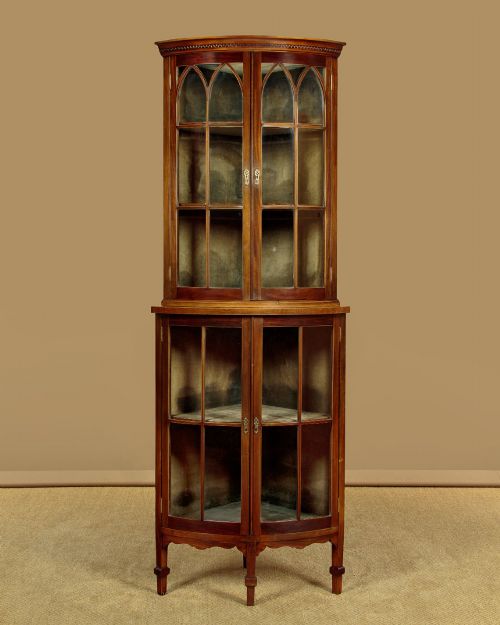
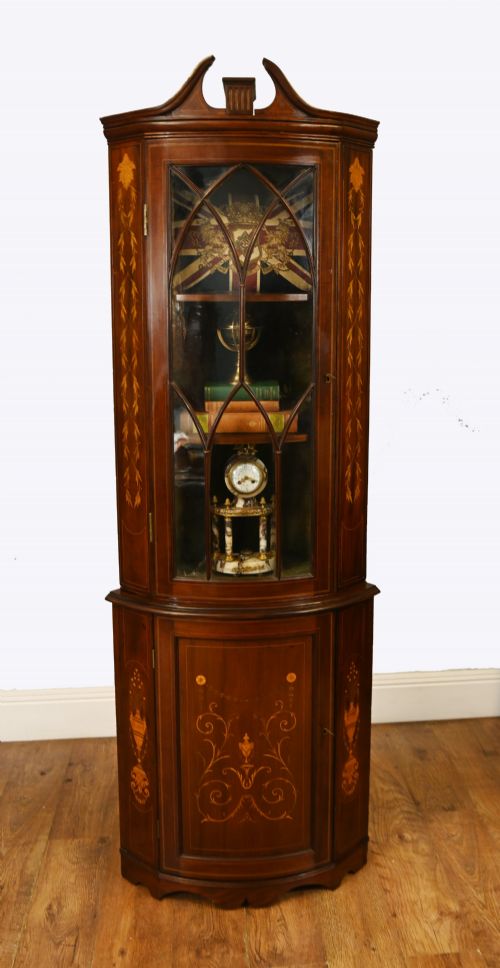
Cabinetmakers predominantly utilised mahogany as the primary timber, frequently embellished with contrasting satinwood inlay and marquetry motifs. Glass forms the panels of the doors, often divided by delicate wooden astragal bars.
Internal elements incorporate brass hardware for hinges and locks, while mirror glass occasionally lines the back panels to reflect light through the shelved interior. Structural execution ranges from single hanging boxes to substantial two part standing furniture.
Listings feature mahogany, oak, walnut, and rosewood timbers, spanning wall hanging, floor standing, and double height cabinet forms.
Judging Quality and Craftsmanship
Distinction across the range lies in the precision of the timber inlay and the delicacy of the glazing bars. Tighter joints, finer grain selection, and sophisticated marquetry distinguish exceptional workshop output from simpler domestic furniture.
Proportion and form also dictate standing; double height floor standing cupboards with serpentine fronts or bow glass doors demonstrate greater ambition than standard wall mounted alternatives.
Goodhall, Lamb and Heighway·Edwards And Roberts
The Edwardian Glazed Corner Cabinet Glossary
- Astragal glazing
- A method of framing glass panes with slender wooden mouldings arranged in geometric or curved patterns. These bars provide structural support while enhancing the visual lightness of the door.
- Marquetry
- The decorative application of small pieces of varied veneers to form pictorial or symmetrical patterns. Cabinetmakers utilised contrasting woods to create floral or classical motifs.
- Sheraton Revival
- A late nineteenth and early twentieth century design movement inspired by the furniture of Thomas Sheraton. Pieces in this style typically feature refined lines, subtle inlay, and classical restraint.
- Bow front
- A convex curved cabinet front that projects outward. This curved form requires specialist glass bending techniques for the glazed door.
- Serpentine front
- A furniture front characterised by a central convex curve flanked by two concave curves. This flowing profile demands advanced carpentry skills.
Edwardian Glazed Corner Cabinet: Frequently Asked Questions
Where should I place a corner cabinet?
These pieces fit naturally into unused room junctions where straight furniture fails to sit comfortably. Wall hanging versions suit hallways or dining rooms, while floor standing variants anchor larger reception spaces.
Position them away from direct sunlight to protect the polished timber surfaces and the internal display contents from fading over time.
How do I care for inlaid mahogany timber?
Maintain the wood by applying a quality beeswax periodically to nourish the grain and preserve the deep reddish tone. Avoid chemical sprays or excessive moisture which can damage delicate satinwood inlay and polished finishes.
Dust the glass panels gently with a soft cloth and check the brass hinges occasionally to ensure the doors hang true without straining the frame.
Can these cabinets support heavy items?
The internal wooden shelves suit ceramic collections, glassware, and books of moderate weight. Wall hanging models rely entirely on secure wall fixings rather than the cabinet structure alone.
Floor standing versions distribute weight down to the base plinth or feet, offering greater stability for heavier displays across multiple internal tiers.
How do I distinguish Edwardian revival from older pieces?
Examine the timber colour, secondary woods used inside the carcass, and the cut of the screws or hinges. Edwardian pieces built in historical revivals display machine sawn precision alongside traditional hand finishing.
Glazing techniques and joinery methods inside the cabinet often provide clues to whether a piece dates from the nineteenth century or the subsequent Edwardian era.