





Edwardian Garden Watercolour
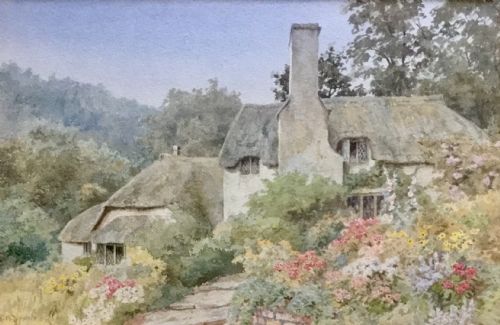
An edwardian garden watercolour captures quiet herbaceous borders and sunlit cottage gates with transparent pigments on paper.
Edwardian Garden Watercolour
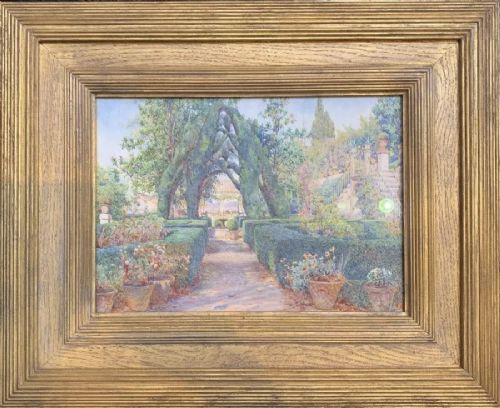
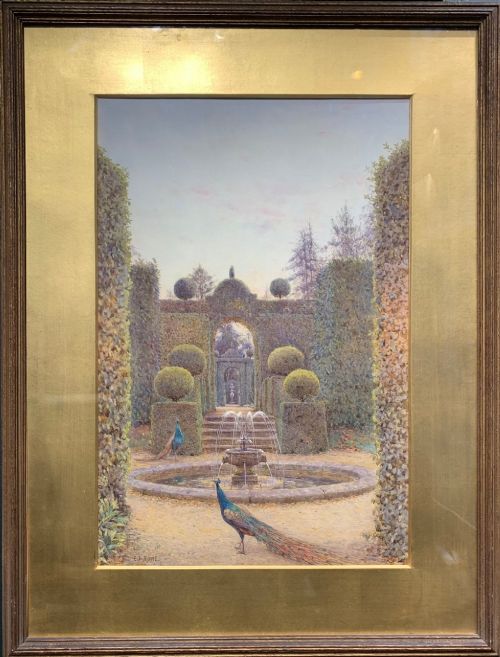
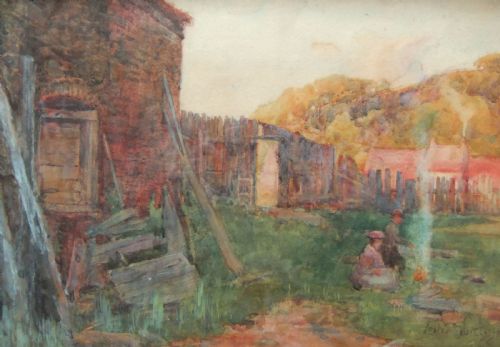
You are looking at an edwardian garden watercolour, which typically depicts pastoral scenes, country houses, and walled flower beds from the early twentieth century. These works capture the English obsession with horticulture, domestic tranquility, and rural life during a distinct period of artistic production.
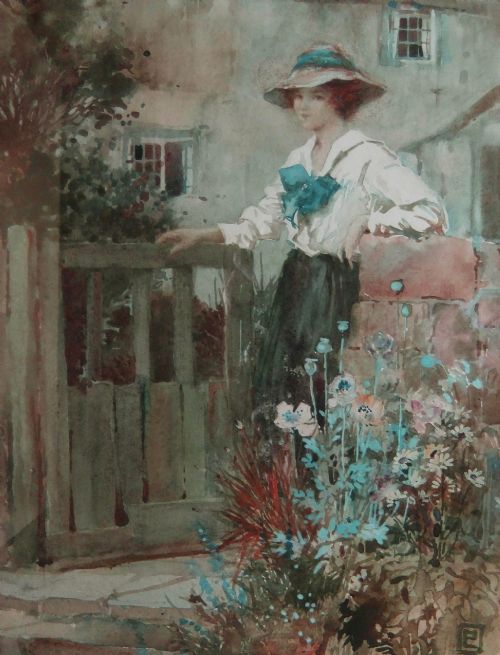
The pieces you encounter span from the Victorian era through the nineteen-thirties, reflecting broader movements such as British Impressionism and Edwardian Pastoralism. Most examples focus on domestic garden spaces, featuring cottage gates, herbaceous borders, and quiet courtyards.
The format ranges from intimate studies of spring crocuses to large framed artworks intended for prominent domestic display. They document both grand country house grounds and humble cottage gardens with equal attention to botanical detail.
What varies in quality
The distinction between ordinary and exceptional works rests on the artist's handling of light, atmosphere, and botanical accuracy within the painted garden. Superior pieces demonstrate a confident control of pigment and water, creating depth and luminosity that lesser works miss.
Condition also plays a vital role, as works protected by glass and kept away from direct sunlight retain their original vibrancy. The strength of the composition and the complexity of the subject matter elevate certain paintings above standard topographical views.
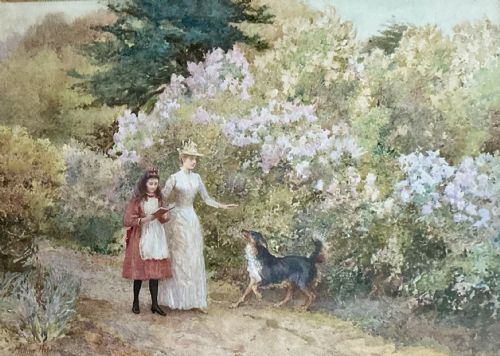
Several garden scenes thoughtfully include domestic pets, rabbits, and chickens keeping the artists company among the Michaelmas daisies.
Ernest Arthur Rowe·Percy Lancaster·Arthur Hopkins·Rowland Henry Hill·Theresa Stannard·Lilian Stannard·David Woodlock·Arthur Claude Strachan·John Abernethy Lynas-Gray·Thomas Nicholson Tyndale·Lester Sutcliffe·Henry John Sylvester Stannard·Benjamin D Sigmund·Beatrice Parsons·George Frederick Nicholls·Arthur H Buckland·Karl Feiertag·Minnie Smythe
The Edwardian Garden Watercolour Glossary
- Watercolour paint
- A medium consisting of colour pigments suspended in a water-soluble vehicle, applied to paper to create translucent washes. It allows artists to build up luminous layers of tone and colour.
- Paper
- The primary support material for these paintings, providing a white or tinted ground that reflects light back through the transparent pigment. Quality and thickness varied according to the artist's preference.
- Gold leaf
- Beaten gold applied to specific areas of an artwork for decorative emphasis. It catches the ambient light and adds a subtle metallic sheen.
- British Impressionism
- An artistic movement characterised by visible brushstrokes, open composition, and an emphasis on accurate depiction of light in its changing qualities. Painters adopted these tenets to render outdoor garden scenes.
- Frame
- A protective and decorative wooden surround enclosing the artwork, often glazed with glass to shield the delicate pigments from atmospheric damage.
Edwardian Garden Watercolour: Frequently Asked Questions
What subjects do these watercolours show?
The paintings primarily depict walled gardens, cottage gates, herbaceous borders, and country house grounds during the Edwardian period and adjacent decades.
Artists also recorded urban parks, coastal homes, and figures tending to domestic tasks like feeding hens or rabbits amidst the foliage.
How should I frame and hang my painting?
These works on paper require framing behind glass with acid-free mounts to prevent physical damage and discolouration from airborne pollutants.
Position the framed artwork away from direct sunlight to protect the fugitive watercolour pigments from fading over time.
How do I identify an Edwardian painting?
Look for the characteristic soft palette, loose brushwork associated with British Impressionism, and typical pastoral subject matter depicting domestic tranquility.
Signatures, dates, and stylistic markers often align the work with the broader Edwardian era and surrounding decades of production.
Were these works painted outdoors?
Many artists worked en plein air to capture the natural light and direct appearance of flowers, trees, and country house gardens.
Studio finishing sometimes accompanied these outdoor sketches, combining direct observation with composed botanical arrangements.