


Edwardian Fireplace Set
An edwardian fireplace set brings functional elegance to a hearth, combining hearth furniture and tools forged to warm and tend fires efficiently.
Edwardian Fireplace Set
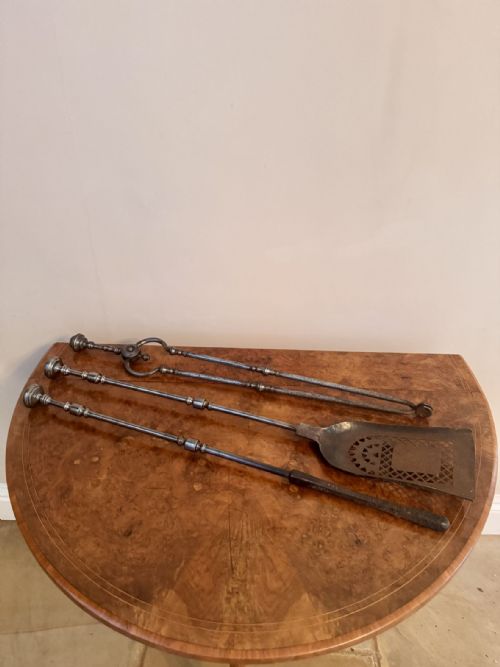
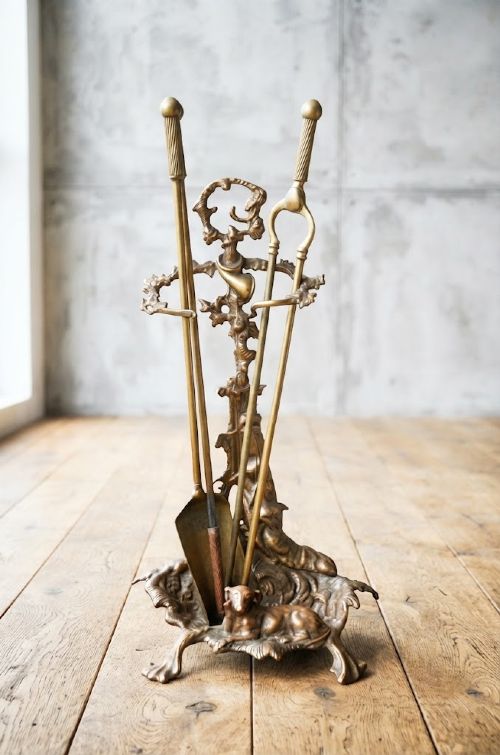
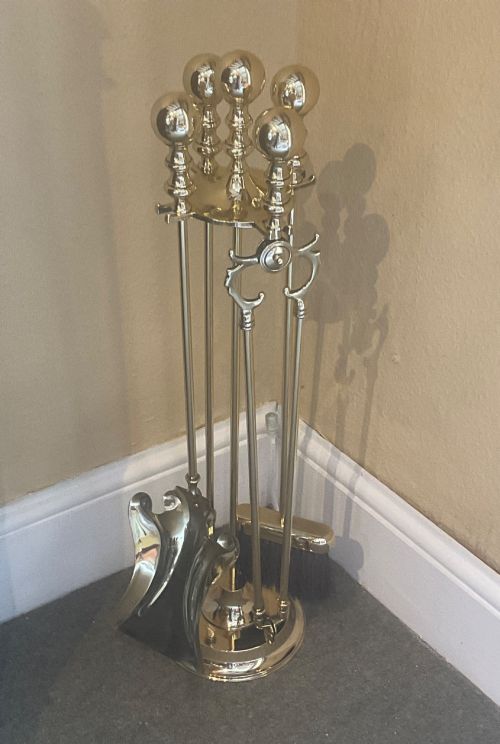
An edwardian fireplace set comprises essential hearth accessories designed to tend domestic fires, frequently incorporating pokers, shovels, tongs, stands, and fire baskets. These ensembles reflect the domestic priorities of the period, balancing utility with refined decorative appeal.
The selections encountered here span traditional groupings alongside variations featuring specific motifs such as golfers, dragons, and hunting scenes. Such thematic iterations demonstrate how period makers infused functional hardware with distinct personal or sporting subjects.
While many groupings originate strictly from the Edwardian era, related examples bridge the Victorian period, the 1900s, and early twentieth-century decades. This overlap in design language shows how traditional English craftsmanship persisted across generational boundaries.
Materials and construction
Makers utilised resilient metals including brass, cast iron, wrought iron, steel, and gunmetal to construct durable hearth furniture that could withstand daily heat and use. Polished brass and cast brass provided bright decorative surfaces, while iron and steel formed the robust structural cores required for fire tools and baskets.
Techniques relied on solid metal casting, forging, and hand-finishing, sometimes incorporating twisted rope handles or applied motifs. Combinations of brass and steel or iron appeared frequently, balancing the visual warmth of copper alloys with the rigidity of hardened steel.
Materials recorded across current pieces include polished brass, cast iron, wrought iron, steel, and gunmetal.
Indicators of quality
Quality rests on the weight and substance of the metal components, with superior sets offering heavier gauges of brass, iron, or steel that resist bending during heavy use. Finer examples display crisp casting definition, particularly on figural motifs like golfers, dragons, or claw and ball feet.
Attention to detail in handles and joints distinguishes finer output from standard production, seen in secure fixings, balanced tool proportions, and well-executed rope twist handles. The integrity of stands and companion frames ensures that tools hang properly and remain stable beside the hearth.
The Edwardian Fireplace Set Glossary
- Andirons
- Horizontal metal bars supported by legs, placed in a hearth to raise firewood for better air circulation. They often feature decorative front standards that match companion sets.
- Companion set
- A matched group of fireside tools usually arranged together on a dedicated stand or rack. These typically include a poker, shovel, and tongs.
- Fire basket
- An open metal grate designed to hold coal or wood safely within the fireplace opening. They appear frequently in iron and steel across period listings.
- Gunmetal
- A type of bronze composed of copper, tin, and zinc utilised for its strength and corrosion resistance. It provides a darker, denser metallic finish than standard brass.
- Fender
- A low metal guard placed on the floor in front of the fireplace to contain sparks and ash. They are frequently paired with matching fire tools.
Edwardian Fireplace Set: Frequently Asked Questions
What tools come in an edwardian fireplace set?
A standard set includes a poker for adjusting logs, a shovel for clearing ash, and tongs for handling fuel safely. Many configurations also provide a dedicated stand or holder to keep the implements organised beside the hearth.
Additional pieces like fire dogs or baskets occasionally accompany these tools to form a complete fireside arrangement. The specific combination varied depending on whether the set was intended for coal or wood burning.
How do I clean brass fire tools?
Cleaning requires a soft cloth and a gentle metal polish formulated specifically for brass to preserve the original surface sheen. Avoid harsh abrasive pads that can scratch the metal or wear down fine surface details like rope twists.
Regular dusting and light polishing maintain the appearance without stripping away the natural patination acquired over decades of domestic use. Maintaining a dry environment around the hearth prevents excessive tarnishing.
Can these fireplace sets still be used?
Most period sets remain fully functional and are constructed from robust metals capable of handling active hearth fires. Solid iron, steel, and brass tools function precisely as intended when tending modern or traditional fires.
Buyers should inspect the structural integrity of tool shafts and handles before exposing them to intense heat. Many owners choose to use them actively while others display them primarily for period aesthetic value.
How do I distinguish Edwardian from Victorian sets?
Edwardian designs frequently favour lighter proportions and simpler neoclassical revival or Arts and Crafts lines compared to heavily ornamented Victorian predecessors. Stylistic shifts moved away from dense, ornate casting toward cleaner geometric forms and functional clarity.
However, stylistic crossover remains common because manufacturing traditions persisted across the turn of the twentieth century. Examining specific motifs and registration marks helps clarify the exact period of manufacture.