

Edwardian Fireplace Guard
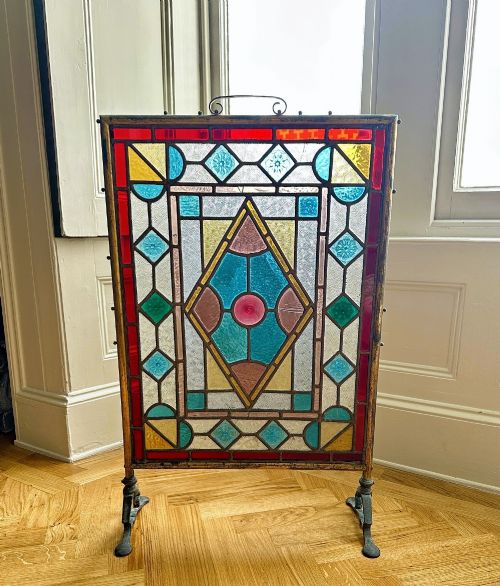
An edwardian fireplace guard stands before the hearth as a practical barrier, combining metalwork and glass to protect a room from stray embers.
Edwardian Fireplace Guard
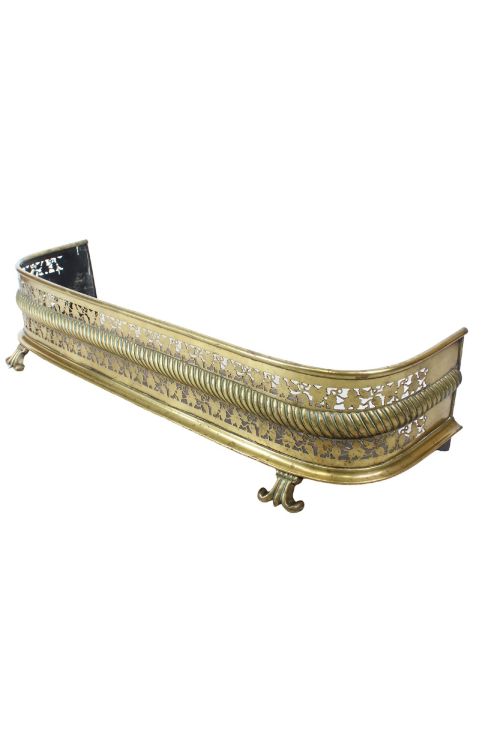
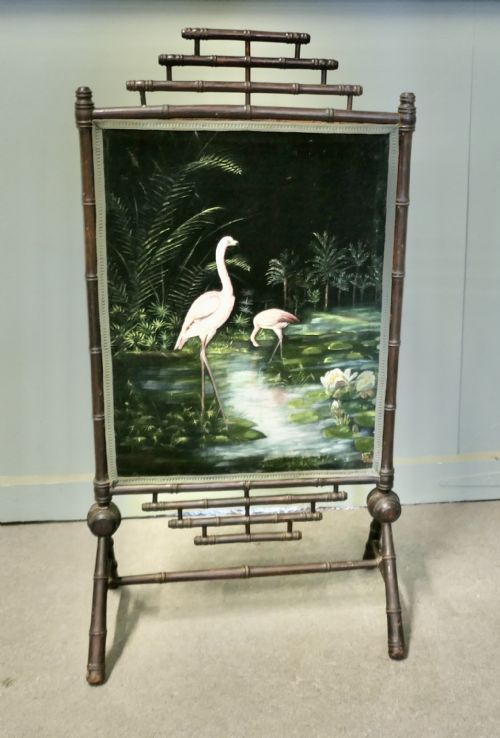
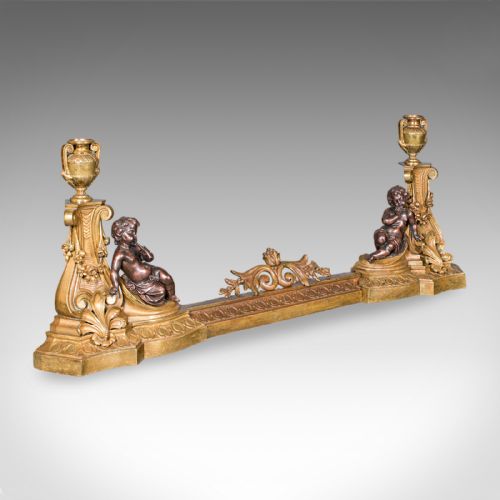
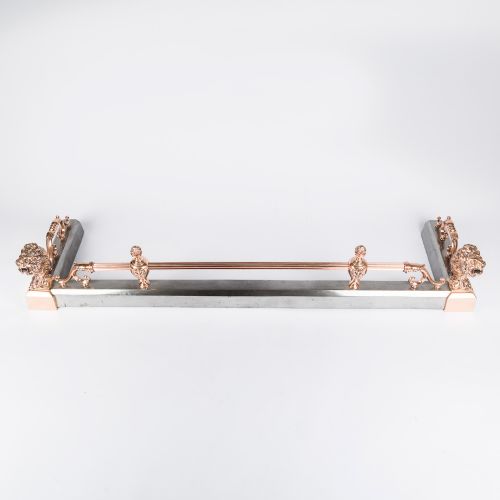
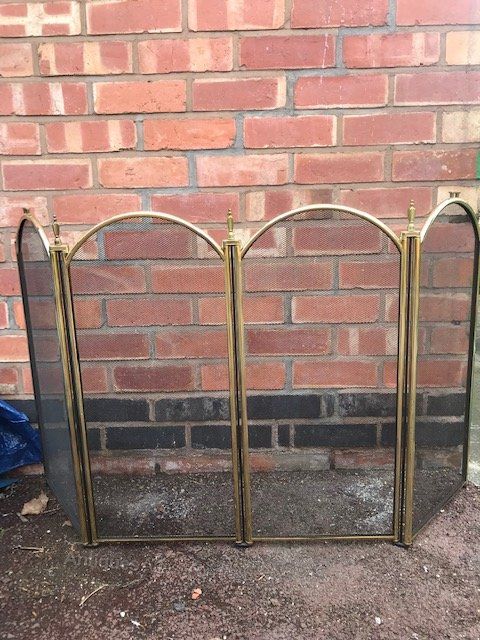
The edwardian fireplace guard groups together domestic hearth protection from the late nineteenth and early twentieth centuries, spanning periods from the Victorian era into the 1920s and 1930s. Buyers encountering these pieces will find folding spark guards, adjustable fenders, and framed screens alongside sturdy club fenders.
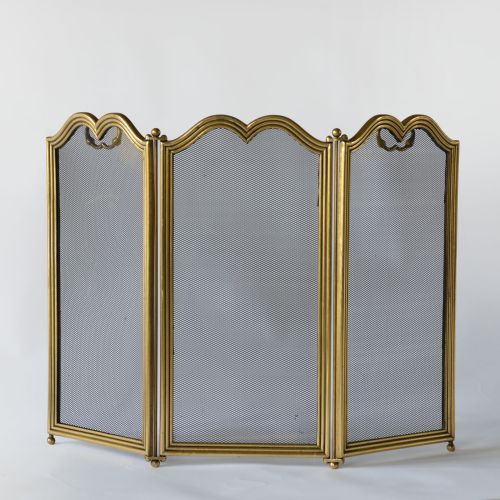
Most entries follow traditional forms built for coal fires, ranging from simple wire mesh panels to elaborate brass frames and club fenders with leather seats. These pieces originate across the British Isles and continental workshops, reflecting domestic habits of the period.
Construction and Materials
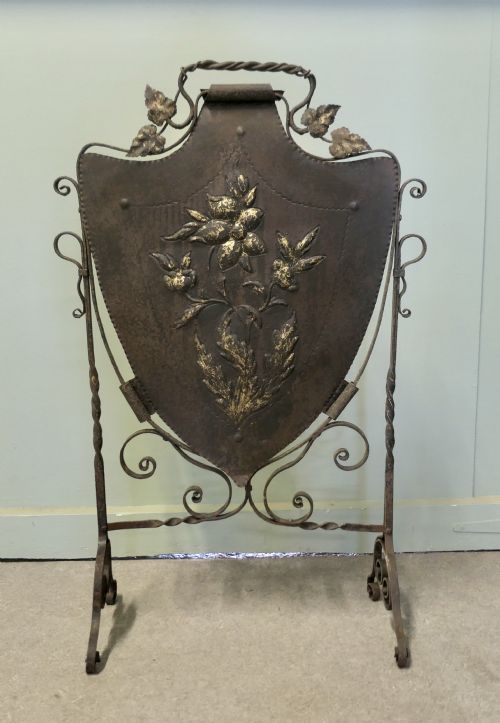
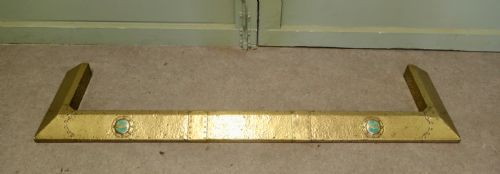
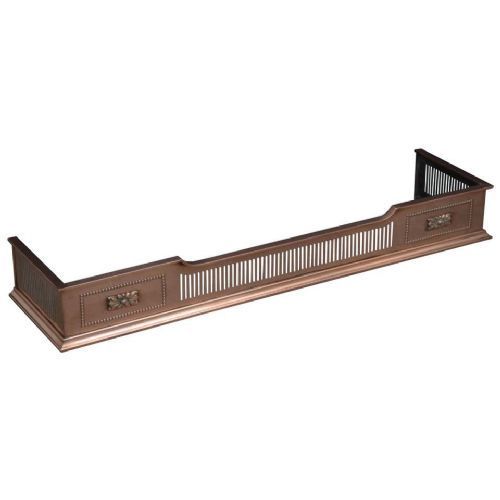
Metalwork dominates the construction, utilising brass, iron, copper, and steel shaped through casting, piercing, and hand-beating. Makers often combined polished brass with blackened iron or added decorative elements like flower patera and green enamel cabochons.
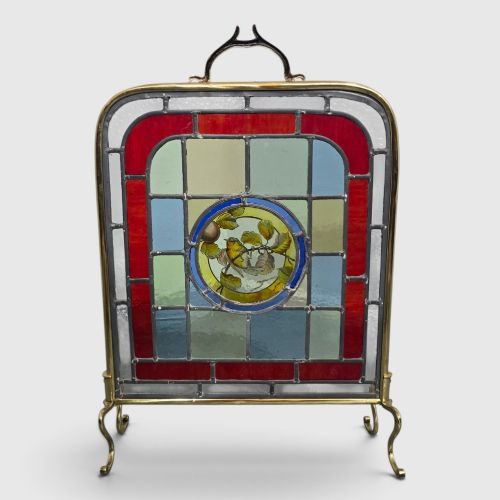
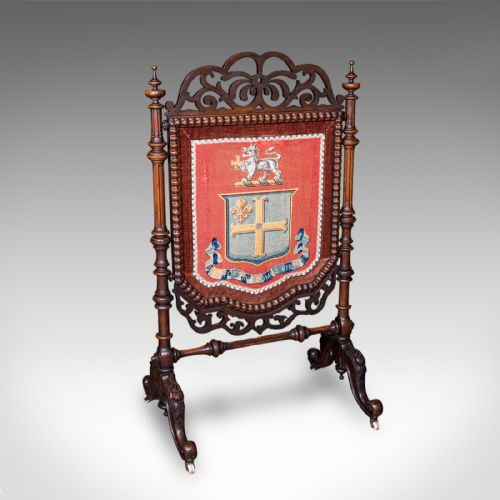
Wood and textiles appear alongside the metals, including oak frames, walnut structures, and leather upholstery for club fender seats. Glass panels, stained glass inserts, and embroidered needlepoint panels also provide visual interest within structural metal frames.
Current listings feature materials ranging from traditional brass, iron, and copper to glass, leather, and lead.
Quality and Craftsmanship
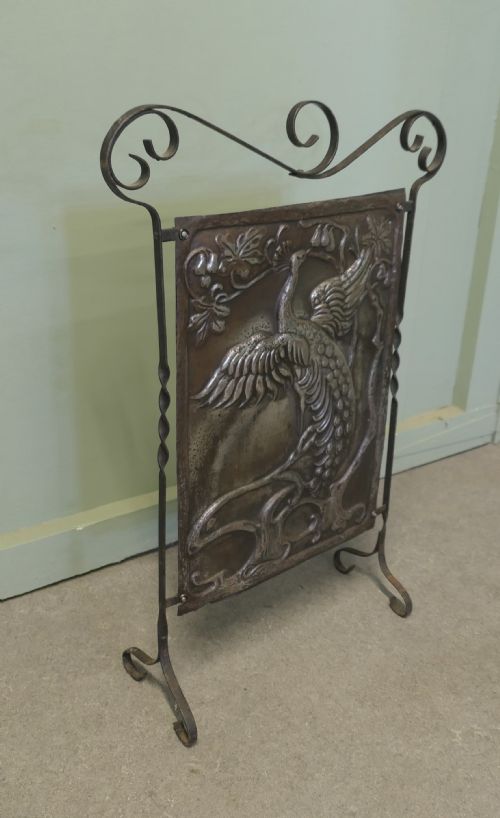
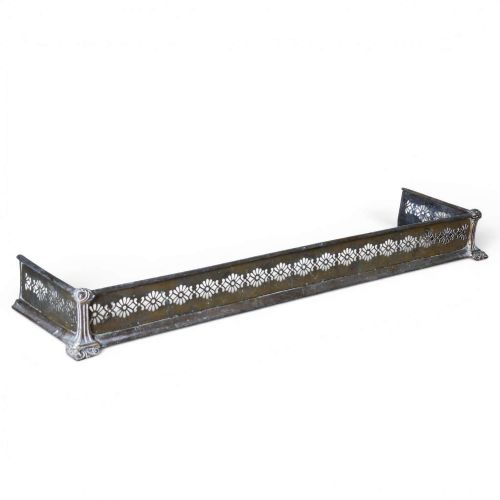
Quality rests in the weight of the metal and the precision of the joints, where heavy gauge brass and solid iron outlast thin sheet alternatives. Superior examples show crisp casting in decorative motifs such as peacock designs or gothic shields rather than soft, indistinct surface stamping.
Integration of secondary materials dictates refinement, distinguishing simple wire frames from framed screens featuring stained glass, cut glass, or finely needlepointed wool panels. The presence of functional adjustments, such as extendable fender rails and well-fitted folding sections, marks superior execution.
The Edwardian Fireplace Guard Glossary
- Club fender
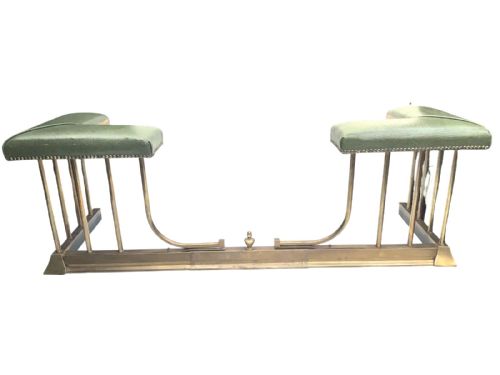
- A low, U-shaped hearth barrier featuring upholstered leather seats on either side. This design allowed people to sit close to the fire while containing stray coals.
- Fire screen
- A decorative panel placed in front of an unlit fireplace during warmer months to hide the grate. Many examples utilise glass, embroidery, or copper panels.
- Spark guard
- A fine metal mesh screen designed to catch flying embers during active fires. They frequently appear as tripartite folding sections for easy storage.
- Patera
- A circular ornamental bas-relief resembling a classical libation dish. Makers pressed or cast these floral motifs into copper and brass fenders.
- Needlepoint
- A form of canvas work embroidery using wool yarn to create pictorial panels. These textiles are often mounted within wooden fire screen frames.
Edwardian Fireplace Guard: Frequently Asked Questions
What is an edwardian fireplace guard used for?
These pieces served to protect rooms from flying sparks and excessive radiant heat while the hearth was in use. They also acted as a decorative screen during warmer months when the fire was unlit.
Larger club fender variants provided additional seating directly around the fireplace opening, combining domestic comfort with hearth safety.
How do I distinguish between Victorian and Edwardian examples?
Victorian pieces frequently display heavier ornamentation, gothic revival motifs, and elaborate pierced brass work characteristic of the nineteenth century. Edwardian and later guards tend towards simpler structural lines, reflecting changing interior tastes around 1900 to 1910.
Material choices also offer clues, with Arts and Crafts influences appearing strongly in pieces utilising hand-beaten copper and stylized floral or peacock motifs.
Can adjustable fenders fit modern hearths?
Many period fenders incorporate sliding mechanisms designed to alter the overall width of the metal kerb. Buyers can often adjust these sections to suit different hearth dimensions.
Careful measurement of the fireplace surround is necessary before purchase to ensure the extended frame sits securely against the hearth floor.
How should I clean a brass and copper screen?
Routine maintenance requires only a soft, dry cloth to remove dust and prevent surface grime accumulation from coal smoke. Harsh chemical polishes should be avoided to preserve the natural patination built up over decades.
Upholstered leather seats on club fenders benefit from occasional treatment with appropriate leather dressings to keep the material supple.