


Edwardian Equestrian Picture
An edwardian equestrian picture captures the grit and grace of sporting life through oils, watercolours and prints.
Edwardian Equestrian Picture
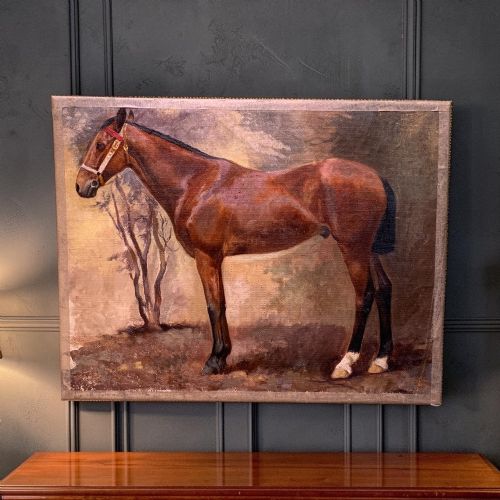
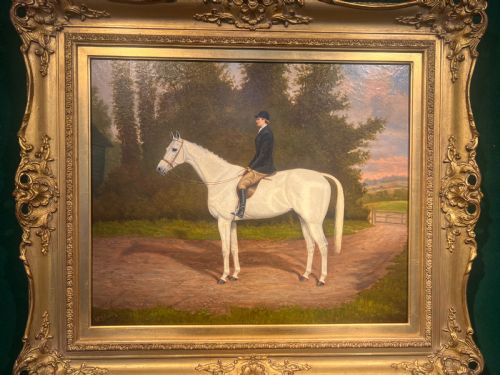
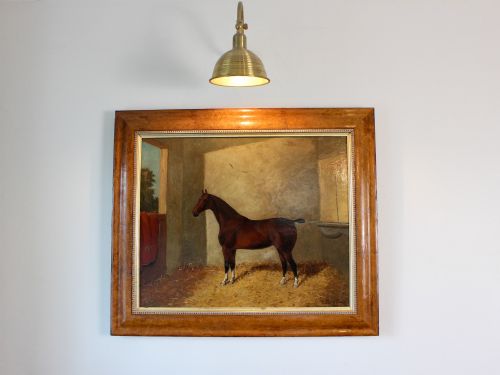
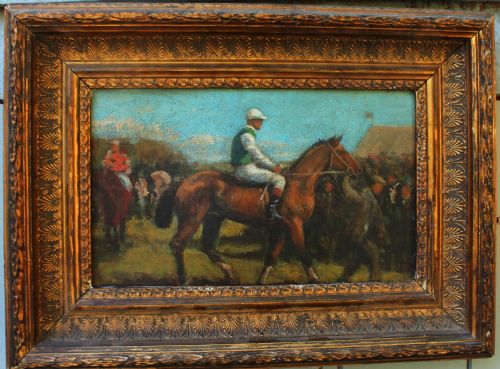
An edwardian equestrian picture brings together portraits of thoroughbreds, race paddocks and hunting scenes from the late nineteenth and early twentieth centuries. Buyers encounter framed oil paintings, watercolours, chalk drawings and original prints capturing horses and riders in British sporting art styles. These works range from intimate studies of individual horses to lively coaching and hunting sequences.
The selection leans heavily on period paintings and prints spanning the Victorian, Edwardian and early twentieth century eras. Works often depict named racehorses, champion hunters and military or leisure riders in detailed landscape settings. Framed artwork frequently retains period wooden or gilt frames that complement the traditional subject matter.
How They Were Made
Artists painted these subjects using oil paint on canvas or panel, and watercolour or chalk on paper. Canvas works display textured brushwork while paper pieces rely on fine washes and detailed line work. Gilt wood and plain walnut frames enclose many of these traditional artworks.
Printmakers utilised techniques such as chromolithography to reproduce sporting art for wider audiences. Original watercolours and drawings show direct hand application by named artists of the period.
Materials recorded across the inventory include paper, glass, wood, canvas, gilt wood, oil paint and watercolour.
What Varies in Quality
Quality rests on the precision of the animal's anatomy and the confidence of the brushwork or line. Master sporting artists capture the tension in a horse's muscle and the movement of a race with notable accuracy. Weaker examples show stiff proportions and lifeless backgrounds.
The importance of the subject matter and the reputation of the artist elevate specific pieces. Signed works by recognised sporting painters carry greater artistic weight than anonymous studio output. The preservation of the original medium and frame also shapes the standing of the piece.
William Albert Clarke·Alfred Munnings·Cecil Charles Windsor Aldin·Alfred Wheeler·John Sanderson Wells·Alfred Duke·Vernon Stokes·Snaffles·Isaac Cullin·John Charles Maggs·Frank Algernon Stewart·Frank Dadd·Thomas Blinks·John Atkinson
The Edwardian Equestrian Picture Glossary
- Chalk drawing
- A work executed primarily using dry chalk or pastel sticks on tinted or white paper. This medium allows for rapid sketching of movement in horses and riders.
- Chromolithography
- A planographic colour printing technique used to produce multi-coloured reproductions of original paintings. It gained popularity for mass-producing affordable sporting prints.
- Crystoleum
- A Victorian method of applying a hand-coloured paper print to glass, convexing it, and painting behind it to create depth. These pieces are typically housed in ornate gilt frames.
- Gilt wood
- Wood carved and coated with a thin layer of gold leaf or metallic gilt paint. It is commonly found on traditional frames surrounding period paintings.
Edwardian Equestrian Picture: Frequently Asked Questions
What subjects appear in these pictures?
The artworks depict racehorses, hunters, coaching scenes and hunting hounds in pastoral or sporting settings. Many feature named thoroughbreds alongside jockeys or huntsmen.
Scenes range from quiet paddock studies to fast-paced point-to-point races and military garrison life.
Are these pieces original works?
The inventory includes a mix of original oil paintings, watercolours, chalk drawings and vintage prints. Named artists created the unique hand-painted pieces during the period.
Printed items include period lithographs and published illustrations by notable sporting artists.
How do I care for antique paper and canvas?
Keep works on paper and canvas away from direct sunlight to prevent fading of watercolours and oils. Maintain stable indoor humidity levels to protect organic materials.
Display pieces in appropriate period frames without exposing them to excessive moisture.
What periods do these artworks represent?
Most pieces date from the Victorian and Edwardian eras, spanning the late nineteenth century through the early twentieth century. Some works reflect stylistic traditions from the broader British sporting art school.
Dates range from the eighteen-eighties to the nineteen-sixties for later print editions.