



Edwardian Equestrian Art
Edwardian equestrian art captures the pulse of the British sporting tradition through detailed depictions of horses, riders, coaches, and hounds.
What the pieces are
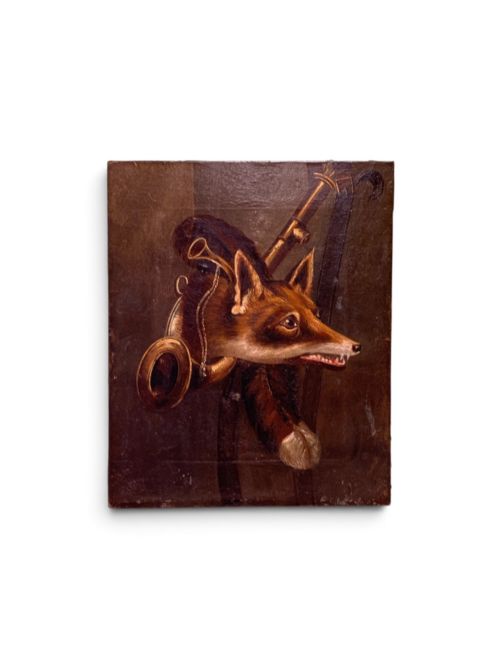
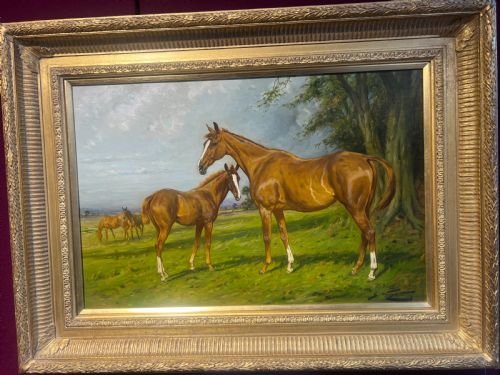
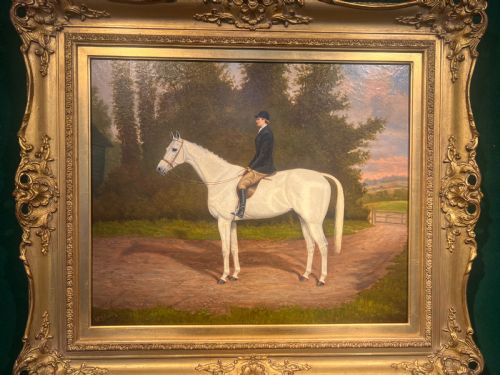
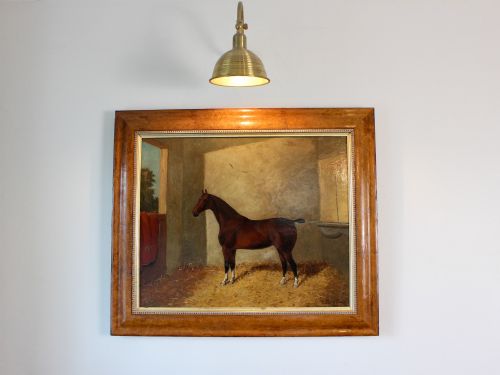
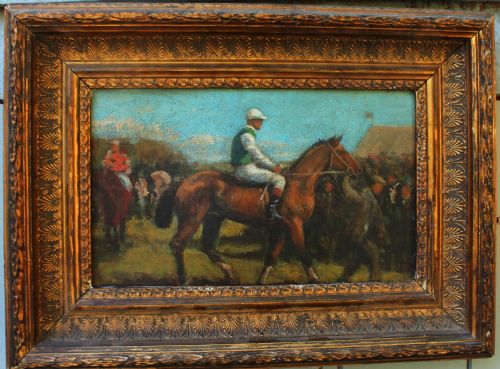
Edwardian equestrian art encompasses paintings and watercolours depicting horses, coaching scenes, and racing subjects from the early twentieth century. These works document the prominent role of horses in sport, transport, and rural life during the period.
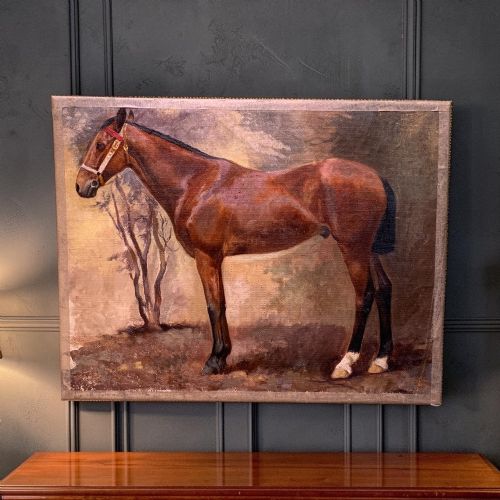
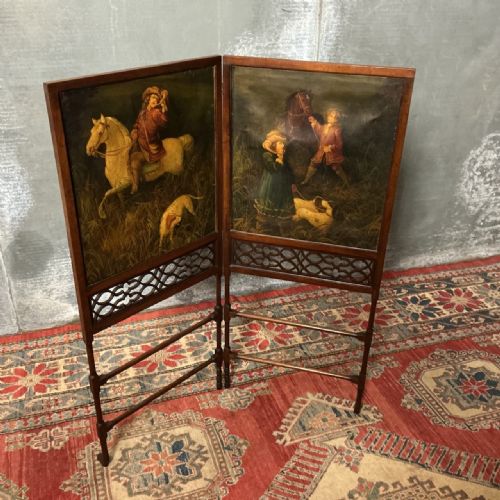
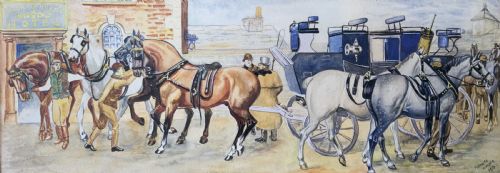
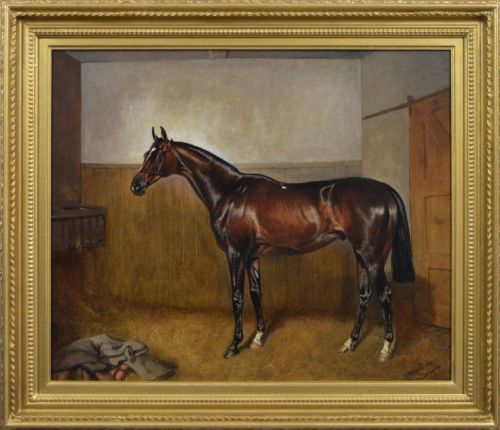
The selections available here range from oil on canvas portraits of named racehorses and hunters to delicate watercolour paintings of hunting scenes and racecourse views. Many pieces bear the signatures of recognised sporting artists or are attributed to notable practitioners of the genre.
How they were made
Artists working in this field utilised oil on canvas and watercolour pigment applied to paper to achieve precise renderings of equine anatomy and movement. Canvases are frequently housed within traditional wood frames, with several featuring giltwood finishes that reflect the formal presentation standards of the era.
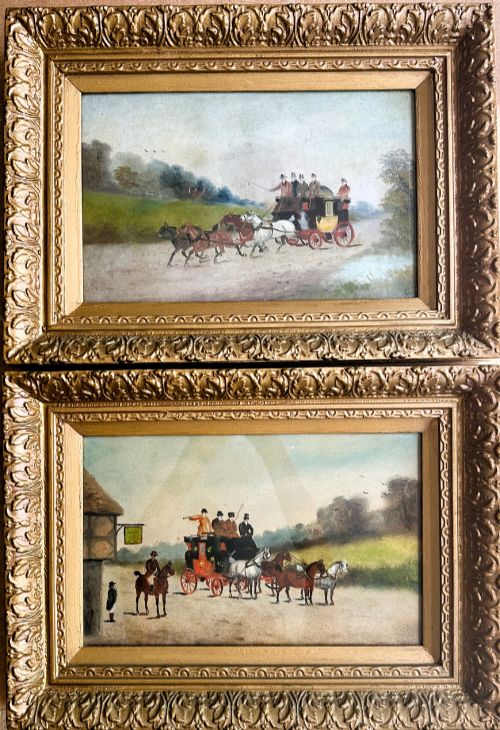
Techniques range from finely detailed oil portraits of individual animals in stables or landscapes to looser, narrative watercolours capturing active coaching scenes and race days. The physical construction relies on period framing methods using wood and gilt moulding to protect and display the artworks.
Retail Price Guide 2026
Typical UK retail prices for edwardian equestrian art, calculated from the Sellingantiques database of over a million retail prices indexed since 2003. This retail price guide relies exclusively on Sellingantiques data; no external sources or auction records are used, so the figures do not describe the wider market.
Several canvases immortalise specific horses with memorable monikers like Ferniehurst Frivolous and Diamond Jubilee.
What varies in quality
Quality in these artworks rests upon the precision of equine anatomy, the fidelity of the rendering, and the artist's ability to convey character and movement. Superior examples demonstrate a confident handling of brushwork in oils or a precise control of wash in watercolours.
The distinction between standard works and exceptional pieces also lies in the historical documentation of the subject, such as named racehorses with jockeys or identified coaching routes, alongside the integrity of the original frame.
F.A. Clark·George Wright·Alexander Maclean·Alfred Wheeler·J. Beckett·Alfred Grenfell Haigh·John Sanderson Wells·Isaac Cullin
The Edwardian Equestrian Art Glossary
- Oil on canvas
- A painting medium where pigments are suspended in a drying oil, applied to a stretched woven fabric support. This method allows for rich colour depth and textured brushwork.
- Watercolour pigment
- A water-soluble paint medium applied to paper support, valued for its luminous transparency and immediacy. It was frequently used for preparatory sketches and finished sporting scenes.
- Giltwood frame
- A wooden picture frame coated with a thin layer of gold leaf or metallic gilt finish. These frames provide period-appropriate ornamentation for formal oil paintings.
- Equine portrait
- A specialised genre of animal painting focusing on the likeness and conformation of a specific horse. These works often record celebrated racehorses, hunters, or prize-winning animals.
Frequently Asked Questions
What subjects appear in Edwardian equestrian art?
The works depict thoroughbred racehorses, hunters in stables, coaching scenes with hounds, and racecourse gatherings. These subjects reflect the widespread cultural and sporting interest in horses during the period.
Artists recorded both individual named animals with their jockeys and broader pastoral scenes involving working plough teams and stagecoaches.
How do I identify the period of a sporting painting?
Period identification relies on stylistic markers, costume details of riders, and framing materials typical of the early twentieth century and late nineteenth century. Signatures and dates inscribed by the artist provide definitive chronological anchors.
The recorded works span the Victorian era through to the nineteen-twenties, showing an evolution in painting technique and subject matter.
Are these works original paintings?
The listings comprise original hand-painted works in oil on canvas and watercolour pigment on paper. Each piece represents a unique artistic creation rather than a modern reproduction.
Some watercolours document historical scenes after earlier engravings, executed by period artists working in traditional mediums.
How should I display these artworks at home?
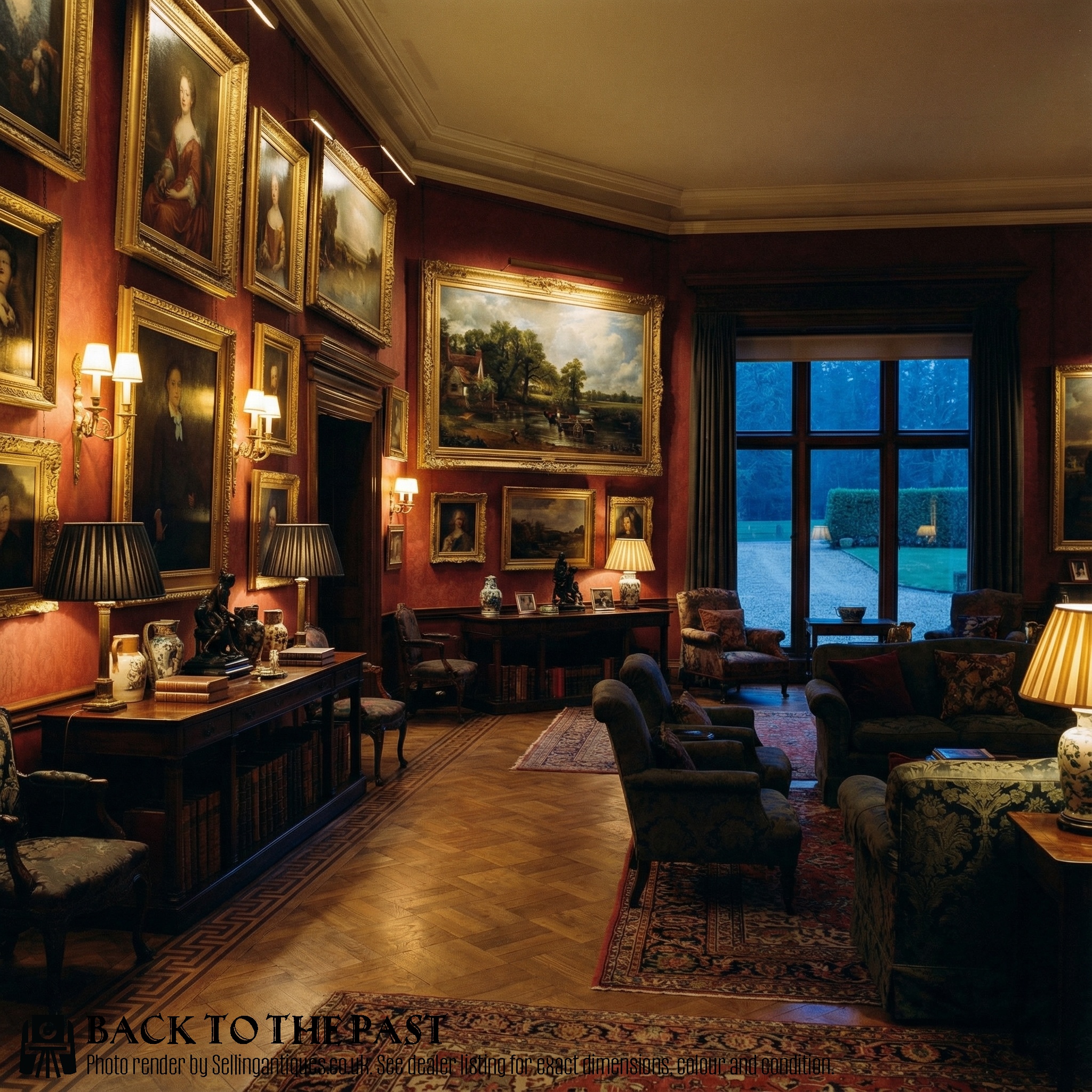
These paintings suit traditional interior settings, particularly libraries, studies, or hallways where historical sporting art complements period architecture. Their original wood and giltwood frames require stable environmental conditions away from direct sunlight and excessive moisture.
Proper wall hanging ensures the canvas or paper remains supported without strain to the wooden stretcher or frame.