



Edwardian Ebonised Furniture
Edwardian ebonised furniture brings dark, polished surfaces and crisp lines into rooms that need a touch of severe elegance.
Edwardian Ebonised Furniture
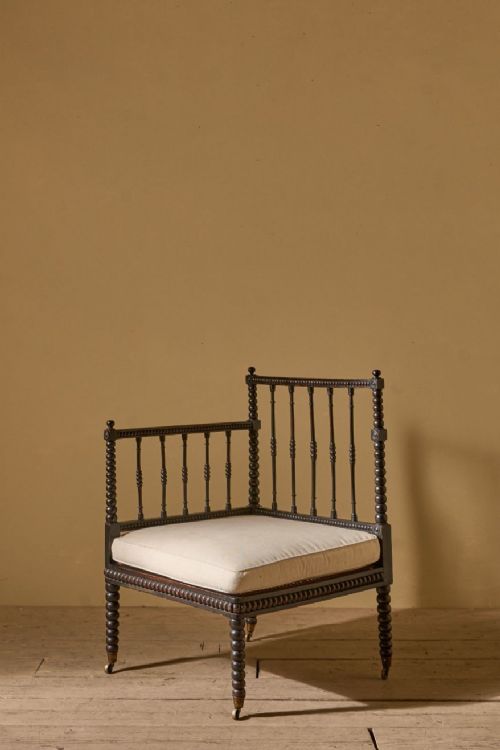
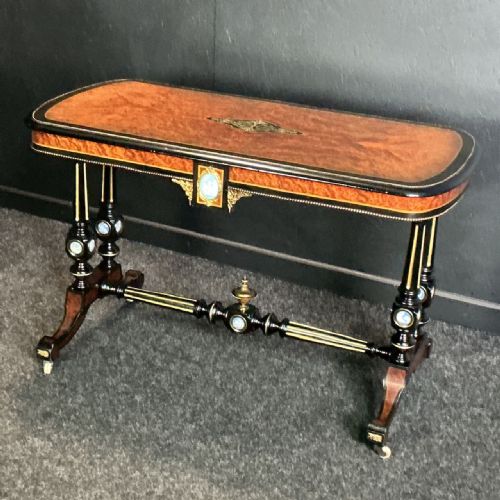
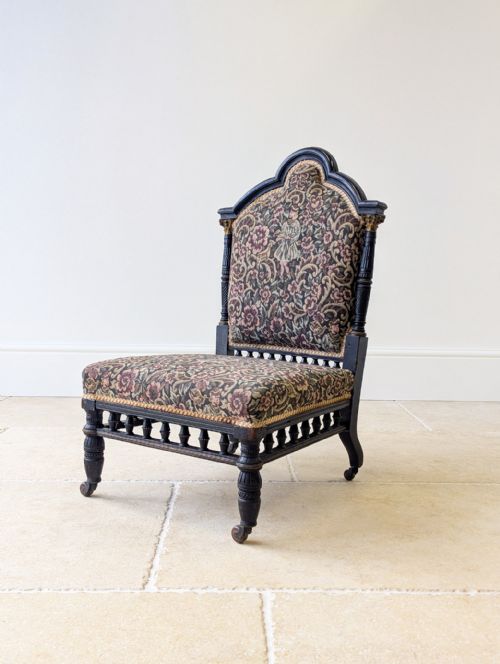
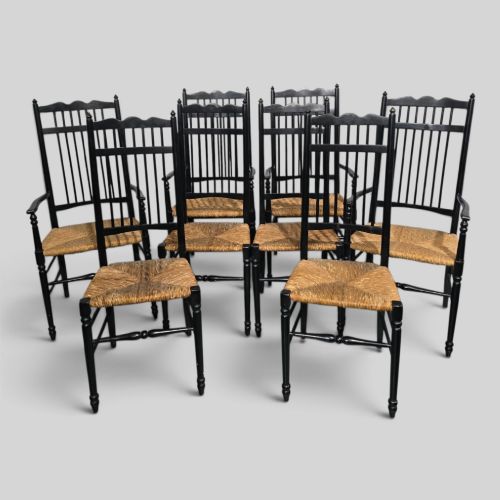
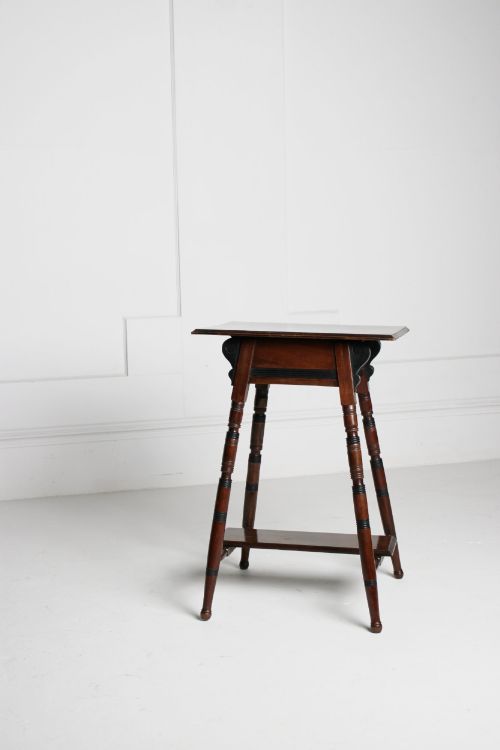
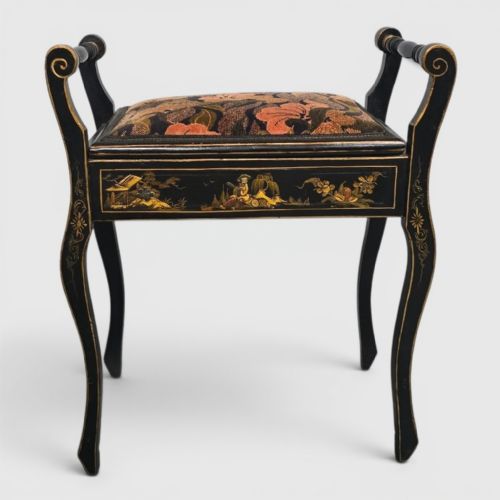
Edwardian ebonised furniture covers a range of dark-finished wooden domestic pieces spanning the late nineteenth century and the early twentieth century. Buyers encounter forms such as centre tables, card tables, corner chairs, salon chairs, dining chairs, side tables, piano stools, and etageres.
The aesthetic leans heavily on nineteenth-century design movements, incorporating styles like the Aesthetic Movement, Arts and Crafts, Moorish Revival, and Chinoiserie. These pieces draw from Victorian roots while simplifying forms for later Edwardian interiors.
Makers and retailers represented include firms such as Edwards and Roberts, Druce & Co London, and pieces in the manner of Daniel Cottier. The selection reflects both formal reception room items and smaller decorative stands.
Materials and construction
Makers utilised hardwoods, mahogany, walnut, oak, and birch, applying an ebonised finish to imitate expensive ebony. Surfaces often feature contrasting inlays of amboyna, burr thuya, or marquetry.
Metal mounts in brass, ormolu, nickel, and gilt brass provide structural accents and decorative detail, while cast solid brass sabots protect table feet. Upholstered elements incorporate textile fabrics alongside porcelain components.
Edwardian Ebonised Furniture Retail Price Guide 2026
Typical asking prices for edwardian ebonised furniture among the pieces listed under this phrase on Sellingantiques today, from the lower quarter to the upper quarter. They describe what is for sale here now, not the wider market.
Listings feature items spanning the nineteenth century through to the nineteen-twenties, incorporating oak, mahogany, walnut, and amboyna.
Judging quality
The refinement of the ebonised finish and the condition of the underlying hardwood dictate the visual success of a piece. Finer examples maintain an even, deep black sheen without excessive chipping to the dark coating.
The integration of contrasting materials, such as precise brass mounts or delicate marquetry inlay, separates standard production items from workshop pieces associated with notable makers. Joinery integrity in smaller tables and chairs underpins lasting structural stability.
Druce and Co London·Daniel Cottier
The Edwardian Ebonised Furniture Glossary
- Ebonised wood
- Timber treated with stain, paint, or chemical processes to imitate solid ebony. This finish became popular during the nineteenth century for achieving a sleek, dark surface.
- Aesthetic movement
- A late nineteenth-century design style emphasising art for art's sake and drawing inspiration from Japanese and Anglo-Japanese motifs. Pieces in this style often feature geometric lines and ebonised finishes.
- Ormolu
- Gilded bronze used for decorative mounts, feet, and handles on furniture. It adds a bright metallic contrast to dark ebonised wooden surfaces.
- Etagere
- A set of open tiered shelves used for displaying ornaments or small objects. These lightweight pieces often feature inlaid wood and delicate supports.
- Sabot
- A protective or decorative metal sleeve fitted to the foot of a furniture leg. They frequently appear in cast brass on nineteenth-century tables.
Edwardian Ebonised Furniture: Frequently Asked Questions
How do I clean ebonised furniture?
Dust surfaces regularly with a soft, dry lint-free cloth to prevent particle buildup. Avoid harsh chemical sprays or excessive moisture which can damage the dark surface coating.
Apply a conservative amount of appropriate furniture wax only if the finish appears dry. Buff gently to maintain the characteristic low sheen.
Where should I place a salon chair?
Salon chairs work well in bedrooms, hallways, or sitting rooms as accent seating. Their compact proportions make them suitable for spaces where large armchairs overwhelm the room.
Keep them away from direct sunlight and heat sources to protect any original fabric upholstery and the ebonised wood finish.
How do I spot Aesthetic Movement pieces?
Aesthetic Movement pieces display clean geometric lines, minimal carving, and often incorporate Japanese-inspired motifs. Ebonised finishes combined with gilt highlights are common hallmarks of this style.
Look for refined proportions and functional simplicity that departed from heavy Victorian ornamentation. Many items also feature subtle brass hardware.