


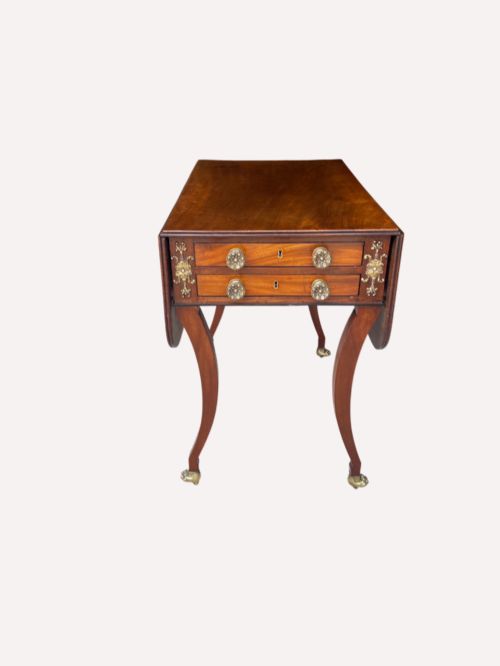
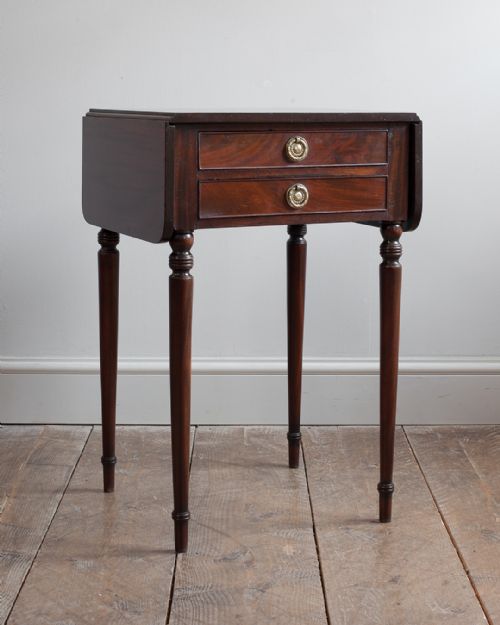

Edwardian Drop Leaf Occasional Table
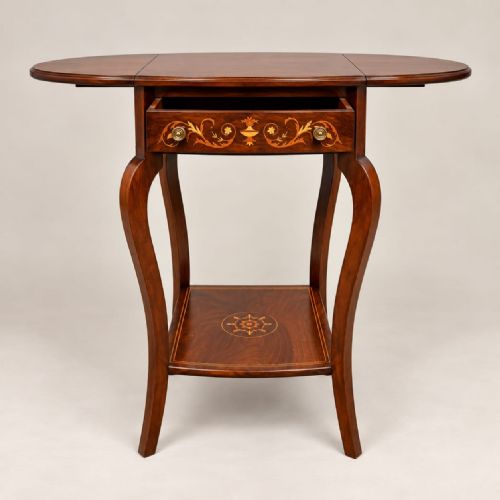
An Edwardian drop leaf occasional table combines nimble domestic utility with refined timber work, designed to extend surface area swiftly when needed and fold away compactly.
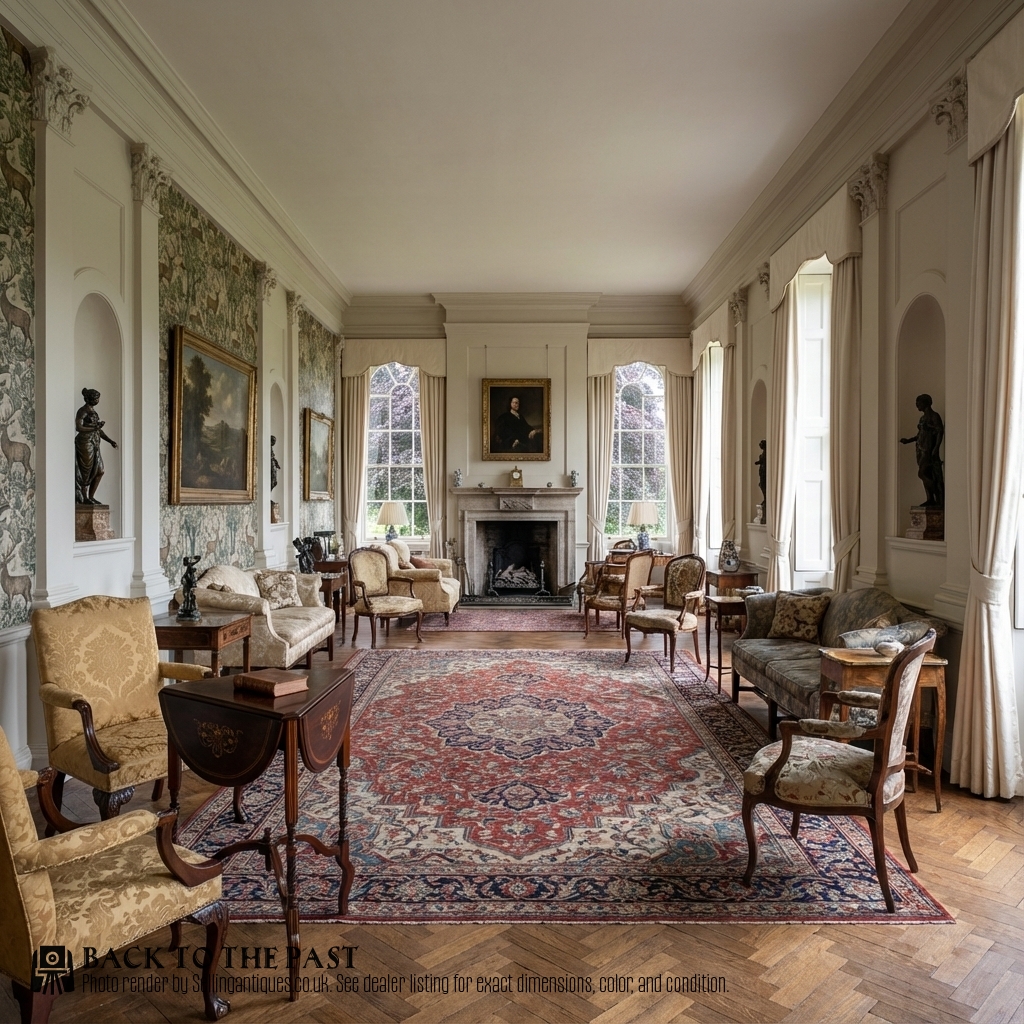
Edwardian Drop Leaf Occasional Table
An edwardian drop leaf occasional table is a versatile multi-purpose piece designed for sitting rooms and parlours where space requires flexible placement. The form draws heavily on earlier Victorian, Georgian, and Regency precedents, translating compact folding mechanisms into lighter domestic furniture.
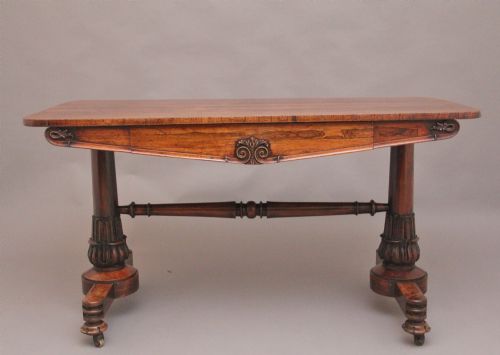
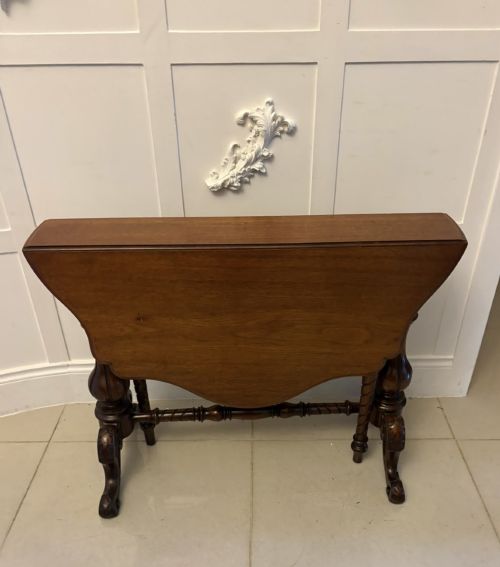
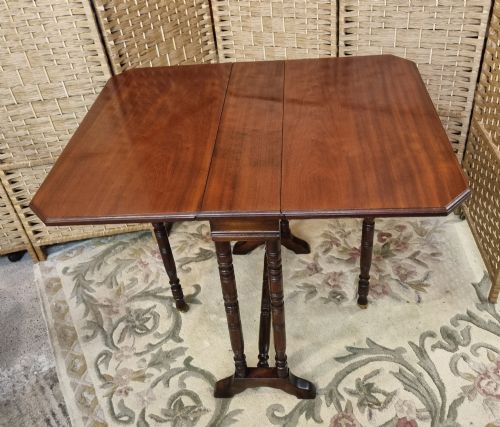
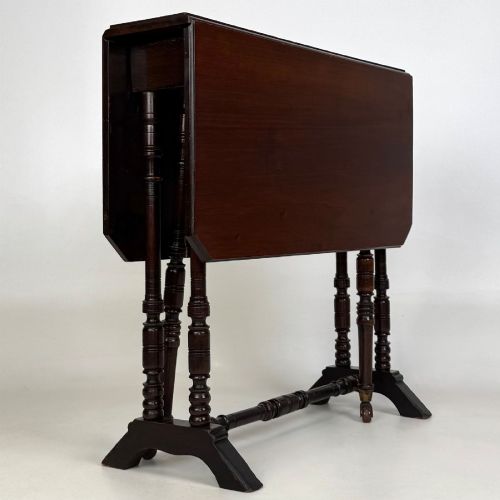
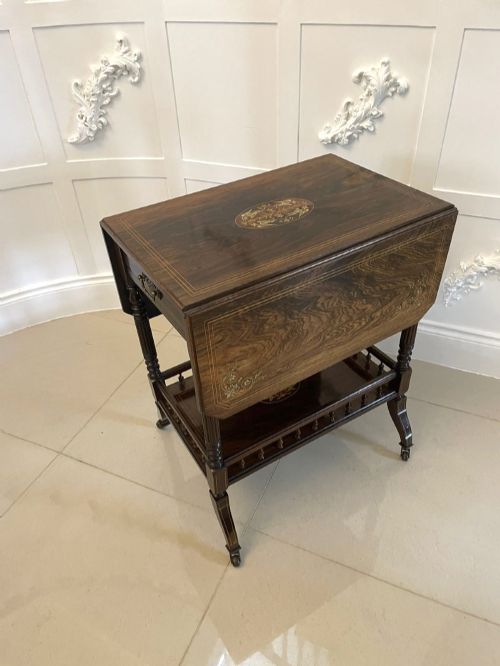
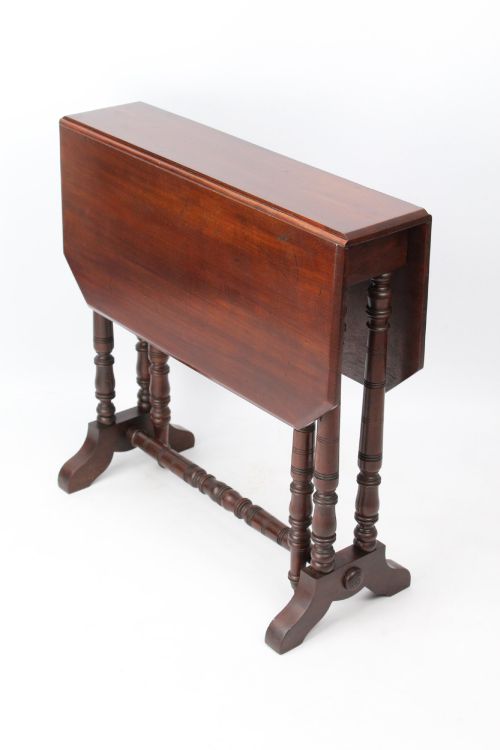
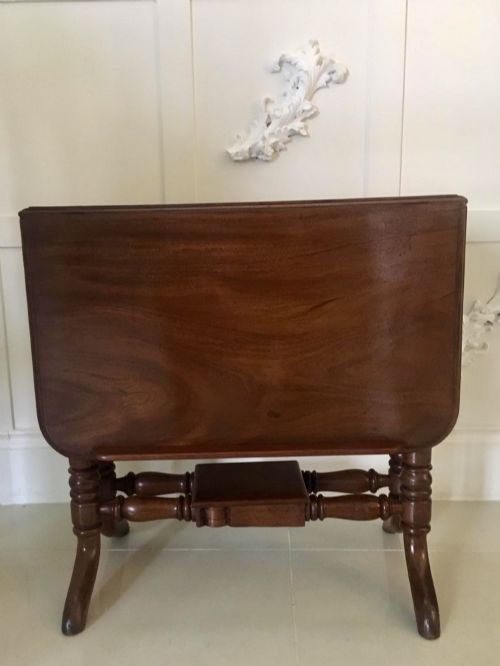
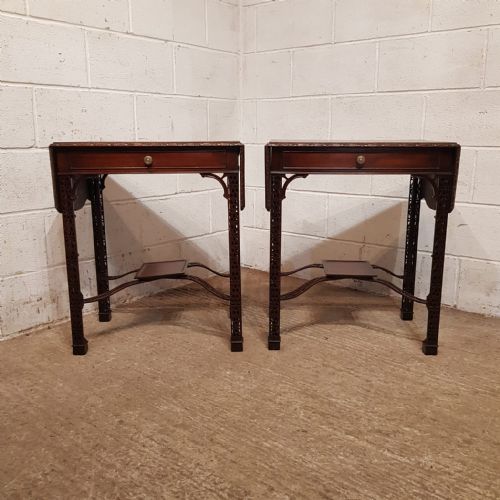
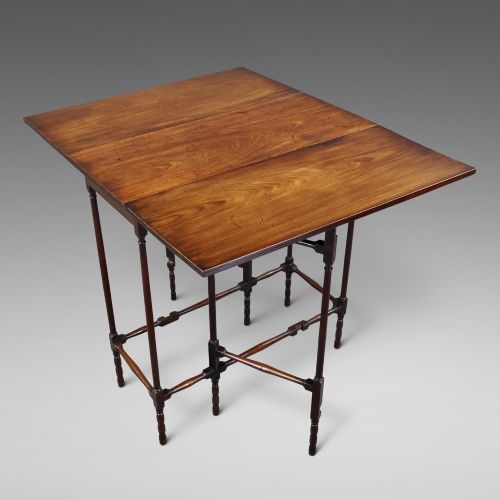
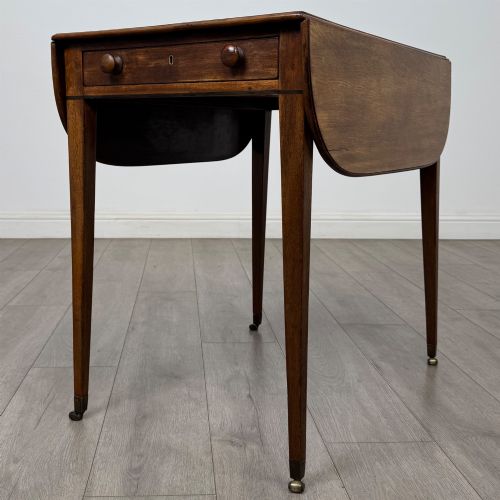
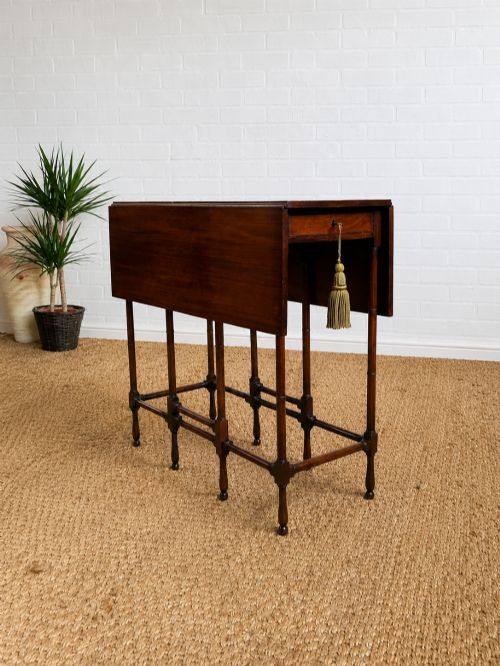
The version most commonly met on this page is constructed from mahogany, often enhanced with contrasting satinwood inlay or boxwood stringing. These tables frequently take the form of Sutherland tables or small Pembroke tables featuring hinged flaps supported by swinging legs or gated frames.
Makers of the period also utilised rosewood, walnut, and oak to build these adaptable occasional tables. Proportions remain generally slender, accommodating domestic spaces that demand portability alongside traditional cabinet-making standards.
How they were made
Cabinet-makers relied predominantly on solid mahogany and figured veneers applied to stable secondary timbers, deploying satinwood, boxwood, and marquetry for decorative banding. Brass fittings appear on castors and hinges, securing the operational drop leaves and allowing smooth mobility across carpets.
Construction techniques combine traditional mortise and tenon joinery with delicate turned legs, such as bamboo-turning or slender gateleg supports, to maintain structural integrity despite the moving leaves. Surface finishes were typically hand-polished to accentuate the natural grain patterns of the wood without heavy synthetic varnishes.
Edwardian Drop Leaf Occasional Table Retail Price Guide 2026
Typical asking prices for edwardian drop leaf occasional table among the pieces listed under this phrase on Sellingantiques today, from the lower quarter to the upper quarter. They describe what is for sale here now, not the wider market.
Some Edwardian tables incorporate bamboo-turned legs, bringing a touch of playful Anglo-Bamboo aesthetic into traditional mahogany tea rooms.
What varies in quality
Quality rests upon the selection of timber figures, such as finely figured mahogany or rich rosewood, matched against the crispness of inlaid satinwood stringing rather than printed or superficial decoration. Superior examples demonstrate precise hinge fitting and stable leaf alignment when fully extended.
The refinement of the undercarriage and leg turning distinguishes finer workshops from standard production. Smooth operation of the drop leaf action, combined with robust joints that prevent lateral wobble, separates the best pieces from simpler utility tables.
Andrew Thomson And Sons·Maple And Co
The Edwardian Drop Leaf Occasional Table Glossary
- Sutherland table
- A narrow drop leaf table featuring exceptionally slender legs and wide leaves that fold down almost vertically. This design allows the piece to occupy minimal floor space when closed.
- Pembroke table
- A small occasional table with two hinged flaps on opposite sides, usually equipped with a single drawer. The style originated in the eighteenth century and remained popular through the Edwardian period.
- Gateleg table
- A table with hinged leaves supported by legs that swing outward like a gate. This construction provides robust support for the extended flaps.
- Inlay
- A decorative technique where pieces of contrasting wood, such as satinwood or boxwood, are embedded into recesses in the primary surface. It creates flat patterns and geometric borders.
- Marquetry
- Elaborate decorative veneer work assembled in pictorial or patterned designs using various coloured woods. It requires high skill to fit the pieces precisely together before application.
- Drop leaf
- A tabletop featuring fixed central sections with hinged side flaps that raise and lower. Brackets or swinging legs support the leaves when in use.
Edwardian Drop Leaf Occasional Table: Frequently Asked Questions
What is a drop leaf occasional table?
A drop leaf occasional table is a small, movable piece of furniture featuring hinged flaps that can be raised to increase surface area or lowered for compact storage.
These tables were designed for flexible use in sitting rooms, parlours, and bedrooms during the Edwardian era and earlier periods.
How do I use an edwardian drop leaf occasional table?
These tables function well beside armchairs or sofas to hold books, lamps, or tea services, expanding instantly when guests arrive.
Pooled space is easily managed by dropping one or both leaves to tuck the table flat against a wall when not in use.
How do I tell an Edwardian table from a Victorian one?
Edwardian tables generally display lighter proportions, brighter mahogany finishes, and more delicate inlaid satinwood or boxwood stringing compared to heavier Victorian counterparts.
Victorian pieces often utilise darker rosewood or solid mahogany with sturdier, more robust turnings reflecting nineteenth-century domestic tastes.
What wood types are used in these tables?
The primary timber encountered is mahogany, frequently complemented by satinwood, rosewood, walnut, and oak.
Inlays incorporate contrasting light woods such as boxwood, alongside occasional exotic veneers.