



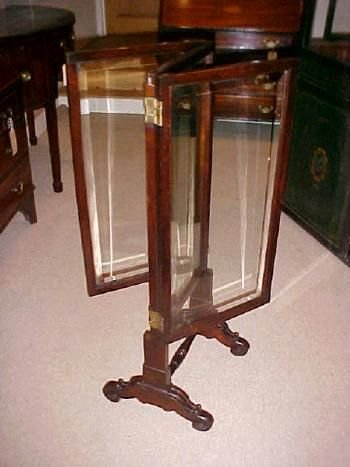
Edwardian Draught Screen
An Edwardian draught screen keeps the chill from the room while dividing a space with timber and textile.
Edwardian Draught Screen
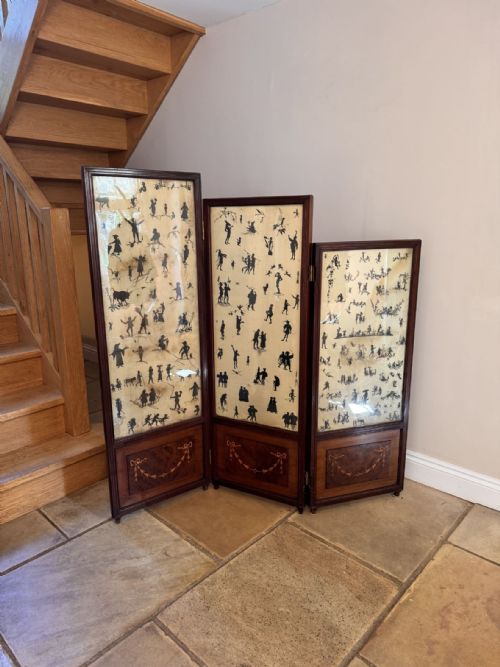
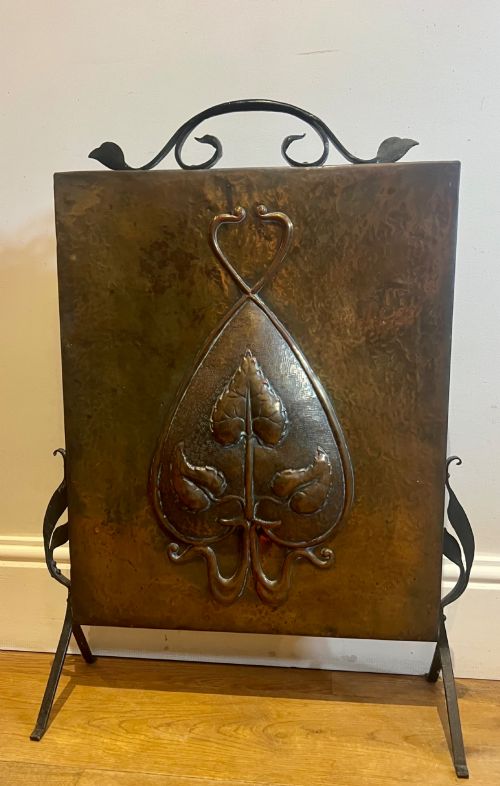
An edwardian draught screen divides a room or shields a hearth using folding panels of timber, fabric, glass, or metal. The examples on this page span several decades and styles, including Victorian and Arts and Crafts pieces alongside Edwardian designs.
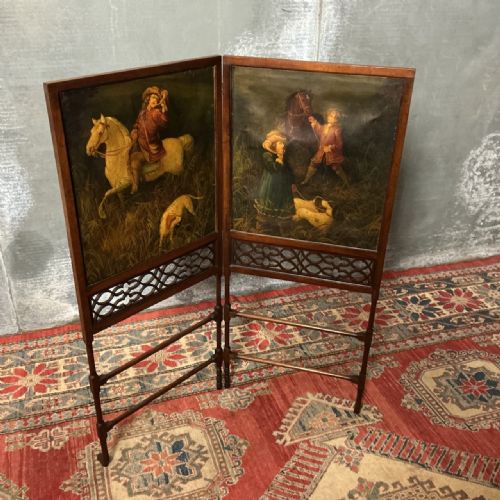
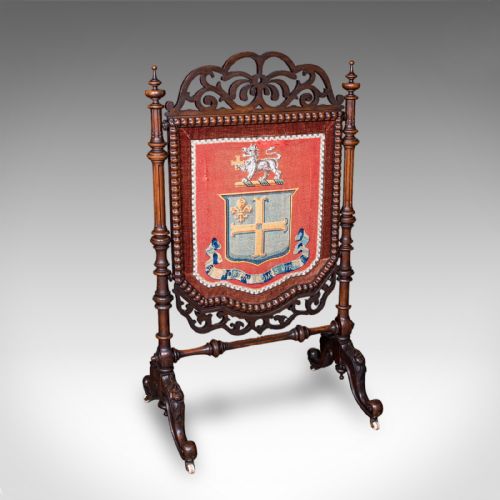
Most pieces seen here take the form of multi-fold folding screens or fire screens, constructed from mahogany, walnut, or oak frames. Buyers often encounter variants inset with oil paintings, needlepoint, embroidered panels, or glass.
Origins range widely across these listings, taking in British cabinetmaking, Chinese lacquer work, Indian fretwork, and Anglo-Indian production. Each folding screen offers a practical way to manage light, draughts, and privacy in domestic interiors.
How they were made
Frames rely on sturdy timbers such as mahogany, walnut, oak, and ebonised wood, joined to create multi-fold hinged structures. Many incorporate detailed fretwork or turned woodwork.
Infill panels display diverse artisan techniques, ranging from oil paintings on canvas and needlepoint embroidery to William Morris velvet fabric and Chinese lacquer. Brass and iron feature in structural hardware and specific fire screens, sometimes paired with copper in the Newlyn style.
Edwardian Draught Screen Retail Price Guide 2026
Typical asking prices for edwardian draught screen among the pieces listed under this phrase on Sellingantiques today, from the lower quarter to the upper quarter. They describe what is for sale here now, not the wider market.
Current listings feature screens spanning from the Victorian era through the 1920s, utilising mahogany, oak, walnut, brass, and canvas.
What varies in quality
The distinction between standard production and finer work lies in the execution of the frame joints and the quality of the infill materials, such as hand-painted oil canvases or complex needlepoint embroidery. Fully reversible hinges and substantial hardwood structures indicate careful manufacturing.
Decorative ambition also shapes the range, with simple fretwork panels sitting below elaborate multi-fold lacquered screens or embroidered armorial designs that required specialised workshop skills.
The Edwardian Draught Screen Glossary
- Draught screen
- A moveable folding barrier designed to block cold air currents in a room. These partitions also serve to divide interior spaces.
- Fire screen
- A smaller screen placed before a fireplace when the hearth is unlit. They often utilise brass, iron, or glass.
- Needlepoint
- A type of canvas work embroidery executed with a yarn threaded through a grid. It frequently appears on Victorian and Edwardian screen panels.
- Fretwork
- Ornamental openwork carved or pierced through wood or metal. This technique adds lightness and pattern to folding frames.
- Lacquer
- A durable glossy finish applied in multiple layers to wood surfaces. Chinese export screens employ this technique for decorative effect.
Edwardian Draught Screen: Frequently Asked Questions
How do I use a draught screen?
Place the screen strategically between doors and seating areas to block sudden drafts of cold air. They also work effectively to section off a corner of a larger room for privacy.
Positioning them near windows or hallways helps manage light and creates intimate zones within an open-plan space without permanent building work.
How do I clean fabric panels?
Surface dust should be removed gently using a soft brush or a low-suction vacuum attachment fitted with a textile guard. Avoid using water or liquid cleaners directly on antique embroidery or velvet.
Professional textile conservators should handle deeper cleaning or stain removal to prevent damage to historic threads and delicate backing materials.
Are all screens folding?
Most examples featured here rely on hinges to form multi-fold panels that expand or flatten for storage. Single-panel fire screens remain fixed on feet rather than folding.
Folding designs offer flexibility because you can adjust their angle to fit different room layouts and wall lengths.
How do I care for wooden frames?
Maintain the timber by keeping the screen away from direct heat sources and strong sunlight, which can dry out polish. A light application of appropriate furniture wax preserves the finish.
Check the hinges periodically to ensure they support the weight of the panels without straining the surrounding wood joints.