

Edwardian Diamond Cluster
When you handle an edwardian diamond cluster, you hold a piece of fine jewellery designed to catch the candlelight with clustered stones.
Edwardian Diamond Cluster
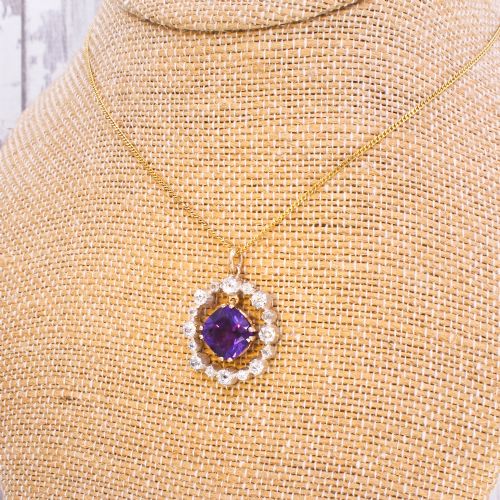
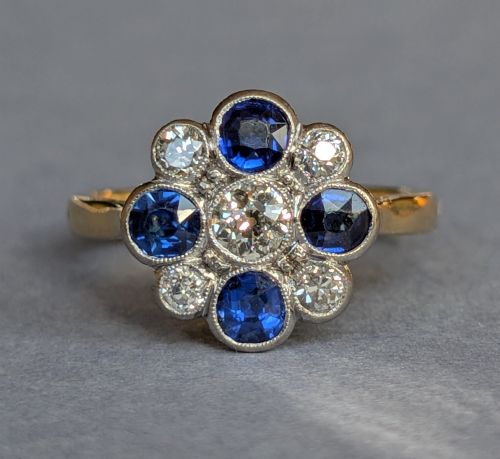
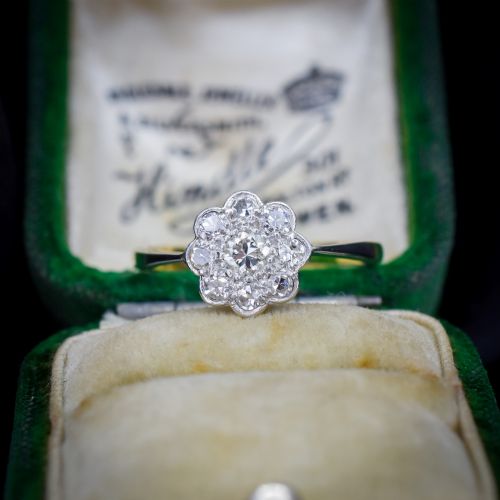
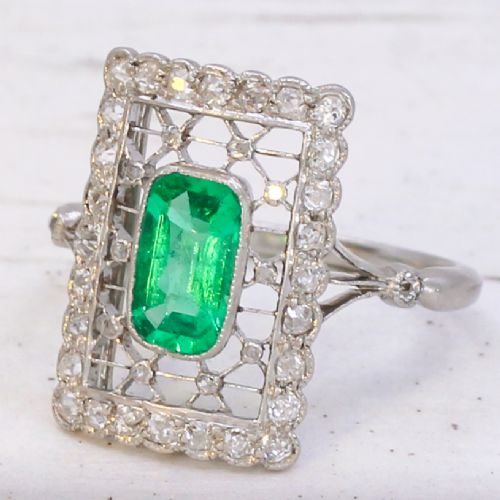
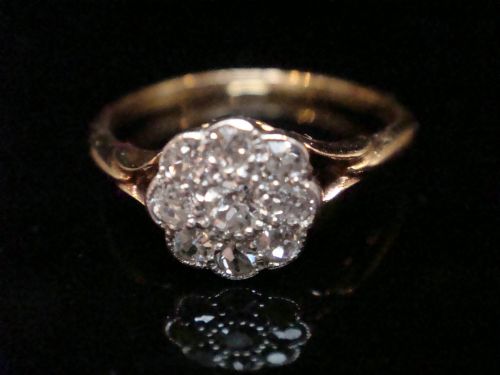
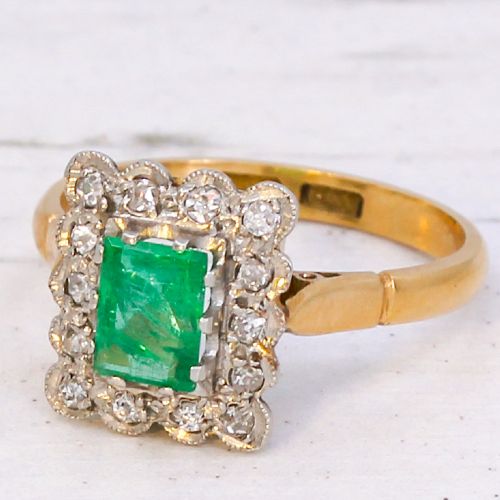
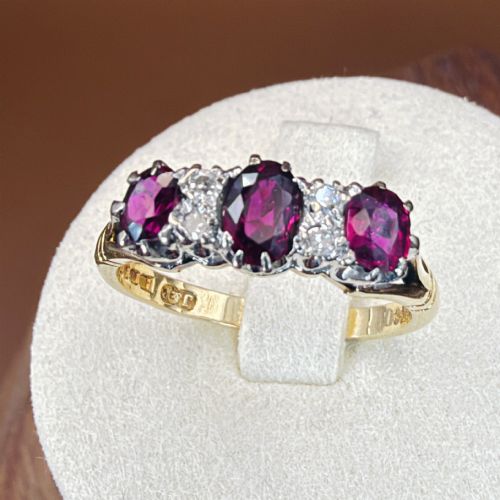
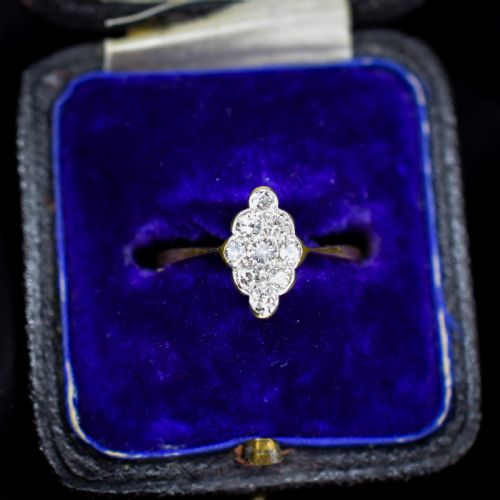
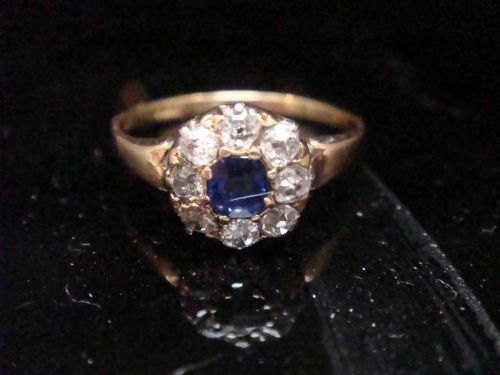
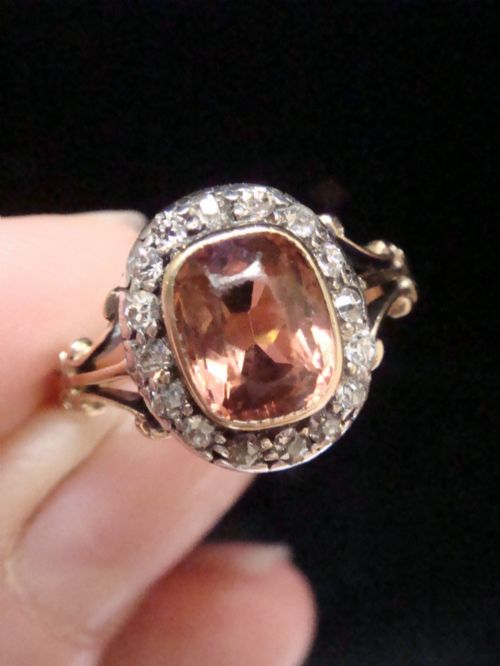
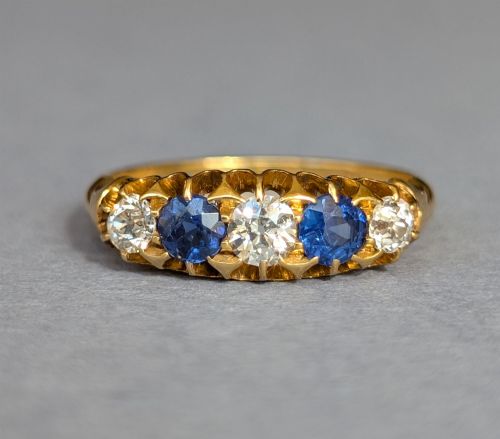
The edwardian diamond cluster forms a central focus of antique jewellery, primarily appearing as rings shaped like daisies, flowerheads or geometric targets. These pieces frequently pair a central diamond with a surrounding border of smaller diamonds or coloured gemstones.
Most examples found on this page date from the early twentieth century, specifically around nineteen hundred to nineteen ten, though related items extend into the Victorian and Art Deco eras. Buyers encounter these clusters mostly as rings, alongside occasional brooches, pendants and earrings.
The predominant construction unites eighteen carat yellow gold bands with platinum settings on the face. This specific pairing allowed makers to mount stones securely while maintaining a bright, white backdrop that enhanced the brilliance of old cut diamonds.
How they were made
Craftsmen of the period utilised old European and old mine cut diamonds, which exhibit distinct hand-cut facets and open culets that differ from modern brilliant cuts. These stones were set into platinum over eighteen carat gold, a metallurgical combination that provided structural strength without heavy metal weight.
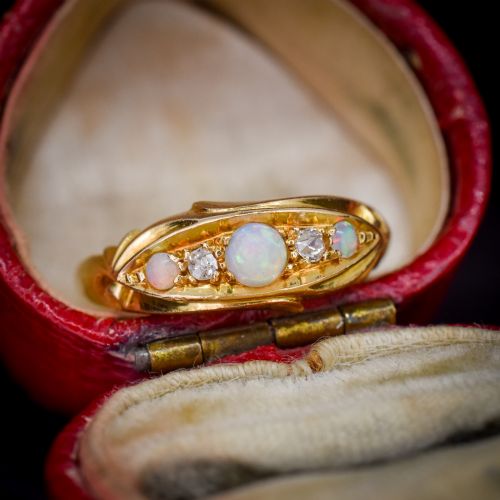
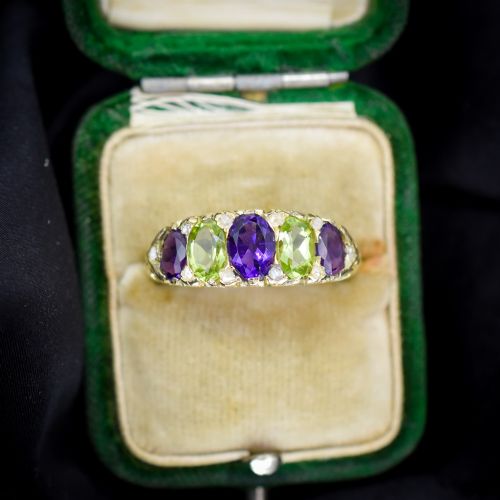
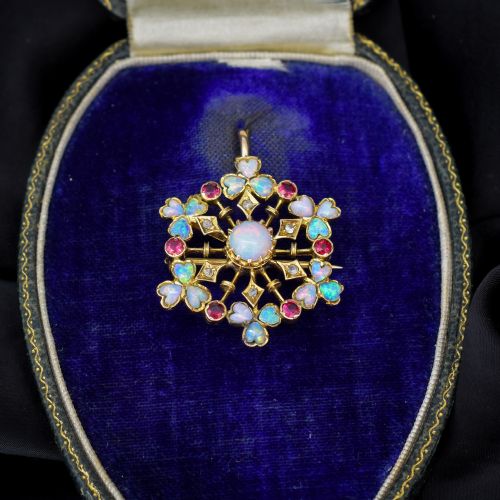
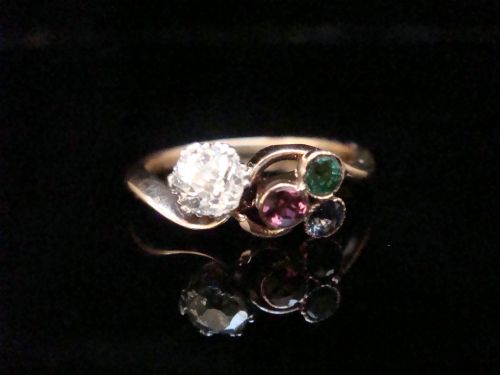
Gemstones such as sapphires, rubies, emeralds and opals frequently anchor the cluster alongside or instead of a central diamond. Jewelers arranged these materials in tight floral or geometric configurations, securing them with delicate claw or bezel settings.
Some clustered floral rings secretly hide delicate pierced galleries underneath, designed purely for the wearer to admire against the skin.
What varies in quality
Quality rests significantly on the proportion and matching of the stones within the cluster, where uniform colour and harmonious cut grades elevate a piece. The presence of unheated coloured gemstones or substantial carat weights in the central diamond further separates exceptional examples from standard ones.
The finesse of the metalwork on the reverse and the delicacy of the gallery under the stones define superior craftsmanship. Pieces that retain their original claw integrity and display balanced symmetry without replacement stones command greater attention.
The Edwardian Diamond Cluster Glossary
- Old cut diamond
- A diamond shaped by hand during the eighteenth or nineteenth centuries, featuring smaller tables, higher crowns and deep pavilions designed to catch gaslight and candlelight.
- Daisy cluster
- A ring design featuring a central circular gemstone encircled by a ring of matching smaller stones, resembling the petals of a flower.
- Navette
- A boat-shaped or marquise-like silhouette that extends along the finger, popular in cluster configurations from the early twentieth century.
- Platinum setting
- The use of platinum on the face of an eighteen carat gold ring to provide a bright white metal surface that holds small diamonds securely.
- Culet
- The small flat facet at the bottom of an antique diamond, visible through the stone as a tiny open circle.
Edwardian Diamond Cluster: Frequently Asked Questions
Can I wear an Edwardian diamond cluster every day?
These antique rings require mindful care due to their delicate settings and age, so removing them during rigorous manual tasks protects the fine platinum and gold claws.
Many people wear them daily as engagement or dress rings, provided a specialist checks the security of the stones periodically.
How do I know if the diamonds are original?
Old cut diamonds display irregular hand-cut facets, smaller tables and open culets that match the manufacturing period of the early twentieth century.
Original clusters show consistent wear across the metal and matching age characteristics among the surrounding smaller stones.
Why is platinum combined with yellow gold?
Platinum became widely used for jewellery tops because its strength allowed for minimal prongs while its natural white colour made diamonds look whiter.
Yellow gold formed the lower shank because it offered traditional warmth and structural durability for everyday wear on the hand.