
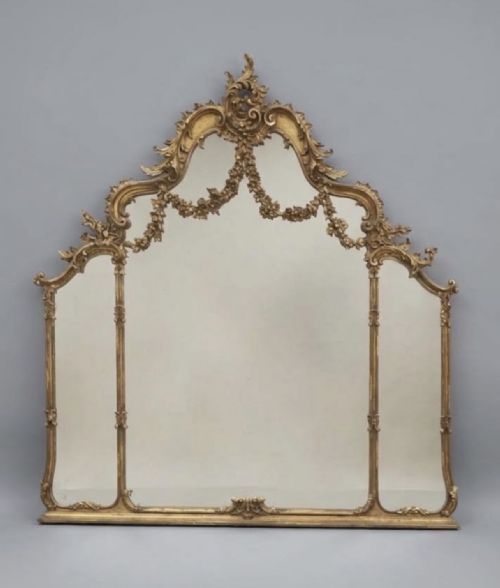
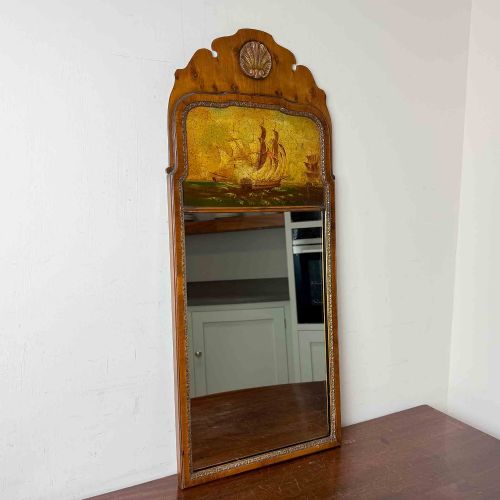
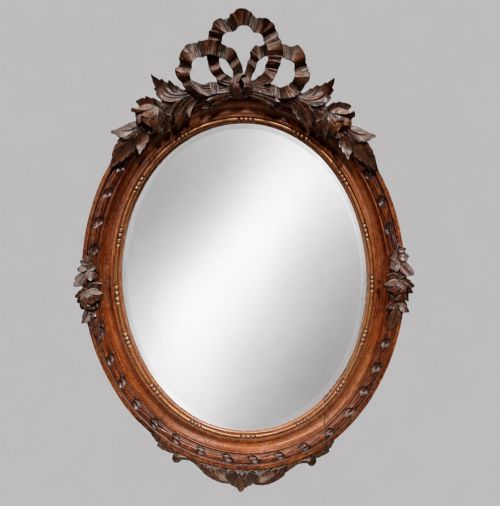
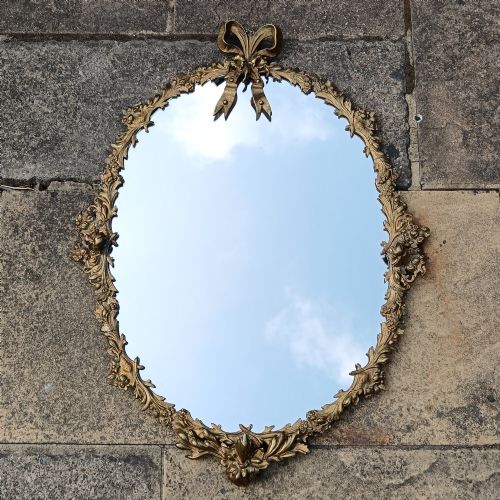

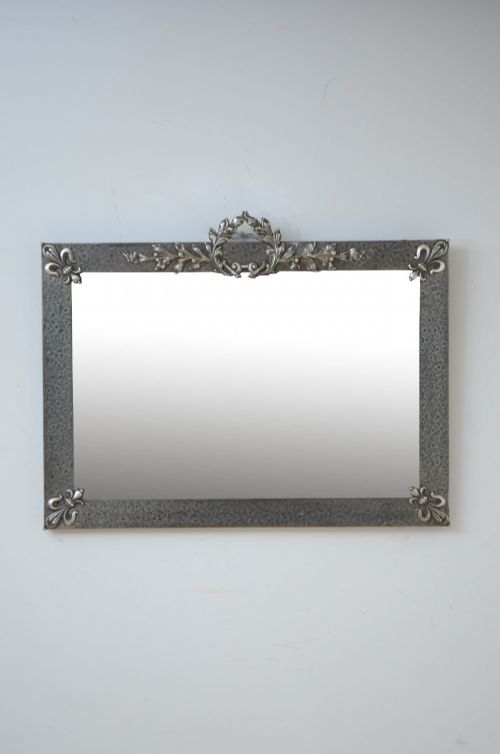
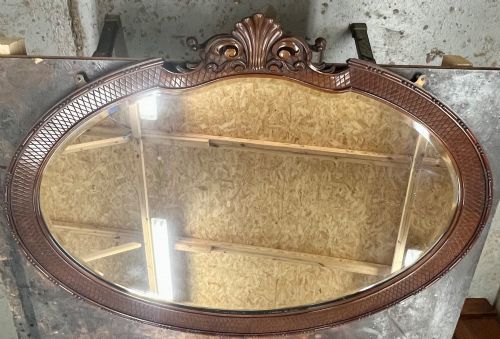
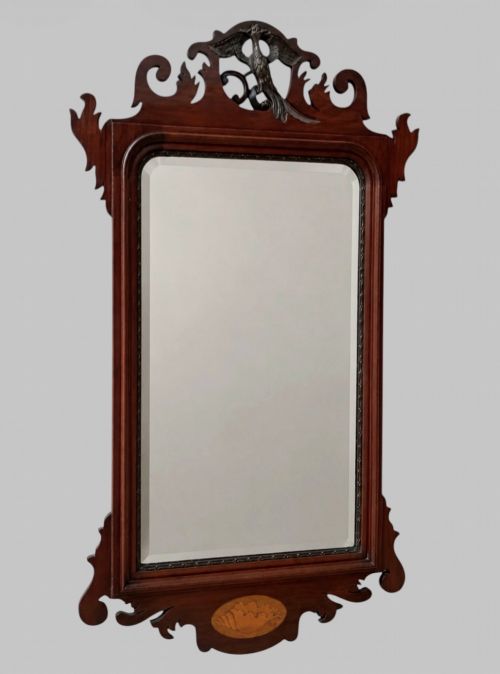
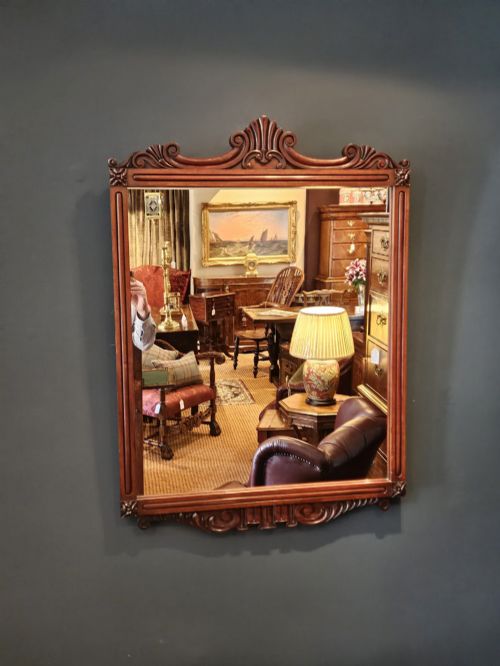


Edwardian Crested Mirror
An edwardian crested mirror brings light and period character into a room, offering decorative wooden frames and shaped tops that reflect early twentieth-century taste.
Edwardian Crested Mirror
An edwardian crested mirror sits primarily within the early twentieth-century aesthetic, though related examples draw upon Victorian, Queen Anne, and Adam revival styles.
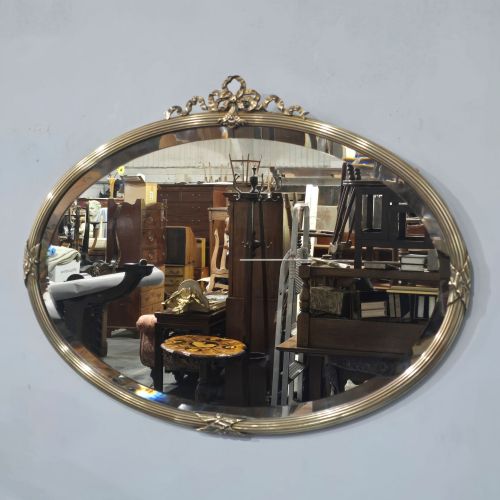
The selections on this page appear as wall mirrors, overmantel mirrors, and cheval mirrors, constructed in rectangular, oval, or shaped top formats.
Makers and craftsmen of this period utilised traditional timber foundations alongside revivalist design motifs to produce decorative furnishings for domestic interiors.
Materials and Construction
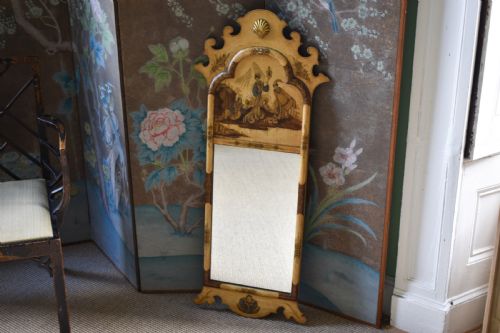
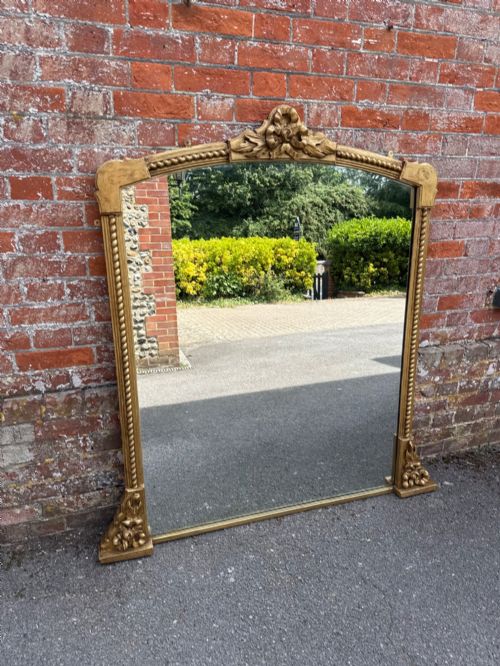
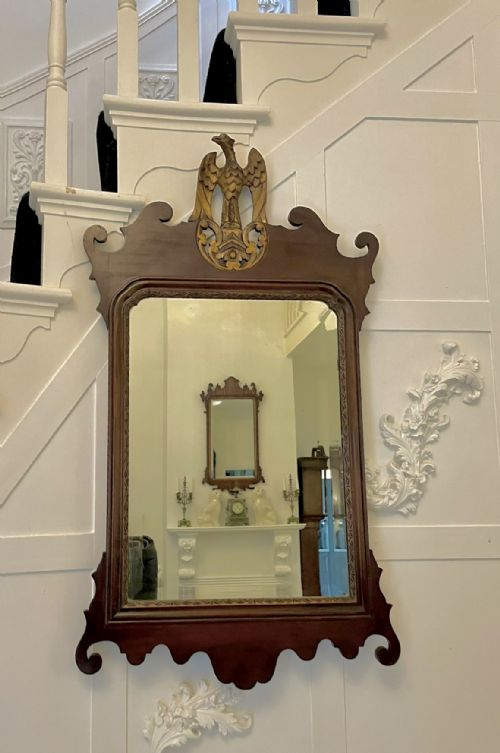
Makers built these frames using solid timbers such as mahogany, yew wood, and walnut, frequently applying giltwood, gesso, or gold leaf to create ornate surface decoration.
Mirror glass is set within fret-cut frames, carved woodwork, or ebonised surrounds, occasionally featuring bevel-edged glass and cut or etched glass panels.
Additional decorative techniques include parcel-gilt highlights, Chinoiserie decoration, inlay, and hammered metal work applied to wall and dressing mirrors.
Listings feature materials including mahogany, giltwood, gesso, and mirror glass across wall, overmantel, and cheval mirror forms.
Assessing Craftsmanship
Superior examples demonstrate depth and precision in hand-carved woodwork, gesso ornamentation, and fretwork rather than mass-produced uniformity.
The integration of original mirror glass, intact gilding, and well-preserved timber frames distinguishes finer pieces from later replacements.
The Edwardian Crested Mirror Glossary
- Overmantel mirror
- A large mirror designed specifically to hang above a fireplace mantelpiece. These pieces often feature shaped tops and ornate giltwood frames.
- Cheval mirror
- A freestanding full-length dressing mirror suspended on a pivoting frame. This allows the glass to tilt to various angles.
- Gesso
- A plaster-based material applied to wood frames and carved or moulded before gilding. It provides a smooth base for gold leaf.
- Parcel-gilt
- A decorative finish where only specific portions of a wooden or ebonised frame are gilded. This creates contrast against the darker background.
- Fret-cut
- Woodwork pierced or cut into intricate patterns using a fretsaw. This technique is common in lighter mahogany wall mirrors.
Edwardian Crested Mirror: Frequently Asked Questions
Where should I hang an overmantel mirror?
These large mirrors traditionally occupy the wall space directly above a fireplace, anchoring the room's proportions and reflecting light across the interior.
Ensure the wall fixings match the substantial weight of the timber and gesso frame to support the piece securely.
What is a cheval mirror used for?
A cheval mirror functions as a freestanding floor-length dressing glass for bedrooms and dressing rooms, allowing full-view reflection.
The pivoting frame lets the user adjust the angle of the glass as required.
How do I identify a revival style?
Revival pieces borrow decorative vocabulary from earlier eras, such as Queen Anne walnut forms or Adam style neoclassical motifs executed in early twentieth-century workshops.
Examine the construction methods and timber ageing to differentiate a period revival piece from an original antique.
Are these mirrors heavy?
Substantial wooden frames combined with thick glass and gesso ornamentation make many wall and overmantel mirrors quite heavy.
Professional installation using appropriate wall anchors is recommended for safety.