



Edwardian Cranberry Glass Dish
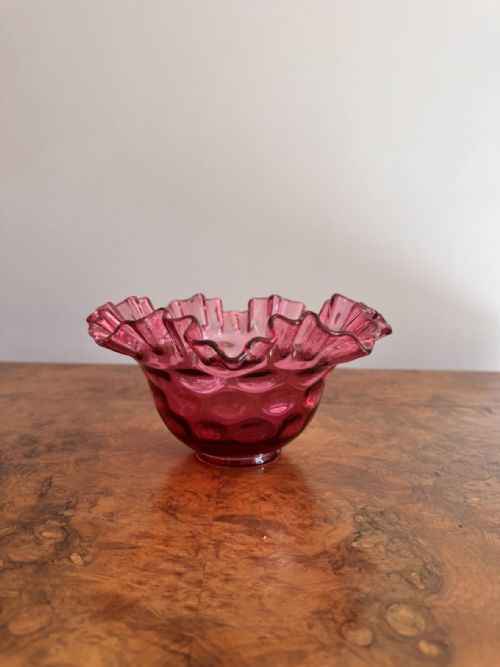
These edwardian cranberry glass dish pieces bring rich ruby tones and bright silver mounts to the table, offering a vibrant focal point for any traditional interior.
Edwardian Cranberry Glass Dish
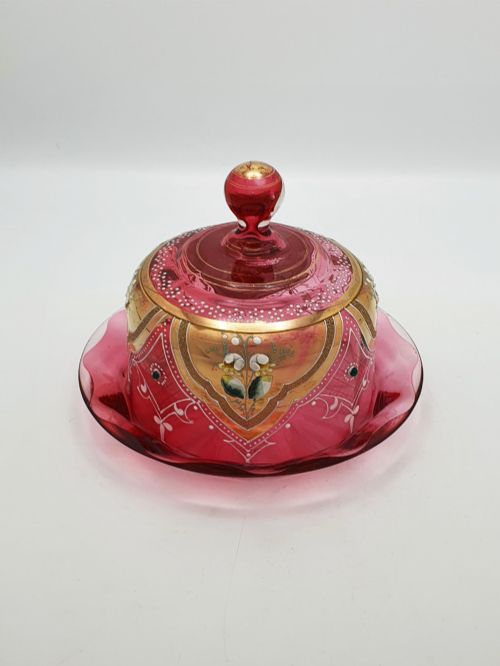
When you search for an edwardian cranberry glass dish, you encounter tablewares and desk pieces produced around the turn of the twentieth century. The selection ranges from preserve dishes and sugar baskets to cheese dishes and lidded trinket boxes.
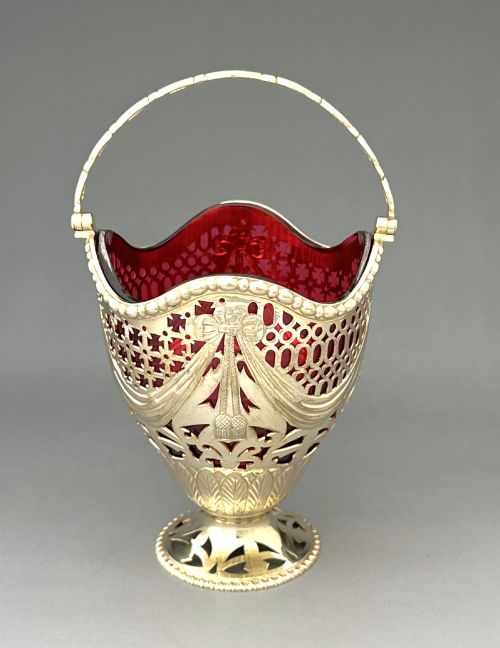
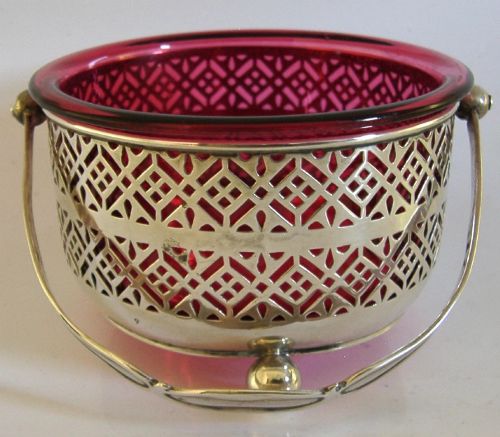
You are most likely to meet swing-handled baskets and preserve dishes fitted with pierced silver-plated or sterling silver stands. These tablewares date primarily from nineteen hundred to nineteen ten, capturing the domestic styling of the period.
Form follows function in these vessels, which combine blown glass liners with metal stands or mounts. Makers utilised contrasting materials such as silver-gilt, pewter, and enamel to elevate simple glass bowls into formal table service.
How they were made
The glass vessels rely on traditional glassblowing techniques, achieving their characteristic colour through the addition of gold to the molten batch. Artisans shaped the hot metal into bowls, baskets, and liners before finishing the rims and surfaces.
Metal mounts and stands employ casting, piercing, and silver-plating methods to create openwork frames that cradle the glass inserts. Craftsmen also applied gold leaf, enamel details, and swing handles to secure the glass components.
Edwardian Cranberry Glass Dish Retail Price Guide 2026
Typical asking prices for edwardian cranberry glass dish among the pieces listed under this phrase on Sellingantiques today, from the lower quarter to the upper quarter. They describe what is for sale here now, not the wider market.
Listings feature Edwardian and early twentieth-century periods alongside Victorian survivals, incorporating cranberry glass, sterling silver, silver-plate, and enamel.
What varies in quality
The weight and depth of the glass colour distinguish different grades of pieces, alongside the precision of the glassblower's form. Richer hues and heavier walls indicate finer production standards in the workshop.
The complexity of the metal mount provides another measure of quality, particularly where hand-pierced silver or detailed enamel work accompanies the glass. Substantial sterling silver or silver-gilt settings elevate an object above simpler plated stands.
WMF
The Edwardian Cranberry Glass Dish Glossary
- Cranberry Glass
- A type of transparent glass coloured with gold chloride, producing shades from pale pink to deep ruby. It gained popularity during the Victorian and Edwardian eras for tableware.
- Silver-Gilt
- Silver that has been coated with a thin layer of gold on its surface. This finish provides the visual warmth of gold while utilising a silver base.
- Sterling Silver
- A silver alloy containing ninety-two point five percent silver by mass and seven point five percent other metals, usually copper. It appears frequently in British hallmarked mounts.
- Preserve Dish
- A small bowl designed for serving jams, jellies, or fruit preserves at the table. These pieces often feature a dedicated stand and accompanying spoon.
- Swing Handle
- A movable arched handle attached to the rim of a basket or bowl via pivots. It allows the vessel to be carried easily during service.
Edwardian Cranberry Glass Dish: Frequently Asked Questions
What is an edwardian cranberry glass dish used for?
These dishes served practical functions on the dining table or dressing table, holding jams, preserves, cheese, or small trinkets. Their decorative coloured glass made them suitable for formal entertaining.
Over time, their role shifted from active dining service to display and collection. Today, owners use them as decorative accents or small storage containers in traditional rooms.
How do I date an edwardian cranberry glass dish?
Dating relies on stylistic markers, hallmarks on silver mounts, and manufacturing techniques. Pieces from this era often show Art Nouveau influences or specific Edwardian basket forms.
Assay office marks and maker stamps on silver-plated or sterling mounts provide precise years of production. Glass characteristics alone offer broader period estimates based on colour depth and blowing style.
How should I clean cranberry glass?
Cleaning requires warm water and mild dish soap applied with a soft cloth or sponge. Avoid abrasive scrubbers that might scratch the surface or damage delicate enamel work.
Silver mounts should be polished separately with a suitable silver cloth, taking care not to expose the glass to harsh chemical dips that could weaken glued or fitted joints.
Are all cranberry glass dishes made in Britain?
While many pieces originate from British workshops and carry domestic hallmarks, continental makers also produced similar tablewares. European glasshouses exported extensive ranges of ruby glass to the British market.
Continental pieces often feature distinct metalwork styles, such as pewter frames or specific Art Nouveau motifs, differentiating them from domestic sterling silver examples.