


Edwardian Country Scene Painting
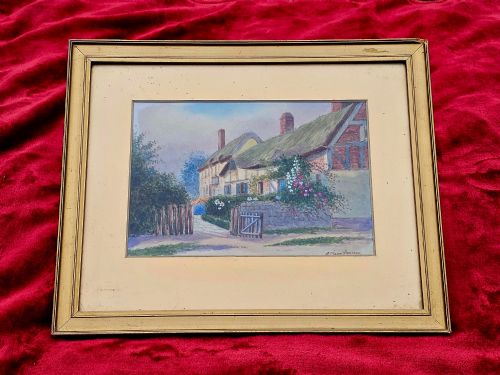
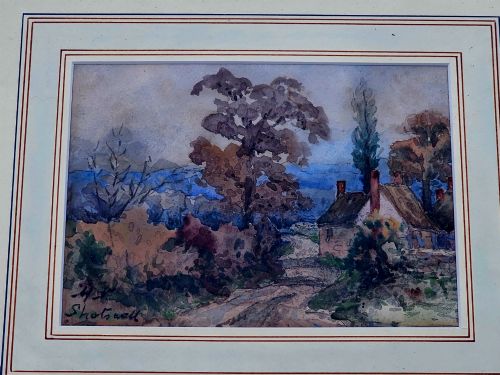
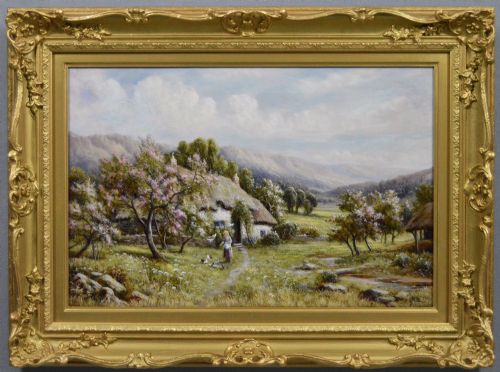
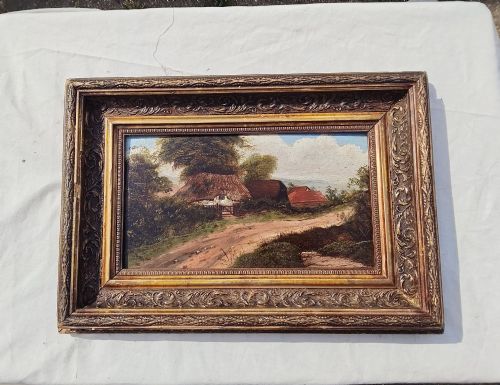
When you search for edwardian country scene painting, you encounter pastoral landscapes, quiet cottages, and rural farmyards captured by British artists around the turn of the twentieth century.
Edwardian Country Scene Painting
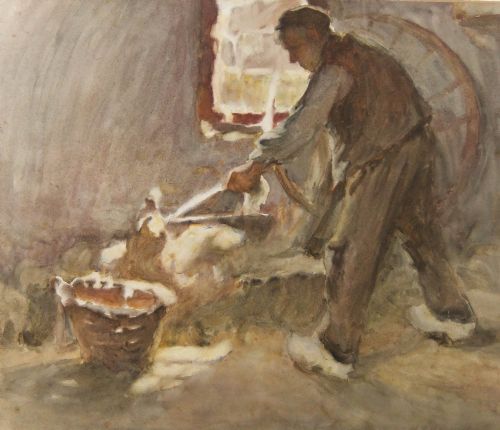
An edwardian country scene painting depicts rural British life, agricultural labour, and natural landscapes through the lenses of the late Victorian and Edwardian periods.
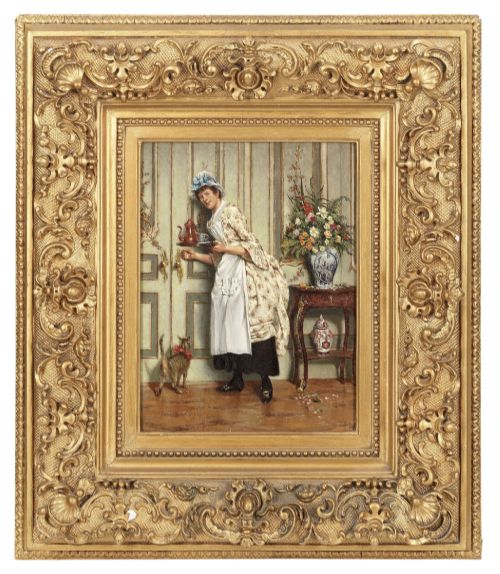
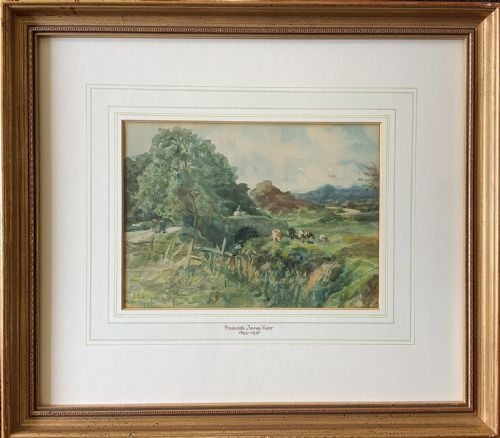
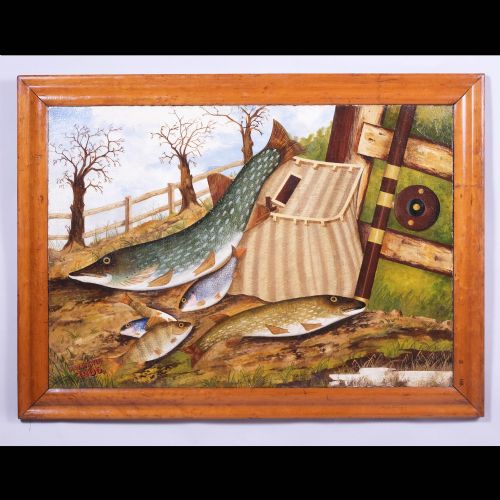
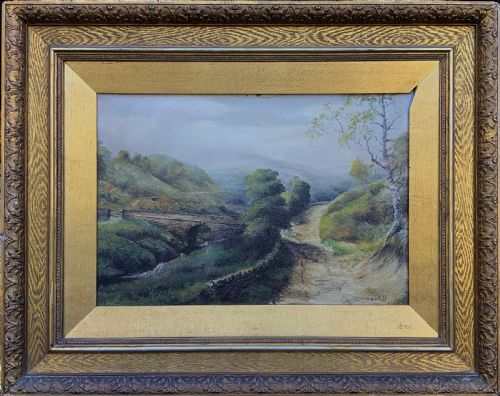
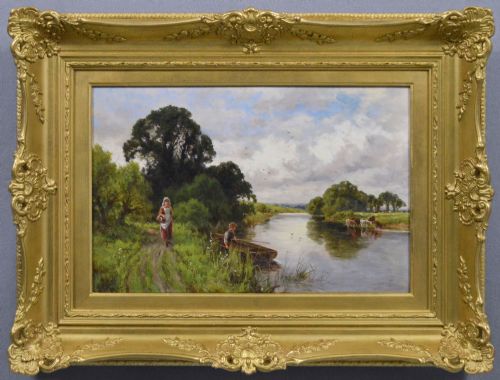
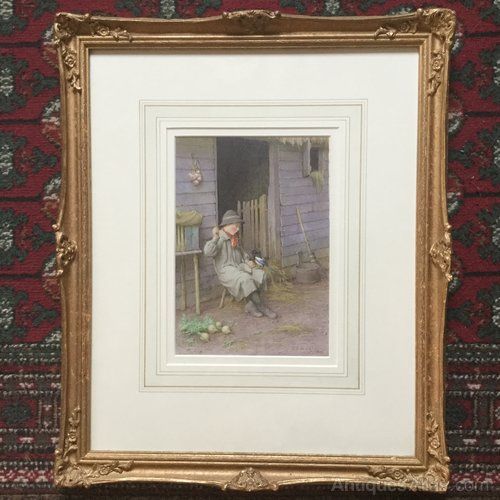
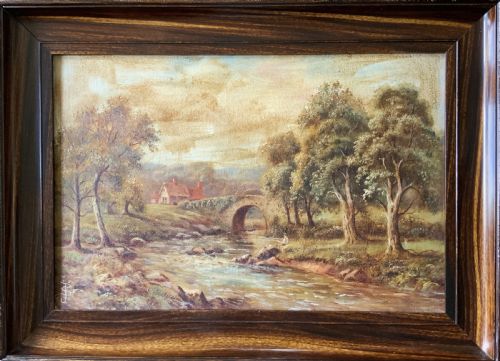
The works most commonly met on this page span watercolour on paper and oil on canvas, framed in wood or giltwood, portraying riverbanks, moorlands, and farmsteads.
These pieces reflect a distinct artistic interest in traditional village life, coastal villages, and agricultural scenes as captured by regional British schools.
Materials and technique
Artists relied primarily on oil paint applied to canvas or card, and watercolours worked on paper, occasionally utilising lithographic reproduction methods.
Pigments were worked with fluid brushstrokes characteristic of British Impressionism and traditional realism, capturing natural light in domestic and pastoral settings.
Edwardian Country Scene Painting Retail Price Guide 2026
Typical asking prices for edwardian country scene painting among the pieces listed under this phrase on Sellingantiques today, from the lower quarter to the upper quarter. They describe what is for sale here now, not the wider market.
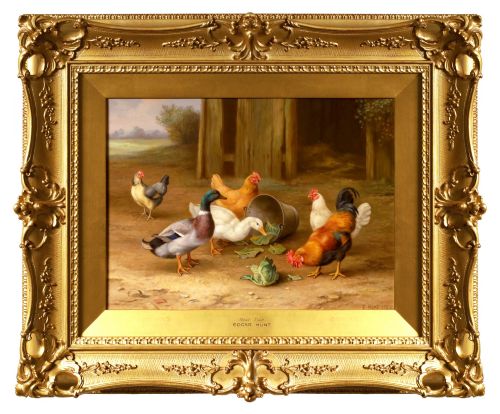
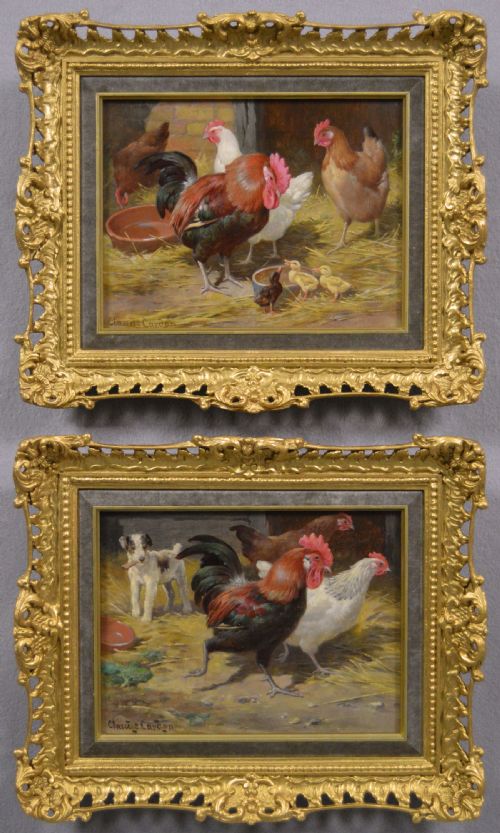
Farmyard poultry outnumber almost all other subjects in these rural scenes, appearing across numerous canvases.
Distinctions in quality
Quality rests upon the artist's handling of light, atmosphere, and perspective, separating routine topographical illustration from evocative impressionist interpretation.
The integrity of the original media, the preservation of the canvas or paper, and the craftsmanship of the period frame dictate the standing of each piece.
A. Marie Parsons·Stephen Samuel Lewin·Henry Silkstone Hopwood·Robert John Hammond·Frederick James Kerr·Edgar Hunt·Henry H Parker·Charles Edward Wilson·Claude Cardon·Sydney Yates Johnson·Richard Harry Carter·Owen Bowen·Arthur Hopkins·Henry John Yeend King·Ernest Pile Bucknall·Philip Henry Rideout·M. C. Hider·Frederick James Knowles·Percival Glenfern·John Atkinson·Ernest Higgins Rigg·John Smith Atherton·William Langley·Herbert Royle·Arthur Winter Shaw
The Edwardian Country Scene Painting Glossary
- Watercolour
- A painting method where fine pigment is suspended in water-based solution on paper. This medium allows for transparent washes of light and colour.
- Giltwood
- Timber covered with a thin layer of gold leaf or gesso and gold paint. Frames of this material frequently accompany traditional landscape works.
- Impressionism
- An art style focusing on accurate depiction of light and its shifting qualities. Painters working in this manner utilised visible brushstrokes and open compositions.
- Genre painting
- The pictorial representation of scenes from everyday life. These works depict ordinary people engaged in common activities, such as farming or fishing.
Edwardian Country Scene Painting: Frequently Asked Questions
What subjects appear in these paintings?
The works depict rural English life, including farm animals, thatched cottages, blacksmith shops, and coastal trawling luggers.
Scenes of agricultural labour, such as hay cutting and horse fairs, also feature prominently across the collection.
Which periods do these artworks represent?
The listings primarily capture the Edwardian era and the late nineteenth century, extending from the 1880s through the 1940s.
Styles range from traditional Victorian realism to early British Impressionism.
How should I display watercolour works?
Watercolours on paper require protection from direct sunlight to prevent the pigments and paper ground from fading over time.
Framing behind glass with acid-free mounts preserves the integrity of the original medium.
How do oils and watercolours differ?
Oil paintings utilise pigment bound in drying oils applied to canvas or card, creating rich textures and opaque surfaces.
Watercolours employ transparent water-soluble pigments on paper, offering a lighter and more luminous finish.