


Edwardian Cottage Landscape Art
Edwardian cottage landscape art captures a rural idyll of thatched roofs, quiet gardens and riverbanks through early twentieth-century painting.
Edwardian Cottage Landscape Art
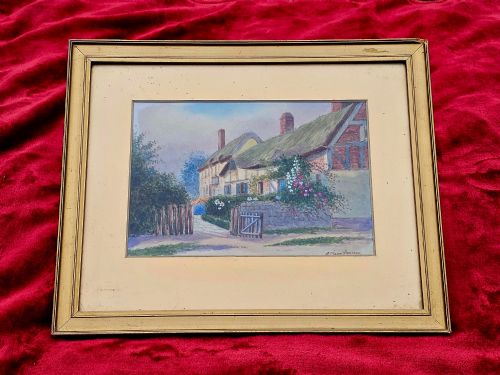
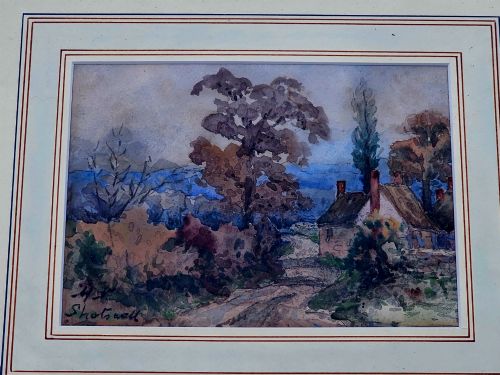
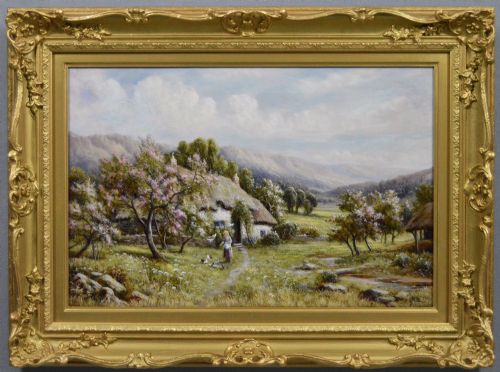
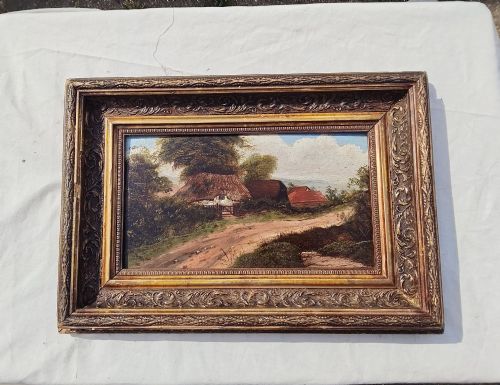
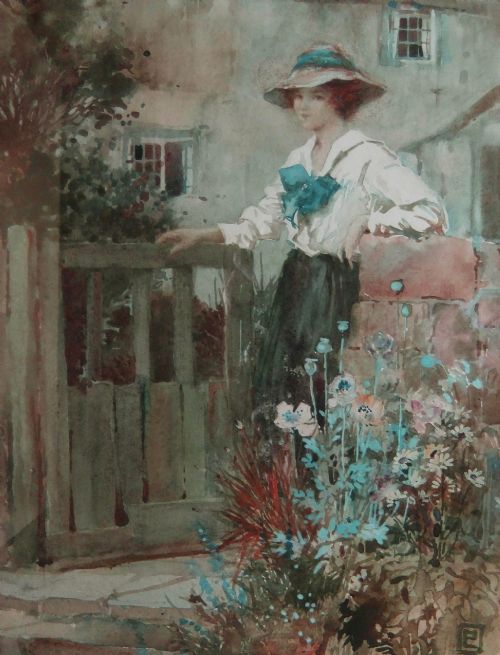
Edwardian cottage landscape art depicts rural scenes, rustic homes and country gardens produced around the early twentieth century. These works capture a romanticised vision of the British countryside, often focusing on domestic daily life alongside traditional rural architecture.
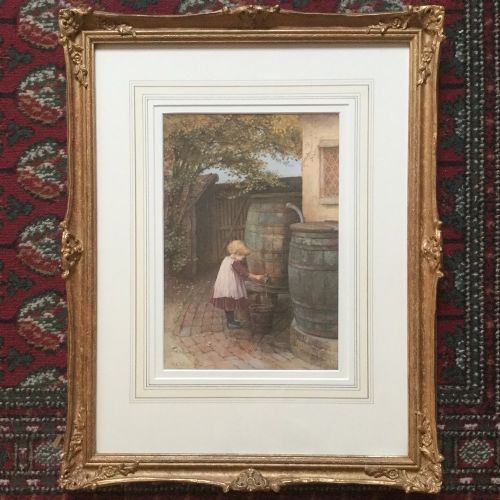
The pieces appearing on this page are predominantly watercolours on paper and oil paintings on canvas or board. They range from intimate domestic studies to larger framed landscapes created by British artists working in Edwardian, impressionist and pastoral styles.
Materials and Techniques
Watercolour pigment applied to paper forms a large portion of these works, often combined with pencil underdrawing and delicate washes to achieve atmospheric effects of light and foliage. Oil paint on canvas or board offers richer texture and depth, allowing artists to build heavy impasto for gardens and pastoral scenes.
Framing typically involves gilt wood surrounds that complement the traditional subjects, while occasional works utilise glass protection over delicate paper supports to preserve the pigment over decades.
Hens, geese and pet rabbits make frequent appearances, keeping watch over quiet cottage gardens.
Distinctions in Quality
Quality rests upon the artist's ability to render natural light, atmospheric depth and convincing architectural proportions within the rustic setting. Weaker examples can feel formulaic or flat, relying on repetitive formulas for cottage walls and garden foliage without true observation.
Superior works demonstrate confident brushwork, particularly in watercolours where washes must remain translucent and controlled. The articulation of figures, livestock and surrounding flora separates standard decorative watercolours from accomplished fine art paintings.
Robert John Hammond·Charles Edward Wilson·Frederick James Knowles·Theresa Stannard·Linnie Watt·Ernest Higgins Rigg·Kershaw Schofield·Lorenzo Headley·Lilian Stannard·Harry Sylvester Stannard·Robert Hollands Walker·Thomas James Lloyd·B. Kaufmann·David Woodlock·Harry Pennell·Joseph Kirkpatrick·Arthur Claude Strachan·John Abernethy Lynas-Gray·Walter Henry Sweet·Thomas Nicholson Tyndale·John Falconar Slater·James William Stamper·Benjamin D. Sigmund·George Frederick Nicholls·David Heward
The Edwardian Cottage Landscape Art Glossary
- Watercolour
- A painting method in which the paints are made of pigments suspended in a water-based solution. Paper serves as the primary support for these translucent applications.
- Oil on Canvas
- A traditional painting technique utilising pigments bound in a drying oil applied to stretched woven fabric. This medium allows for extensive blending and rich textural depth.
- Pastoral
- A genre of art depicting the rural life of shepherds, cottages and country landscapes in an idealized manner. These scenes emphasise peace and simplicity away from industrial expansion.
- Gilt Wood
- Timber framing finished with a thin layer of gold leaf or metallic gilt gesso. It is commonly found protecting traditional oil paintings and watercolours from the period.
Edwardian Cottage Landscape Art: Frequently Asked Questions
What subjects appear in Edwardian cottage landscapes?
These artworks commonly depict thatched cottages, walled country gardens, riverbanks and rural lanes with figures engaged in daily chores. Domestic animals such as sheep, hens and cattle frequently populate the foreground alongside traditional British architecture.
Artists drew inspiration from picturesque villages across regions like Devon, Somerset and Hampshire, creating a lasting visual record of Edwardian country life.
How should I care for antique watercolours?
Watercolours on paper require protection from direct sunlight to prevent the delicate pigments from fading over time. Keeping them behind glass in stable indoor environments prevents moisture damage and preserves the paper support.
Professional framing using acid-free mounts ensures the paper remains undamaged by chemical contact with the backing materials.
What is the difference between oil and watercolour works here?
Oil paintings utilise heavy pigments bound in oil on canvas or board, offering thick textures and deep, layered colours. They are generally more robust and traditionally housed in heavier gilt wood frames.
Watercolours rely on transparent washes on paper, resulting in lighter, more luminous compositions that capture airy atmospheric effects.
How do I identify an Edwardian painting?
Edwardian works typically date from the early twentieth century, reflecting a nostalgic pastoral aesthetic distinct from later modernist movements. Signatures, framing styles and artist exhibition records often help narrow down the exact decade of creation.
The clothing of figures and the specific style of rural architecture depicted also offer strong clues to the period.