


Edwardian Cottage Art
Edwardian cottage art captures rural life through watercolours, oils and rustic furnishings from the early twentieth century.
Edwardian Cottage Art
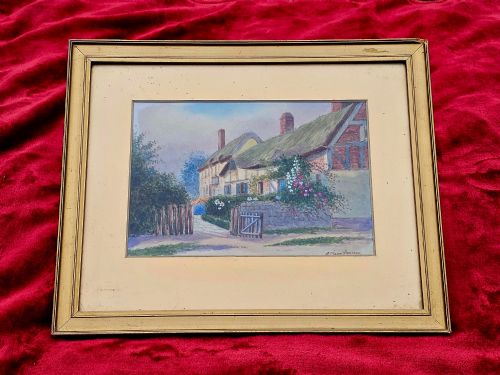
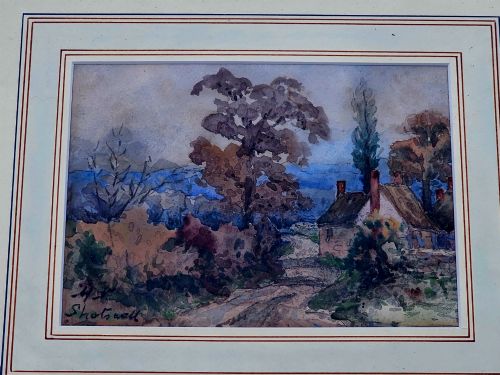
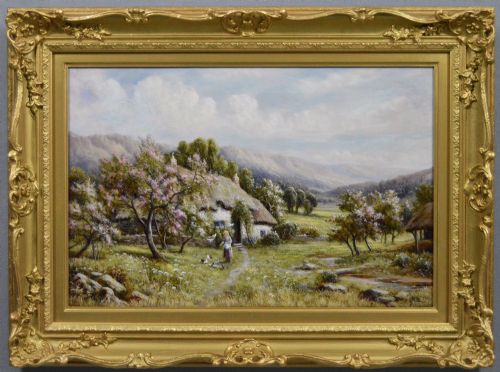
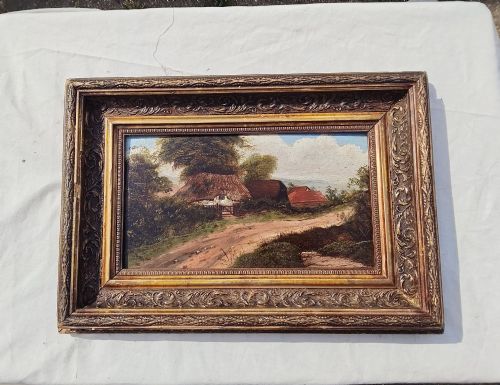
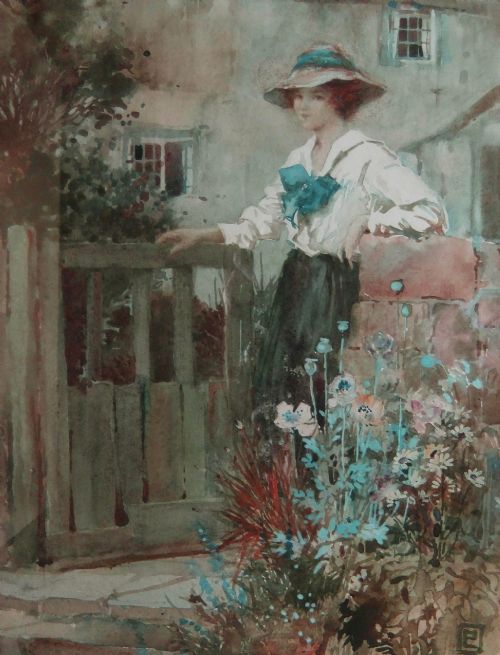
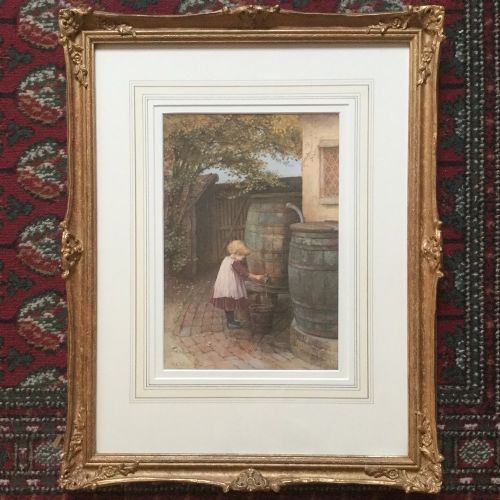
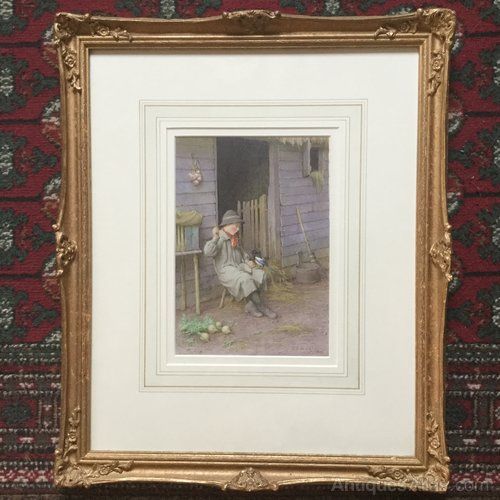
Edwardian cottage art encompasses paintings, watercolours and country furniture depicting rural scenes, gardens and domestic life. These pieces originate primarily from the Edwardian period, alongside related Victorian and early twentieth-century works.
Watercolours and oil paintings dominate the selection, portraying thatched cottages, pastoral landscapes and village inhabitants. Buyers also encounter Arts and Crafts oak furniture and decorative accessories tied to the same rural aesthetic.
How they were made
Paintings utilise watercolour pigment on paper or oil paint on canvas, board and card, capturing natural light in pastoral settings. Lithographs offer printed reproductions after original compositions.
Woodwork employs traditional joinery and carving techniques, seen in oak cottage dressers and country chairs produced during the late nineteenth and early twentieth centuries.
Mediums include watercolour, oil paint, lithography and needlework, capturing domestic scenes and rural English landscapes.
What varies in quality
Quality rests upon the skill of the artist in handling light, proportion and detail within landscape and figure subjects. Named artists with established exhibition records distinguish finer paintings from anonymous works.
Material preservation and framing influence the standing of each piece. Intact original surfaces on wood furniture and well-preserved paper without excessive discolouration elevate the standard.
A. Marie Parsons·Robert John Hammond·Charles Edward Wilson·Frederick James Knowles·Theresa Stannard·Linnie Watt·Ernest Higgins Rigg·Kershaw Schofield·Lorenzo Headley·Lilian Stannard·Harry Sylvester Stannard·Robert Hollands Walker·Thomas James Lloyd·B. Kaufmann·David Woodlock·Henry Spernon Tozer·Harry Pennell·Joseph Kirkpatrick·Arthur Claude Strachan·John Abernethy Lynas-Gray·Walter Henry Sweet·Thomas Nicholson Tyndale·John Falconar Slater·James William Stamper
The Edwardian Cottage Art Glossary
- Watercolour
- A painting method where fine pigment is suspended in a water-based solution, typically applied to paper. It creates luminous washes suited to rural landscapes.
- Oil on canvas
- Pigment bound in drying oil applied to a woven fabric stretched over a wooden frame. This medium allows rich texture and depth.
- Arts and Crafts
- A design movement valuing traditional craftsmanship, simple forms and local materials. It heavily influenced domestic furniture and furnishings of the period.
- Lithograph
- A print made from a flat stone or metal plate treated to retain ink where required. It enabled the reproduction of original artworks for broader distribution.
- Pastoral
- A genre of art depicting country life, agriculture and idealized rural scenery. It focuses on the peace of nature and village communities.
Edwardian Cottage Art: Frequently Asked Questions
What subjects do these paintings show?
The artworks depict rural scenes, including thatched cottages, cottage gardens, rivers and village inhabitants. Common motifs feature children, farm animals and figures outside rustic dwellings.
These compositions reflect a romanticized view of English country life popular during the early twentieth century.
How do I date an Edwardian painting?
Dating relies on stylistic clues, artist signatures and exhibition records from the period. Many works carry dates or inscriptions pointing to the early decades of the twentieth century.
Framing materials and backing papers also offer helpful indicators of the era in which the piece was mounted.
Where were these pieces displayed originally?
Original owners placed these watercolours and oil paintings in domestic interiors, parlours and country homes. They complemented rustic furniture such as oak dressers and country chairs.
Such items created a warm, traditional atmosphere that celebrated rural heritage within urban or rural residences.
What is the Arts and Crafts influence?
The Arts and Crafts movement emphasised simple construction, natural wood grains and utility in household items. This aesthetic appears in unpretentious oak furniture and needlework pictures from the era.
It represented a rejection of mass-produced ornamentation in favor of honest, handcrafted design.