



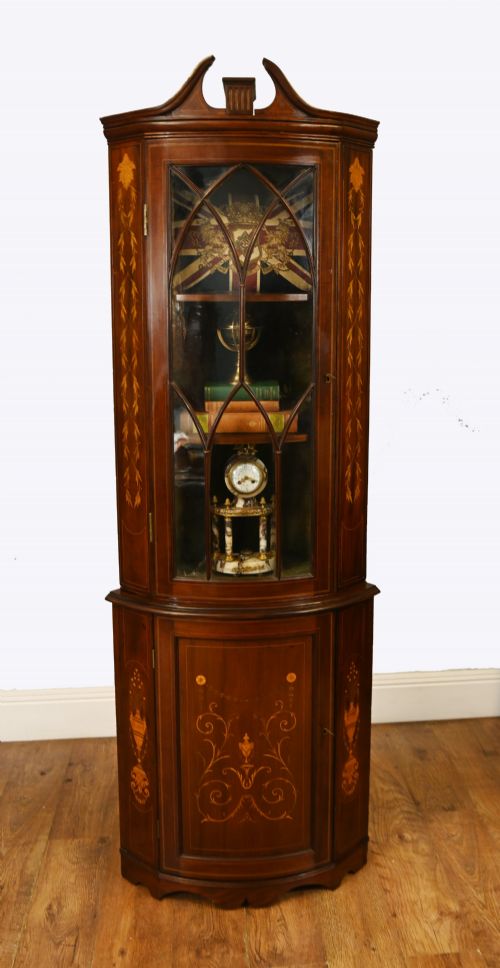


Edwardian Corner Display Cupboard
An Edwardian corner display cupboard turns unused room angles into focal points for glass and china.
Edwardian Corner Display Cupboard
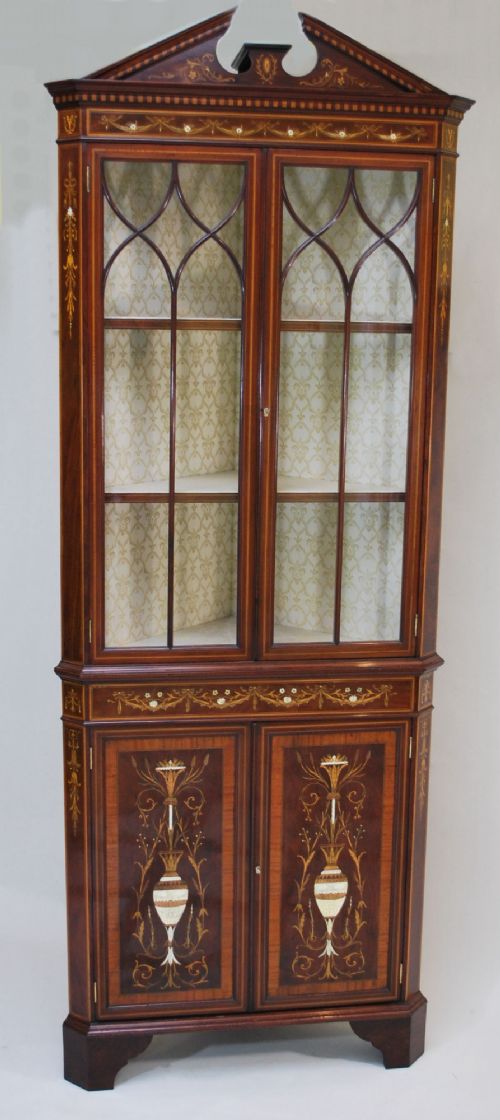
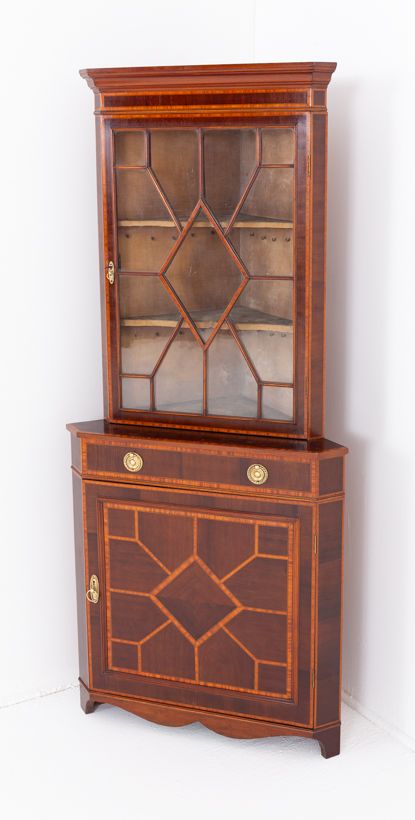
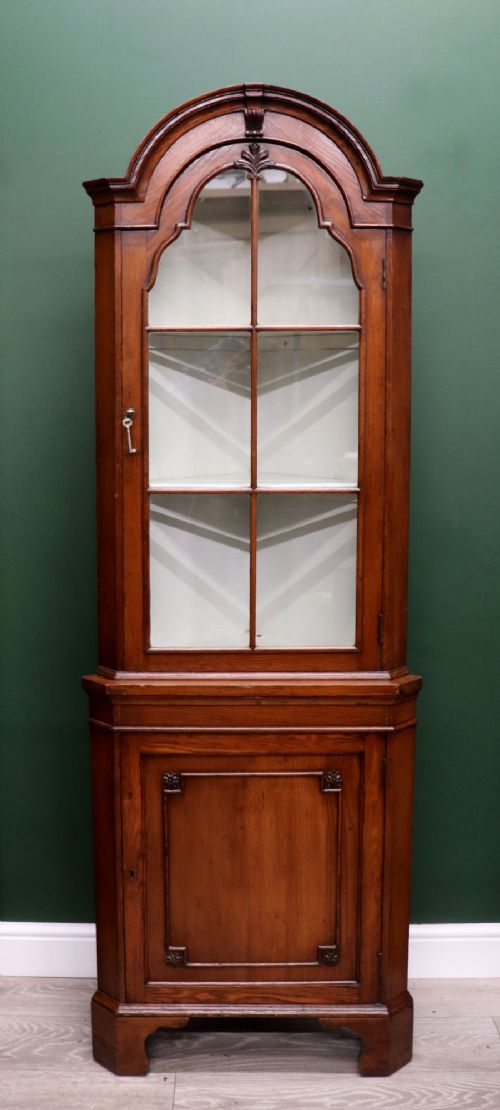
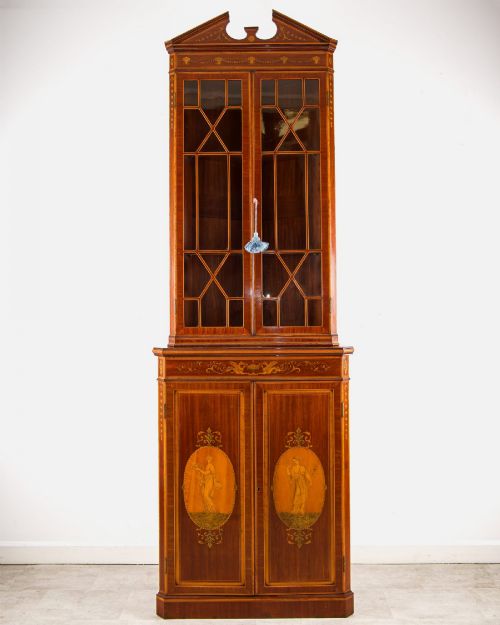
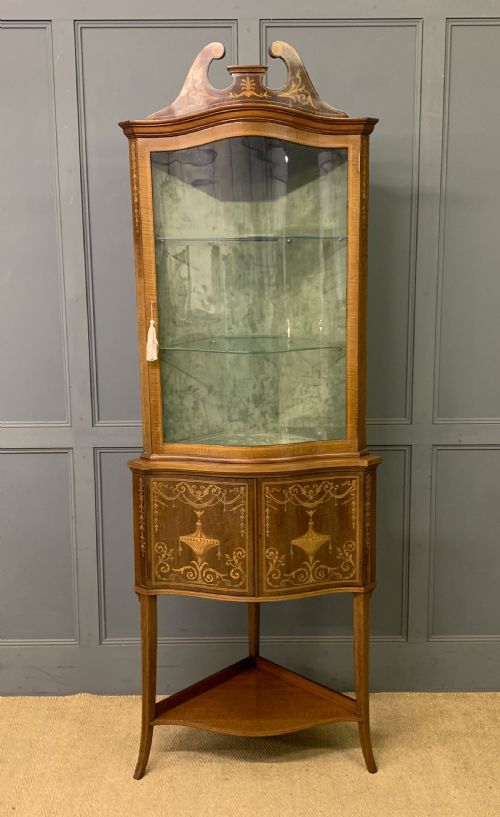
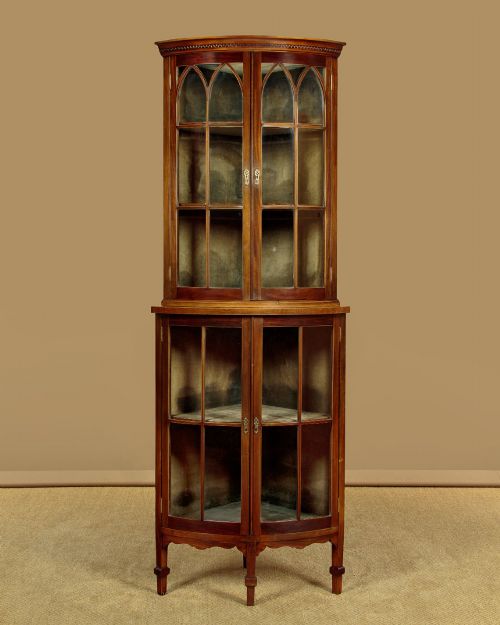
An edwardian corner display cupboard utilises dead space in a room by fitting neatly into a ninety-degree angle while offering glass doors to showcase porcelain or books. The version most commonly met on this page is constructed from mahogany, often featuring satinwood inlay and standing on the floor or hanging on the wall.
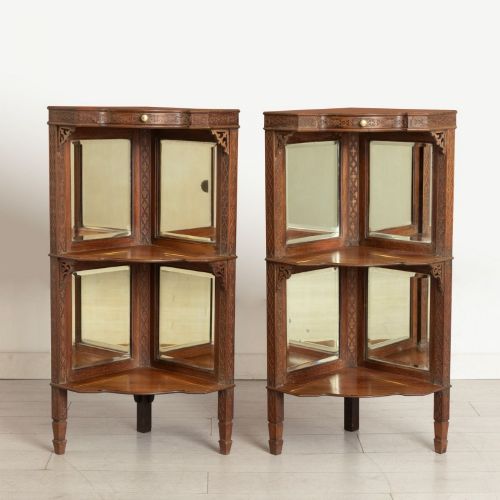
The form spans periods from the late nineteenth century through the edwardian era and into the early twentieth century, drawing heavily on earlier georgian and sheraton revival designs. These pieces range from small wall-hanging cabinets with single doors to substantial double-height standing units with glazed upper sections and enclosed cupboards below.
How They Were Made
Cabinet makers relied primarily on solid mahogany and mahogany veneers, frequently embellished with delicate satinwood inlay, marquetry, and brass hardware. Glass panels were secured within wooden frames using astragal glazing bars to create multi-pane doors that held delicate items safely.
Construction involved sturdy corner posts and dovetailed joints designed to support the weight of stacked ceramics or books while maintaining strict right angles for wall placement. Hanging variants incorporated heavy brass mounting brackets, whereas floor-standing models utilised plinths or bracket feet for stability.
Mahogany is the dominant timber across these listings, accompanied by oak, walnut, and rosewood.
What Varies in Quality
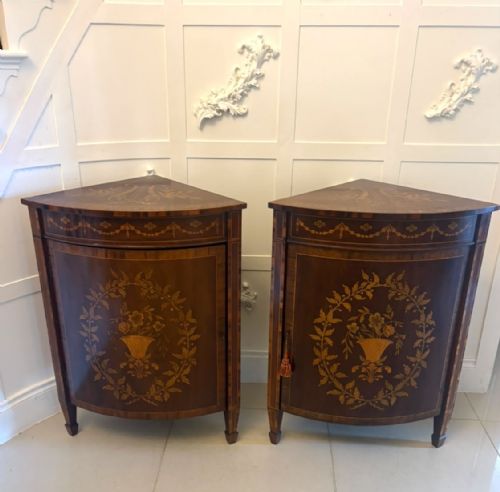
The distinction between ordinary and superior pieces rests on the crispness of the marquetry inlay and the choice of timber figure. Finer examples display meticulously hand-cut satinwood motifs and matched mahogany grains that show depth under polish.
Structural refinement also separates the standard production from the exceptional workshop output, seen in the proportion of the astragal glazing bars and the weight of the brass hinges. Maker attribution, such as work originating from established firms, signals superior interior joinery and timber selection.
Edwards & Roberts·Goodhall Lamb and Heighway
The Edwardian Corner Display Cupboard Glossary
- Astragal glazing
- Wooden bars that divide a glass door into smaller panes. They provide structural rigidity while framing the items displayed inside.
- Marquetry
- Decorative patterns formed by fitting together thin veneers of different coloured woods. It appears frequently on edwardian panels.
- Sheraton Revival
- A late nineteenth and early twentieth century style inspired by eighteenth century designer Thomas Sheraton. It favours light mahogany and delicate inlay.
- Bow front
- A convex curved cabinet front that projects outward. This shape softens the sharp angles typical of corner furniture.
- Satinwood inlay
- Contrasting yellowish wood inserted into mahogany surfaces to create borders and floral motifs. It brightens the dark timber ground.
Edwardian Corner Display Cupboard: Frequently Asked Questions
How do I hang a wall cabinet?
Wall-hanging corner cupboards rely on internal fixing brackets screwed directly into solid masonry or wall studs. Because these mahogany pieces carry considerable weight once glass and ceramics are added, securing them properly is essential.
Most historic examples feature original brass plates or reinforced screw holes inside the carcass. Professional installation ensures the corner angles bear the load safely without pulling away from the plaster.
Can these hold heavy books?
Standing floor models with wooden shelves handle heavy volumes easily. The internal fixed shelving is built to support substantial loads of books or ceramics.
Wall-hung variants and smaller glazed display units suit lighter porcelain and glassware rather than massive libraries. Checking the shelf thickness and support cleats clarifies the intended weight capacity.
How do I clean the glass?
Traditional glass in these cabinets is delicate and secured with old putty or glazing beads. Spraying cleaner directly onto the glass can seep behind the wooden astragals and damage the timber.
Applying a mild glass cleaner to a cloth first protects both the antique wood finish and the surrounding frame. Gentle wiping preserves the original surface patination.
Are shelves adjustable?
Most period corner cupboards feature fixed wooden shelving grooved directly into the sides of the carcass. This fixed construction provided maximum stability for the right-angled structure.
Later or revival variations occasionally incorporate traditional wooden support pegs allowing height adjustment. Examining the interior walls reveals whether the shelves were built in place.