


Edwardian Corinthian Table Lamp
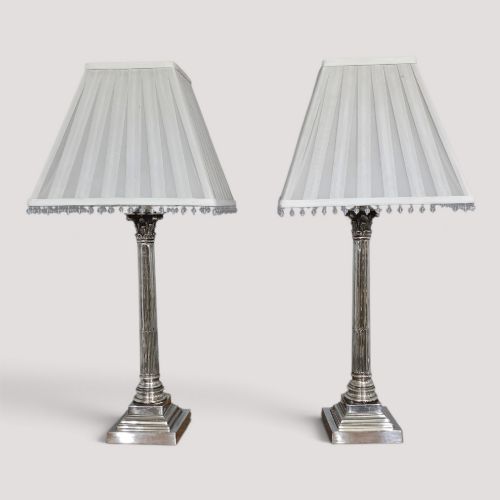
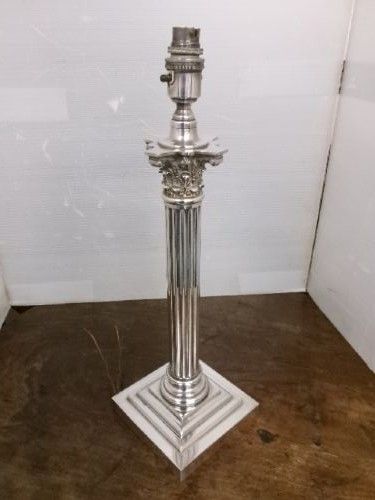
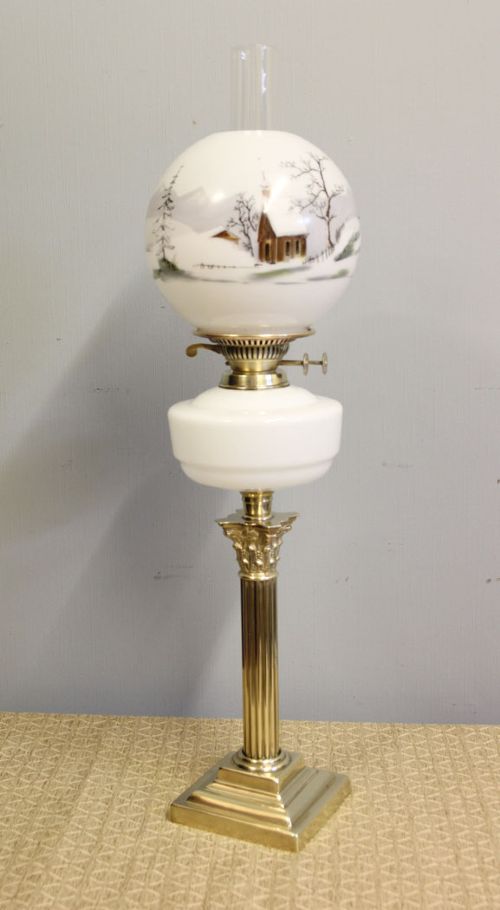
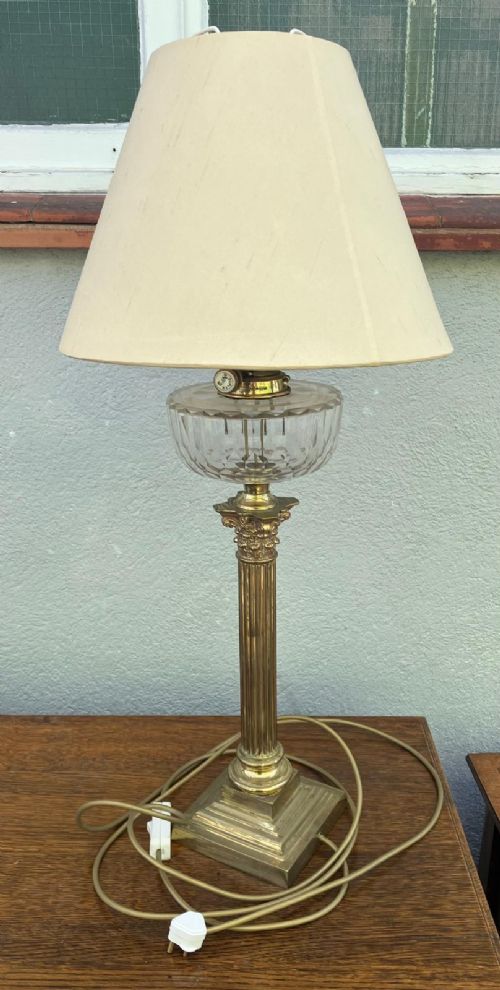
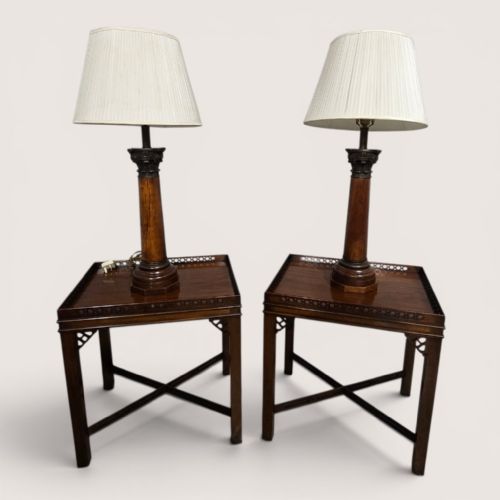
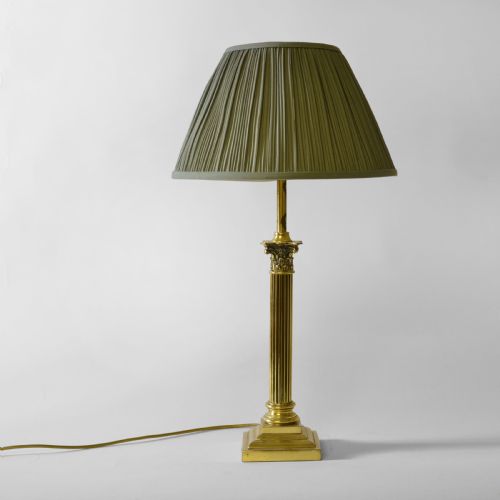
An edwardian corinthian table lamp brings classical architectural dignity to a room, cast in solid brass, silver plate or occasionally oak.
Materials and construction methods
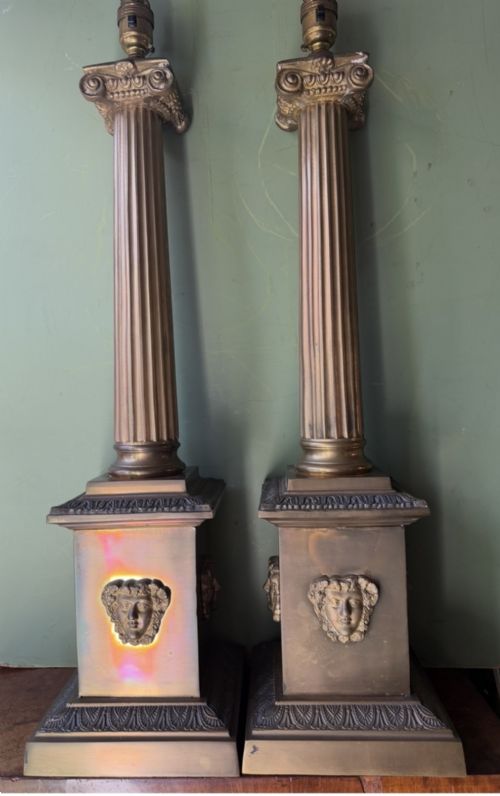
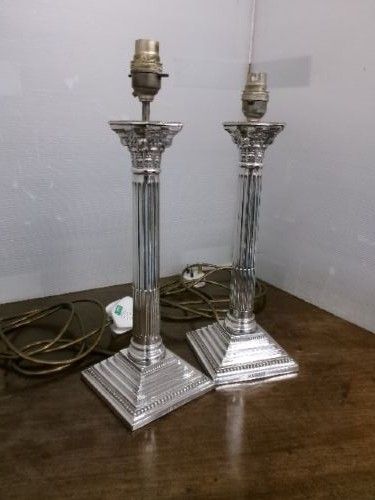
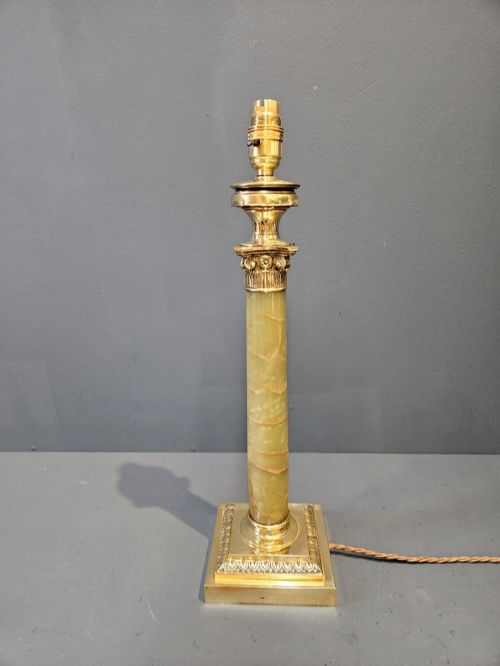
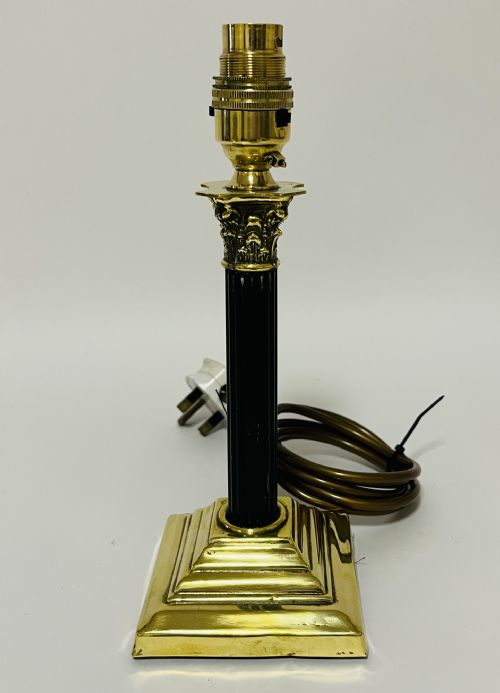
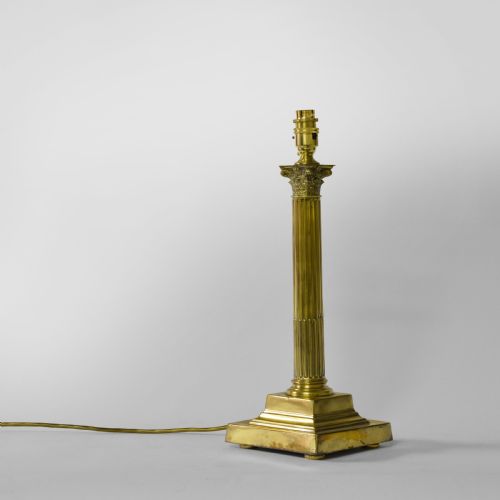
Makers utilised cast brass as the primary structural metal, shaping it into fluted shafts and intricate acanthus-leaf capitals that define the Corinthian style. Silver plating and electroplating were applied extensively over base metals to achieve a brighter reflective finish, while solid sterling silver examples appear with distinct hallmarks.
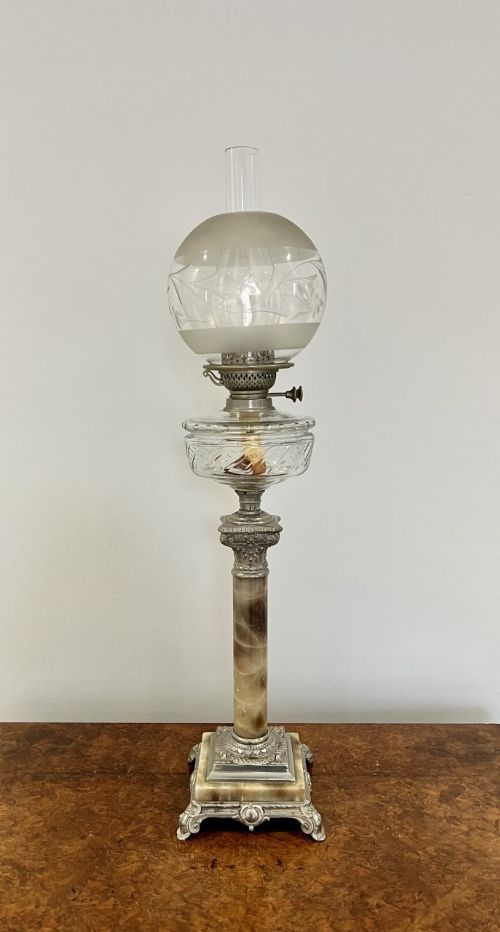
Secondary materials such as marble, onyx, iron, ormolu and cut glass enter the construction for bases and bodies, paired frequently with fabric or silk shades. Some larger examples incorporate heavy pedestals and stepped square plinths to maintain stability beneath tall column shafts.
Distinctions in manufacture and finish
The precision of the casting in the acanthus-leaf capital separates standard production from superior work, as crisp detail requires skilled hand-chasing after the metal leaves the mould. Heavy gauge brass and thick silver plating indicate a higher standard of manufacture than thin sheet metal or worn electroplate.
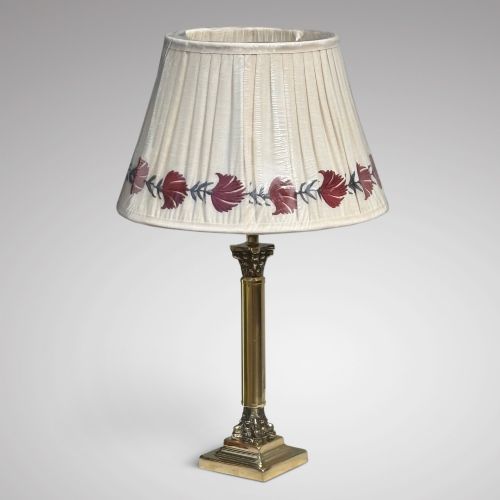
Proportion and scale dictate the visual success of the piece, with taller, well-balanced columns commanding greater presence than compressed or stocky forms. The integration of structural elements, such as corner paw feet or stepped marble plinths, adds architectural weight to the finished lamp.
Several heavy columns stand upon diminutive lion's paw feet, ensuring your desk furniture is guarded by miniature beasts.
Walter Latham & Son
The Edwardian Corinthian Table Lamp Glossary
- Corinthian capital
- The uppermost member of a classical column, decorated with carved or cast acanthus leaves and scrolls that support the weight above. This ornament forms the visual centrepiece of every lamp in this category.
- Neoclassical
- A style originating in the eighteenth century that revived the classical forms and motifs of ancient Greece and Rome. It influences the strict symmetry, fluted columns and proportional balance seen across these pieces.
- Silver plate
- A thin layer of silver fused or electroplated onto a base metal such as brass or copper. This technique allowed makers to offer the appearance of solid silver at a lower production cost.
- Oil lamp
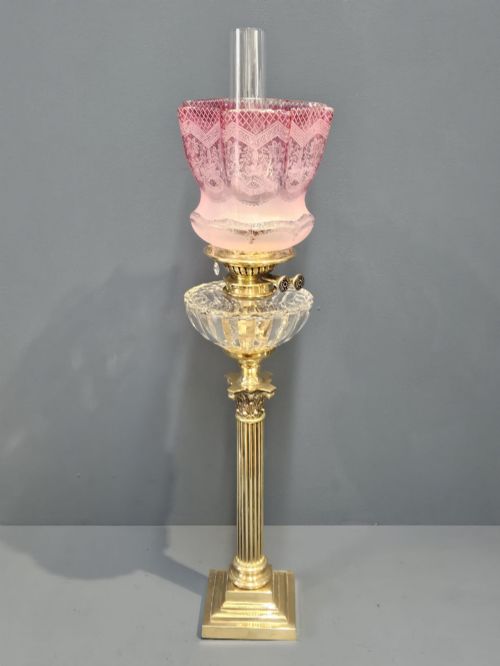
- A lighting device designed to burn liquid fuel through a wick before electricity became standard. Many surviving examples have been converted safely to accept modern electrical fittings.
- Acanthus
- A decorative motif modelled after the Mediterranean plant of the same name, featuring lobed and scalloped leaves. It dominates the ornamentation of the column capitals on these lamps.
Edwardian Corinthian Table Lamp: Frequently Asked Questions
Are these lamps converted from oil lamps?
Many examples began life as oil lamps before receiving modern electrical conversions to suit contemporary interiors.
This conversion process preserves the original burners, reservoirs and column structures while allowing safe household use.
How do I identify an Edwardian period lamp?
Edwardian pieces often display lighter scale, refined silver plating, or specific casting marks dating around nineteen hundred to nineteen ten.
Comparison with Victorian predecessors reveals sleeker proportions and cleaner Neoclassical revival detailing.
What materials were used for the columns?
Cast brass and silver-plated metal form the vast majority of shafts, supplemented occasionally by solid sterling silver, marble, onyx or oak.
These metals provide the structural rigidity necessary to support heavy decorative capitals and large shades.
How should I clean a silver plated lamp?
Gentle dusting with a soft cloth preserves the delicate electroplated or silver surface without wearing through to the base metal.
Harsh chemical polishes should be avoided to prevent stripping the historic finish from the intricate acanthus carvings.