



Traditional Cut Glass Lamp
A traditional cut glass lamp brings weight and refractive sparkle to a room, spanning periods from the Victorian era through the Edwardian years and into the 1930s.
Traditional Cut Glass Lamp
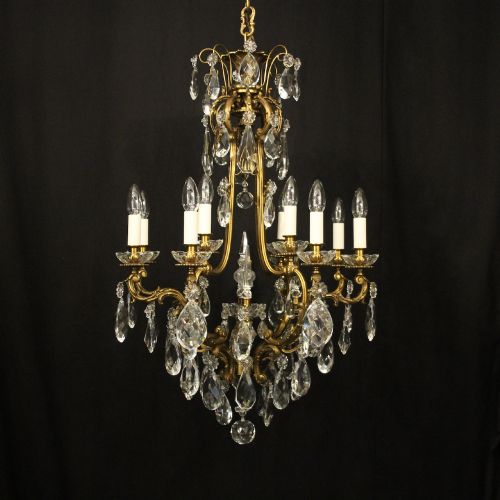
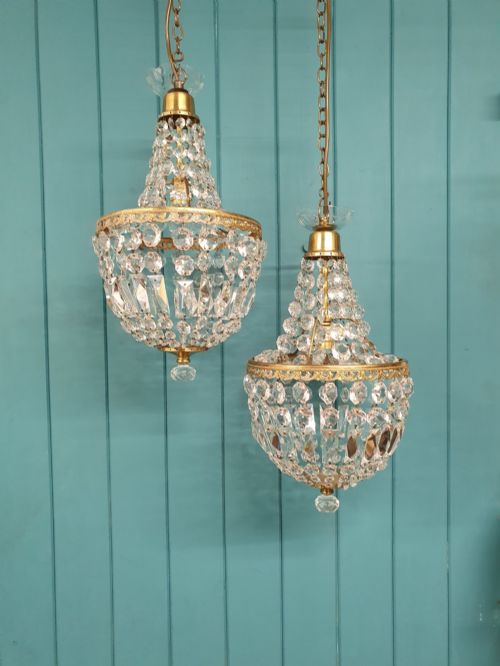
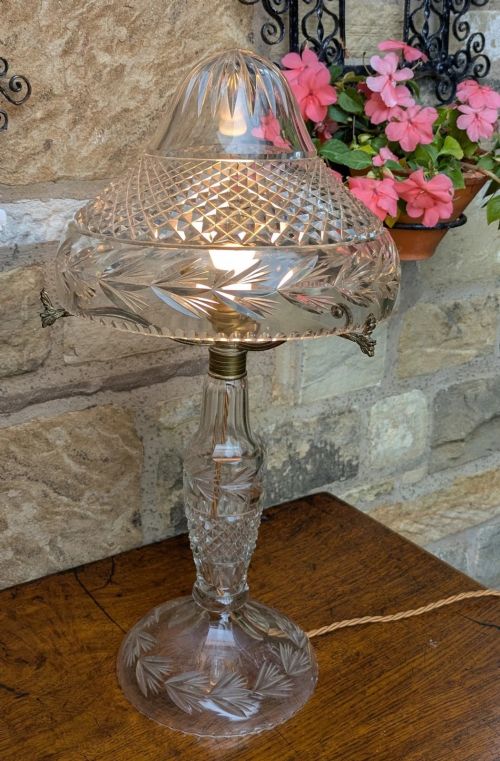
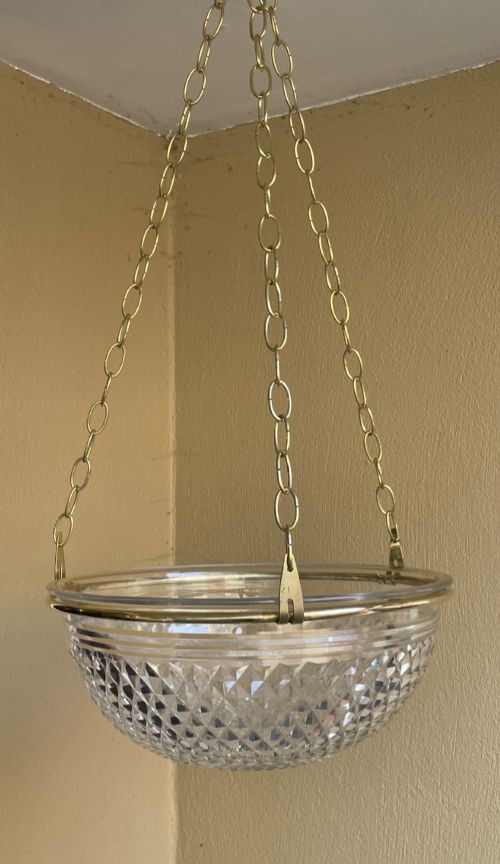
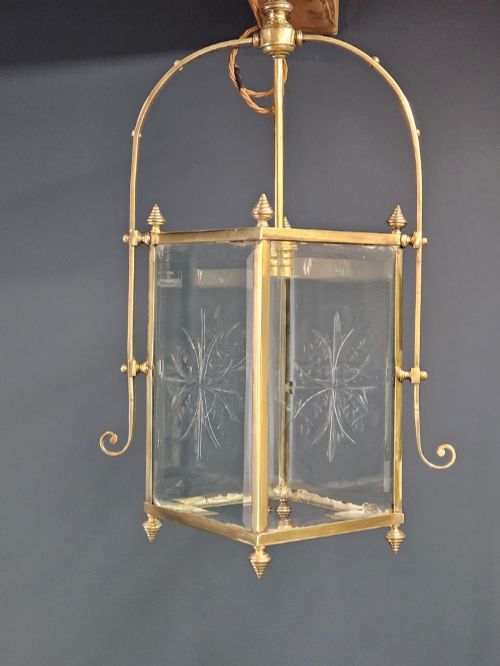
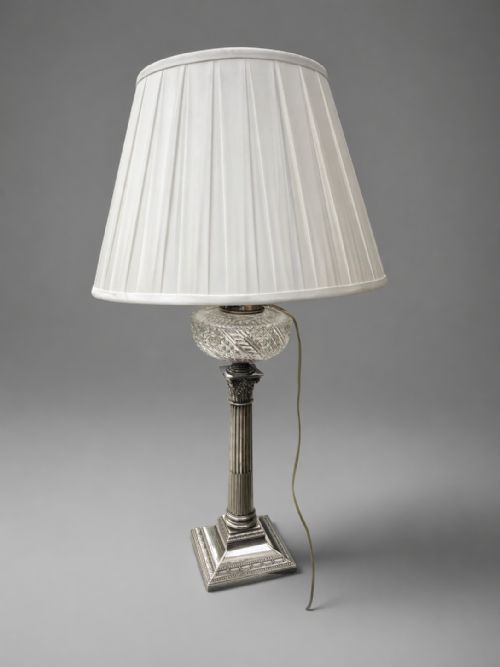
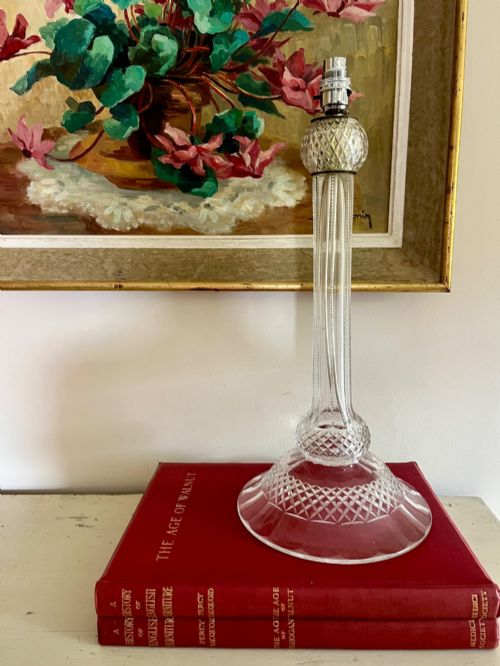
A traditional cut glass lamp is a functional and decorative object designed to diffuse light through faceted crystal, heavy glass reservoirs, or detailed shades. When you search for a traditional cut glass lamp, you encounter table lamps, converted oil lamps with glass bodies, and hanging ceiling fixtures that rely on the interplay of glass and metal.
The pieces appearing on this page originate primarily from the Victorian and Edwardian periods, alongside early twentieth-century examples up to the 1930s. Table lamps and oil lamps with brass columns or silver-plated fittings represent the common iterations alongside pendant and ceiling lights.
Makers and retailers such as Stuart Crystal, Messengers, and Harrods appear across the historical record, alongside French Empire and Neoclassical styled fixtures. Buyers select these lamps for their dense glass bodies, which refract light cleanly across a domestic interior.
Materials and construction
Makers combined heavy cut glass and crystal with structural metals including cast brass, bronze, and silver plate to provide stable mountings for the glass components. Glass bodies and reservoirs were formed with deep prismatic cuts, flutes, or acorn motifs to catch and multiply ambient light.
Metal frames, galleries, and Corinthian columns were cast and turned to secure the fragile glass components safely. Fabric shades sometimes accompanied later twentieth-century table forms, while chandeliers and pendant lights utilised wired brass frameworks decorated with glass drops and crystal swags.
Listings feature cut glass lamps spanning the Victorian, Edwardian, and 1930s periods, incorporating brass, bronze, and silver-plated mounts.
Evaluating quality
Quality rests in the depth and crispness of the glass cutting, where sharper facets produce clearer refraction than soft or rounded edges. The weight of the metal mounts and the structural integrity of the brass or bronze frames indicate the underlying standard of manufacture.
The integration between the glass reservoir or body and its metal collar or base distinguishes superior pieces from standard production. Original components, matched crystal drops, and intact maker stamps or retailer markings elevate the standing of an individual lamp.
Stuart Crystal·Messengers·Harrods·F. & C. Osler
The Traditional Cut Glass Lamp Glossary
- Cut glass
- Glass that has been shaped and faceted on a wheel to create decorative patterns that refract light. This technique defines the bright, sparkling surfaces seen on period lamp bodies.
- Plafonnier
- A bowl-shaped ceiling light mounted close to the fixture surface. These pieces often utilise frosted or cut glass contained within brass or bronze frames.
- Reservoir
- The enclosed container designed to hold fuel in an oil lamp before conversion to electricity. These sections are frequently formed from heavy cut crystal or patterned glass.
- Tent and bag chandelier
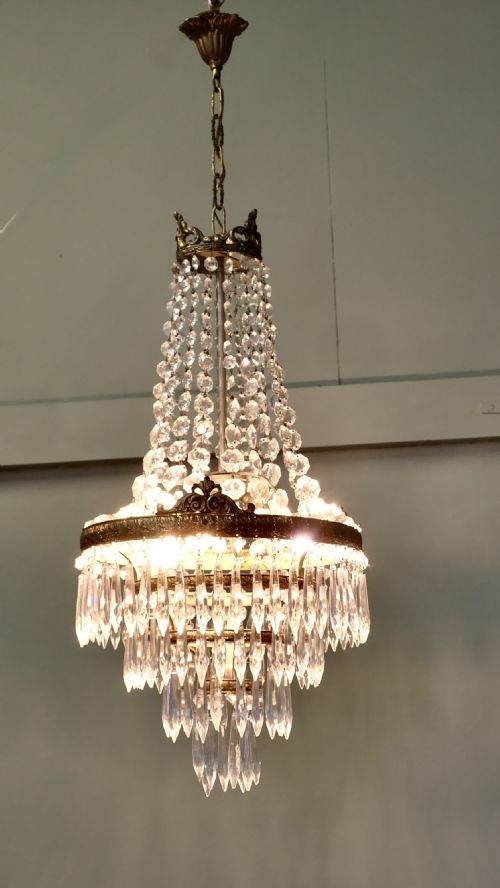
- A lighting fixture featuring upper strings of crystals forming a tent shape above a gathered bag of glass drops. This style appears in larger reception rooms and formal spaces.
Traditional Cut Glass Lamp: Frequently Asked Questions
How do I date a cut glass lamp?
Dating relies on examining the metal fittings, mounting styles, and the characteristics of the glass cutting. Victorian and Edwardian pieces often incorporate cast brass or bronze bases alongside hand-cut crystal reservoirs.
Later twentieth-century examples tend toward simpler turned metals and machine-finished glass. Comparing the wiring or examining retailer marks can also help narrow the period of manufacture.
Were these lamps originally electric?
Many table lamps began as oil lamps utilising brass burners and glass fonts before later conversion to electricity. Chandeliers and pendant lights were designed for early electric or gas lighting systems.
Conversion work often retains the original metal and glass bodies while updating the internal wiring for modern domestic use.
How do I clean a cut glass lamp?
Maintenance involves gentle cleaning with lukewarm water and a mild detergent to preserve the clarity of the glass facets. Metal components require specific care depending on whether they are brass, bronze, or silver-plated.
Harsh chemical cleaners should be avoided to protect the aged patina on the surrounding metal frames.
What is an oil lamp conversion?
An oil lamp conversion describes a period oil-burning fixture that has been adapted to accept an electrical fitting and bulb holder. This process preserves the decorative glass font and brass base while making the piece functional for contemporary interiors.
These conversions often retain the original gallery or burner collar as part of the lamp structure.
How do I style a cut glass lamp?
These lamps function effectively as focal points on side tables, sideboards, or within traditional entrance halls. The refractive quality of the cut crystal suits spaces with dark wood furniture or neutral walls where light can bounce off the faceted surfaces.
Pendant and ceiling versions provide overhead illumination suited to dining rooms or period hallways.