


Edwardian Column Oil Lamp
An edwardian column oil lamp brings substantial brass and coloured glass into a room, offering the warmth of period lighting combined with classical proportion.

Edwardian Column Oil Lamp
When you search for an edwardian column oil lamp, you encounter tall, upright lighting fixtures that adapt classical architectural forms for domestic use. The pieces on this page span the Victorian and Edwardian periods, stretching from the nineteenth century into the early twentieth century.
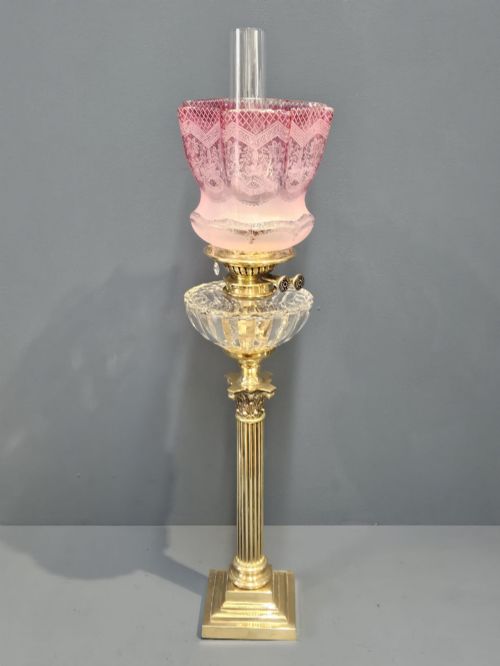
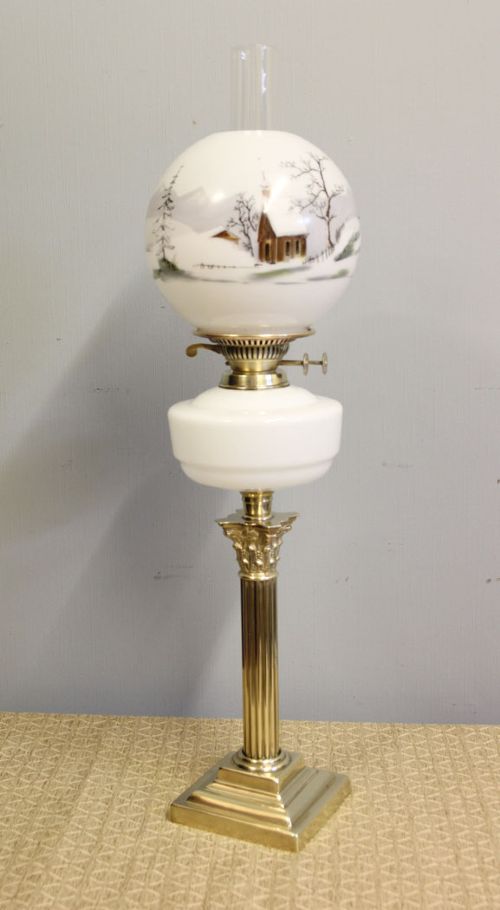
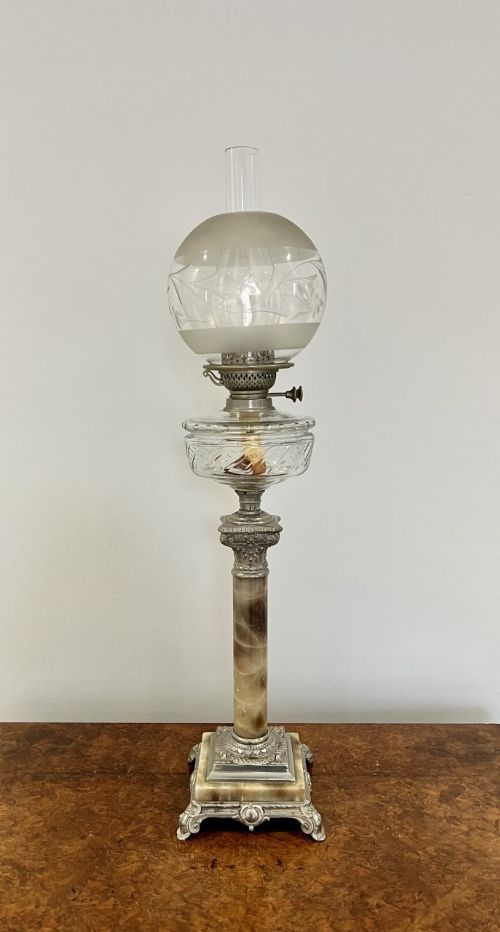
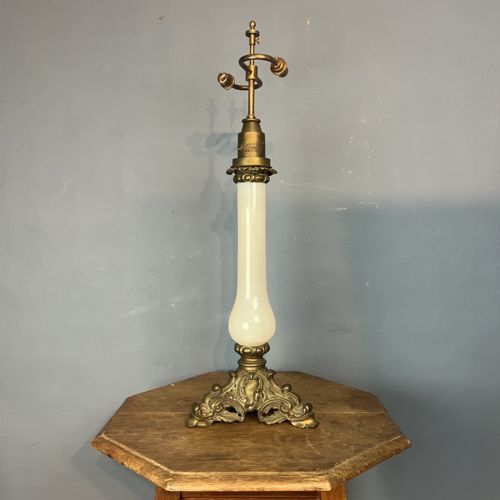
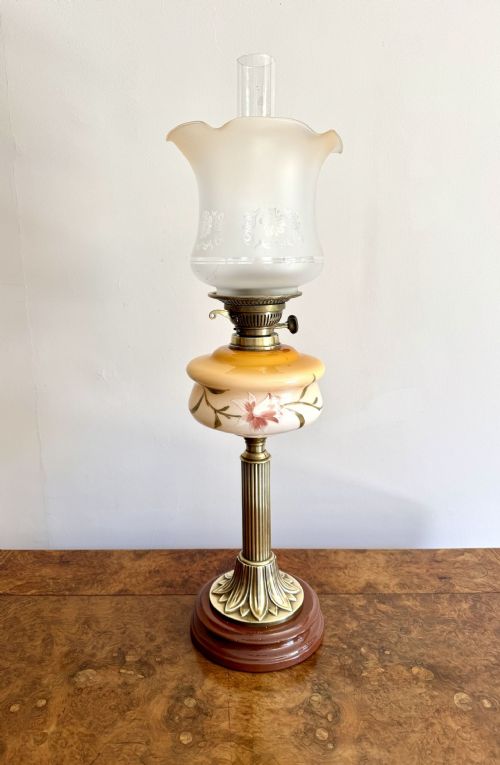
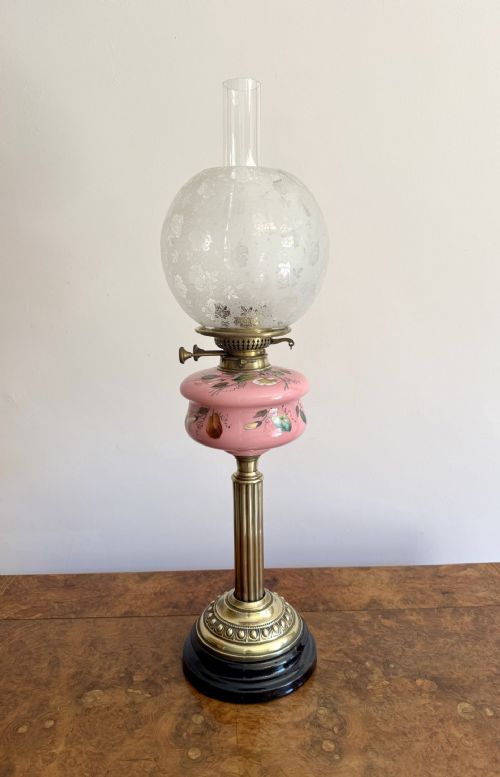
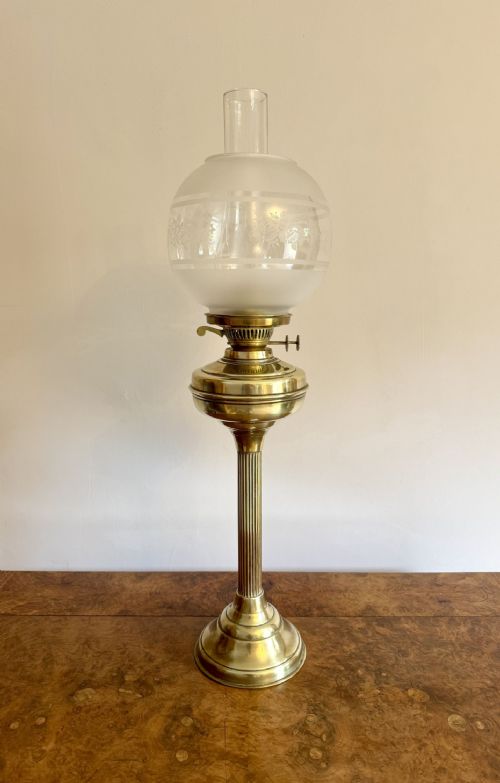
The most common format pairs a heavy metal column with a contrasting glass font and a decorative shade. You will regularly find Corinthian capitals atop brass stems, supporting opaline, cranberry glass, or etched glass shades.
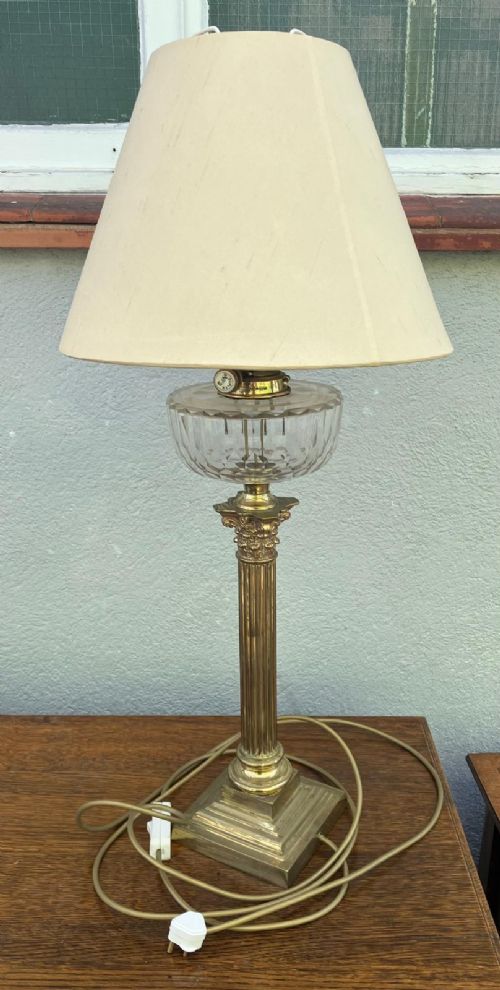
While many survive in their original oil-burning configuration, others have been converted for modern electrical use. Table heights dominate the selection, alongside occasional standard or floor-standing variants.
Materials and construction
Makers built these lamps using heavy brass for the structural columns and bases, often combining them with cast elements and gilt finishes. Cut glass, pink glass, and opaline glass formed the vibrant fonts and reservoirs that held the fuel.
Shades required specialised glassmaking techniques, from layered cranberry glass to hand-etched winter scenes and decorative painting. Metal components were frequently cast and turned, occasionally featuring maker stamps or patent marks on the brass work.
Listings span from the 1850s through to 1930, uniting brass, opaline glass, and cut crystal in standard and table heights.
Distinguishing quality across the range
Quality rests in the crispness of the casting on the brass capital and the weight of the metal column. Better examples feature finely detailed Corinthian acanthus leaves and substantial bases that prevent tipping.
The glass elements create another distinction, as thick, heavy lead crystal or layered cranberry glass surpasses thin, plain glass. Matching or period-correct shades with hand-etched detail elevate the piece above standard replacements.
Mc Gary’s Patent·Osler Lead Crystal Glass
The Edwardian Column Oil Lamp Glossary
- Corinthian column
- A classical architectural column style featuring an ornate capital decorated with acanthus leaves, frequently utilised on the upper shaft of these lamps.
- Opaline glass
- An opaque, milky-white glass popular in the nineteenth century for shades and fonts, offering a soft diffusion of light.
- Cranberry glass
- A rich red-pink transparent glass created by adding gold chloride to the molten batch, used extensively for lamp fonts and shades.
- Font
- The oil reservoir of the lamp, typically positioned above the column and beneath the burner and shade.
- Standard lamp
- A tall floor-standing version of the table lamp, designed to rest directly on the floor.
Edwardian Column Oil Lamp: Frequently Asked Questions
Are these lamps still able to burn oil?
Many retain their original burners and reservoirs, though collectors often check the condition of the internal mechanism before use.
Several examples on the market have already been converted to electricity for safe daily domestic lighting.
How do I identify an Edwardian piece?
Edwardian items usually date from around 1900 to the 1910s, showing lighter proportions and refined brass work compared to earlier Victorian designs.
Look at the complexity of the glass shades and the specific casting details on the column for chronological clues.
Can I replace a broken glass shade?
Replacement shades are available, though matching the exact period style, fitter size, and colour like cranberry or opaline requires patience.
Original glass elements significantly enhance the character and integrity of the lamp.
Where should I place a floor lamp?
Standard floor lamps suit corners of reception rooms where their height can fill vertical space effectively.
Ensure they stand on stable, level flooring due to the substantial weight of the brass columns.