
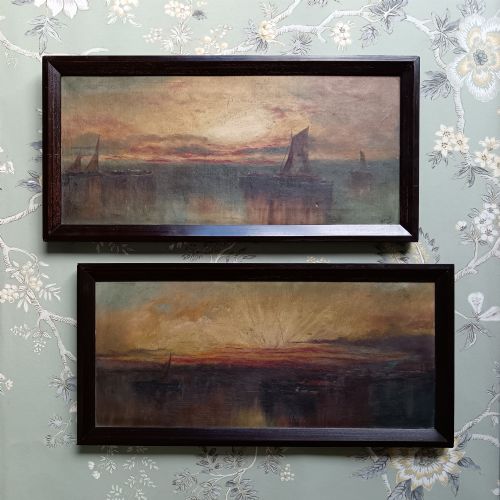


Edwardian Coastal Oil Painting
An Edwardian coastal oil painting captures sea air and salt spray through layered brushwork on canvas.
Edwardian Coastal Oil Painting
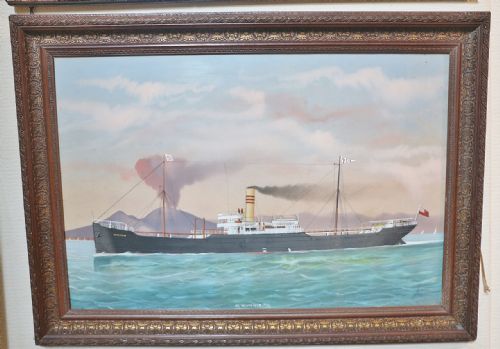
An edwardian coastal oil painting records maritime scenes, harbours and shorelines from the early decades of the twentieth century. These works frequently depict fishing boats, choppy seas and coastal estuaries rendered in oils on canvas.
The pieces appearing here include depictions of Cornish ports, Whitby mornings and tranquil beaches painted during the Edwardian era. Artists often worked on location to capture changing light over water and cliffs.
Subjects range from bustling fishing harbours with working vessels to quiet sandy stretches and rocky outcrops. Painters documented both the working life of the coast and the leisure pursuits of the period.
How They Were Made
Artists painted primarily with oil paint applied to stretched canvas or wood panels, allowing for rich texture and depth of colour. The medium permitted both smooth blending for skies and thick impasto marks for crashing waves.
Finished works rested within wooden frames, often accented with gilt finishes to complement the luminous quality of the pigments. Ground layers on the canvas dictated the overall tone before brushwork began.
Listings feature works executed on canvas and wood panels using oil paint, spanning the late nineteenth century through the nineteen-thirties.
What Varies in Quality
Quality rests in the handling of light and atmosphere, where skilled brushwork conveys the movement of water and salt air convincingly. Superior examples demonstrate a confident control of tone that brings depth to both sea and sky.
The skill of the composition and the accurate depiction of maritime architecture or rigging distinguish finer canvases from simpler amateur works. Provenance and legible signatures from recognised painters elevate certain pieces above anonymous studies.
Charles Napier Hemy·Pieter Cornelis Dommersen·James Webb·William Shayer SRN·William Sidney Cooper·Bertram Priestman·Harry John Pearson
The Edwardian Coastal Oil Painting Glossary
- Impasto
- Paint applied thickly to a canvas, standing out in relief from the surface. This technique creates physical texture that catches the light.
- Seascape
- A work of art depicting the sea, ocean or coastal views. These subjects formed a major focus for maritime painters.
- Gilt Wood
- Timber carved or moulded and coated with gold leaf or metallic paint. Frames of this material surrounded many period oil paintings.
- Estuary
- The tidal mouth of a large river where the tide meets the stream. Painters frequently set their coastal views around these waterways.
Edwardian Coastal Oil Painting: Frequently Asked Questions
How should I clean an oil painting?
Dust gently with a soft dry brush, avoiding water or chemical cleaning agents on the painted surface.
Professional conservators should handle any deeper cleaning or removal of aged varnish.
Where were these coastal scenes painted?
Artists travelled to fishing ports and estuaries across Britain, including Cornwall, Whitby and local Sussex harbours.
They often worked outdoors directly from nature to record accurate local conditions.
How do I identify the period?
Look at the clothing of figures, the type of vessels depicted, and the style of the original framing.
Signatures, dates inscribed on the reverse, and artist records provide precise chronological placement.
Can I hang them in direct sunlight?
Bright sunlight fades oil pigments and damages the structural integrity of old canvas over time.
Position paintings on interior walls away from intense heat sources and direct rays.