


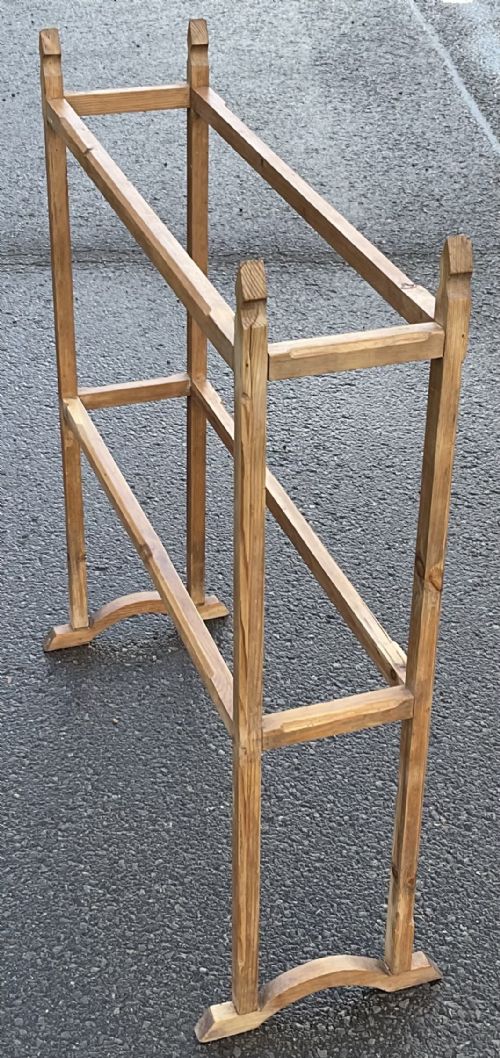


Edwardian Clothes Horse
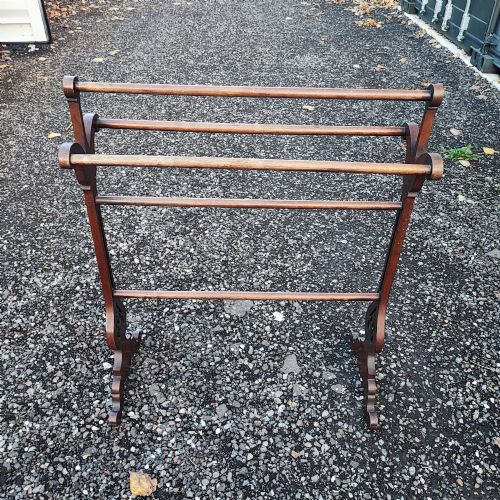
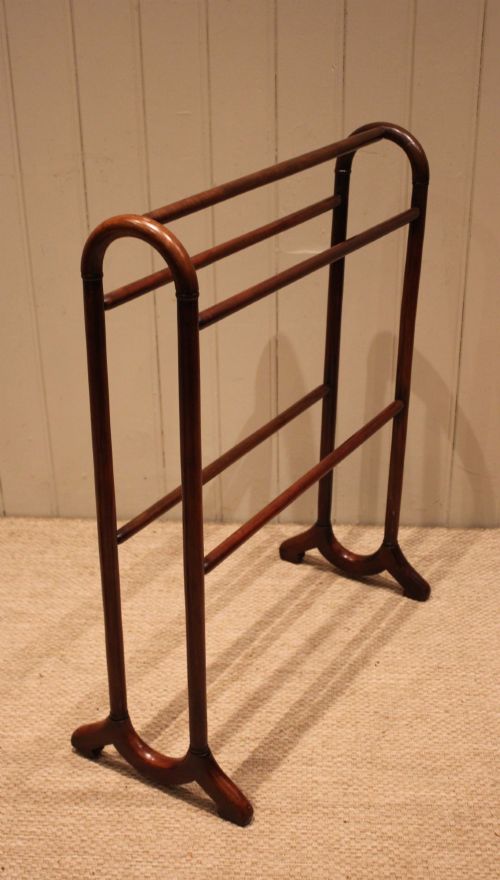
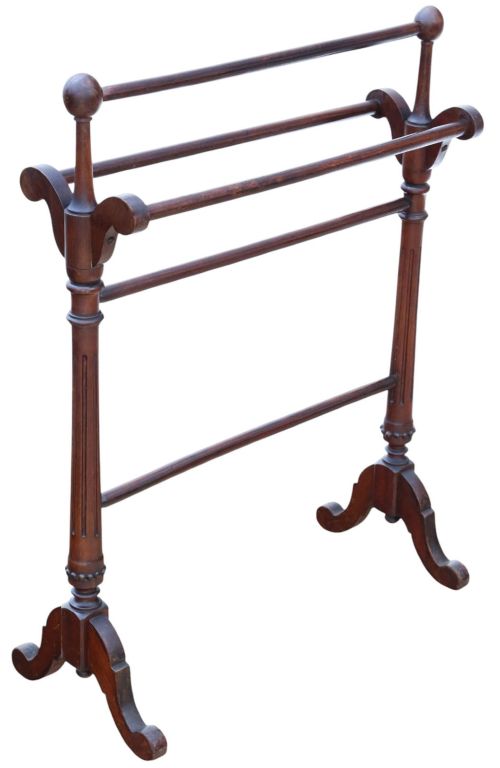
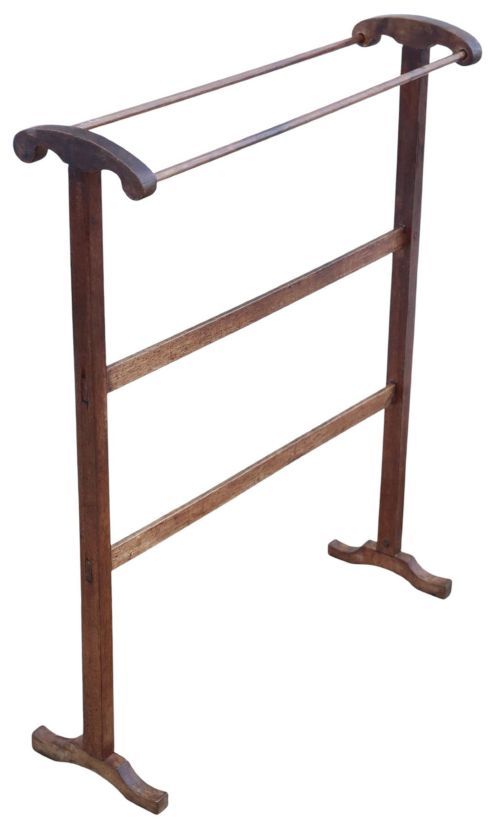
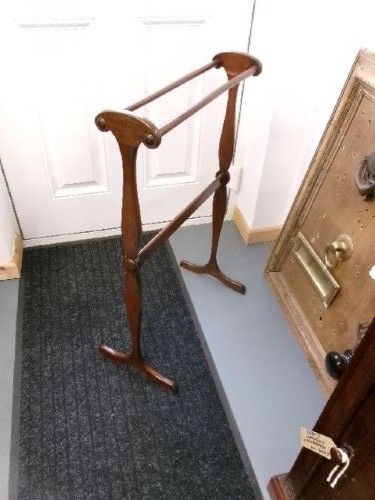
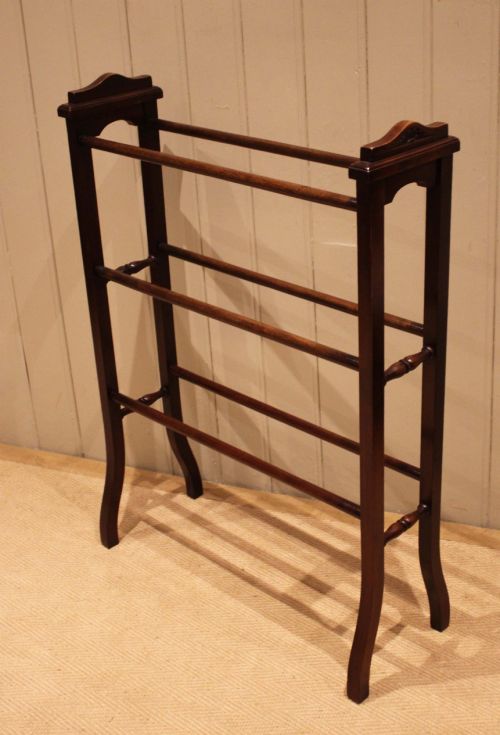
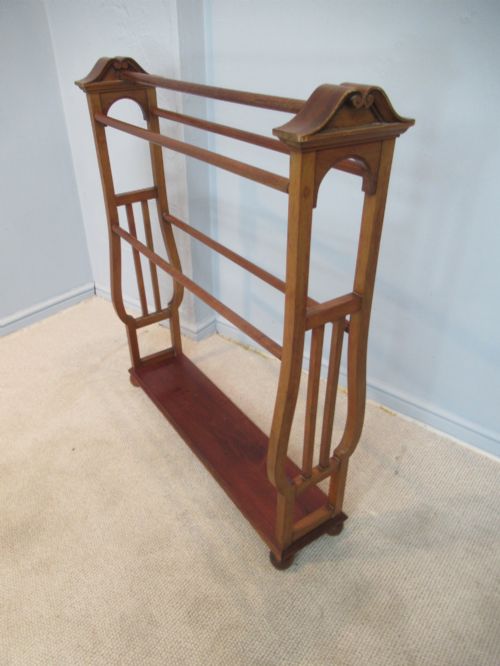
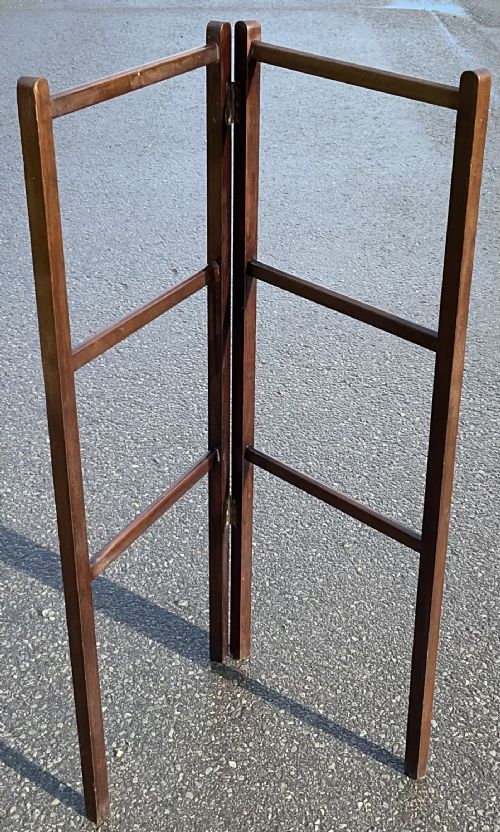
These Edwardian clothes horse examples are practical wooden frames designed for drying laundry and textiles.
Edwardian Clothes Horse
An edwardian clothes horse functions primarily as a towel rail, clothes airer, or standing rail for domestic use. The pieces found here span the Edwardian period, alongside Victorian, Arts and Crafts, and Regency examples.
Most entries consist of standing wooden towel rail stands and folding airers rather than wall-mounted fixtures. They serve bedrooms, bathrooms, and laundry spaces with simple utility.
The form appears most frequently in mahogany, oak, and pine, reflecting the domestic habits of the period. Simpler pine versions share space with more elaborate inlaid mahogany and walnut pieces.
What separates the best from the rest
Quality rests upon the selection of timber and the complexity of the woodwork. Plain pine rails sit at one end of the scale, while satinwood inlay and carved mahogany stand at the other.
The presence of multiple rails, such as five-bar configurations, and functional gate-action joints indicate superior workshop production. Sound construction ensures the folding framework operates smoothly without looseness.
Edwardian Clothes Horse Retail Price Guide 2026
Typical asking prices for edwardian clothes horse among the pieces listed under this phrase on Sellingantiques today, from the lower quarter to the upper quarter. They describe what is for sale here now, not the wider market.
Mahogany is the most frequent timber seen across these listings, appearing alongside oak, pine, walnut, and ebonised wood.
The Edwardian Clothes Horse Glossary
- Clothes horse
- A hinged wooden frame used for airing laundry and hanging garments indoors. It folds flat when not in use.
- Gate action
- A pivoting hinge mechanism allowing sections of a frame to swing open like a gate. This construction provides stability while enabling the piece to fold.
- Ebonised
- Timber treated with a dark stain or finish to imitate ebony. This technique was popular for achieving a formal black surface.
- Satinwood inlay
- Decorative woodwork where contrasting light timber is inserted into recesses. It adds refined detail to mahogany surfaces.
- Towel rail stand
- A freestanding wooden frame featuring horizontal bars for hanging textiles. These pieces function in both bedrooms and bathrooms.
Edwardian Clothes Horse: Frequently Asked Questions
How do you use an edwardian clothes horse?
These frames stand upright in rooms to dry laundry, air towels, or display garments. The hinged sections adjust to fit the available space.
Fold the frame flat against a wall when not in use to save floor space in smaller rooms.
What wood were they made from?
Makers relied on durable timbers including mahogany, oak, walnut, and pine. Hardwood varieties offered greater strength for daily use.
Some refined examples feature satinwood inlay or brass details, whilst others received black ebonised finishes.
Are they folding pieces?
Many examples utilise a gate-action or hinged design that allows the wooden sections to fold together. This mechanism made storage straightforward.
Fixed standing rails also exist alongside these folding airers, offering a rigid structure with multiple bars.
How do I date a clothes horse?
Dating relies on timber choice, construction methods, and stylistic details associated with periods like the Edwardian era or Victorian times. Inlaid satinwood points to specific decorative preferences.
Comparing the bar count and joint construction helps separate nineteenth-century pieces from later Edwardian production.