

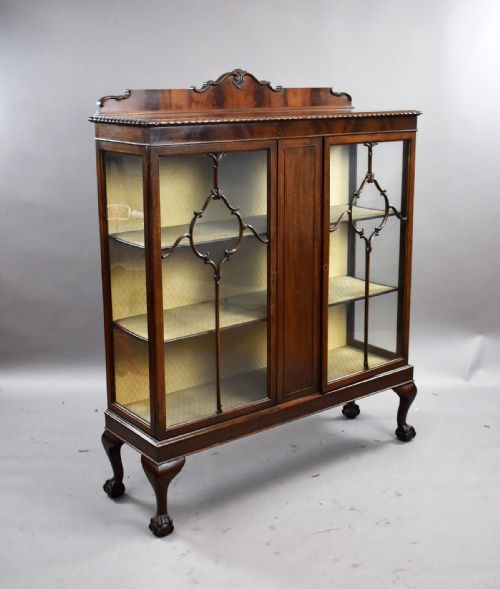


Edwardian Chippendale Cabinet
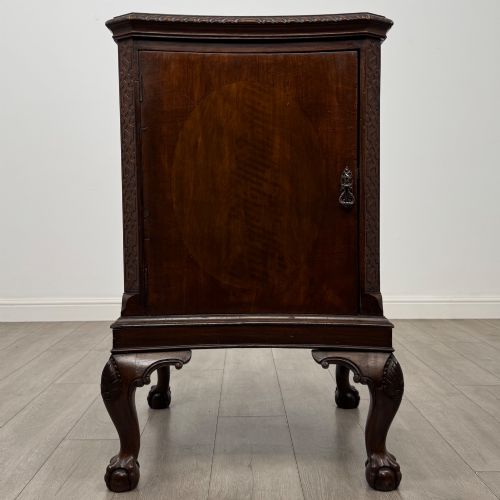
An edwardian chippendale cabinet combines revival proportion with practical storage, offering structured elegance for a period interior.
Edwardian Chippendale Cabinet
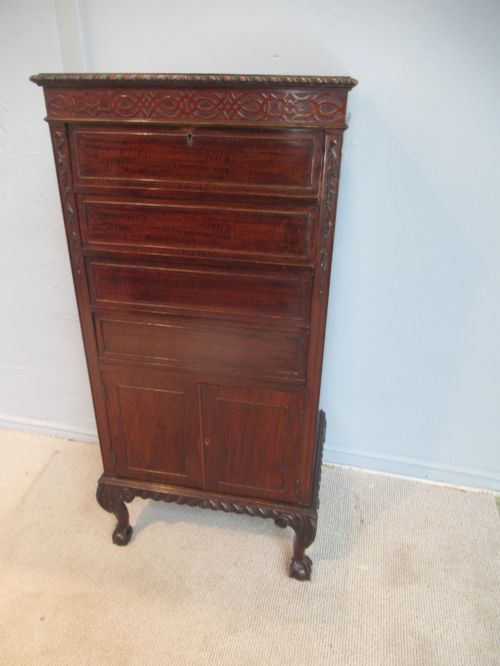
When you search for an edwardian chippendale cabinet, you encounter pieces spanning the Edwardian era, the Victorian period, and the early twentieth century. The selection ranges widely in form, appearing as display cabinets, bookcases, sideboards, bijouterie tables, corner cabinets, and music cabinets.
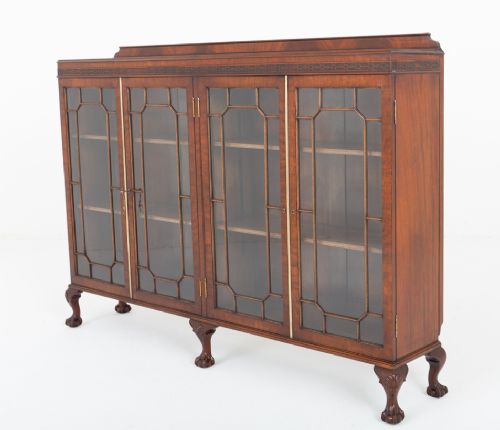
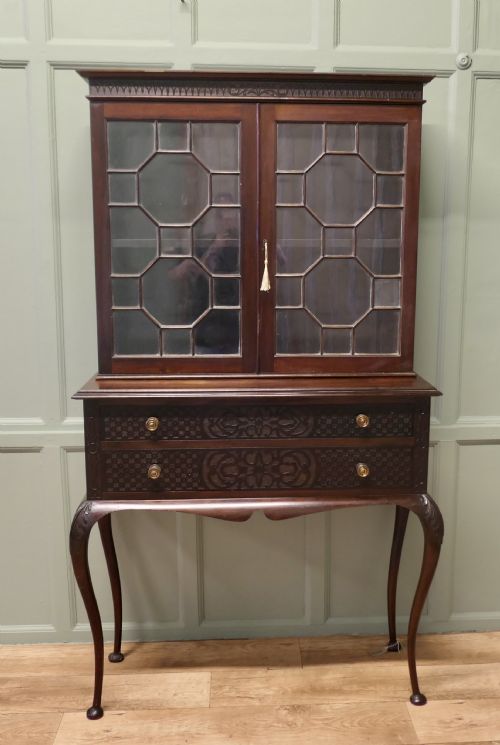
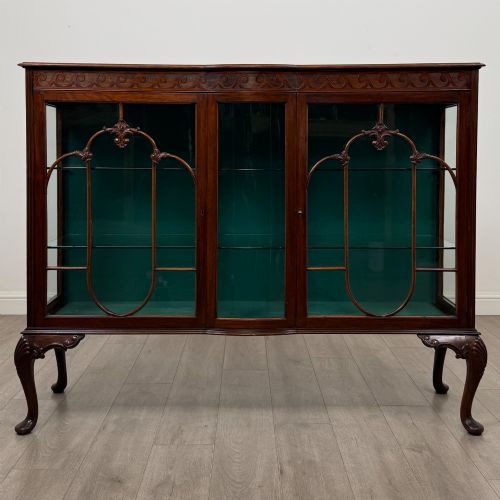
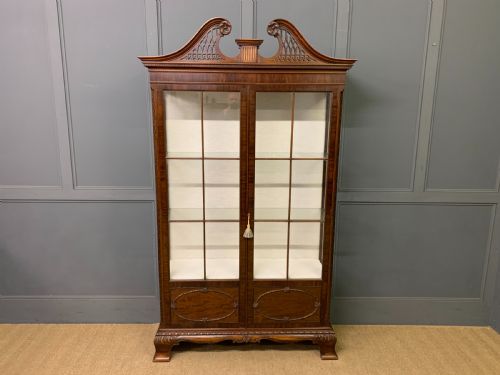
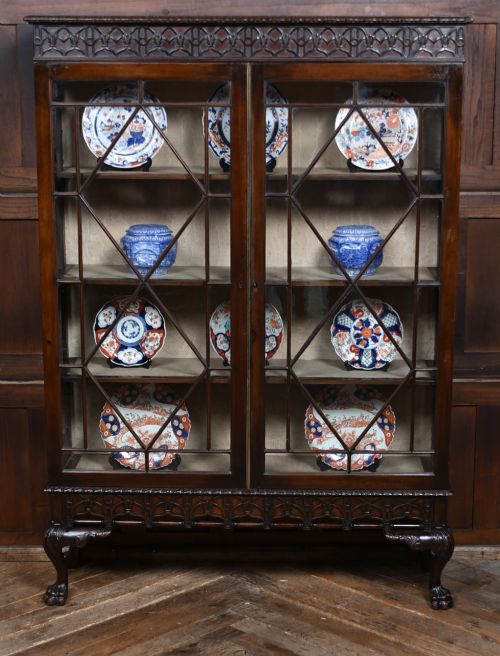
The most common form on this page is the display cabinet, often featuring glazed doors and revival detailing that echoes eighteenth-century proportions. These pieces were constructed to house collections, books, or silverware while displaying the cabinetmaker's skill in revival design.
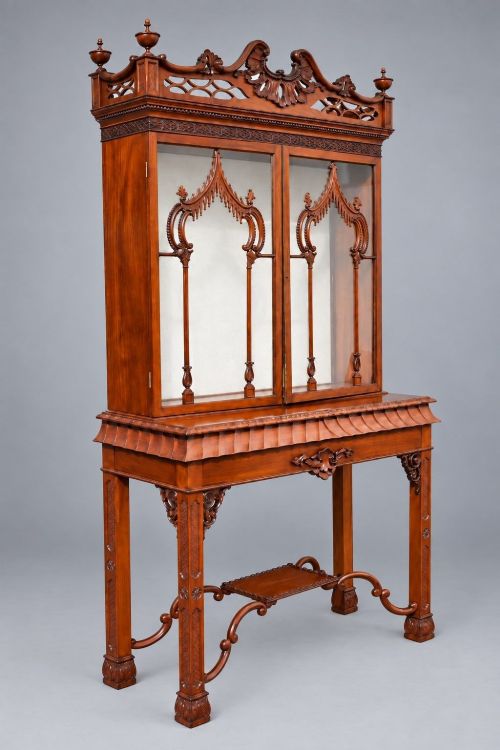
Makers and workshops of the period produced both standard domestic furniture and ambitious large-scale items, such as breakfront display cabinets and cabinets on stands. You also find smaller wall-hanging corner cupboards and bedside cabinets built to the same stylistic standards.
How They Were Made
Mahogany forms the primary structural material across these pieces, frequently enhanced with satinwood inlay, brass hardware, and painted elements. Glazing is a dominant feature, utilising glass panels held within astragal bars to showcase the interior.
Craftsmen applied carving techniques to solid mahogany and veneers, drawing on Chinese Chippendale and standard revival motifs. Interior fittings often incorporate fabric or velvet lining, particularly within bijouterie tables and display cabinets designed to hold delicate objects.
The site's archive records pieces spanning the Victorian period through the Edwardian era and into the nineteen-twenties.
What Varies in Quality
The standard of timber selection and carving depth marks the division between everyday production and master-workshop output. Pieces originating from documented firms display crisper fretwork, superior joinery, and more thoughtfully matched mahogany veneers.
Proportion and structural integrity distinguish finer examples from standard revival items. A well-proportioned cabinet balances the weight of its glass and timber with harmonious cornice work and sturdy framing.
Waring and Gillows·Edwards and Roberts·Warings
The Edwardian Chippendale Cabinet Glossary
- Astragal
- Moulding applied to glass doors to divide the panes into smaller geometric sections. These bars are typically slender and shaped to match the revival style.
- Bijouterie table
- A glass-topped display table constructed to exhibit small valuable objects, jewellery, or curiosities. They often feature hinged lids and fabric-lined interiors.
- Chippendale revival
- A late nineteenth and early twentieth century design movement that reinterpreted eighteenth-century Thomas Chippendale furniture patterns. It includes standard revival and Chinese Chippendale interpretations.
- Serpentine front
- A cabinet or sideboard facade curved with a convex centre flanked by concave ends. This shaping requires precise carpentry and adds visual movement to heavy timber.
Edwardian Chippendale Cabinet: Frequently Asked Questions
How do I date an edwardian chippendale cabinet?
Dating relies on construction methods, timber choice, and stylistic cues recorded across the Edwardian and late Victorian periods. Secondary woods, drawer linings, and glass manufacturing traits provide additional chronological context.
Makers' marks or stamps, when present, offer the most definitive guide to a piece's age and origin. Comparing the specific fretwork and carving style to known revival patterns further refines the date.
What is Chinese Chippendale style?
Chinese Chippendale incorporates Asian-inspired fretwork, glazing bars, and pagoda-style motifs into eighteenth-century furniture forms. This style experienced a major revival during the Victorian and Edwardian eras.
Cabinets in this sub-style often feature intricate pierced wooden galleries and lattice work. They represent a lighter, more ornamental branch of the broader Chippendale revival movement.
Where should I place a display cabinet?
Display cabinets require stable placement away from direct sunlight to protect timber finishes and interior fabrics. Rooms with consistent ambient temperature prevent the wood and glass from shifting.
Freestanding models need level flooring to ensure doors align properly within their frames. Wall-hanging corner cabinets require secure fixing directly into structural masonry or studs.
Are these cabinets practical for modern storage?
These cabinets offer practical storage for books, ceramics, and collections behind secure glazed or panelled doors. Shelving depth and interior clearance vary by form, from shallow corner cupboards to deep sideboards.
Specialised variants like music cabinets and bijouterie tables provide segmented storage for specific items. Their traditional dimensions suit contemporary rooms while maintaining period character.