
Edwardian Carver Chair Set
An edwardian carver chair set brings matched seating with open arms to the dining table, combining period craftsmanship with practical comfort.
Edwardian Carver Chair Set
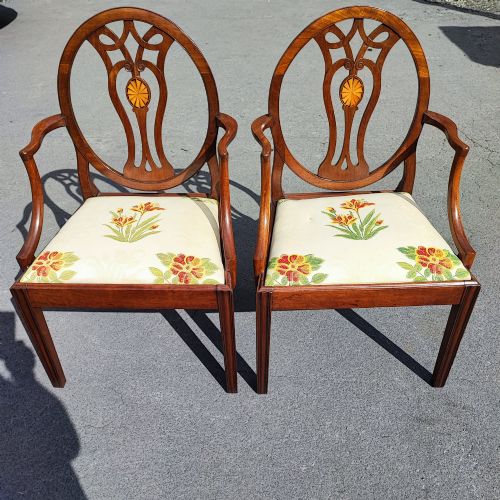
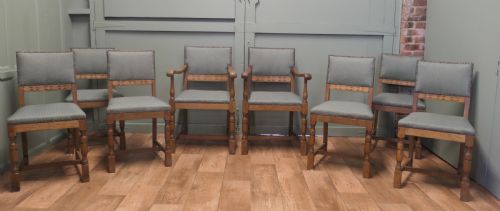
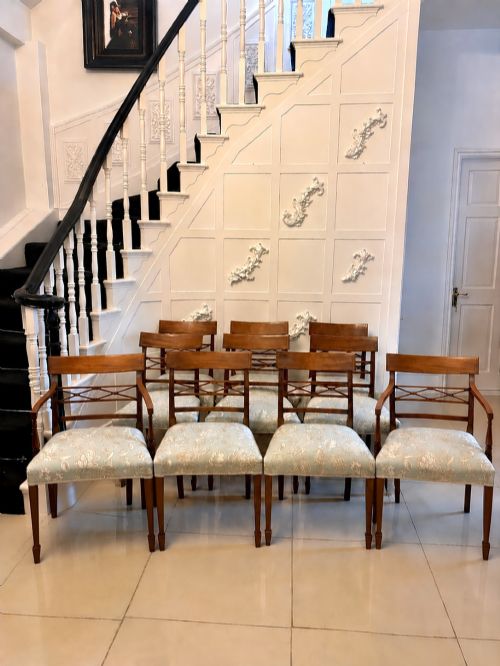
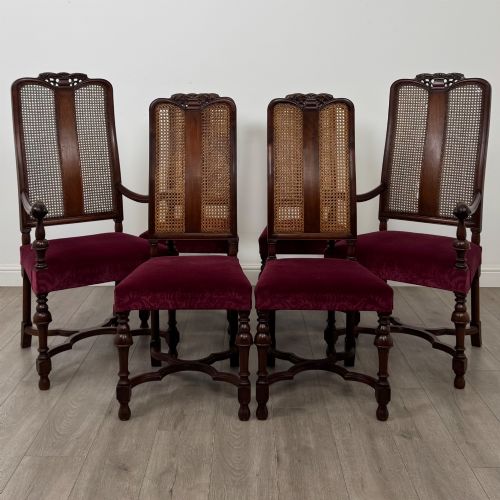
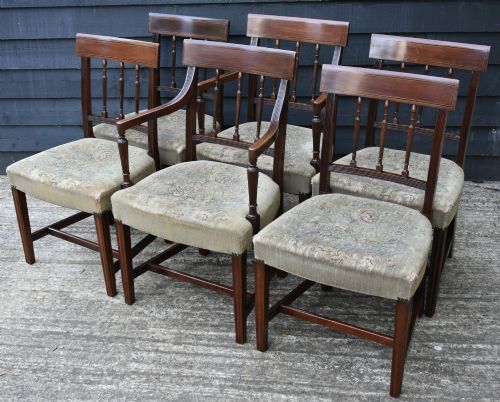
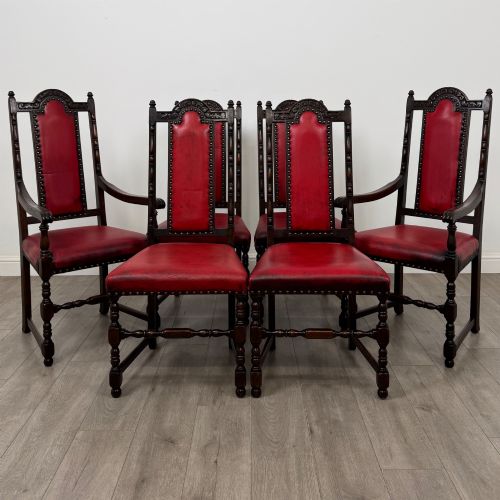
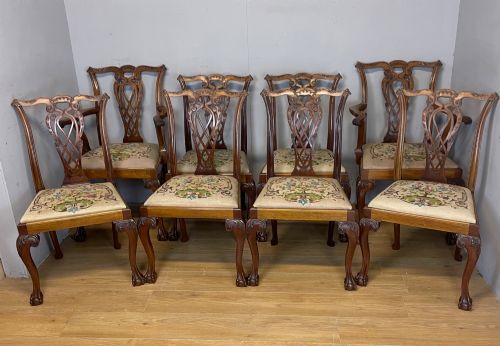
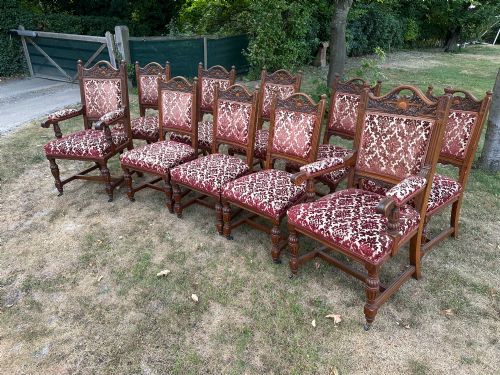
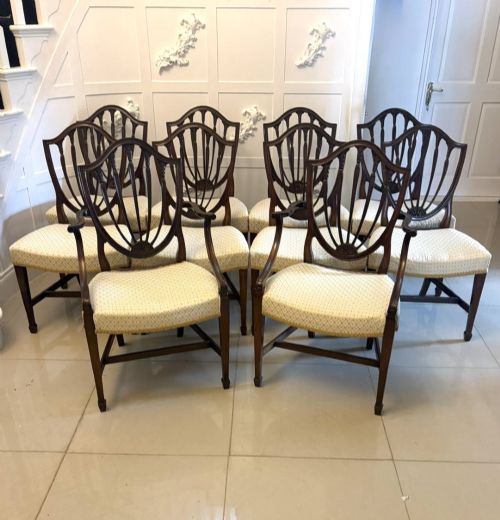
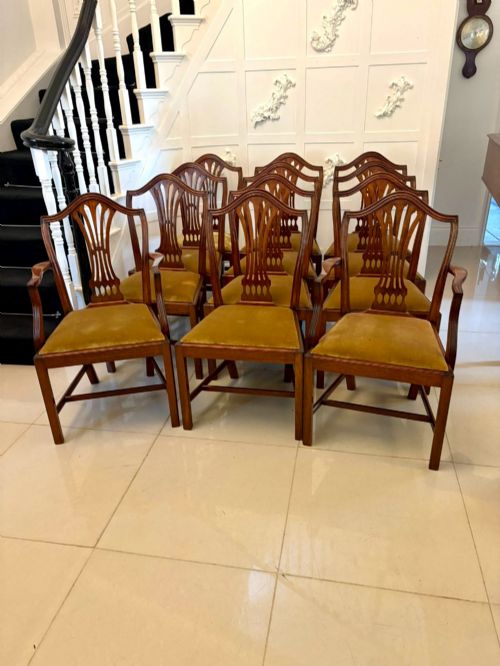
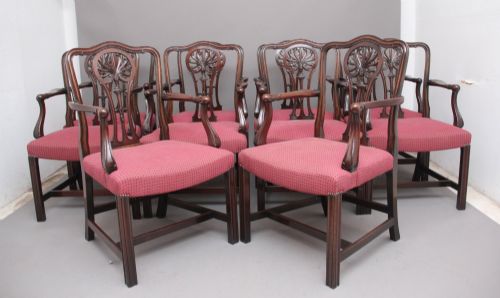
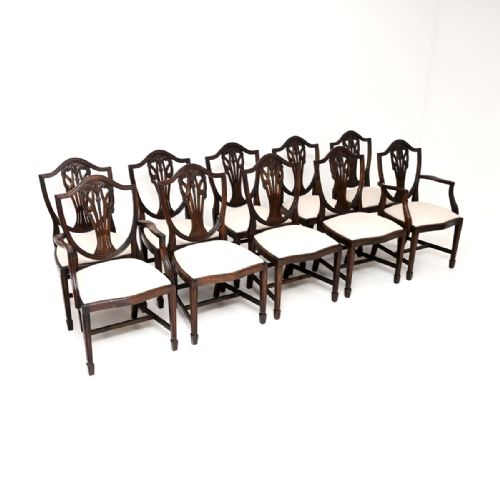
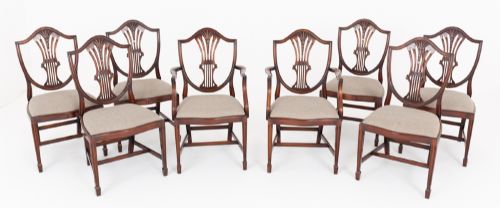
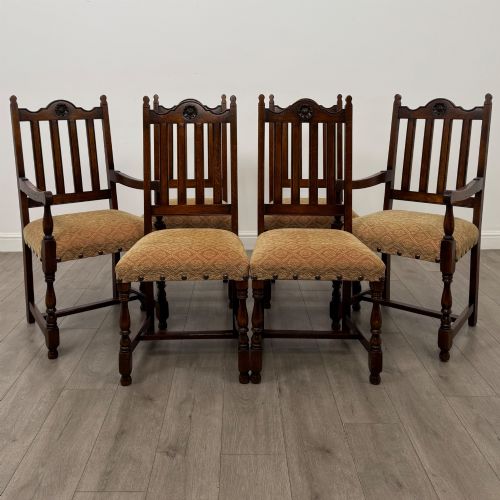
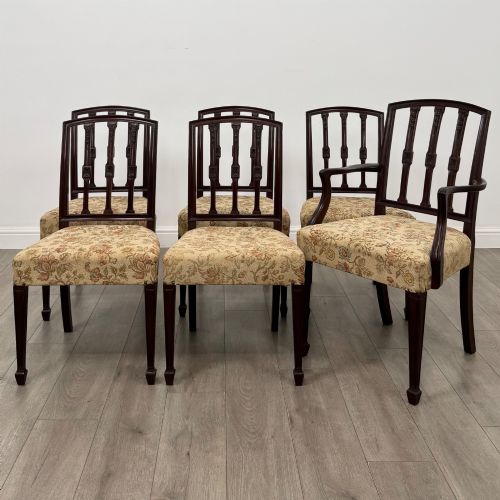
An edwardian carver chair set typically comprises a group of dining chairs that includes elbow chairs for the heads of the table, originating largely from the early twentieth century alongside late nineteenth-century pieces. The selection on this page ranges from formal mahogany dining chairs to sturdy oak country seating.
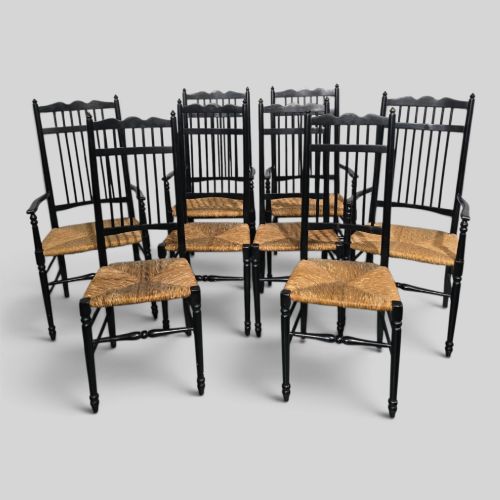
Most suites follow historical revivals, interpreting Georgian, Hepplewhite, Chippendale, and Jacobean designs through the manufacturing methods of the Edwardian era. Alongside these formal dining sets, buyers encounter salon chairs and ladder-back kitchen variants.
Materials and construction
Cabinetmakers constructed these frames primarily in mahogany and oak, occasionally incorporating maple, satinwood, ash, and beech, with inlay work and carved details defining the decorative approach. Seat construction frequently utilises upholstered pads covered in fabric, velvet, leather, or traditional rush.
Joinery methods combine period hand-carving with early industrial production, allowing for sturdy frame assembly in sets ranging from four to sixteen pieces. Brass accents and string inlay appear on select mahogany and satinwood models.
Some dining suites include up to sixteen chairs, ensuring nobody misses out on a seat during a royal feast.
Distinctions in quality
Quality in an edwardian carver chair set rests upon the crispness of the wood carving, the selection of timber grain, and the integrity of the frame joinery. Sets produced by documented firms exhibit finer detailing in shield backs and inlaid motifs.
The consistency of the timber across all matching chairs distinguishes larger dining sets, alongside the retention of original leather or upholstery materials.
Warings·Alfred Allen of Birmingham·Maple and Co·Cowtan and Sons·Waring and Gillow
The Edwardian Carver Chair Set Glossary
- Carver chair
- An armchair designed to sit at the head of a dining table, featuring integrated elbow rests. These pieces match the smaller side chairs in a unified dining set.
- Shield back
- A chair back shaped in the outline of a heraldic shield, popular in Hepplewhite designs. This form often includes pierced splats and carved wheat ears.
- Revival style
- The nineteenth and twentieth-century reinterpretation of historical furniture periods such as Georgian, Chippendale, or Jacobean. Makers adapted these older forms for Edwardian dining rooms.
- Barley twist
- A turning technique resembling a twisted rope, carved into the legs or stretchers of oak chairs. This decorative feature is common in Jacobean revival seating.
Edwardian Carver Chair Set: Frequently Asked Questions
How many chairs come in a set?
Sets vary in size, frequently containing anywhere from four to sixteen chairs depending on the original commission. Many larger dining suites divide the count between standard side chairs and paired carver armchairs.
Buyers often find groupings of six, eight, or ten chairs suited to formal dining spaces.
What wood was used?
Makers most commonly utilised mahogany and oak for these dining suites, reflecting both formal Edwardian tastes and country traditions. Finer formal sets incorporate mahogany alongside inlay woods like satinwood and maple.
Country or vernacular variations frequently employ ash, beech, or solid oak with rush or leather seats.
Are these revival pieces?
Many Edwardian dining suites draw heavily on historical aesthetics, reproducing or reinterpreting Georgian, Chippendale, Hepplewhite, and Jacobean designs. These revival pieces blend older decorative motifs with early twentieth-century construction.
Cabinetmakers of the period utilised these classic styles to satisfy contemporary demand for traditional dining furniture.