

Edwardian Carved Bureau
An edwardian carved bureau provides a compact writing workspace framed by period detail, offering practical storage alongside traditional craftsmanship.
Edwardian Carved Bureau
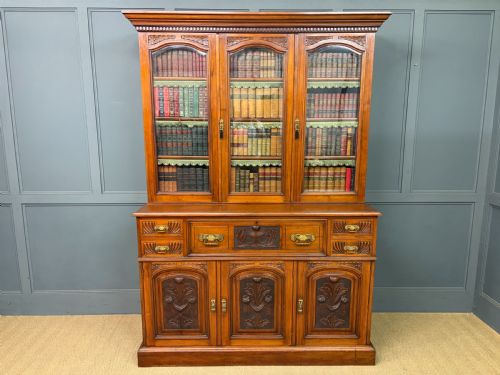
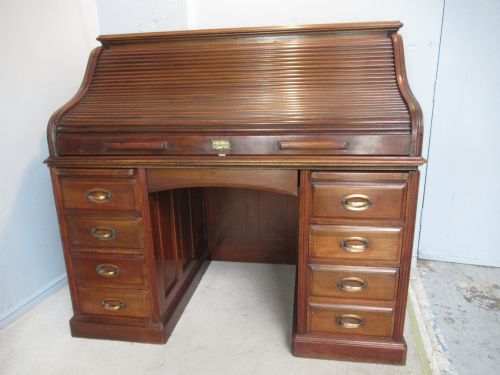
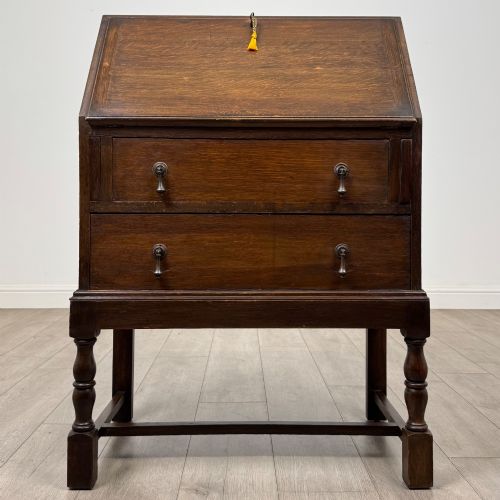
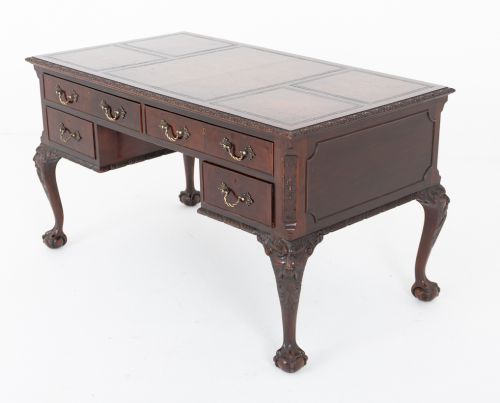
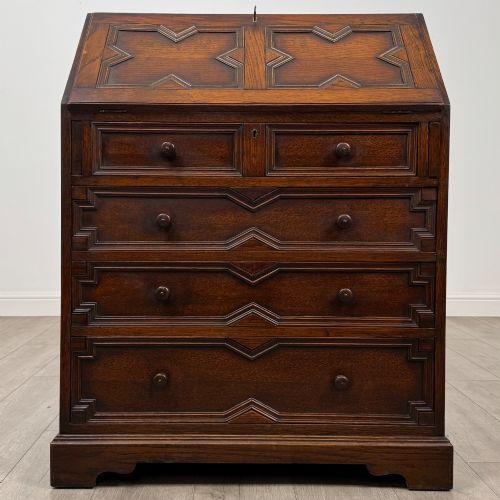
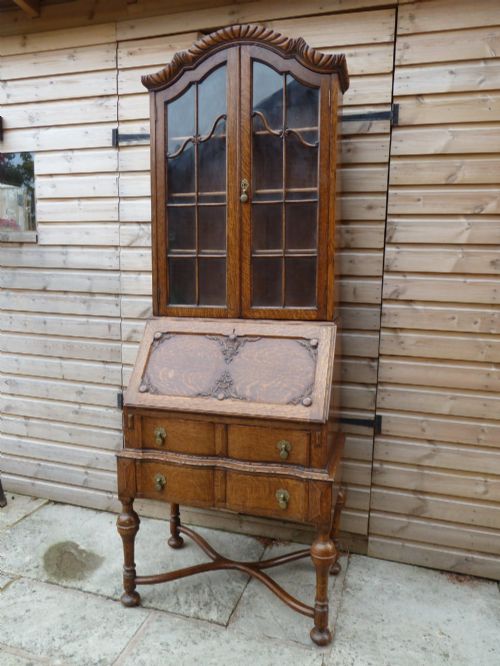
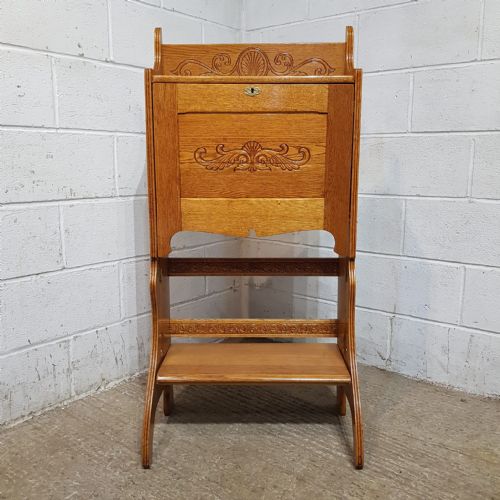
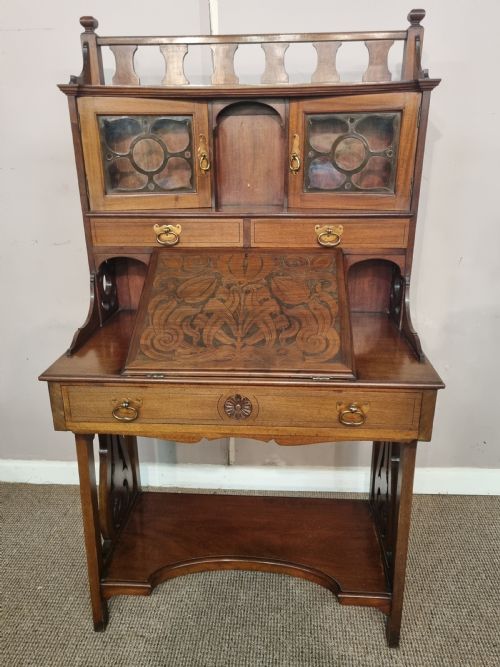
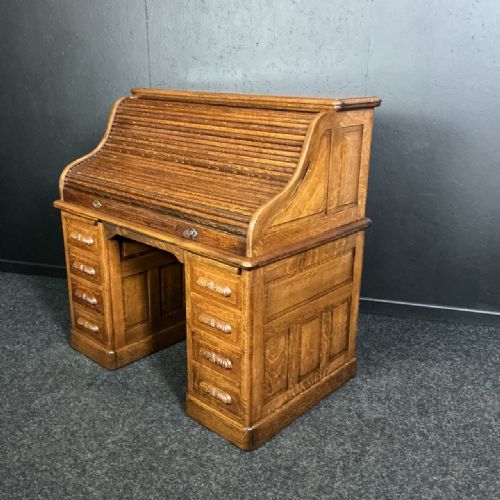
An edwardian carved bureau stands as a practical writing piece, typically combining a sloping fall-front writing flap with internal pigeonholes and drawers below. The selection here brings together oak and walnut examples from the Edwardian era, alongside related writing desks and cabinets from the wider Victorian and twentieth-century periods.
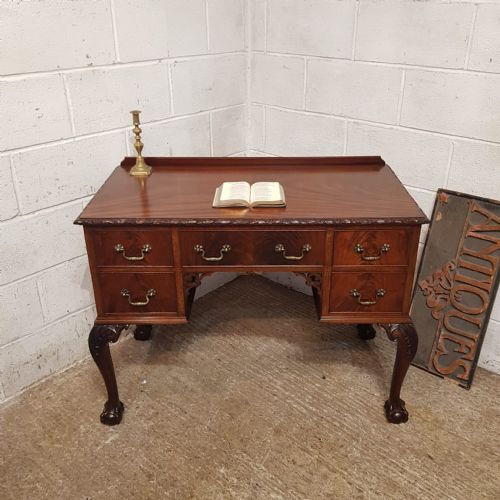
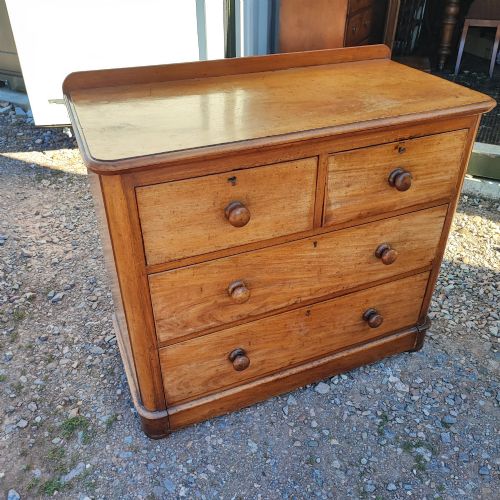
Buyers will encounter various forms ranging from compact oak desks to larger bureau bookcases and revival styles. The construction spans standard Edwardian production as well as earlier Victorian antecedents, showcasing how domestic writing furniture evolved through the nineteenth and early twentieth centuries.
How they were made
Cabinet makers utilised solid timber frameworks of oak, mahogany, and walnut, frequently applying burr walnut or satinwood veneers to the visible surfaces. Carved ornamentation, brass handles, and fitted leather writing inserts were integrated into the structural design of the desks.
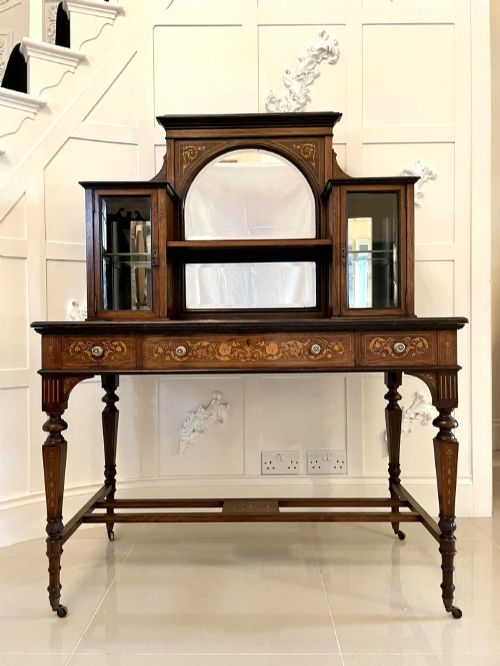
Joinery techniques combined traditional dovetailed drawer construction with framed panels to support the fall-front mechanisms. Marquetry inlay and decorative carving were applied directly to the timber fronts to distinguish individual pieces.
Some bureaus conceal tiny secret drawers behind pigeonholes, designed for letters and valuables.
What varies in quality
The standard of timber selection and veneer matching defines the visual appeal, with burr walnut and figured mahogany achieving greater depth than plain oak or standard pine. Superior examples demonstrate crispness in the hand-carved details and precise jointing around the writing flap.
Makers such as Edwards and Roberts or Shapland and Petter introduced refined cabinetwork, setting them apart from utilitarian workshop production. Original hardware, intact leather inserts, and well-preserved interior compartments indicate superior original condition.
Gillows·Edwards and Roberts·Shapland and Petter
The Edwardian Carved Bureau Glossary
- Bureau
- A writing desk featuring a sloping hinged flap that opens to reveal compartments and small drawers. This form provides a concealed writing surface when closed.
- Fall-front
- The hinged writing flap of a bureau that lowers to a horizontal position for writing. It often supports the user's weight through side brackets or the framework itself.
- Marquetry
- Decorative veneer work formed by fitted pieces of different coloured wood or other materials to create pictorial or geometric designs. It is commonly found on tabletop surfaces and bureau fronts.
- Pedestal desk
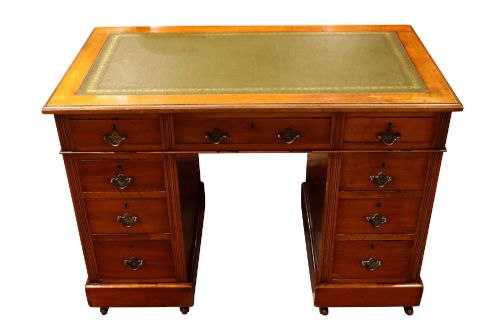
- A heavy writing desk supported by two distinct pedestals containing banks of drawers. These desks offer substantial storage beneath the main writing surface.
- Secretaire
- A piece of furniture containing a built-in writing drawer or drop-front desk compartment. The term frequently applies to bookcases and cabinets equipped with writing drawers.
Edwardian Carved Bureau: Frequently Asked Questions
How do I use an antique bureau daily?
Lower the fall-front flap to utilise the internal surface for writing or laptop use, keeping stationery stored within the pigeonholes above.
Close the flap when not in use to conceal papers and maintain a tidy room appearance.
What is the difference between a bureau and a desk?
A bureau specifically incorporates a sloping fall-front writing surface that covers an organised interior of small drawers and slots.
Standard desks usually feature a fixed flat top, sometimes with an inset leather panel, resting upon legs or pedestals.
How do I care for the wood surface?
Dust the timber regularly with a soft dry cloth and apply a quality beeswax periodically to nourish the polished grain.
Keep the piece away from direct heat sources and strong sunlight to prevent the veneer from drying or cracking.
How can I date an Edwardian bureau?
Examine the construction methods, drawer dovetails, and secondary woods visible on the interior elements to confirm the period.
Compare the revival style motifs, such as Chippendale or Jacobean influences, against standard manufacturing traits of the early twentieth century.