

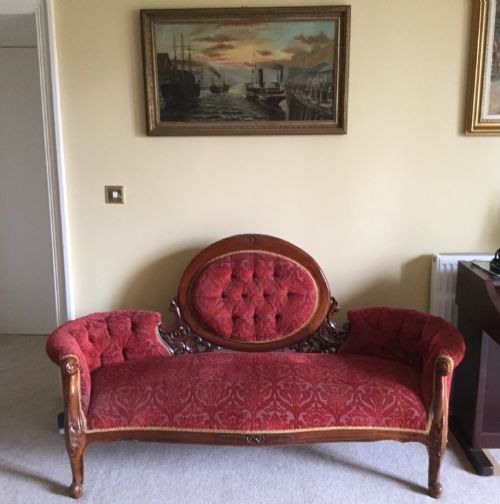
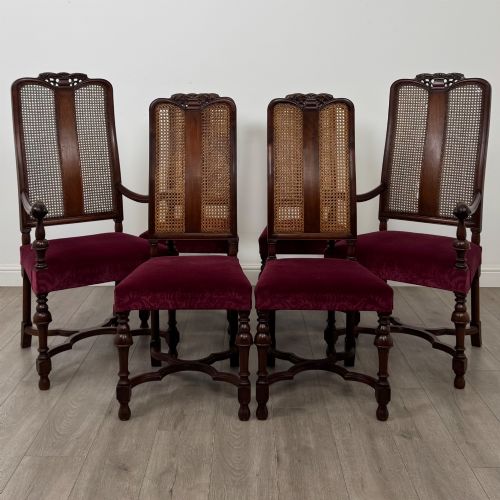
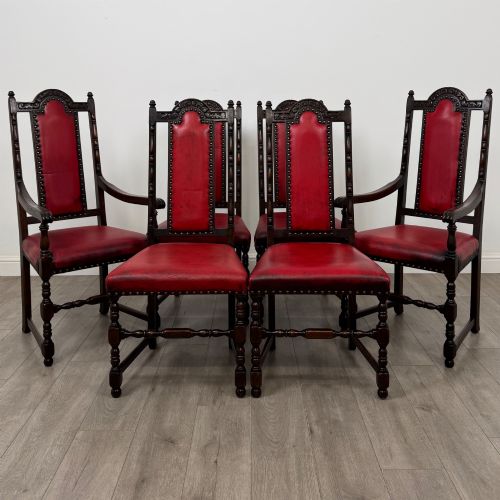
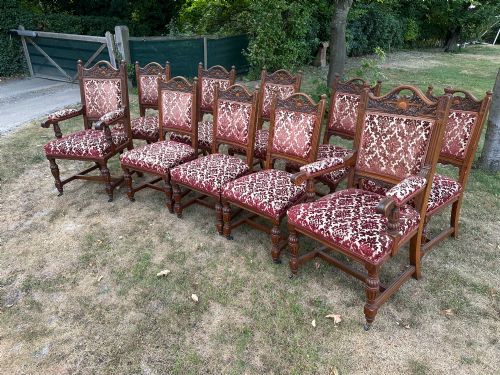
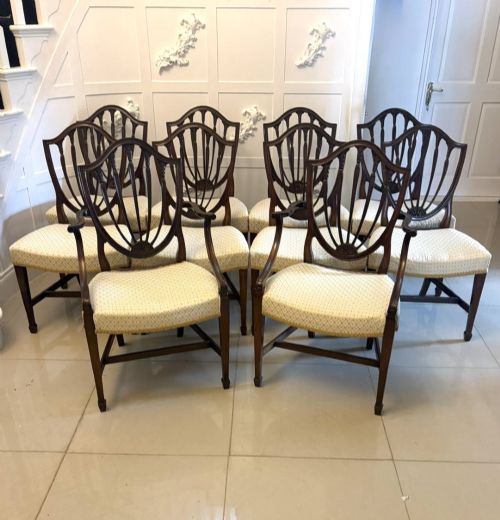
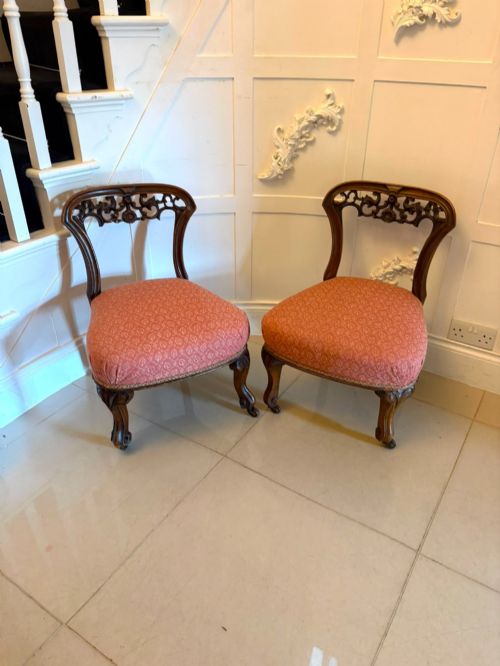
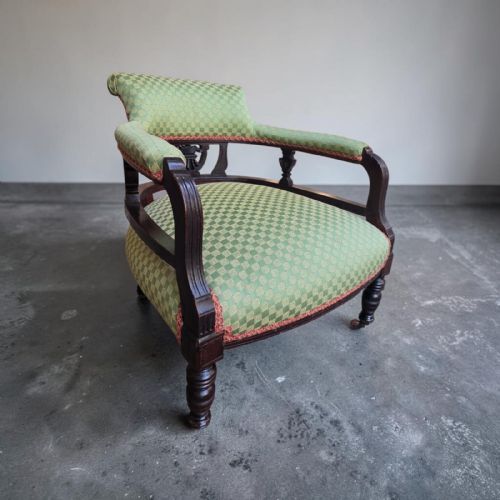
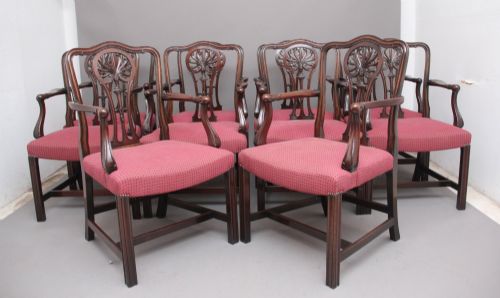
Edwardian Carved Back Chairs
Edwardian carved back chairs are seating made during the early twentieth century, sought after for their refined proportions and detailed woodwork.
Edwardian Carved Back Chairs
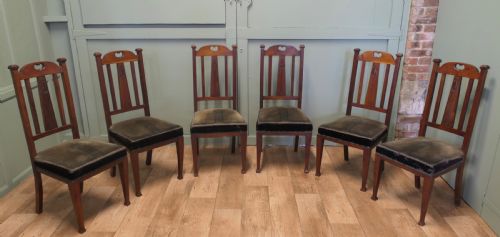
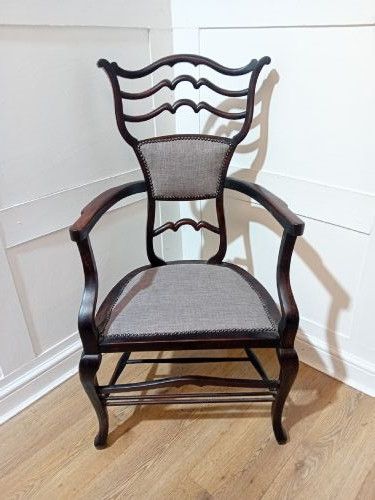
When you search for edwardian carved back chairs, you are looking at seating produced around the turn of the twentieth century, alongside related pieces from the Victorian and later periods. The selection includes dining chairs, armchairs, side chairs, and desk chairs originating from the Edwardian era.
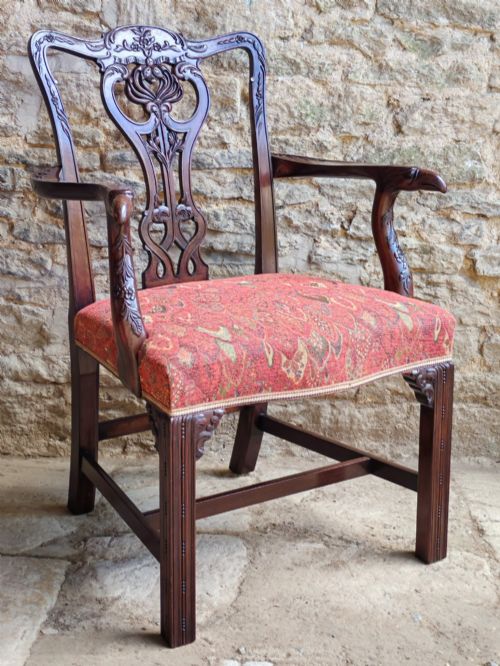
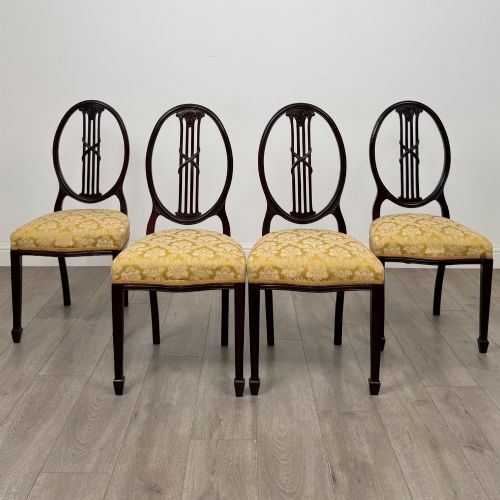
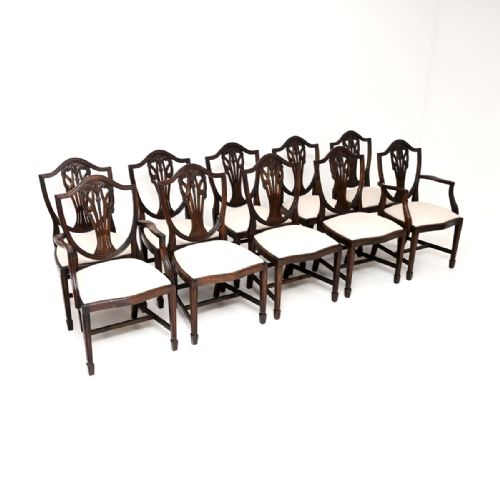
Makers and workshops of the period often turned to earlier design revivals, producing pieces styled after Chippendale, Hepplewhite, and Sheraton forms. You will find sets of dining chairs alongside single armchairs and tub chairs.
Woods such as mahogany, oak, walnut, and beech dominate the material selection, frequently complemented by cane, leather, fabric, and velvet upholstery. These seats suit formal dining rooms and studies alike.
How they were made
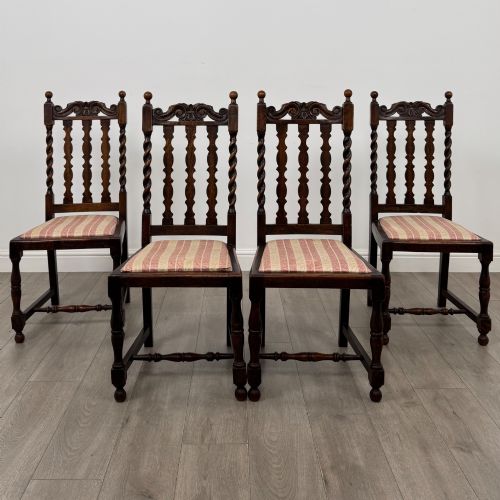
Makers utilised solid hardwoods like mahogany and oak for structural integrity, often shaping splats and rails by hand to achieve traditional revival profiles. Turning techniques produced barley twist supports, while steam-bending shaped elements for bentwood or tub chairs.
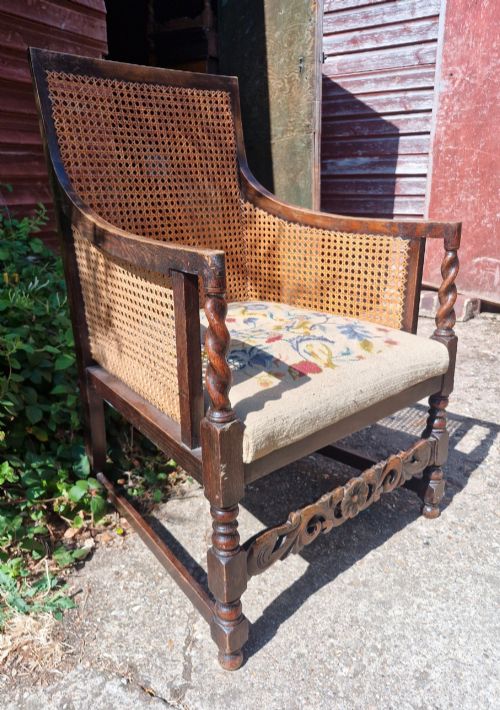
Upholstered versions relied on traditional stuffing materials, secured over sprung bases and finished with leather, velvet, or brocade. Cane work was woven directly into frames for lightweight seat and back panels.
Decorative details included hand-carved motifs, shield backs, and painted finishes on satinwood surfaces.
Listings feature woods including mahogany, oak, walnut, beech, maple, and satinwood, paired with cane, leather, and fabric upholstery.
What varies in quality
The distinction between standard examples and finer pieces lies in the crispness of the hand-carved detail and the selection of timber grain. Superior chairs show tight joinery and well-proportioned splats that reflect careful workshop production.
Completeness of a set strongly influences the standing of dining chairs, as matching groups of six or ten retain greater cohesion than assembled sets. Original upholstery materials and intact cane panels also separate exceptional survivors from heavily restored examples.
Howard and Sons·Charles Tozer·Maple and Co·Alfred Allen of Birmingham·Hindley and Sons
The Edwardian Carved Back Chairs Glossary
- Shield back
- A chair back shaped in the outline of a heraldic shield, commonly found on Hepplewhite revival dining chairs. This design became popular in the late eighteenth century and saw a resurgence during the Victorian and Edwardian periods.
- Tub chair
- An armchair with a rounded, enclosed back and arms forming a single continuous curve. These pieces frequently incorporate cane panels or upholstered barrels.
- Bergere
- An enclosed armchair with a wooden frame and cane woven back and sides. It often includes a loose seat cushion.
- Barley twist
- A cylindrical furniture leg or stretcher carved in a spiral resembling a twisted barley sugar stick. This decorative turning method appears frequently on oak chairs.
- Splat
- The central vertical slat of wood running from the seat to the top rail of a chair back. Carved splats define the silhouette of many dining chairs.
Edwardian Carved Back Chairs: Frequently Asked Questions
How do I identify Edwardian chairs?
Edwardian chairs usually date from around 1900 to 1910 and often draw inspiration from earlier Georgian and Sheraton styles. They are characterised by lighter proportions than their Victorian predecessors.
Look closely at the timber and construction methods to distinguish them. Mahogany and walnut were frequently used, alongside beech and oak.
Are these chairs suitable for daily dining?
Many of these chairs were built as robust dining furniture and remain functional for everyday use. Sets of mahogany or oak chairs provide sturdy seating around a dining table.
Check the joints and frame stability before regular use. Older upholstered seats may also benefit from professional evaluation.
Can I mix different chair styles?
Mixing single armchairs and side chairs was common in historic interiors. Many listings offer pairs or individual carvers alongside larger dining sets.
Matching timber tones helps create visual harmony when combining different seating styles. Eclectic arrangements often feature complementary revival pieces.
What is cane work on chairs?
Cane work involves weaving thin strips of rattan to form lightweight panels for chair backs and seats. This technique adds texture and breathability to armchairs and tub chairs.
Original cane panels require gentle care to prevent drying and breakage. Many Edwardian pieces retain their woven inserts in good condition.