


Edwardian Candlestick Holders
Edwardian candlestick holders bring period table lighting into modern rooms through brass, silver plate and pewter.
Edwardian Candlestick Holders
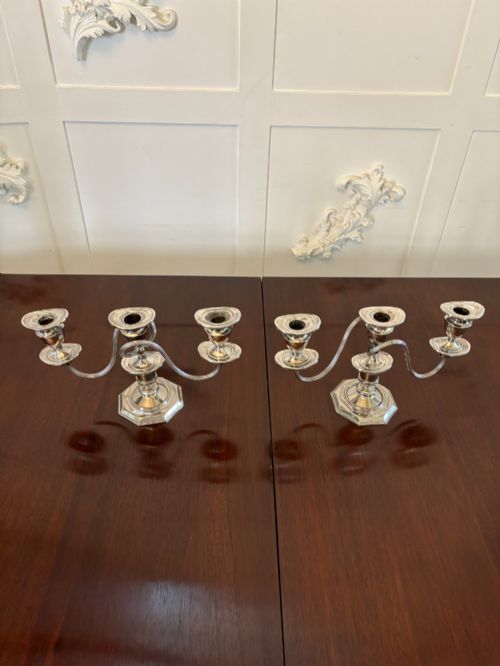
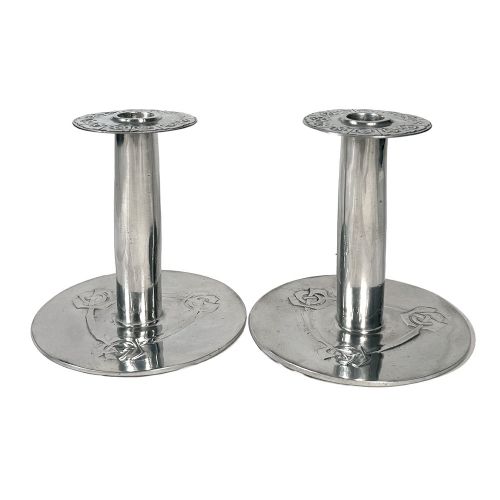
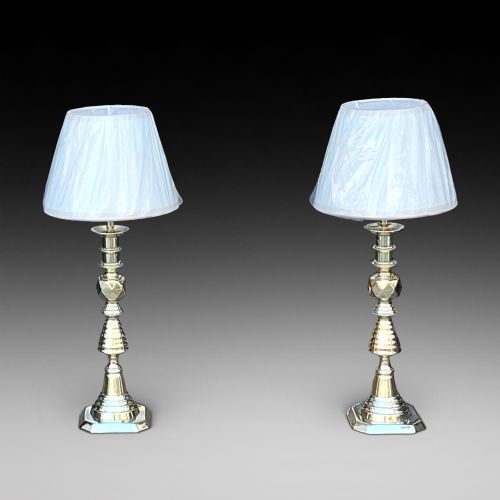
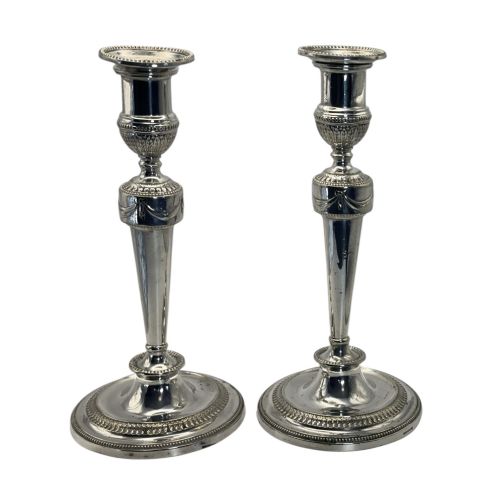
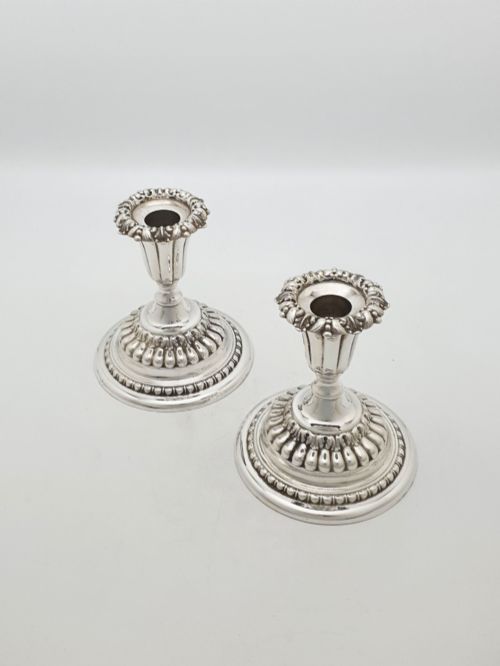
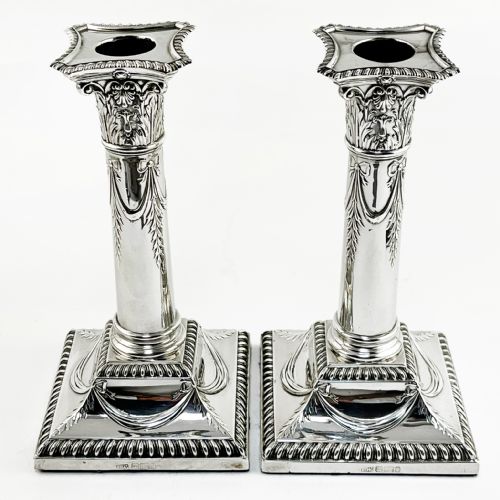
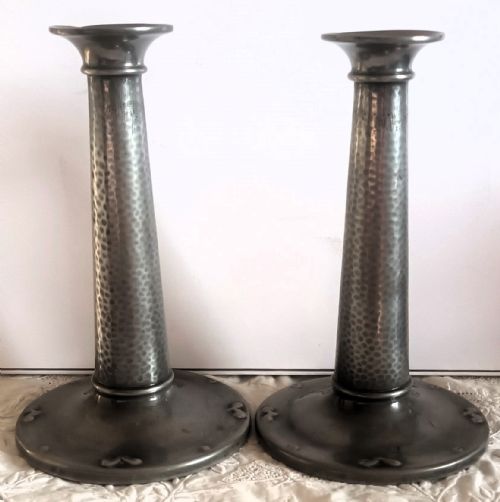
Edwardian candlestick holders comprise matching pairs and single examples designed to burn taper candles on dining tables, desks and mantelpieces during the early twentieth century. You will frequently encounter heavy brass and silver-plated specimens alongside Arts and Crafts pewter designs originating from the period around nineteen hundred.
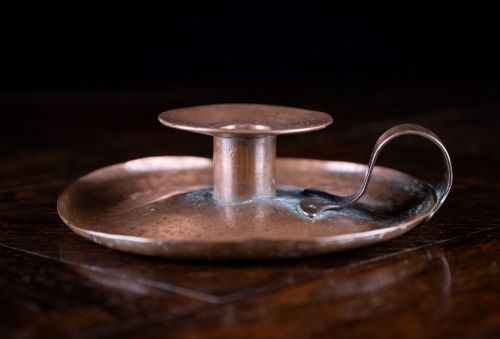
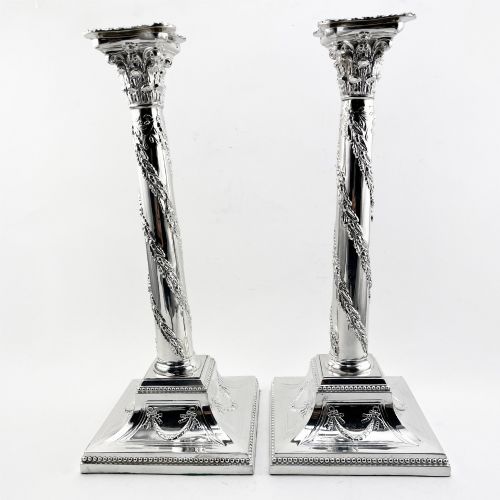
Forms range from tall altar and church candlesticks to low chambersticks fitted with finger rings, plus double-arm candelabra and reflector lamps. The selection includes works drawing on classical Corinthian capitals, organic Art Nouveau styling and sturdy oak and brass combinations.
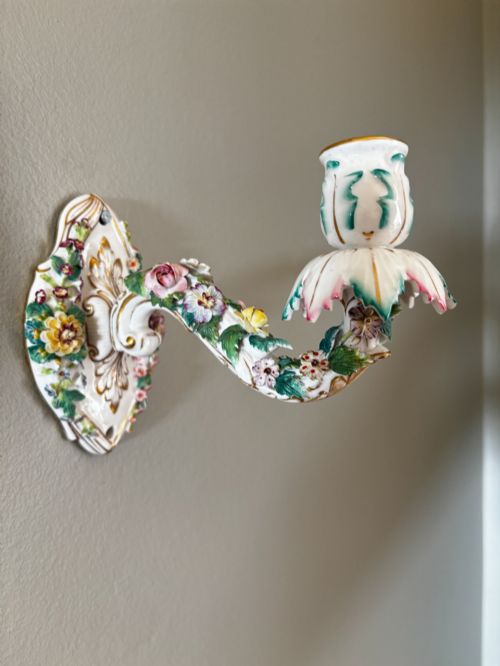
Makers utilised diverse materials spanning sterling silver, copper, ceramic and bronze alongside traditional brass and plated metals. Pieces survive from the late Victorian crossover years through to the outbreak of the First World War.
How they were made
Makers cast brass and bronze in foundry moulds before turning sections on lathes to achieve smooth shafts and weighted bases. Pewter items from the period utilised specific metal alloys shaped through spinning and casting techniques associated with the Arts and Crafts movement.
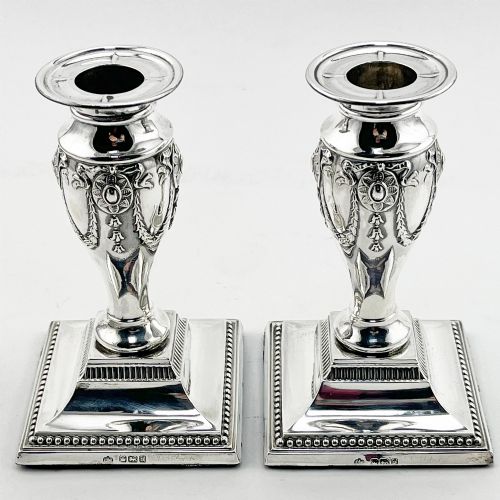
Silver-plating involved electroplating a base metal core with a thin layer of pure silver, while sterling pieces bore hallmarked silver sheet formed over supportive internal resin or weighting material. Oak and ceramic elements were turned or moulded separately and joined with metal fittings.
Surface finishes received hand polishing or patination to accentuate twisted stems, gadrooned edges and applied decorative motifs such as dog figures or classical acanthus leaves.
Edwardian Candlestick Holders Retail Price Guide 2026
Typical asking prices for edwardian candlestick holders among the pieces listed under this phrase on Sellingantiques today, from the lower quarter to the upper quarter. They describe what is for sale here now, not the wider market.
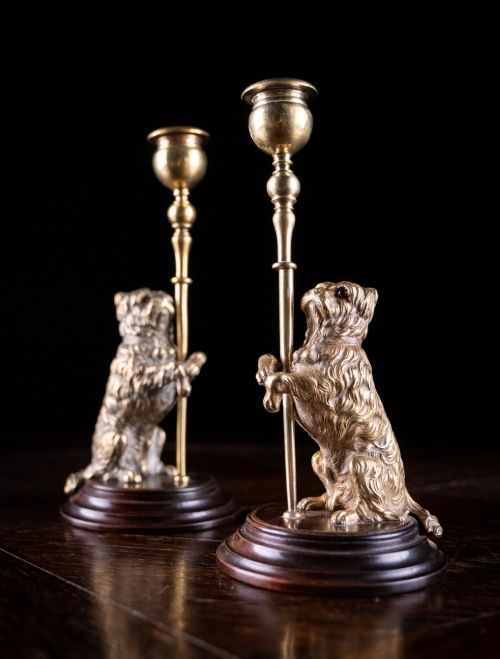
Dogs watched over evening routines through charming brass candlestick designs cast in the form of standing terriers and pugs.
What varies in quality
Quality rests upon the crispness of casting detail and the integrity of construction where components join. Well-executed pieces display sharp fluting on Corinthian columns and deeply struck hallmarks on silver items, whereas lesser examples show softened edges from worn production moulds.
Weight distribution dictates balance in taller pairs; superior candlesticks feel substantial and stable in the hand rather than hollow or tinny. The retention of original plating layers and honest patination on brass and copper surfaces separates factory output from tired items.
Elkington and Co·Archibald Knox for Liberty and Co·Mappin and Webb·James Fenton·Frederick J Smith and Co·Wm Tonks and Sons
The Edwardian Candlestick Holders Glossary
- Chamberstick
- A low candle holder featuring a saucer base and a loop handle for carrying illumination through bedrooms. These often include a small conical snuffer resting in the tray.
- Corinthian
- A classical column capital design featuring carved acanthus leaves and scrolls. This motif appeared frequently on formal brass and silver-plated candlesticks.
- Electroplated Nickel Silver
- A base metal alloy of copper, nickel and zinc coated with a layer of pure silver through electrolysis. The process became widespread for domestic tableware in the nineteenth and twentieth centuries.
- Candelabra
- A branched lighting fixture holding multiple candles on separate arms radiating from a central stem. These range from small desk models to large five-light dining table centerpieces.
- Barley twist
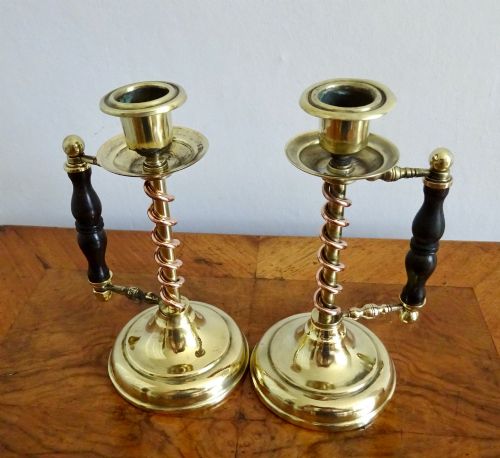
- A decorative turning technique producing a spiral shaft resembling twisted rope. This style appeared on wooden and brass candlestick stems during the period.
Edwardian Candlestick Holders: Frequently Asked Questions
How do I date edwardian candlestick holders?
Examine the piece for stylistic clues such as Arts and Crafts motifs or Art Nouveau curves, which place items around nineteen hundred. Silver examples often bear hallmarks with date letters that provide the exact year of assay.
Look also at construction methods and base materials, keeping in mind that production spans the late nineteenth century into the nineteen twenties.
Can I use real candles in antique holders?
Modern taper candles fit securely into most period sockets provided the diameter matches the aperture. Ensure you use dripless candles and extinguish them before the flame reaches the metal or wooden socket.
Remove wax gently with warm water rather than scraping tools to protect the original surface finish.
How do I clean brass and silver-plated holders?
Clean brass using a mild soapy solution and a soft cloth to remove dust without stripping the aged patina. Avoid harsh abrasive commercial dips that remove the remaining silver plate on plated items.
Silver-plated pieces benefit from gentle treatment with dedicated silver cloths to maintain their reflective shine.
What is the difference between a chamberstick and a candlestick?
A chamberstick incorporates a wide saucer base designed to catch dripping wax and a looped finger ring for carrying the light safely by hand. Standard candlesticks lack the finger ring and focus purely on standing firmly on a table or mantelpiece.
Both forms served domestic lighting needs before the advent of electricity.